
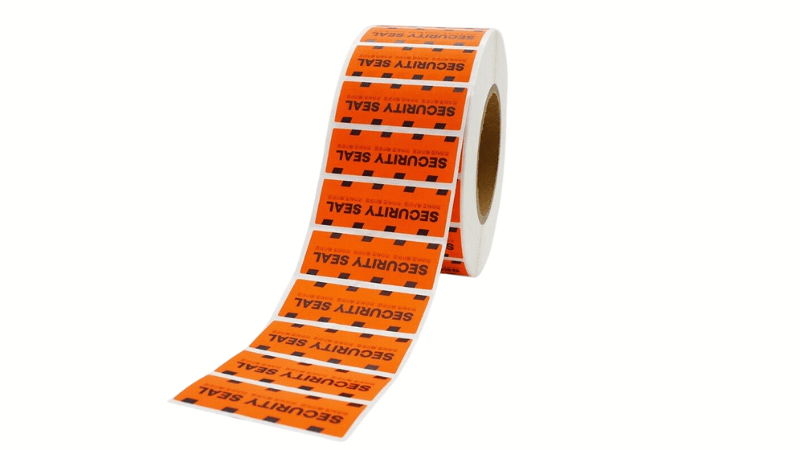
According to the 2026 Global Brand Protection Report, product counterfeiting and retail warranty fraud account for immense annual revenue losses. Organized retail crime syndicates systematically exploit standard product packaging, utilizing basic heat guns to bypass traditional seals.
This guide walks you through the different types of tamper-proof stickers, their real-world applications, and how to choose the best fit for your products in 2025. About finding the one that protects what matters, we’ll cover what to look for and what to avoid!
What Are Tamper-Proof Stickers and How Do They Work
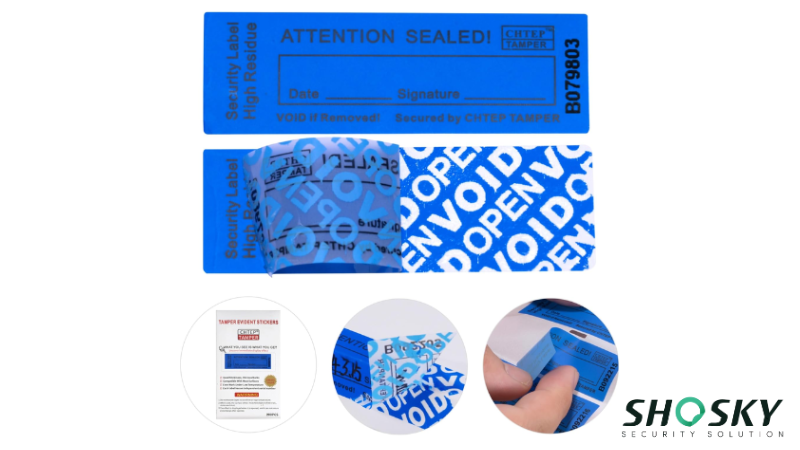
A tamper-proof sticker is a precision die-cut security seal designed to protect specific localized entry points on premium merchandise or classified documents. Unlike continuous packing tape utilized for bulk shipping cartons, security labels are meticulously engineered to secure targeted vulnerabilities, including electronic chassis seams, cosmetic bottle caps, and pharmaceutical vials.
These precision labels function as active forensic barriers rather than simple adhesive paper. Quality assurance directors rely on the following targeted mechanical defenses to authenticate individual product units:
- Multi-layer delamination: Advanced security labels utilize unstable internal resin layers. When an intruder attempts to peel the sticker, these layers separate irreversibly, permanently transferring a hidden warning message directly onto the product chassis.
- Ultra Destructible Matrices: Eggshell stickers utilize a highly brittle cast vinyl substrate. This delicate film splinters into microscopic fragments instantly if subjected to razor blades or manual picking, making intact removal mathematically impossible.
- Cryptographic Serial Verification: Premium security stickers embed variable QR codes and covert micro text directly into the label face. This establishes a unique digital fingerprint for each individual unit that counterfeiting syndicates cannot replicate.
By deploying these highly targeted micro defenses, manufacturing teams lock down specific hardware vulnerabilities without altering the overall packaging aesthetics. This precision protection guarantees absolute unit-level authenticity and completely neutralizes unauthorized warranty repair claims.
Ready to Get Your Tamper-Proof Stickers?
Start With A Low Minimum Order Quantity
The 6 Main Types of Tamper-Proof Stickers
There are several engineered categories of security stickers available on the commercial market. Procurement teams must precisely match the adhesive transfer mechanics to their specific packaging substrates to prevent spontaneous peeling or permanent asset damage.
The following 6 categories represent the absolute industry standards classified entirely by their chemical and physical behavior:
1. Void Labels
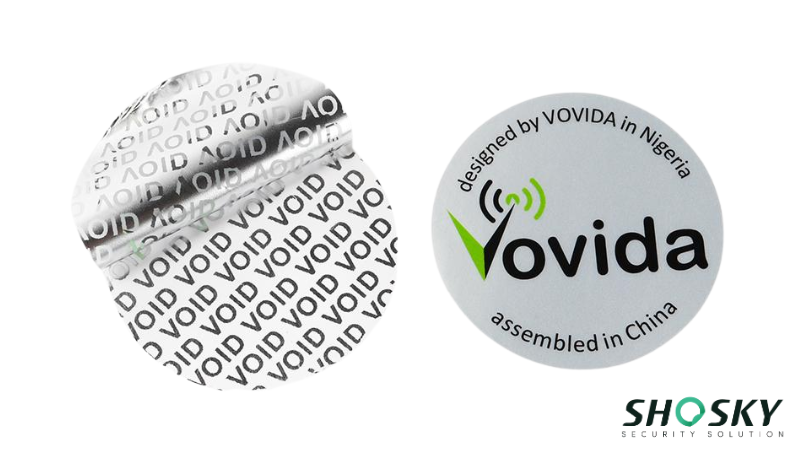
VOID security labels are specifically engineered to leave behind a highly visible warning message, such as a repeating VOID text or a custom corporate pattern, whenever unauthorized removal is attempted. These pressure-sensitive labels rely entirely on a dual-layer chemical construction to actively expose tampering.
Packaging engineers utilize these specific technical formulations to match different retail surfaces:
-
High Tack Transfer Adhesives: Deposit heavy acrylic residue directly into the cardboard pores to prevent resealing.
-
Zero Residue Options: Separate cleanly from the main product but reveal the permanent warning solely on the peeled film to protect polished metallic hardware.
-
Surface Calibrated Resins: Formulated to bond exceptionally well to smooth plastic, metal, and polished paperboard without premature edge lifting.
By leveraging these precise chemical mechanisms, quality assurance teams ensure that once the label is removed, it mathematically cannot be reapplied without showing massive signs of physical interference. This makes them ideal for securing sensitive electronics and complex logistics networks.
2. Destructible (Eggshell) Labels

Destructible labels, commonly called eggshell stickers, are manufactured from incredibly brittle cast vinyl materials that forcefully shatter when tampered with. They are engineered so thieves absolutely cannot peel them off in one single continuous piece.
Procurement directors specify these labels for their unique physical failure characteristics:
-
Microscopic Splintering: The ultra-thin substrate severely fractures into tiny shards instantly upon experiencing mechanical picking or razor blade lifting.
-
Rapid Adhesive Curing: The specialized acrylic glue cures completely over 24 hours, forming a chemical bond massively stronger than the label face itself.
-
Conformable Substrates: The delicate material perfectly molds to highly uneven chassis gaps or tightly curved glass vials.
This irreversible mechanical failure makes them especially useful in preventing severe return fraud and unauthorized electronic warranty abuse. Reapplication is rendered physically impossible, drastically simplifying the inspection process for return center personnel.
3. Holographic Security Labels
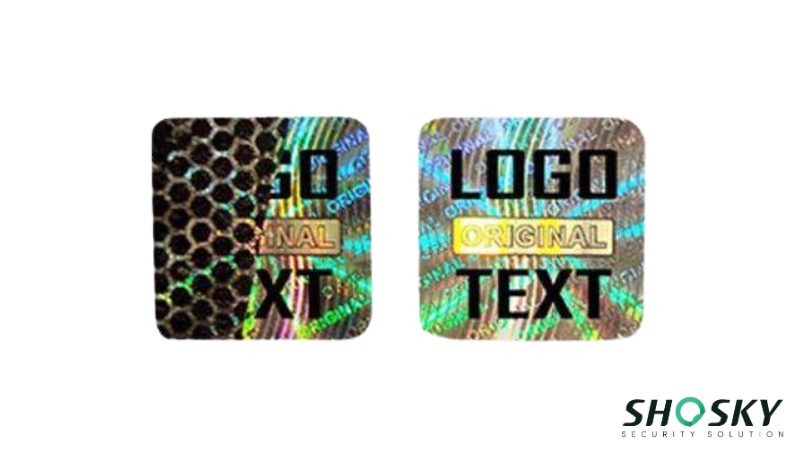
Holographic labels add a massive layer of visual cryptographic complexity that is exceptionally hard for underground syndicates to replicate. They utilize reflective optical foil and multi-layered master imaging to create a shimmering, multi-angle visual effect that allows for rapid retail authentication.
These premium labels combine visual aesthetics with hard physical security through the following features:
-
Multi-Angle Reflectivity: Allows store clerks and consumers to verify genuine merchandise at a rapid glance without specialized scanning equipment.
-
Integrated Covert Microtext: Embeds microscopic corporate tracking codes hidden deeply within the foil layers.
-
Destructible Security Layers: Designed to completely shatter the holographic image if lifted, utterly destroying its visual appeal and street value.
Because of this dual-purpose construction combining visual appeal and physical security, holographic labels are the absolute smartest choice for protecting high-risk luxury goods and premium branded electronics.
4. Transparent Seal Labels
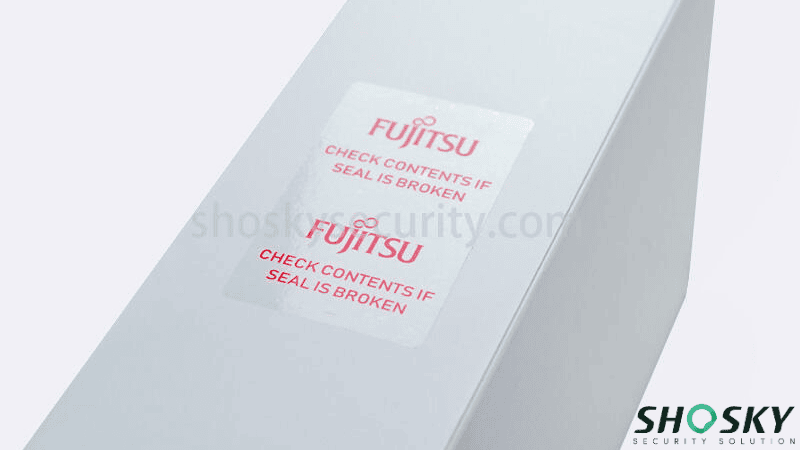
Transparent security seals are perfectly clear polymer labels commonly placed over premium box flaps, cosmetic bottle caps, or luxury product openings. They maintain a distinct low-profile aesthetic, which perfectly preserves the expensive packaging design while offering absolute tamper visibility.
Brands customize these clear barriers using specific engineered enhancements:
-
Low Profile Aesthetics: The crystal clear film blends seamlessly into white cardboard or frosted glass without obstructing primary marketing copy.
-
Micro Perforated Tear Lines: Precision laser cuts guarantee the polymer tears instantly and permanently under minimal lifting pressure.
-
Custom UV Traceability: Invisible fluorescent inks can be stamped directly onto the clear film for covert logistical tracking.
These subtle design elements work exceptionally well in luxury retail and high-end cosmetic packaging. If someone illegally accesses the package, the clear polymer label typically stretches or wrinkles permanently, making it visually obvious the item is compromised.
5. Thermochromic Color Changing Labels
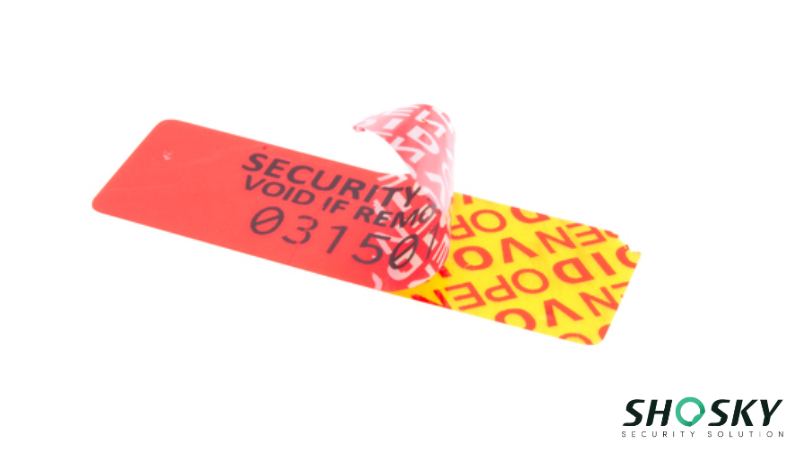
Color-changing labels react aggressively to specific extreme environmental triggers like industrial heat, freezing pressure, or harsh ultraviolet light. These specialized labels are mandatory in global pharmaceuticals and sensitive food packaging where improper environmental handling severely impacts product safety.
Quality control inspectors rely on these permanent chemical shifts to verify transit integrity:
-
Extreme Heat Activation: The ink irreversibly shifts from stark white to bright red if exposed to counterfeiter heat guns.
-
Deep Freeze Crystallization: Specialized glues fracture visually if criminals attempt to bypass the seal using liquid nitrogen cooling sprays.
-
Ultraviolet Exposure Shifts: Detects prolonged exposure to harsh sunlight, which may degrade sensitive chemical ingredients inside the container.
The reactive technology is engineered directly into the ink or adhesive barrier. Once triggered, the color-changing phase is strictly permanent, instantly signaling to safety inspectors that the product logistics chain was completely compromised.
6. Cryptographic QR Enabled Labels
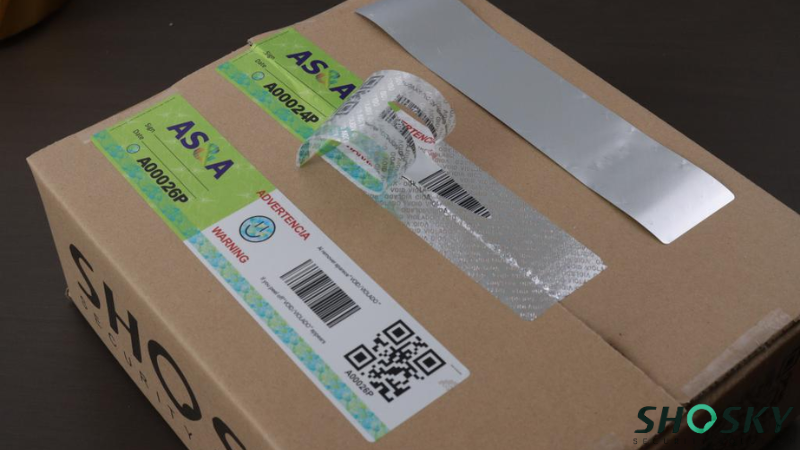
QR-enabled labels seamlessly link physical retail products directly to cloud-based digital tracking systems. Each precision label carries a unique randomized code that consumers or inspectors can easily scan to instantly verify manufacturing origin, shipment details, or live warranty status.
These sophisticated smart labels deliver enterprise-level digital traceability through advanced asset management:
-
Randomized Digital Fingerprints: Every single unit receives a mathematically unique identifier that mass counterfeiters absolutely cannot duplicate.
-
Global Geolocation Logging: Brand protection teams can instantly detect highly suspicious activity, like simultaneous multiple scans in completely different countries.
-
Live Warranty Status Checks: Allows service technicians to digitally verify active repair coverage before touching the physical hardware.
Combined with physical tamper-evident adhesives, these smart labels offer the ultimate hybrid of physical and digital supply chain security. This adds unparalleled tracking depth for online sales and massive global distribution networks.
Tamper-Proof Sticker Types – At a Glance
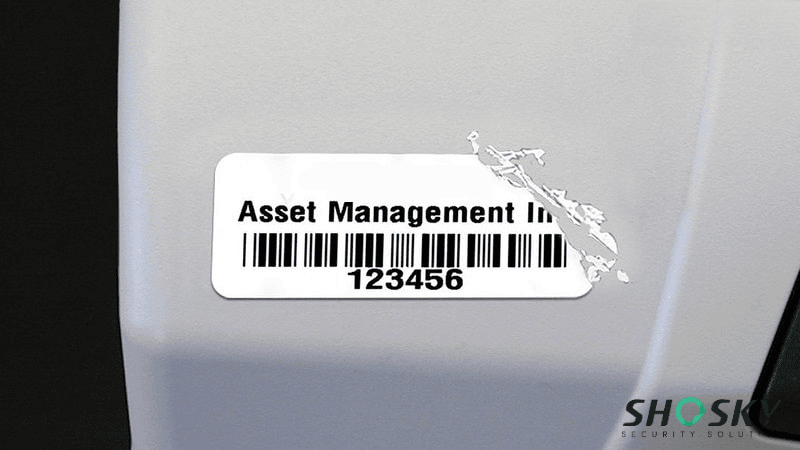
Different tamper-proof stickers react in different ways. The right type depends on your product, use case, and how you apply it. Here’s a quick look.
| Type | Tamper Indicator | Common Uses |
|---|---|---|
| Void Sticker | Leaves “VOID” text or pattern | Electronics, logistics |
| Destructible Label | Breaks into pieces when removed | Warranty seals, tools |
| Hologram Sticker | Distorts or breaks on tampering | Luxury goods, tech |
| Clear Seal | Rips or wrinkles when opened | Retail, skincare packs |
| Color-Shift Label | Color changes with pressure/heat | Food, medicine packaging |
| QR/Serial Code | Scan or code confirms authenticity | E-commerce, pharma |
With so many types available, it’s easy to find a tamper-evident solution that fits your product and packaging needs. From visible deterrents to smart tech features, these stickers support both safety and branding, helping your business stay secure without sacrificing design.
How to Choose & Customize the Right Tamper-Proof Sticker
Before choosing a tamper-proof sticker, procurement directors must think critically about where and how it will be operationally deployed. Selecting the wrong chemical matrix leads directly to poor surface adhesion, weak protection, and massive operational liabilities.
Step 1: Define Your Goal (Security Level)
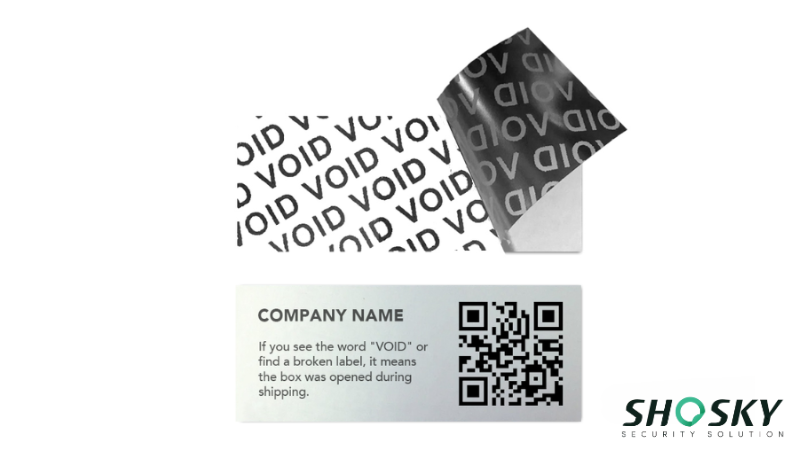
Procurement directors must determine if they are trying to deter casual retail theft, prevent complex warranty fraud, or stop sophisticated international counterfeit rings. The right level of security heavily depends on your product risk profile, retail value, and specific business goals.
Each unique goal requires a completely different type of sticker technology. If your goal is simply to show a customer that a food container or cosmetic box has not been opened, a transparent seal or void label is highly effective.
However, if you need to prevent component swapping on expensive electronics, a destructible eggshell label is ideal because it is impossible to remove cleanly. For high-value luxury items, you must deploy holographic labels or QR-enabled stickers to absolutely prove brand authenticity.
Step 2: Match the Sticker to the Surface & Environment
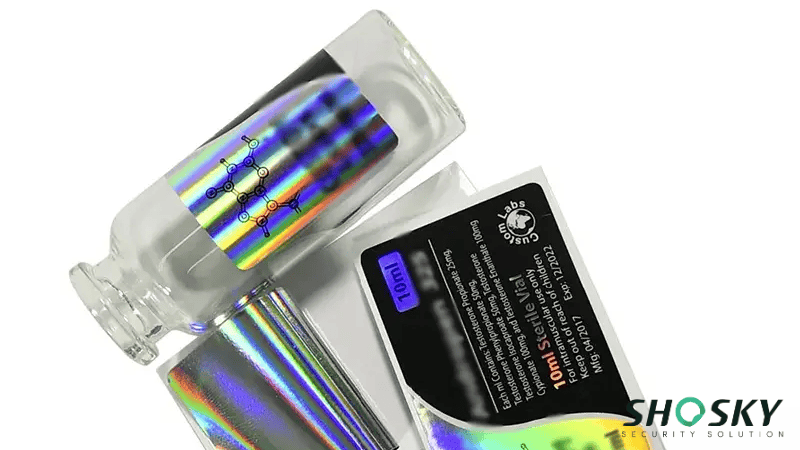
A security sticker’s effectiveness is one hundred percent dependent on its specific chemical adhesive matching the physical product surface. Rough or highly textured surfaces require a significantly thicker and more aggressive adhesive coating that can mechanically fill the microscopic surface gaps.
Furthermore, low surface energy plastics like polyethylene are notoriously difficult to stick to and absolutely require a highly specialized acrylic transfer adhesive to prevent spontaneous peeling.
You must also deeply evaluate the logistical lifecycle and environmental extremes your shipment will face. Quality control managers need to consider if the package will sit in a hot distribution warehouse, require freezing temperatures for food transport, or endure heavy moisture and ultraviolet light. A weak security sticker that accidentally falls off in normal transit is significantly worse than utilizing no sticker at all, as it constantly triggers false security alarms across your entire supply chain.
Step 3: Verify Industry Compliance Needs
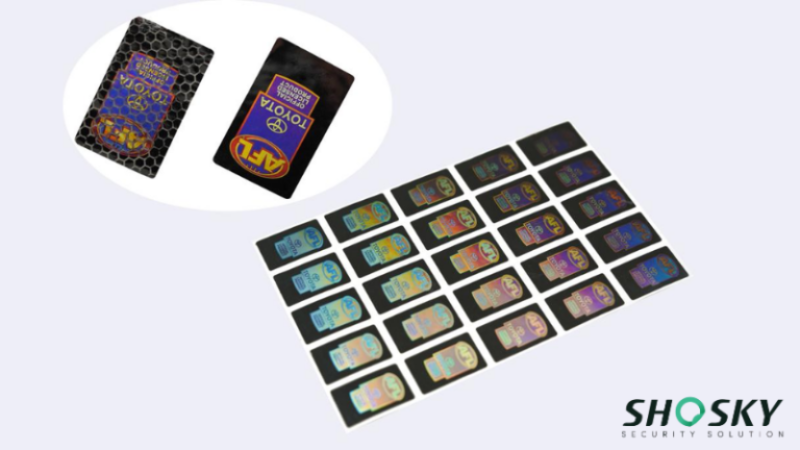
Security is often not just a good corporate idea; it is a strict legal requirement. Many global industries have heavily enforced regulations for packaging integrity to aggressively protect consumers from contamination or fraud. Skipping this crucial compliance verification step can easily lead to massive shipping delays, devastating financial fines, or forced product recalls across multiple countries.
Different sectors demand entirely different legal standards for their security seals. The FDA rules on tamper-evident pharmaceutical packaging are extremely strict, often requiring materials to adhere to ISO standards for absolute traceability and chemical safety.
Food and beverage seals must utilize certified food-safe materials to prevent toxic contamination, while electronic compliance often relates to restricting hazardous substances within the label materials themselves.
Industries & Use Cases for Tamper-Proof Stickers
Tamper-evident stickers aren’t just about security—they help protect your brand and reduce risks that come with shipping, retail, or online sales. Companies across industries use them to build buyer trust and limit losses from fraud or contamination.
1. Electronics & E-commerce (Warranty Protection)
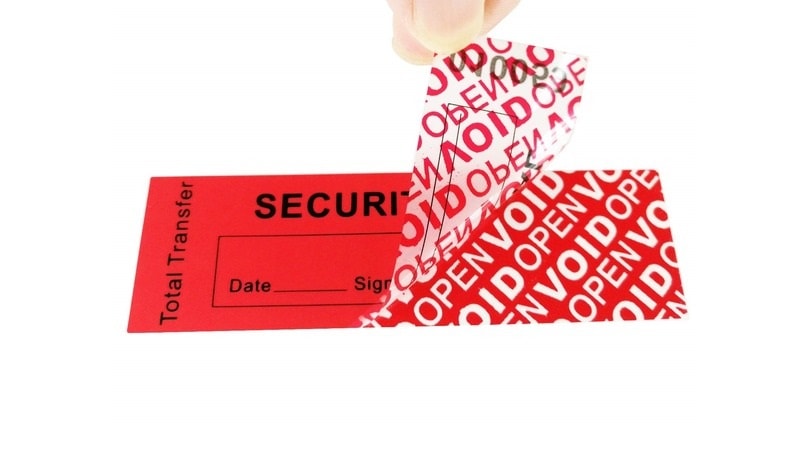
The consumer electronics and e-commerce sectors face massive financial losses from organized return fraud and unauthorized hardware modifications. To combat this critical vulnerability, procurement directors strictly mandate highly specialized physical security mechanisms to protect device integrity.
Engineers integrate these physical barriers into hardware production by using brittle cast vinyl labels that shatter instantly if an end user attempts to pry open the main chassis screw ports.
Massive logistics companies utilize these destructible seals on all refurbished electronics to establish an undeniable visual baseline. They pair this with high-tack acrylic adhesives that leave permanent void messaging directly on the motherboard housing if internal components are illegally swapped. If a customer covertly tampers with the device, the label shatters permanently, granting the retailer the legal authority to instantly reject false warranty repair claims according to federal trade guidelines.
2. Pharmaceuticals & Healthcare (Compliance & Safety)
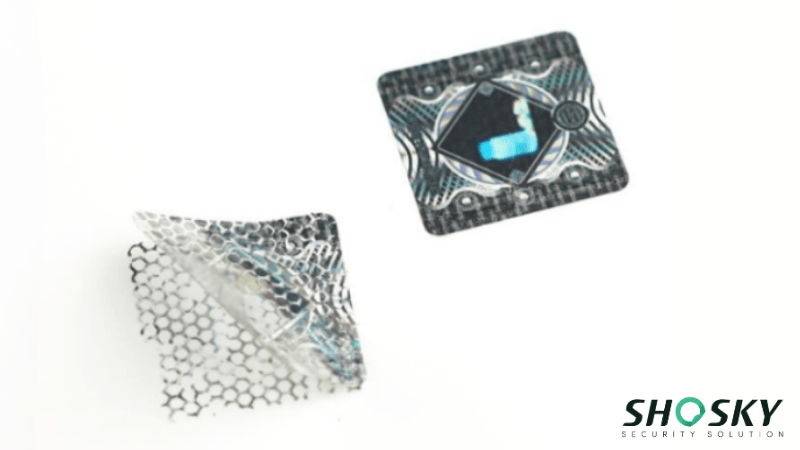
The global medical supply chain requires absolute chemical safety and perfect digital traceability. Medical device manufacturers must aggressively integrate high-security packaging to strictly prevent malicious adulteration and highly organized drug counterfeiting. To ensure total patient safety, healthcare packagers deploy specialized cold weather adhesives that maintain their aggressive chemical bond even during strict liquid nitrogen cold chain logistics.
Major medical suppliers actively integrate serialized void stickers onto their highly sensitive sterile packaging. These labels utilize variable QR codes linking physical vials to digital tracking ledgers, while medical-grade topcoats ensure zero chemical leaching into the primary packaging.
This proactive layer of security offers immediate visible evidence of criminal interference, ensuring perfect compliance with stringent FDA and European safety frameworks to totally protect patient health.
3. Food, Beverage, and Cosmetics Shelf Trust
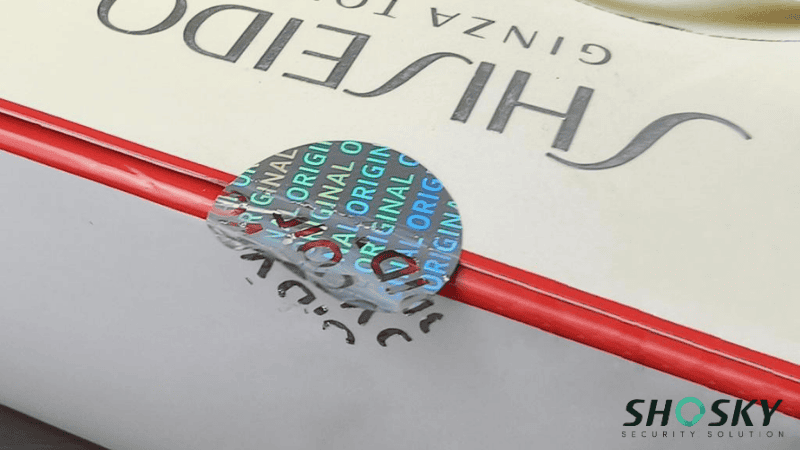
The highly competitive food and beauty sectors heavily favor discreet and premium tamper-proof seals. This structural shift is driven entirely by mass consumer demand for uncompromised shelf hygiene and pristine unboxing experiences. Brands protect retail displays by using low-profile clear polymer labels that blend seamlessly into high-end cosmetic jars without obstructing the primary marketing copy or premium design aesthetics.
Global conglomerates actively utilize custom transparent box seals and laser-scored neckbands to combat unauthorized in-store retail sampling. These precise engineering features allow legitimate buyers to open the container effortlessly while utilizing specialized glues that reveal warning messages without leaving a messy residue on the expensive glass.
Customers can instantly see the clear structural seal remains entirely intact, completely reassuring them that the luxury product is perfectly safe and uncontaminated.
4. Apparel and Retail Loss Prevention
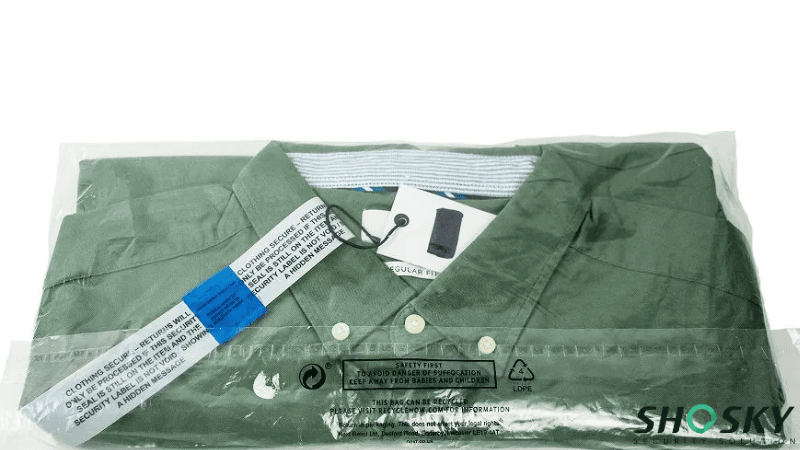
Fashion brands constantly battle the incredibly costly problem of wardrobing, where malicious customers wear an item to a social event and then systematically return it as pristine inventory. Stopping this requires highly visible physical deterrents deployed actively by apparel logistics managers. They utilize high-contrast, brightly colored security seals that act as an immediate psychological deterrent against unauthorized consumer tampering and return fraud.
Major online apparel retailers tackle this exact vulnerability by deploying massive security labels that physically bridge zipper lines, making it impossible to comfortably wear the garment without breaking the seal. They pair this with zero-residue adhesives to prevent permanent chemical damage to expensive luxury leather goods or delicate textiles.
If the logistics return center receives the item with a fractured label, the brand strictly enforces its return policy, ultimately saving millions in inventory shrinkage.
FAQs
Can tamper-proof stickers survive deep freeze cold chain logistics?
Yes, provided you specify the correct formulation. We utilize highly modified cold-weather acrylic adhesives engineered specifically to maintain an aggressive chemical bond and trigger visual VOID messages without crystallizing in deep freeze conditions.
Do eggshell destructible labels work on curved glass vials?
Yes, provided you specify the correct formulation. We utilize highly modified cold-weather acrylic adhesives engineered specifically to maintain an aggressive chemical bond and trigger visual VOID messages without crystallizing in deep freeze conditions.
Will standard security stickers stick to low surface energy plastics?
Standard rubber glues frequently fail on Low Surface Energy materials like polyethylene. You must explicitly specify labels equipped with modified acrylic transfer adhesives to guarantee permanent bonding on slick reusable plastic shipping totes.
What protocol must receiving personnel follow if a sticker is broken?
Receiving personnel must immediately quarantine the specific carton and halt further unpacking. You must document the exact VOID discrepancy photographically and trigger an internal compliance audit to investigate the broken chain of custody.
Eliminate Product Fraud with Shosky’s Tamper-Proof Stickers
Tamper-evident stickers play a key role in protecting your products, brand, and customers. From reducing fraud to building shelf trust, the benefits are clear. And with so many custom options available, it’s easy to select the right type for your operations. Just make sure to work with certified suppliers who understand your needs and are committed to product safety!
Shosky Security offers tamper-proof sticker solutions for every packaging type. Whether you’re in food, tech, or healthcare, our custom stickers help you stay compliant, stop tampering, and protect your brand. Contact us today and get a quote that fits your needs!