
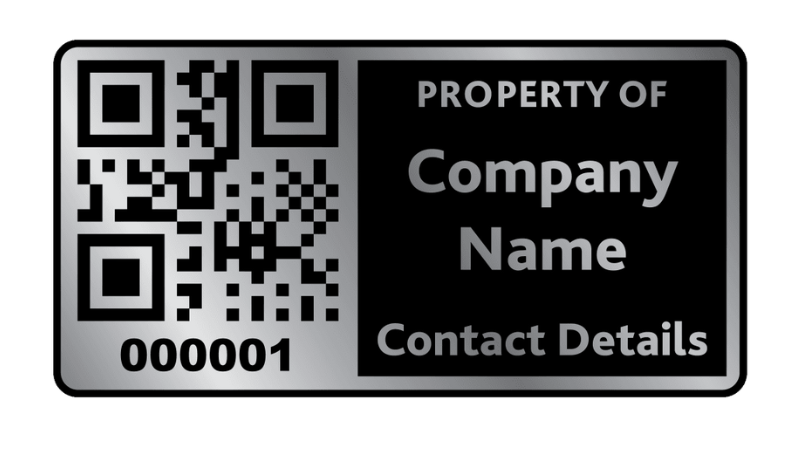
Around 43% of businesses now rely on QR codes for logistics tracking and product authentication. However, in a market flooded with counterfeits, a standard printed QR code is useless; it can be easily peeled off and transferred to a fake product.
To truly secure your supply chain, you need Tamper-Evident QR Code security Labels. In this article, we will talk about QR code security labels in detail and how you can use them with advanced tamper-evident solutions like destructible paper and PET VOID films to enhance security and supply chain transparency.
Why Tamper-Evident QR Code Security Labels Are Essential for Supply Chains
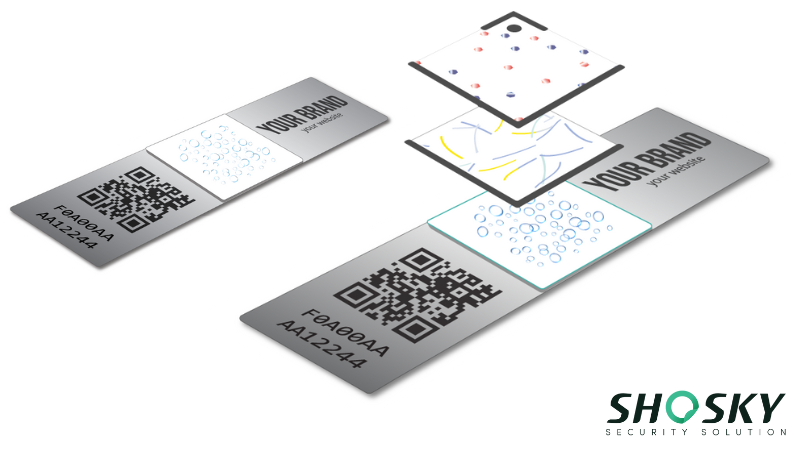
A growing number of businesses are adopting QR codes. In 2024, the global QR code security labels market was valued at US$1.8 billion, projected to reach US$4.6 billion by 2033 at a CAGR of 11.1%. Meanwhile, the double-layer QR code label segment is expected to grow from US$1.8 billion (2023) to US$4.2 billion by 2033.
Unlike traditional barcode systems, QR codes offer remarkable scalability:
- Massive Data Storage: Store up to 4,296 characters, including URLs and tracking data.
- Security Integration: When printed on high-security materials, these codes become impossible to counterfeit.
- Cost-Effectiveness: Accessible for small businesses with minimal disruption to current operations.
- Mobile Readiness: Instant access through any smartphone camera or Quick Response (QR) code scanner app.
To help you choose the right security level, here is a quick comparison between standard labels and high-security QR solutions:
| Feature | Standard QR Label | Shosky Tamper-Evident QR Seal |
|---|---|---|
| Security Level | Low (Easy to copy/transfer) | Extreme (Anti-transfer & VOID reveal) |
| Traceability | Static URL only | Unique Serialized UID / ERP Sync |
| Tamper Evidence | None | Visible "VOID" or Eggshell Fracture |
| Best Use Case | Marketing & Menus | Pharma, Electronics & High-Value Assets |
The Digital Bridge: How QR Codes Transform Physical Seals
A QR code security label is more than a sticker; it is a “digital bridge.” The physical seal provides immediate visible proof of tampering (such as a VOID message or eggshell fracture), while the embedded QR code links to a secure digital database. This creates a dual-layer security protocol:
- Physical Layer: Irreversible material damage confirms the package hasn’t been opened.
- Digital Layer: A quick scan verifies the product’s unique serial number, batch origin, and real-time status against the manufacturer’s cloud data.
By linking these two layers, businesses ensure that even if a physical seal is perfectly faked, the digital authentication will fail—and vice versa.
5 Key Use Cases for Secure QR Code Security Labels in Product Traceability
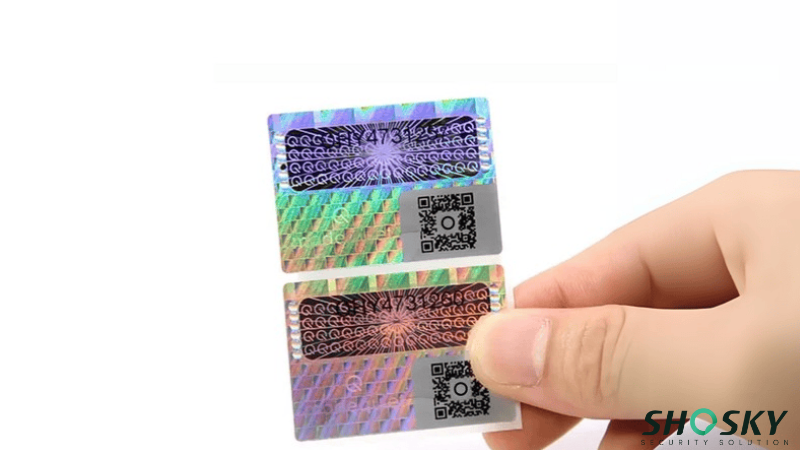
The following five use cases show how QR codes can improve efficiency, accuracy, and transparency. Each example highlights practical applications that demonstrate the versatility and value of QR code security labels in modern business workflows and brand protection.
1. QR Labels for Inventory Management and Anti-Theft
Linking physical inventory to a digital database via QR code security labels gives businesses real-time visibility into their stock.
Key benefits for warehouse teams:
- Automated Updates: Eliminate human error by scanning directly into ERP tools.
- Movement History: Track item location and quantities in one platform.
- Tamper Alerts: If a sealed pallet is scanned and the label shows physical damage (like a VOID watermark), the system instantly flags a security breach.
These automated alerts ensure that any internal theft or security breach is flagged before the product reaches the next destination.
2. QR Product Tracking Across the Supply Chain
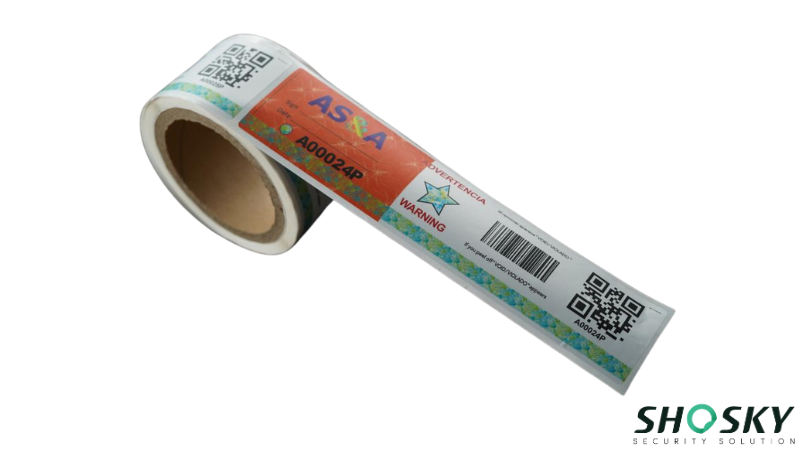
QR security labels serve as the critical link to monitor goods across every stage of the supply chain.
- Real-time Logistics Update: Provide instant status and location data to logistics partners.
- Physical-Digital Integration: Pair QR data with tamper-evident tapes or seals for dual protection.
- Consumer Transparency: Allow customers to scan and verify the entire journey of the product.
By integrating these digital and physical layers, businesses can minimize unauthorized access while building deeper brand trust through transparency.
3. QR Traceability Labels for Compliance and Quality Control
In industries like pharmaceuticals, food, and electronics, traceability isn’t optional—it’s a regulatory requirement. For FDA or CE compliance, printing traceability data on destructible security labels ensures the audit trail cannot be manipulated.
Critical data captured by QR Traceability Labels:
- Raw-material sources: Verification of origin for every component.
- Manufacturing stages: Real-time logging of production milestones.
- Expiration dates: Automated alerts for time-sensitive goods.
- Audit Readiness: Instant confirmation of compliance during inspections.
This structured data collection not only meets strict regulatory standards but also simplifies the audit process for quality control teams.
4. QR Authenticity Labels to Prevent Counterfeiting
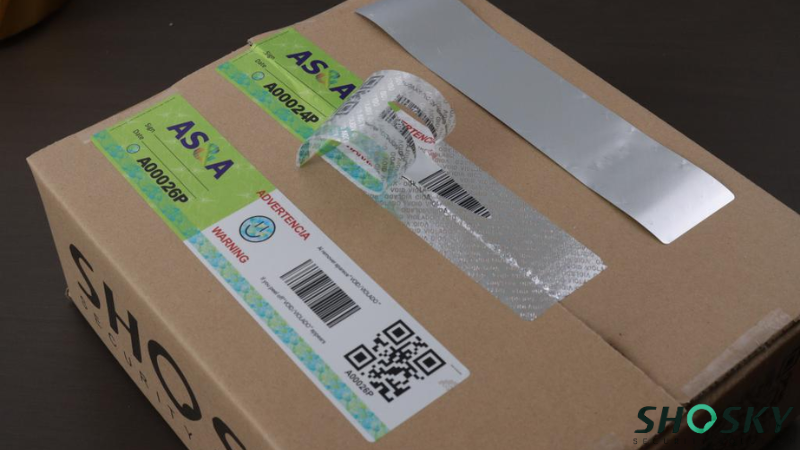
Counterfeiting costs global brands billions each year, especially in luxury goods, pharma, and electronics. To prevent cloning, these security labels link the product’s physical integrity to its digital identity, acting as a first line of defense.
How Shosky prevents QR cloning:
- Physical Destruction: If a counterfeiter peels the QR label off a genuine box, the hidden VOID layer activates, physically destroying the QR code’s readability.
- Anti-Replication: Integration with tamper-evident packaging makes it nearly impossible to replicate security features.
This combination of physical destruction and digital verification makes it nearly impossible for counterfeiters to bypass the brand’s security measures.
5. QR Labels for Customer Engagement and Warranty Registration
Beyond tracking and security, QR labels are powerful engagement tools.
High-value post-purchase functions:
- Digital Manuals: Replace bulky guides with instant video tutorials.
- Smart Warranties: Use “Warranty Void If Removed” QR seals to verify legal repair claims.
- Instant Support: Connect customers directly to support portals or online reordering.
By turning a simple label into a service portal, brands can protect their legal interests while providing a tech-driven experience for the end-user.
Industry-Specific QR Label Solutions for Anti-Counterfeiting
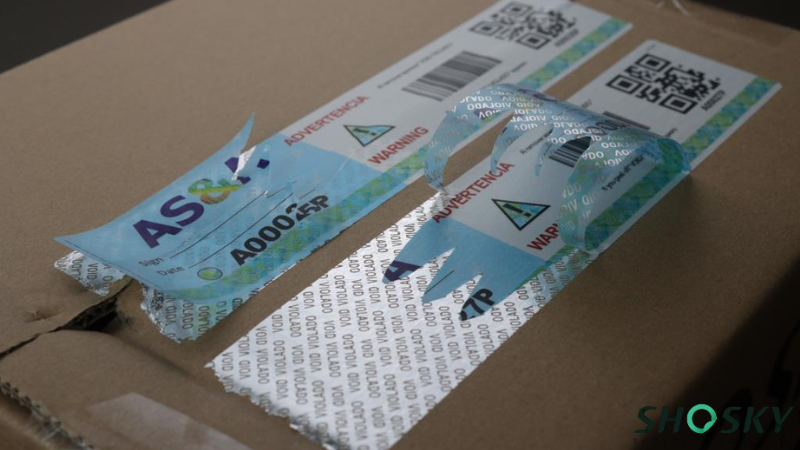
Industries are using QR code security labels to improve collaboration and transparency across teams and external partners. In fact, different industries have discovered unique applications for QR code security labels that address their specific operational needs:
- Manufacturing: Implement QR-linked security seals for production tracking and quality checks. QR codes on parts and assemblies ensure visibility and reduce errors in large-scale operations.
- Pharmaceuticals: Track chain of custody—link batch info, dispense instructions, and patient safety documents to each QR scan. Using PET VOID labels ensures medicine boxes cannot be opened and resealed without obvious evidence.
- Logistics & Warehousing: Apply the QR to pallets, bins, or even storage boxes. Scanning at each stage helps control inbound/outbound shipment control and builds real-time accuracy.
- Electronics: Use labels for warranty activation and service logs. Scan a QR, record details like model number, repair history, and warranty activation without paperwork. Scanning a tamper-evident QR on a motherboard proves the component hasn’t been illegally modified.
These examples prove that QR code security labels are more than just a tracking tool. They deliver visibility, compliance, and customer trust in environments where accuracy is vital. Businesses that adapt QR solutions to their unique needs often find measurable gains in both efficiency and credibility.
Best Practices for Implementing High-Security QR Code Security Labels
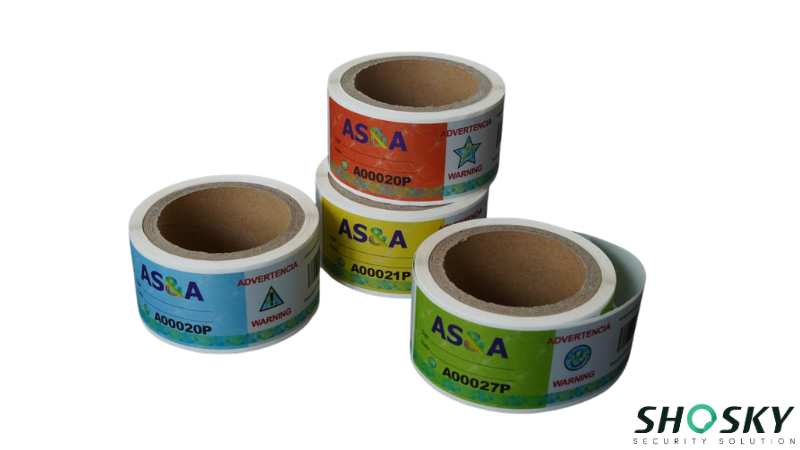
Selecting the right materials and design parameters is critical to ensuring that your security labels remain functional throughout the entire product lifecycle. Standard paper labels often fail in industrial environments due to dust, moisture, or rough handling.
Expert Checklist for Deployment:
- Material Selection: Use destructible eggshell paper or PET VOID films for high-security environments.
- Size & Contrast: Maintain a minimum size (at least 2×2 inches) with high-contrast colors for reliable scanning.
- Industrial Printing: Use resin ribbons to prevent the code from being wiped off with chemical solvents.
- System Integration: Sync every scan into ERP, CRM, or analytics platforms to capture real value.
Following this checklist ensures that your QR code system transitions from a simple tracking tool to a high-performance security asset that resists both environmental wear and intentional tampering.
FAQs
Q1: How secure is the link between physical seals and digital QR data?
The security lies in the “Dual-Layer” approach. High-security QR security code labels are printed on tamper-evident materials; if the physical seal is compromised, the digital link is visually destroyed, preventing the data from being reused on fake goods.
Q2: Can QR code tracking work offline?
Yes, static QR codes can store alphanumeric data (like batch numbers or SKUs) directly on the label for offline use via handheld scanners, but accessing online resources like product info or manuals requires an internet connection.
Q3: What’s the ideal size and format for industrial QR labels?
At least 2×2 inches with high contrast and durable material. Factory-direct manufacturers can laser-print serialized QR codes directly onto PET VOID security labels to withstand harsh logistics environments.
Conclusion
From warehouses to customer-facing applications and brand protection, QR code security labels offer practical solutions that improve workflow efficiency and operational accuracy. They support tracking, compliance, and anti-counterfeiting efforts while also enhancing engagement and transparency. Using the right QR type and following best practices helps businesses prevent errors, provide real-time information, and enhance transparency and product authenticity.
Protect Your Business with QR security Code Labels from Shosky Security
At Shosky Security, we provide durable, tamper-evident QR security code labels that safeguard products, streamline inventory, and ensure authenticity. Contact us today to request a free technical sample kit and let Shosky Security help protect your business with effective QR code labeling solutions!