
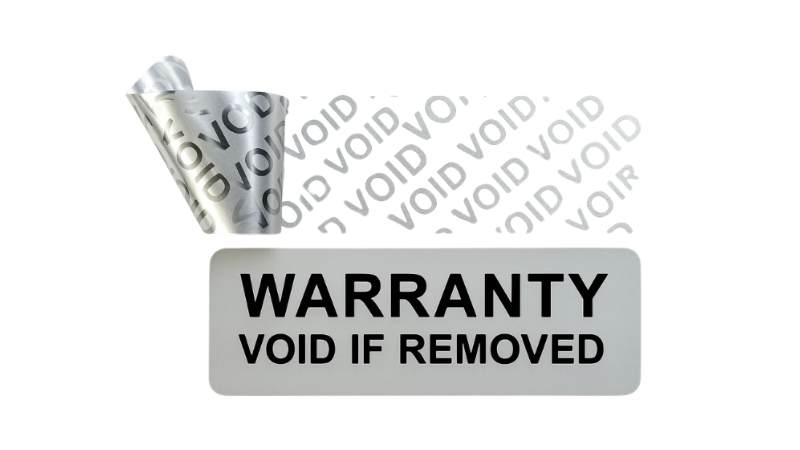
When a high-value product leaves the factory, it needs more than just a user manual and a warranty card. It needs physical protection against tampering, unauthorized repairs, and fraudulent claims.
In 2026, as global supply chains face increasing risks of counterfeiting and unauthorized modifications, deploying industrial-grade warranty-void labels helps ensure the product’s integrity throughout its lifecycle.
These tamper-evident solutions do more than secure key internal components; they provide undeniable legal proof between the brand and the buyer. As product security becomes a strict regulatory requirement across industries, using highly engineered warranty void labels is essential. Here is how they work and why every manufacturing company should consider them.
Why Warranty Void Labels Belong On Your Bill Of Materials
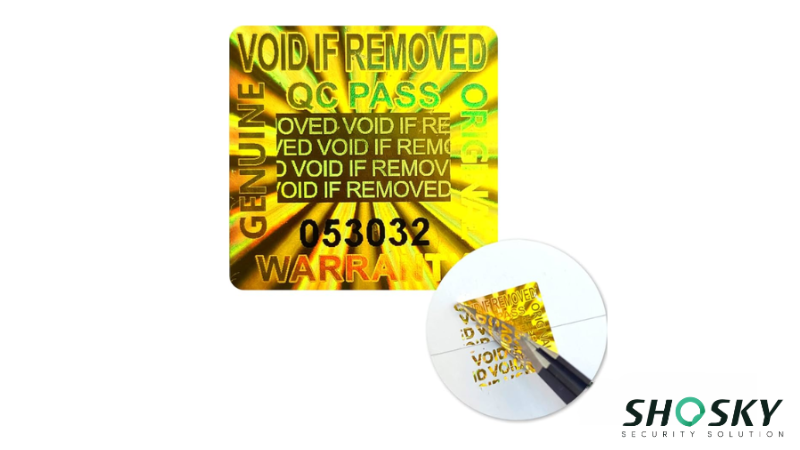
A basic security label mathematically costs a tiny fraction of a cent to a few cents per unit installed. Conversely, a single heavily disputed Return Merchandise Authorization claim routinely runs into massive double- or triple-digit costs per case once you accurately calculate inbound reverse logistics shipping, highly paid technician inspection time, and endless customer service back-and-forth.
That massive financial gap represents the entire business case for highly engineered labels, and it has aggressively gotten significantly wider over the past two years due to rising fraud exposure:
-
Exploding Retail Return Fraud: The National Retail Federation officially estimates that 9% of the 849.9 billion dollars in retail merchandise returned in 2025, roughly 76 billion dollars, was entirely fraudulent.
-
Point of Sale Abuse Analytics: Working directly from highly accurate point of sale transaction data rather than basic survey methodology, Appriss Retail and Deloitte put fraudulent or abusive returns at 15.14% of the total in 2024, significantly up from 13.7% the previous year.
-
Algorithmic Detection Limitations: Roughly 85% of major retailers now heavily use artificial intelligence tools to flag suspicious returns, though only about half consider those digital tools fully effective on their own.
Transaction-level software fraud scoring is incredibly good at catching massive pattern abuse across gigantic volumes, but it possesses a massive blind spot. It is absolutely not good at physically catching a single hardware unit that comes back with a highly legitimate-looking defect claim directly after someone secretly opened the housing and explicitly caused the damage themselves.
That exact physical gap is precisely what a properly specified tamper-evident label completely closes. Furthermore, for buyers sourcing finished goods, a documented tamper-evident process physically tied to serialized batch records serves as a concrete line item on a rigorous supplier scorecard, thereby enabling effortless verification of ISO 9001 and CTPAT compliance.
Label Construction And Chemical Adhesion Matching
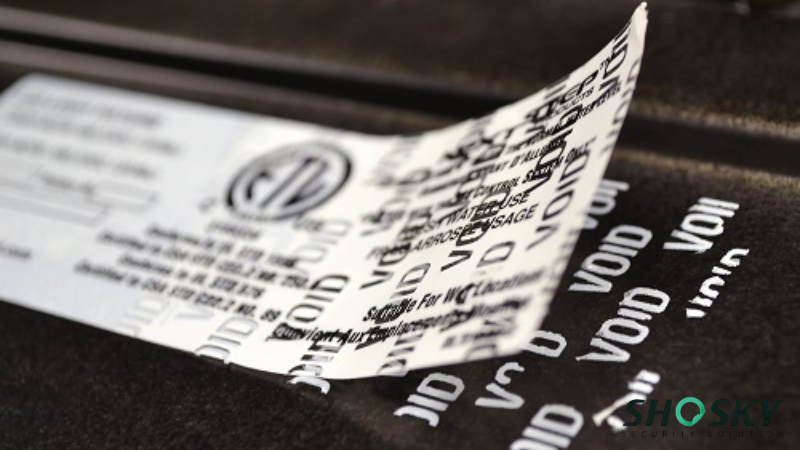
Every warranty void label actively deployed in the global market structurally falls into one of four highly specific construction types, and the chemical differences between them are absolutely not cosmetic. It entirely determines whether the label survives rough transit, whether it can be aggressively counterfeited, and crucially, whether it physically holds up on your specific housing substrate.
Procurement engineers must rigorously evaluate these main architectural categories utilized heavily in modern industrial production:
-
Destructible Vinyl Substrates: Built from an ultra-brittle film that violently fractures into incredibly tiny, totally unpeelable fragments the exact moment removal is attempted, precisely similar to peeling a fragile eggshell. This remains the absolutely safest default for highly textured plastics or radically curved housings where a rigid single-piece film will not seat evenly.
-
VOID Pattern Films: These utilize an advanced differential adhesive system in which the molecular bond to the product surface is engineered to be significantly stronger than the label’s printed layer. A permanent VOID or OPENED mark transfers aggressively onto the housing, even if the label lifts off entirely in one solid piece.
-
Holographic Security Labels: These actively add complex, shifting color matrices and deeply embedded microtext strictly for visual authentication, aimed significantly less at unauthorized repair and far more at sophisticated counterfeit replacement labels.
-
Serialized Custom Labels: These carry a proprietary logo, a high-density 2D barcode, or a sequential serial number that directly links a physical hardware unit to a specific manufacturing batch and digital warranty record for strict audit purposes.
The underlying chemistry behind all four heavily relies on pressure-sensitive acrylic adhesives that aggressively gain molecular tack over time as the solvent flows deeply into microscopic surface irregularities on the housing. This is exactly why atmospheric dwell time is a mandatory spec parameter, absolutely not a suggestion. A label forcefully peeled two hours after factory application behaves completely differently from the exact same label removed after the mandatory 24- to 72-hour curing window.
How 2026 Right To Repair Laws Impact Warranty Void Label
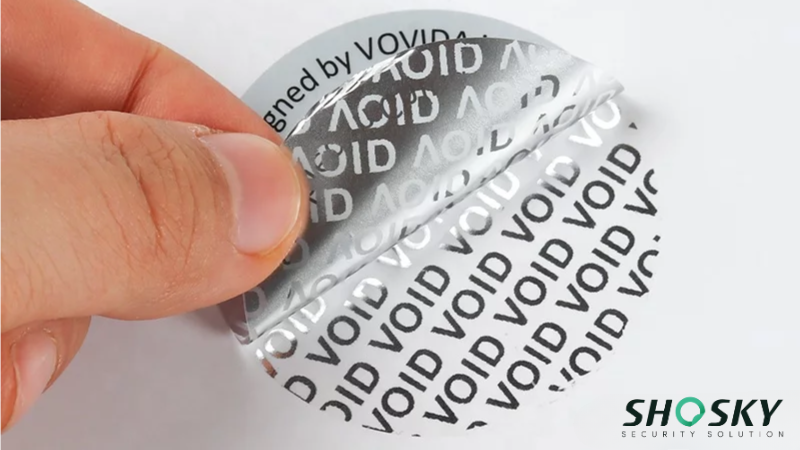
Under the federal Magnuson-Moss Warranty Act, a global manufacturer has never been legally permitted to void a hardware warranty solely because a tiny physical seal was broken.
The Federal Trade Commission has consistently and aggressively enforced this exact position since 2018, stating that a physically broken seal is merely evidence that access occurred, not definitive proof that the specific access caused the exact defect being claimed. Recent aggressive state Right to Repair statutes have officially sharpened that exact legal requirement over the past two years:
California Right To Repair Act
Effective since July 2024, the highly restrictive California Right to Repair Act, SB 244, requires global manufacturers to make physical parts, specialized diagnostic tools, and technical documentation fully available to independent repair providers and device owners for three to seven years.
Oregon Software Bans
Effective specifically for consumer electronics officially manufactured strictly after January 1, 2025, the Oregon Senate Bill 1596 aggressively bans malicious parts pairing. This completely illegal software lock actively prevents a genuinely sourced third-party, or owner-installed replacement part, from functioning correctly.
Colorado Digital Enforcement
Effective January 1, 2026, the expansive Colorado House Bill 24-1121 extends similar legal protections to a broad category of digital electronics and heavy enterprise equipment, including data center hardware, while also strictly prohibiting parts pairing.
Want to Learn More About Warranty Void Labels?
Start With A Low Minimum Order Quantity
Absolutely none of these highly aggressive laws legally restrict your operational use of physical tamper labels. What they do, critically, is narrow the legal gap between claiming the seal is broken and assuming the warranty is automatically void. Under these new regulations, the mere act of removing a warranty void sticker absolutely no longer instantly erases federal consumer protections or automatically validates an RMA rejection.
Consequently, if your current factory warranty terms still aggressively state that any tampering completely voids the warranty in full, that outdated clause is now a massive legal liability. Your corporate RMA denial documentation absolutely needs to forensically show the unauthorized access explicitly caused the specific damage claimed.
Custom Configuration Options For Warranty Void Labels
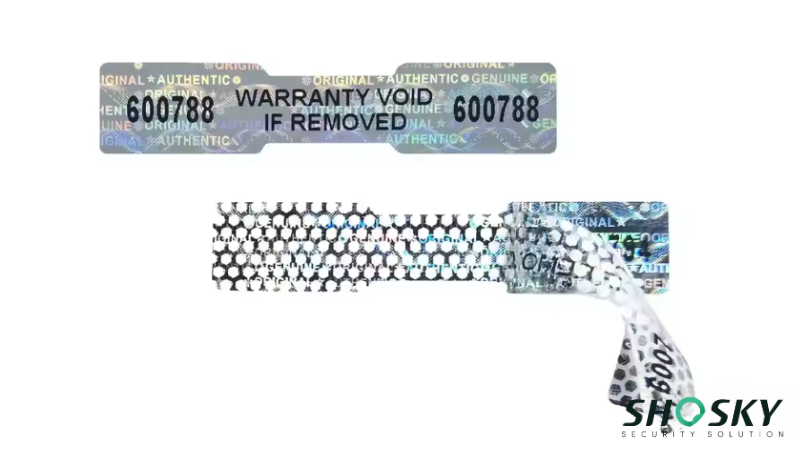
Once the core base substrate is perfectly matched to your hardware housing, the remaining critical procurement decisions largely revolve around exactly how much anti-counterfeiting technology and digital traceability your highly specific risk profile actually justifies mathematically.
To mathematically help your engineering and procurement teams seamlessly compare these highly advanced configurations directly against your actual daily production requirements, rigorously utilize this highly condensed reference matrix:
| Security Layer Upgrade | Technical Implementation | Primary OEM Defense Application |
|---|---|---|
| Holographic Matrices | Custom light diffraction patterns that are exceptionally expensive to physically replicate. | Most useful when organized counterfeit replacement labels present a highly realistic commercial threat. |
| Ultraviolet Fluorescent Inks | Completely invisible under standard normal light but glow intensely under a 365 nm blacklight. | Highly useful for rapid covert verification at a busy receiving dock without tipping off professional counterfeiters. |
| Micro Text Printing | Reads strictly as a solid block line to the naked eye but resolves perfectly under high magnification. | Provides an incredibly low cost secondary forensic verification layer explicitly for deployed field technicians. |
| 1064 nm Laser Serialization | Sequential deep laser etched numeric tracking and high density QR codes. | Ties a physical hardware unit directly to a specific factory batch and digital warranty record. |
| RFID Inlays | Embedding active radio frequency identification allows bulk scanning without direct line of sight. | Matters most on high volume industrial pallets moving rapidly through highly complex global handling points. |
You should explicitly treat this technical table as the absolute starting point for a highly detailed specification conversation directly with your chosen vendor, absolutely not a blind final answer. The perfect combination depends on your exact housing material, your current annual reverse logistics volume, and, definitively, whether massive counterfeiting or unauthorized repair poses the significantly larger financial risk.
Ready to Get Warranty Void Labels for Your Business?
Start With A Low Minimum Order Quantity
Industry Applications Worth Benchmarking Against
Understanding exactly how different high-risk manufacturing sectors deploy these chemical barriers heavily helps procurement teams optimize their own physical security protocols. Elite engineering firms aggressively utilize these precise strategies to prevent catastrophic supply chain fraud.
Consumer Electronics Warranty Void Labels
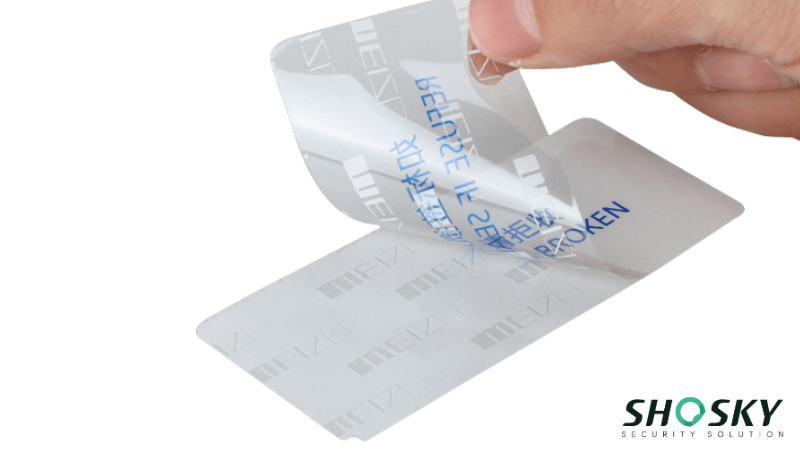
Applying multi-layer holographic or destructible cast vinyl labels directly over delicate chassis seams of electronics aggressively protects internal circuit boards and sealed battery compartments. Deeply embedded 1064 nm laser serial numbers allow a global manufacturer to perfectly trace a specific hardware unit’s physical repair history across multiple RMA attempts.
Medical Equipment Warranty Void Labels
Deploying specific tamper-evident labels directly on sensitive calibration screws and sterile device enclosures of medical equipment conclusively demonstrates that a critical device was not altered outside authorized factory service channels. This actively functions directly alongside existing rigorous federal FDA device traceability requirements.
Automotive Engineering Warranty Void Labels
Global automotive OEMs aggressively use high-tack void labels directly on ECU housings and specialized dealership service panels. This definitively confirms that the factory engine calibration has not been illegally altered outside the authorized dealer network, thereby maintaining strict federal emissions compliance.
Industrial Machinery Warranty Void Labels
Massive heavy machinery manufacturers actively apply extremely durable labels to critical maintenance access panels to strictly enforce ISO aligned factory quality control standards. This builds a well-documented maintenance history that definitively supports enterprise liability protection over decades of grueling service life.
Assembly Line Standards For Applying Warranty Void Labels
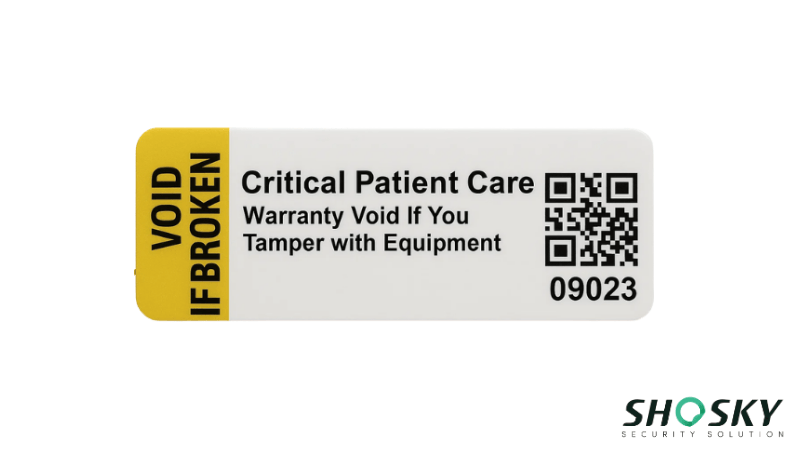
An incredibly high-quality security label physically applied incorrectly mathematically performs absolutely no better than a terribly low-quality one applied correctly. The catastrophic failure point is almost always found directly on the factory assembly line, completely not in the polymer material itself.
To mathematically guarantee zero adhesion failures in the field, your industrial assembly line must rigorously enforce these exact operational protocols:
-
Clean the Surface Meticulously: Always thoroughly wipe the target hardware housing with 99% industrial isopropyl alcohol directly before label application. Microscopic factory machine oil, airborne dust, or silicone mold release agent residue remains the single most incredibly common root cause of premature chemical label failure.
-
Allow Proper Atmospheric Dwell Time: Strictly apply labels at a stable room temperature and allow 24 to 72 hours for the highly aggressive acrylic adhesive to fully reach its maximum molecular bond strength before the product physically ships.
-
Match The Adhesive To The Substrate: Standard PET void films work incredibly well on perfectly smooth bare aluminum or glass. Heavily textured or low-surface-energy plastics absolutely require highly aggressive, destructible vinyl formulations, or the label will simply peel off intact.
-
Avoid Applying Over Contamination: A physical label carelessly placed directly over factory grease chemically bonds so weakly that it can be instantly lifted off completely intact utilizing extremely mild heat, completely defeating the physical security purpose.
-
Do Not Modify The Chassis After Labeling: Any structural or mechanical shift immediately after factory application can trigger a false VOID mark, instantly creating a massive dispute over an RMA claim that was never fraudulent.
Aggressively documenting these strict application steps directly inside your factory assembly work instructions is exactly what permanently turns a vulnerable label program into a highly audit-ready security process.
FAQs
Q1: How do OEMs definitively choose between destructible vinyl and VOID-pattern film for hardware housings?
It heavily comes down to physical surface geometry. Destructible cast vinyl is the absolute safer default for heavily textured plastics or radically curved housings. VOID pattern films require a perfectly flat, highly smooth surface, such as bare aluminum, to securely seat and reliably transfer their chemical mark.
Q2: Which warranty void labels actually work on low-surface-energy (LSE) plastic hardware?
Standard water-based labels absolutely fail on LSE plastics like industrial polypropylene. Procurement teams must explicitly specify a high tack, heavily modified solvent acrylic-based system engineered for slick surfaces and strictly require verified ASTM D3330 peel adhesion data before purchasing.
Q3: Are warranty void labels legally binding forensic evidence strictly on their own in a B2B dispute?
They represent highly documented physical forensic evidence of tampering, which carries massive weight in a dispute, but they are absolutely not a standalone legal instrument. Their ultimate evidentiary value heavily depends on your underlying warranty contract language connecting the access to the actual hardware defect.
Q4: Does our current warranty language create compliance risk even if our warranty void labels are highly secure?
Yes. If your terms illegally state that a broken seal alone voids the warranty in full, that language is a massive liability under the federal Magnuson-Moss Warranty Act and 2026 Right to Repair statutes. The physical label and the warranty clause must absolutely be reviewed as a single cohesive system.
Q5: What exact technical information do you need from us to successfully quote a physical sample kit?
We strictly require your exact housing material polymer, approximate annual order volume, and any specific optical customization requirements like RFID or laser serialization. We will immediately send a highly targeted sample kit perfectly matched to your actual use case, along with a written specification sheet.
Boost Brand Trust with Shosky Security Warranty Void Label Options
Strong warranty practices start with strong protection, and warranty void labels deliver exactly that. These tamper-evident solutions help businesses stop tampering, lower return fraud, and reassure customers that products meet original standards. No matter what industry you work in, adding high-quality warranty labels can make a real difference!
Don’t leave your products unprotected. Partner with Shosky Security for high-quality warranty void label options that deliver real security and brand protection. Contact us to explore our free sample offer and see how Shosky Security can help you build stronger product trust.