
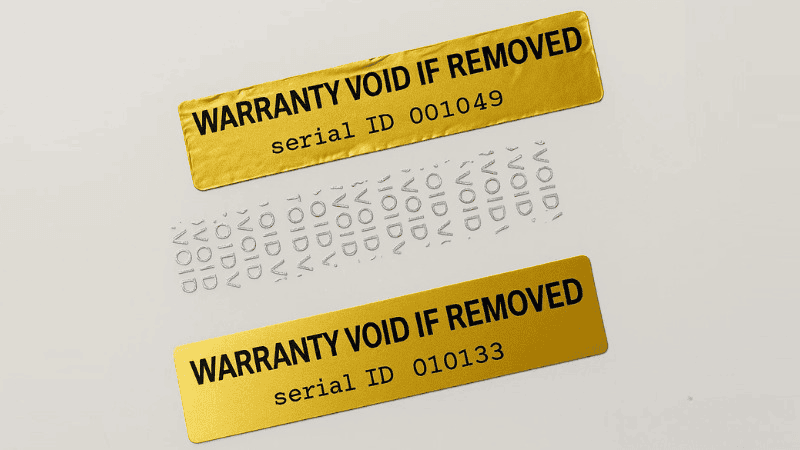
Short answer: absolutely no, not automatically, and definitely not just because the warranty void sticker is broken. Under federal law, a manufacturer absolutely cannot void your entire warranty simply because a tiny security seal was removed or damaged. They legally still have to definitively show that whatever you did under the housing directly caused the specific problem you are now claiming under warranty.
That said, the warranty void sticker is heavily engineered so removal is chemically permanent and visually obvious. Since some companies still blatantly deny claims based on a broken seal alone, it helps a lot to understand both adhesive chemistry and consumer law before you reach for a screwdriver.
We actively manufacture these exact labels for a living, directly supplying manufacturers across global electronics and medical devices. That unique manufacturing position gives us a significantly different angle on this legal question than most basic consumer guides, since we know exactly what happens at the microscopic adhesive level when one of these labels is physically disturbed.
What Is A Warranty Void Sticker Exactly
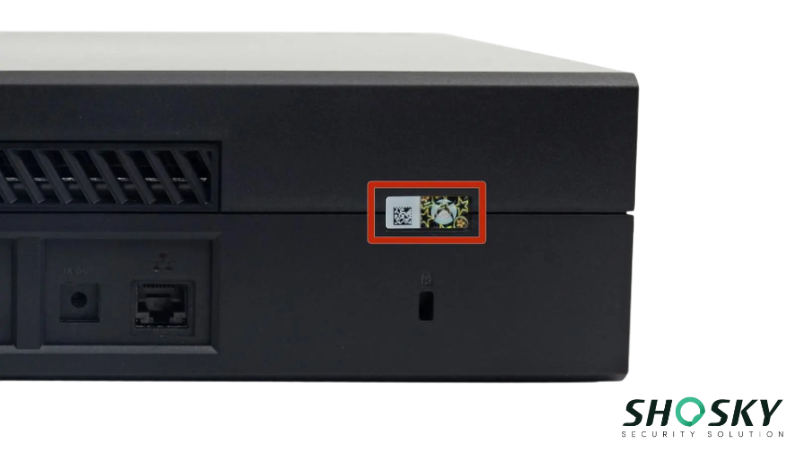
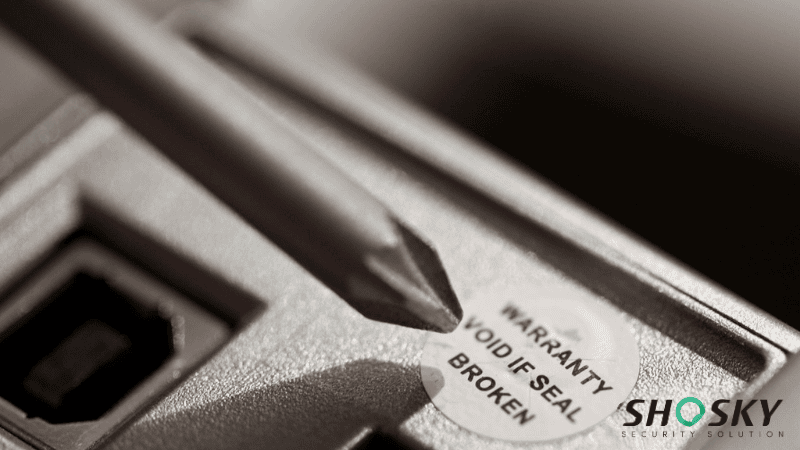
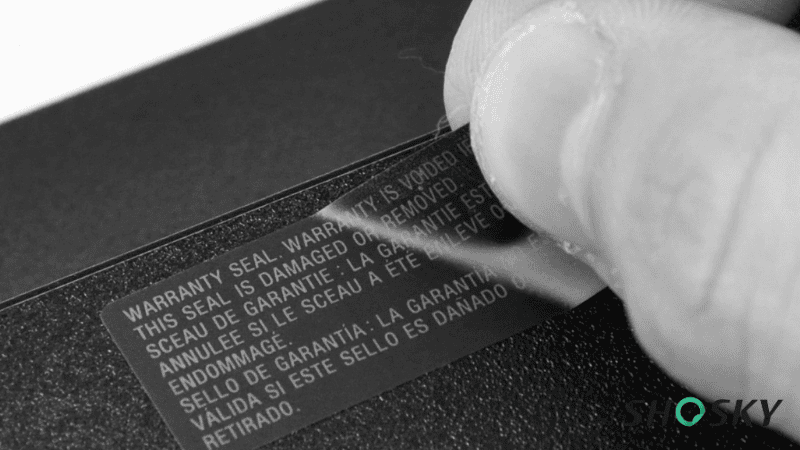
A warranty void sticker, sometimes referred to as a VOID label or a tamper seal, is a specialized adhesive label placed directly over a screw, plastic seam, or access panel on a manufactured product. It is chemically designed to do one highly specific thing: leave unmistakable, absolutely permanent forensic evidence if someone opens the housing.
To successfully achieve this physical security, industrial label manufacturers engineer these seals utilizing two primary material methods:
-
Destructible Vinyl Labels: These are manufactured from an ultra-brittle material that violently fractures into incredibly tiny, unpeelable pieces the moment you try to lift them, much like peeling a fragile eggshell. Once broken, it physically cannot be reapplied or made to look intact again.
-
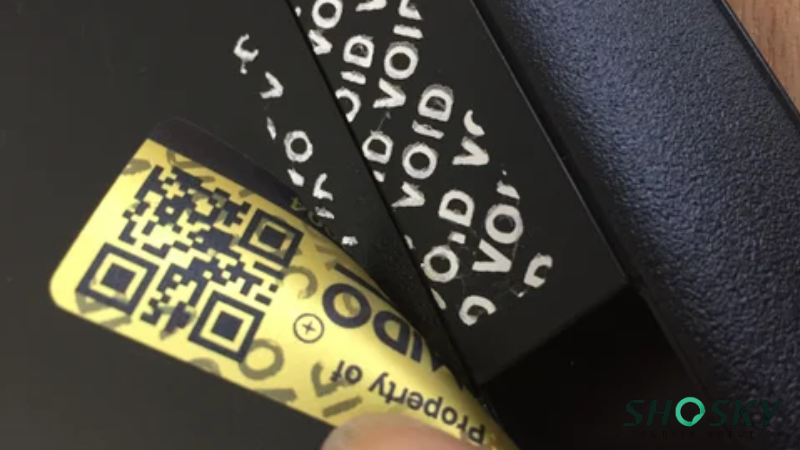
VOID Pattern Labels: These use an advanced chemical adhesive that is deliberately much stronger than the label’s printed polymer surface. When you forcefully peel it, a hidden VOID or OPENED message completely transfers permanently onto your product, even if the label itself miraculously lifts off in one solid piece.
Regardless of which specific chemistry is deployed, the label is absolutely not designed to be removed cleanly. That is the entire fundamental point. It permanently exists to definitively answer one exact question for the manufacturer later during a repair inspection: was this specific hardware housing opened after it originally left the factory floor?
Is It Actually Illegal To Remove A Warranty Void Sticker
No, it is absolutely not illegal for you, as a consumer, to physically remove a warranty void sticker. What is strictly restricted is exactly what the manufacturer can legally do simply because you removed it. The most relevant regulation regarding this issue is the Magnuson Moss Warranty Act, a powerful federal law that strictly governs consumer product warranties in the United States.
This act explicitly prohibits a company from illegally conditioning your warranty on using exclusively their highly expensive authorized repair service, and it totally prevents them from voiding your warranty just because a physical seal was broken, without further forensic proof. The FTC actively enforces this law and has been incredibly explicit about this exact issue for several years.
In April 2018, the FTC aggressively sent formal warning letters to 6 massive electronics and gaming companies. As reported by major news outlets, the agency officially told them that their restrictive warranty void sticker language was highly likely illegal because it falsely implied the warranty was automatically void due to a broken seal, with absolutely no requirement to show the physical tampering actually caused any real damage.
In July 2024, the FTC went significantly further and sent strict warning letters to eight more massive companies. Three of these corporations were cited specifically because their physical warranty void stickers were maliciously placed in locations that actively blocked routine consumer maintenance, like accessing a simple battery or a basic dust filter, rather than just securing deep internal repairs.
The FTC’s incredibly consistent position completely comes down to this core legal fact: a company can legally deny a specific warranty claim only if it can definitively show that your unauthorized access explicitly caused the exact physical defect you are currently claiming. They absolutely cannot deny your entire warranty, or flatly refuse to even evaluate your claim, just because a tiny warranty void sticker is broken.
What Happens After Removing A Warranty Void Sticker?

While the law heavily protects you, a few different operational issues can arise when you break the seal, and they are definitely not all in your favor. It is highly worth being incredibly realistic about exactly how customer service departments react.
When you intentionally break a warranty void sticker, you should aggressively prepare for these four potential outcomes:
-
Permanent Access Documentation: The label flawlessly documents that you physically opened the product, permanently. If your product later miraculously develops a totally unrelated problem, such as a factory screen defect that has absolutely nothing to do with what you accessed, the broken seal alone should not, under the laws described above, legally be grounds for denial.
-
Legitimate Claim Denial: If your physical access caused the actual problem, for example, you were poking around near a delicate battery connector, and now the device will not charge at all, the company can completely legitimately point to the broken seal as forensic evidence and legally deny that specific claim.
-
Incorrect Corporate Denials: Some companies still incorrectly deny claims. FTC warning letters are, unfortunately, not instant daily enforcement, and plenty of frontline retail-level staff are simply blindly following an outdated internal corporate policy that has absolutely not kept pace with federal FTC guidance.
-
Absolutely No Clean Reversals: You cannot undo it. Whether the label violently shatters or leaves a deeply printed chemical mark, there is absolutely no clean way to make a removed tamper seal look completely untouched again.
If you are absolutely not confident that the internal repair or physical inspection you are about to attempt is truly worth creating that permanent forensic record, it is always strongly worth considering an authorized service channel before voiding the physical seal.
2026 Right To Repair Laws Impacting Warranty Void Stickers
Beyond the powerful federal Magnuson Moss Act, a rapidly growing number of local states have aggressively passed their own Right to Repair laws. These laws are specifically designed to make it drastically easier for everyday consumers and independent repair shops to fix products without illegally losing all consumer protections in the process.
To help consumers understand their local legal protections, here is a detailed breakdown of the most aggressive state-level Right to Repair legislation currently impacting hardware warranties:
| State Jurisdiction | Effective Date | Key Consumer Protection Mandate |
|---|---|---|
| California | Jul-24 | Requires manufacturers to explicitly provide repair parts, specialized tools, and technical documentation to consumers for up to seven years. |
| Oregon | Jan-25 | Strictly bans parts pairing, making it highly illegal for manufacturers to utilize software to reject genuine third party replacement components. |
| Colorado | Jan-26 | Massively extends anti parts pairing protections strictly covering a vast range of everyday digital electronics and consumer hardware. |
None of these incredibly powerful laws explicitly say you can completely ignore a warranty void sticker with absolutely zero consequences. What they aggressively do is legally reinforce, at the highest state level, that a massive manufacturer’s obligations to support independent repair and strictly honor a factory warranty absolutely do not disappear just because you or a local independent shop physically touched the internal product components.
Want to Learn More About Anti-Tamper Security Solutions?
Explore Shosky’s Security Blogs
What To Do If A Warranty Void Sticker Causes A Claim Denial
If a massive corporate company completely denies your entire warranty claim and the absolute only reason given is “the seal was broken” or “the sticker is missing”, with absolutely no technical explanation of exactly how that physically caused the specific hardware problem you are reporting, you have a few highly reasonable next steps to forcefully fight back.
Requesting Technical Proof For Warranty Void Sticker Disputes
You must immediately ask the customer service representatives to explicitly explain the technical connection between the broken seal and the specific hardware defect you are reporting. A highly vague reference to generic tampering, without a specific causal explanation, is exactly the kind of illegal denial the FTC has repeatedly flagged as totally improper. Do not accept a generic rejection; aggressively demand technical documentation.
Documenting Your Warranty Void Sticker Claim
Always submit your entire warranty request in writing, either via email or through a well-documented support ticket portal. This ensures there is an undeniable legal paper trail of exactly what the corporate representative officially told you and exactly when the conversation occurred.
Telephone calls can be easily denied, but written documentation of an illegal warranty rejection gives you significant leverage for further escalation.
Filing FTC Complaints Over Warranty Void Sticker Issues
Actively file a formal complaint directly with the FTC at reportfraud.ftc.gov if you genuinely believe the corporate denial aggressively violates the federal Magnuson Moss Warranty Act.
Individual consumer complaints heavily contribute to the massive data pattern the FTC actively uses to quickly decide who receives the absolute next round of severe federal warning letters. Additionally, leverage your state attorney general’s office if you reside in a state with active Right to Repair protections.
FAQs
Q1: Can I safely remove a warranty void sticker myself without getting in legal trouble?
You will absolutely not get in legal trouble for physically removing it yourself. What strictly matters is whether whatever you were actively doing under the housing explicitly caused the specific problem you later claim under warranty. If it definitively did not, the broken seal alone should absolutely not be valid grounds for a full denial under U.S. federal law.
Q2: Are warranty void stickers actually illegal for massive manufacturing companies to use?
No, the physical stickers themselves are entirely legal to deploy. What is heavily legally restricted by the FTC is improperly treating a broken seal as automatic, standalone forensic proof that completely voids your entire product warranty, without definitively showing the tampering explicitly caused the specific hardware defect.
Q3: Can I carefully put the warranty void sticker back or perfectly make it look completely untouched?
Absolutely no. These complex labels are highly specifically chemically engineered so this process cannot be done cleanly. Destructible versions violently shatter into totally unusable microscopic fragments, and highly engineered VOID pattern versions permanently leave a heavily printed mark on the product surface even if the label lifts off entirely whole.
Q4: Does carefully opening my smartphone to replace a battery void the whole warranty?
Not automatically. Under the strict Magnuson Moss Warranty Act and, heavily depending on your specific state, additional modern Right to Repair protections, a massive company generally has to definitively show that your specific battery repair directly caused the specific issue you are actively claiming, not just that you merely opened the device.
Q5: What exactly should I do before I physically remove one of these security seals myself?
Aggressively check whether your specific product is still highly within a time window where an authorized factory repair would be completely free or incredibly low cost, since that totally avoids the broken seal question entirely. If you actively proceed anyway, keep meticulous records and high-resolution photos of the exact product’s condition before you start.
Empowering Consumer Rights And Hardware Security
Understanding your consumer rights empowers you to actively challenge illegal warranty denials, but navigating these strict hardware policies remains complex. Whether you are repairing personal electronics or running an independent repair shop, knowing exactly how a warranty void sticker functions prevents massive corporations from utilizing generic security labels to entirely avoid their legal obligations.
If you are an enterprise manufacturer actively trying to align your corporate warranty terms and physical label specifications with the latest 2026 Right to Repair rules without violating FTC guidelines, Shosky Security can seamlessly help. Contact our technical engineering team today to strictly request exact physical specifications, secure highly competitive wholesale volume pricing, and definitively upgrade your corporate product security labels.