
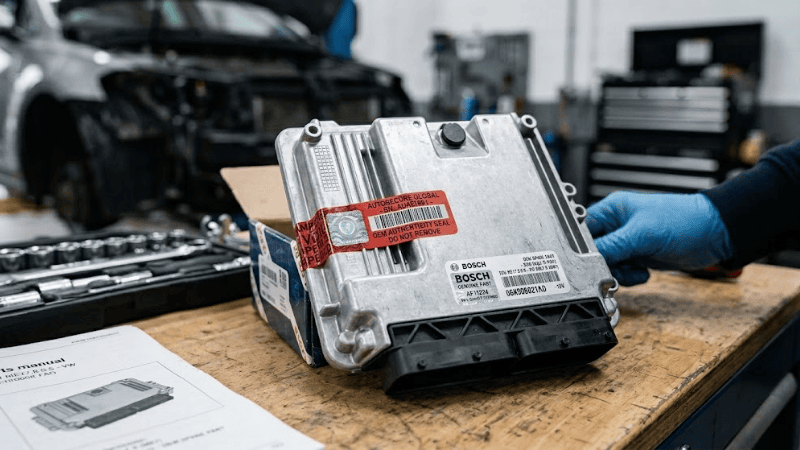
The total loss to the automotive industry from counterfeit parts is accelerating. In fiscal year 2024, U.S. Customs and Border Protection seized over 211,000 counterfeit parts. Yet the authorities warn that the actual volume entering the market is likely far greater.
Behind every fake brake pad, counterfeit sensor, and swapped airbag is a supply chain that failed to stop it. Not at the border, but at the box. The packaging itself is where the fight is lost or won. In this article, we will break down the three physical layers where OEMs are most vulnerable and explore the precise tamper-evident solutions that protect automotive spare parts security across global logistics.
The Threat of Return Fraud to Automotive Spare Parts Security
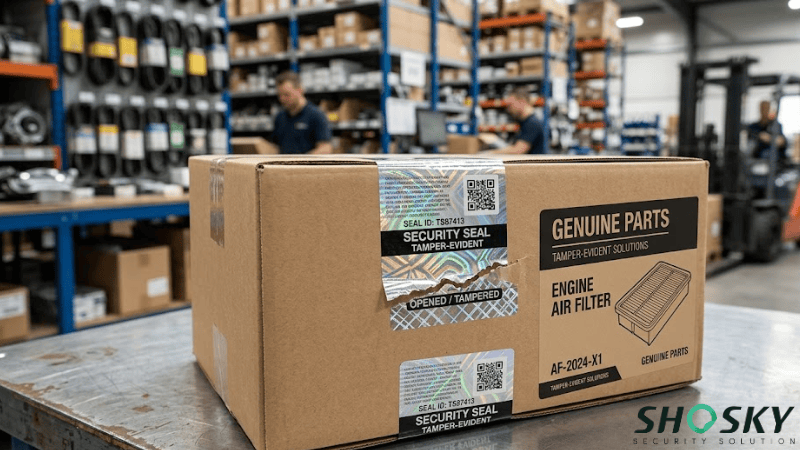
Findings from the U.S. Department of Commerce and the OECD indicate that counterfeit auto parts entering the U.S. market carry an estimated financial impact of over $3 billion annually. When packaging fails to signal tampering, OEMs face severe consequences across three main areas:
- Return Fraud and Part Swapping: The most common and least visible attack. A mechanic or consumer removes a broken or fake car part, places it inside genuine OEM packaging, and returns it to the distributor for a full refund.
- Financial and Reputational Damage: The cost goes far beyond the price of the component itself. Warranty disputes, massive recall campaigns, and brand damage accumulate quickly, and they all carry the OEM’s name regardless of where the fake originated.
- Human Safety Hazards: The human cost is the starkest reality. Homeland Security Investigations recorded at least three fatalities and two life-altering injuries linked to counterfeit parts between June 2023 and March 2024 alone.
Every one of those fraudulent parts passed through packaging that failed to show evidence of interference. Implementing highly visible tamper-evident solutions at both the macro logistics level and the micro packaging level is the only way to close that gap before a fake part reaches a vehicle.
Multi-layered Physical Defenses for Auto Parts Packaging
Standard clear tape and generic stickers cannot protect high-value components. OEMs must implement specific, highly engineered physical defenses at every structural layer of the packaging.
1. Logistics and Container Transport with High-Security Seals
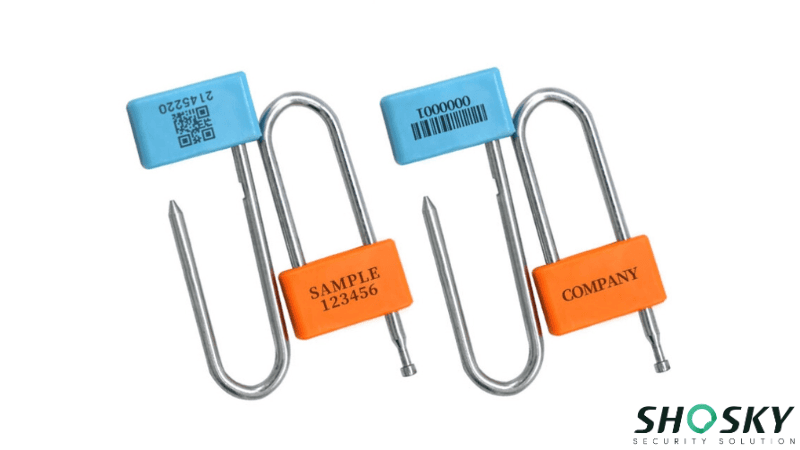
The first point of physical vulnerability is the international shipping container or intermodal truck trailer. Automotive logistics often involve moving heavy engine blocks or bulk pallets of precision electronics across complex multi-modal hubs. During these long transit periods, cargo is frequently left unattended at ports or rail yards.
Relying on standard mechanical padlocks is entirely insufficient for border crossings and leaves the cargo exposed to organized theft rings. High-security automotive seals are necessary to mitigate the risks. Here are the key functions of them:
- ISO 17712 Compliance: Heavy-duty bolt and cable seals provide the “High-Security” (H) rating required for international automotive freight and C-TPAT regulations.
- Anti-Spin Technology: Prevents sophisticated drilling attacks on container latches during overnight stops or port storage.
- Fray-Cut Steel Cables: Flexible cable seals adapt to misaligned trailer doors while ensuring that cut wires cannot be rethreaded or disguised.
- Serialized Audit Trails: Laser-etched serial numbers create a permanent digital link between the container and the shipping manifest.
By strictly securing the container at the point of origin, high-security seals ensure that the bulk shipment reaches the regional distribution center completely uncompromised. This establishes a trusted baseline for the entire logistics network. Once this outer perimeter is verified, warehouse teams can safely process the cargo down to the individual box level.
2. Outer Carton Protection with OEM Parts Tamper Tape
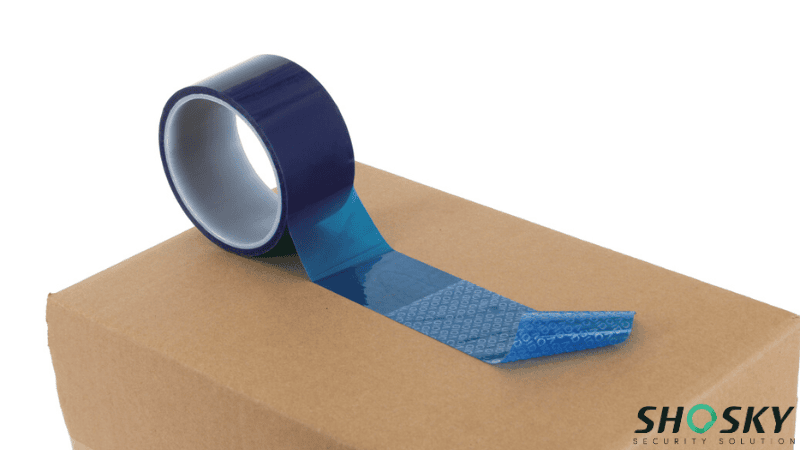
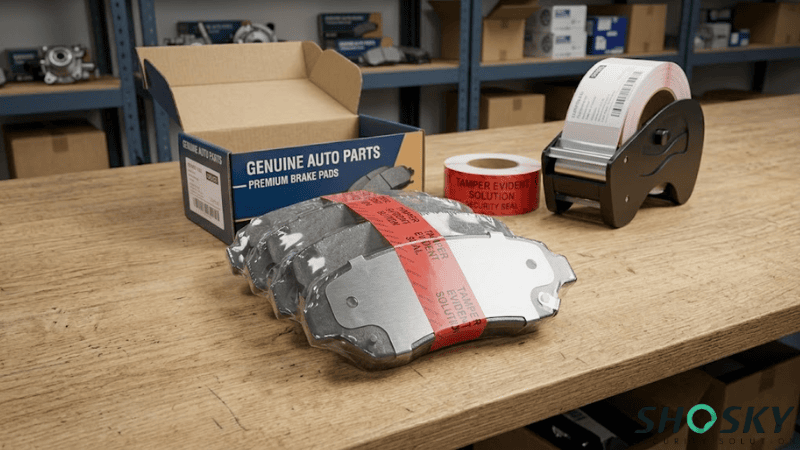
Heavy automotive components like brake rotors and alternators are shipped in reinforced corrugated boxes. These boxes go through constant handling in warehouses, trucks, and storage areas. Without proper security, outer packaging becomes an easy target for tampering or return fraud in the automotive supply chain.
Warehouses that use custom-branded OEM parts tamper tape add a formidable security layer to cartons. Other key functions of OEM parts Tamper Tape include:
- Thermal Resistance: Resists sophisticated heat-based lifting attempts during covert tampering.
- Mechanical Adhesion: Holds firmly under transport pressure and heavy pallet stacking friction.
- High-Visibility Indicators: Supports fast visual checks during warehouse security inspections.
- Bulk Scalability: Works across bulk vehicle shipments without losing visual clarity or adhesion.
This tape shifts the outer packaging from a simple container into a monitored security layer. Any attempt to open the box forces a permanent “VOID OPENED” mark on the surface. That makes it incredibly difficult to reintroduce a swapped part into the supply chain without immediate detection.
3. Component-Level Authentication with Genuine Parts Void Labels
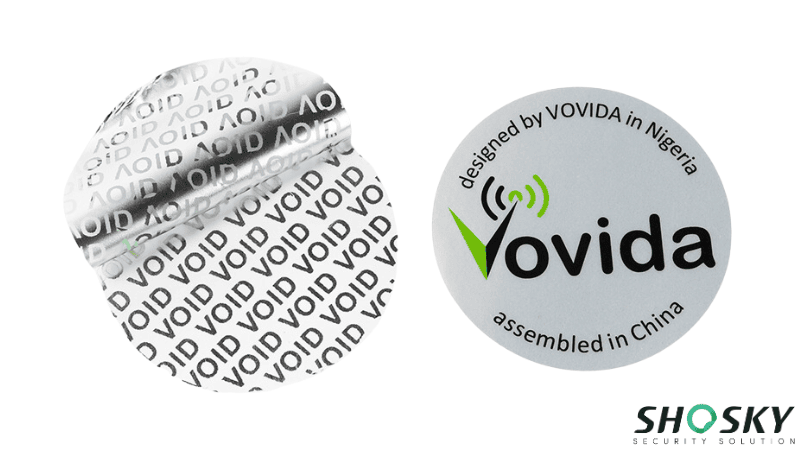
Once the outer carton is opened, smaller automotive components such as sensors, control modules, and precision electronic accessories become fully exposed. These items are often packed in anti-static bags or molded plastic cases, which are incredibly easy to replace or reseal if not properly secured.
At this level, inner void labels carry the primary responsibility for maintaining security. Key functions of inner void labels:
Key functions of inner void labels:
- Zero-Residue Technology: Leaves no adhesive residue on sensitive electronic sensor housings or control modules.
- Handling Stability: Maintains the tamper-evident bond under rough handling pressure and continuous movement.
- Electronic Authentication: Helps strictly monitor the authenticity of sensitive vehicle electronics and airbags.
- Rapid Sorting Verification: Supports immediate visual security checks in high-speed warehouse sorting facilities.
These labels form a vital second barrier inside the packaging system. Even if outer protection is completely bypassed, the inner layer still reveals any attempt to interfere with the contents, rendering the packaging impossible to restore.
Engineering Standards for Automotive Spare Parts Security Solutions
Standard consumer packaging fails rapidly in the automotive industry. Vehicle components endure a brutal supply chain journey, facing exposure to hydraulic fluids on the factory floor, extreme temperature shifts in air cargo, and heavy mechanical friction during global transit.
A security seal is completely useless if it degrades or falls off before reaching the dealership. To qualify as true “automotive-grade,” tamper-evident solutions must be chemically and physically engineered for these exact variables.
| Area | Requirement | Role in Automotive Security |
|---|---|---|
| Adhesive system | Acrylic-based, chemical-resistant | Maintains bond under oil, grease, and hydraulic fluids |
| Thermal resistance | -40°C to +120°C range | Stable performance across logistics and engine environments |
| Surface compatibility | Metal, plastic, coated cartons | Supports diverse automotive parts and accessories |
| Tamper response | Visible void activation | Shows interference immediately after opening |
| Label integration | Serial and QR-based labels | Enables tracking and verification across OEM systems |
| Environmental durability | Dust and moisture resistance | Prevents breakdown during storage and transit |
| Mechanical stability | Resistance to friction and pressure | Keeps seals intact during repeated handling |
By mandating these exact material specifications, OEMs ensure that their security packaging does more than just survive transit. It transforms passive packaging into an active, verifiable data point.
When a serialized barcode remains perfectly scannable despite grease exposure, and a void label activates flawlessly after months of warehouse storage, dealership mechanics can authenticate parts instantly.
This seamless integration of physical durability and digital tracking is what ultimately closes the loop on counterfeit parts, ensuring true end-to-end security across the automotive network.
Expert Tip from Shosky Security: The Total Supply Chain Audit
Automotive spare parts security is only as strong as its weakest link. A high-security bolt seal on the container is useless if the inner parts can be swapped without detection. Conversely, a high-tech void label on a sensor provides no value if the entire shipping box is stolen due to poor carton sealing. For maximum risk mitigation, OEMs should mandate a “Three-Point Specification”: ISO 17712 seals for transport, branded tamper tape for cartons, and non-transfer labels for individual components.
FAQs
Q1: What is return fraud in the automotive parts industry?
Return fraud occurs when a mechanic or consumer purchases a genuine OEM part, removes it from the box, replaces it with a broken or cheap counterfeit component, and returns the sealed box for a full refund.
Q2: Why do OEMs use non-transfer void labels on electronics?
Automotive electronics and sensors are highly sensitive. Non-transfer void labels reveal the tamper-evident “VOID” message entirely on the plastic label itself when peeled. This provides undeniable proof of tampering while leaving absolutely zero sticky residue on the expensive vehicle component.
Q3: Can tamper-evident tape survive engine grease and oils?
Yes, provided it is manufactured with the correct chemistry. Premium automotive security tapes utilize advanced acrylic adhesives that resist degradation from motor oil, transmission fluids, and heavy industrial grease.
Q4: How do serialized seals help with warranty claims?
Serialized seals provide a unique tracking number linked to an OEM database. If a part fails and is returned under warranty, the manufacturer can scan the seal to verify that the part is actually theirs and not a counterfeit swap, saving millions in fraudulent claims.
Secure Automotive Supply Chains End-to-End with Shosky’s Solutions
The automotive industry continues to face pressure from counterfeit parts and return fraud, but most risks trace back to one weak point: packaging. Without visible tamper indicators, substitution can happen anywhere along the chain without detection.
Layered protection across cartons, inner packaging, and serialized seals creates a structured defense that supports traceability from warehouse to installation. At Shosky Security, we provide automotive-grade tamper-evident solutions that support OEMs in reducing fraud and improving traceability. For inquiries or product details, contact us today.