
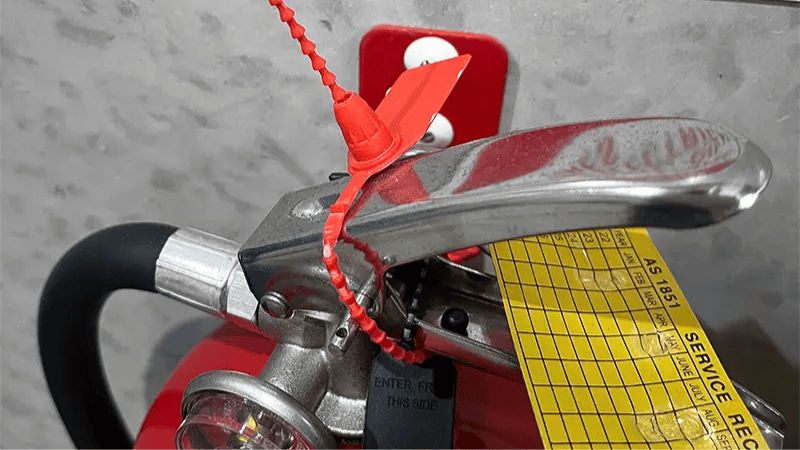
According to NFPA industrial fire safety reports, fire extinguishers successfully control small fires 75% to 90% of the time, but only when they are present, accessible, and properly maintained. A large number of workplace fire incidents involve extinguishers that either failed or were inaccessible when needed. In many cases, the issue is not the absence of equipment.
It’s missing inspection records, broken tamper seals, or skipped monthly checks that only show up during an emergency. This is why tamper-evident solutions like fire extinguisher inspection tags and security seals matter. Without them, even working equipment can fall out of compliance. This article explains how to use both correctly.
Understanding NFPA Requirements for Routine Fire Extinguisher Monthly Inspections
Commercial facilities must strictly adhere to NFPA 10 standards and OSHA 1910.157 regulations regarding portable fire extinguishers. These codes mandate two distinct levels of maintenance: an annual tear-down inspection by a certified fire protection technician, and a routine 30-day visual inspection performed by internal facility staff.
To satisfy the Authority Having Jurisdiction (AHJ) during a surprise audit, this monthly internal inspection must verify three core elements comprehensively. First, inspectors must confirm operational readiness by ensuring the pressure gauge needle sits perfectly in the green operating zone while checking the cylinder, hose, and nozzle for corrosion, dents, or blockages.
Second, they must establish chain-of-custody documentation by ensuring that the physical inspection tag features chronologically accurate dates and the inspector’s initials to demonstrate an uninterrupted timeline of maintenance.
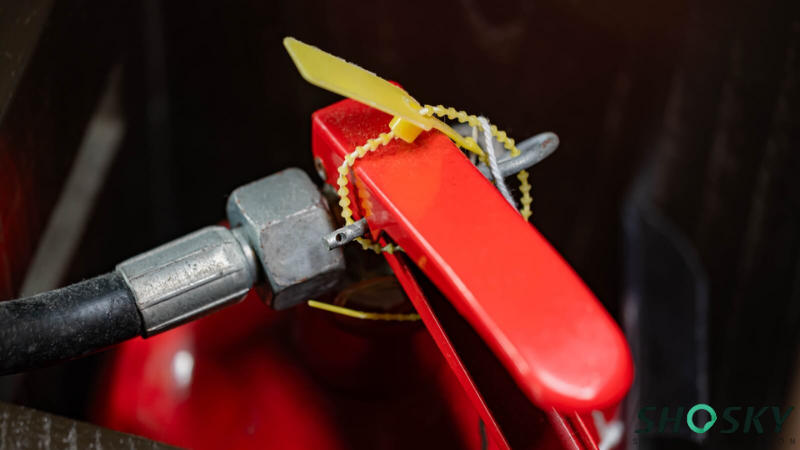
Finally, strict anti-tamper verification is required: the metal safety pull-pin must be secured with an authorized, low-break-strength tamper-evident seal to verify that the unit has not been covertly discharged or vandalized since its last check.
Ensure NFPA Compliance with Certified Fire Extinguisher Seals
Start With A Low Minimum Order Quantity
Step by Step: How to Fill Out a Fire Extinguisher Tag Accurately
Fire extinguisher tags contain important inspection details. Incorrect records may create compliance problems, failed inspections, or insurance disputes. Accurate tags also help customers and inspectors review equipment history quickly. Here is how to fill them out properly:
Step 1: Record the Exact Inspection Date
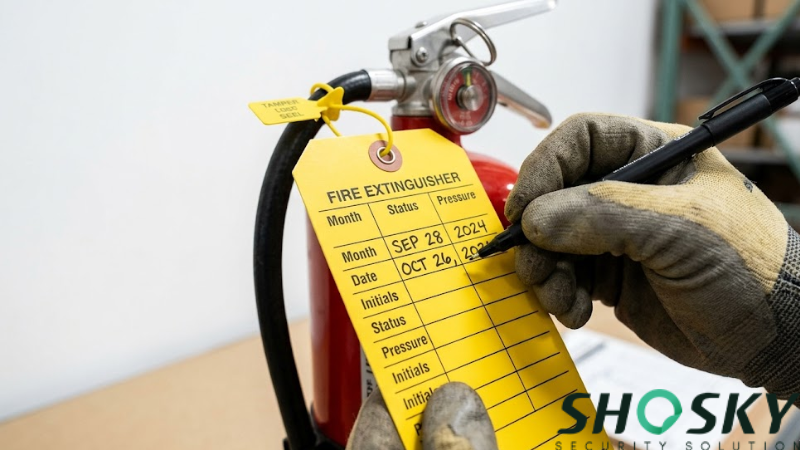
The first step in completing fire extinguisher inspection tags is recording the exact inspection date with chronological accuracy. Most tags include a monthly inspection grid with spaces for dates, initials, and punch marks that build a continuous record over time. This timeline is the first thing auditors review to confirm that no inspection cycle has been missed.
Chronological consistency carries real weight during compliance checks. A skipped month, missing entry, or unclear date can signal a lapse in maintenance history.
In regulated environments, this can lead to OSHA penalties, failed audits, and insurance complications, especially when inspection records cannot prove uninterrupted coverage. During this step, inspectors should visually confirm the following details:
-
Total Visual Clarity: Ensure the physically punched hole or heavily written date remains entirely easy to read, with absolutely no visual ambiguity.
-
Chronological Accuracy: Meticulously mark the exact current month and year to strictly avoid devastating audit timeline gaps.
-
Historical Reference Availability: Actively confirm that previous monthly inspection records remain fully visible on the printed grid for continuous tracking.
-
Environmental Material Durability: Aggressively check for severe ultraviolet fading or heavy water damage, and actively replace the degraded tag with a heavy-duty, waterproof synthetic version designed for outdoor or highly corrosive industrial environments.
Fire equipment distributors often recommend waterproof inspection tags for industrial environments. Warehouses, shipping facilities, and outdoor sites regularly expose fire equipment to dust, oil, moisture, and rough handling conditions.
A durable label should resist fading and damage over time. Fire extinguishers located outdoors or inside busy industrial areas usually require stronger tag material for long-term use.
Step 2: Authorizing with Inspector Initials
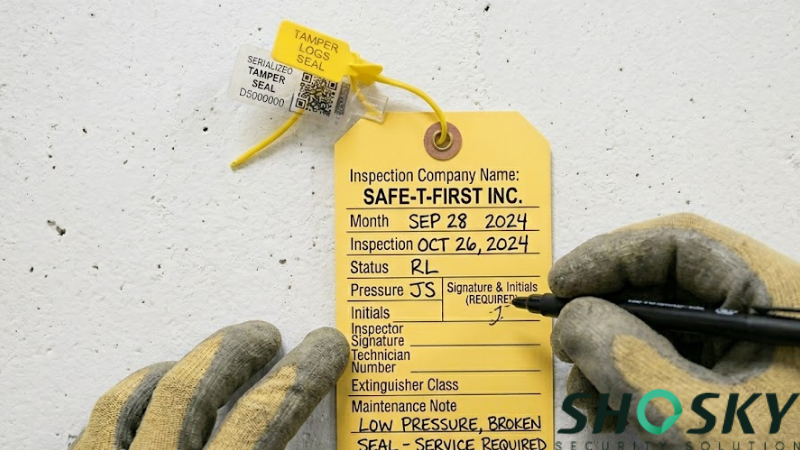
After completing the inspection, the inspector must apply initials or a signature to the tag. This step establishes the Chain of Accountability, linking the inspection record directly to the individual responsible for confirming the extinguisher’s condition.
This signature is not a formality. In the event of a fire incident, it becomes part of the legal and compliance record used to determine responsibility.
If an extinguisher fails during use, inspection history and the signing technician’s identity may be reviewed to establish whether proper maintenance was carried out by the service provider or accepted by the facility owner. Most fire extinguisher tags also include:
-
Certified Technician Identification: Apply completely clear initials to officially and legally take total responsibility for the monthly safety check.
-
Corporate Vendor Details: Strictly ensure the specific third-party inspection company name and emergency contact information remain fully legible.
-
Equipment Hazard Classification: Visually verify the specific extinguisher class exactly matches the documented chemical hazard zone requirements.
-
Maintenance Action Notes: Meticulously log any highly specific testing parameters or minor mechanical service actions aggressively performed during the active site visit.
A complete and traceable record allows businesses to manage multiple extinguishers across different locations with clear accountability. Many facilities also pair signed inspection tags with serialized tamper seals and service reports to strengthen audit readiness.
Step 3: Logging the Extinguisher Status
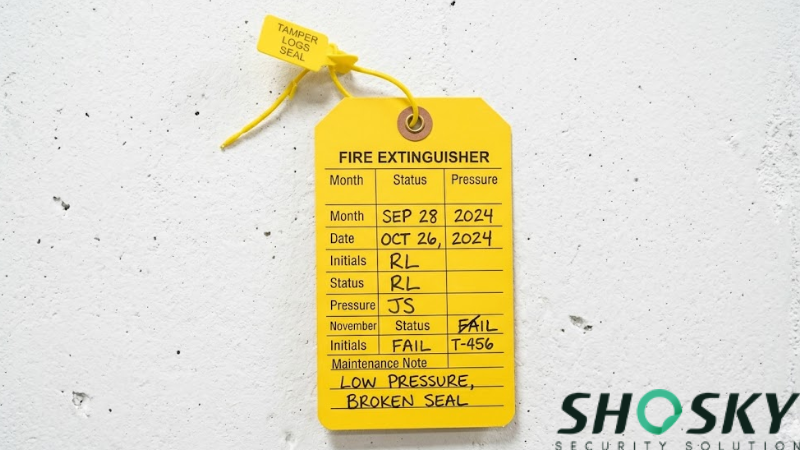
The next step involves accurately recording the physical condition of the fire extinguishers. Fire extinguishers must remain in peak working order at all times. A failed pressure gauge or damaged hose dramatically reduces effectiveness during a sudden emergency.
Beyond visual checks, inspectors must physically ensure the extinguisher has not been used or tampered with since its last monthly inspection. Minor external damage can disrupt internal pressure and weaken discharge ability. Inspectors must specifically check and meticulously log:
-
Analog Pressure Irregularities: Visually verify the mechanical gauge needle sits absolutely firmly directly in the green operational pressure zone without any microscopic dropping.
-
Hardware Degradation Levels: Rigorously inspect the external steel cylinder surfaces and heavy rubber hose assembly for any severe chemical corrosion or physical blockages.
-
Security Hardware Compromise: Definitively confirm the stainless steel metal safety pin remains absolutely locked, and the polymer security seal is not physically broken or completely missing.
Any visible signs of active chemical leakage, severe blunt physical impact, or missing mechanical components must be documented immediately and in detail for urgent service action. Removing compromised units from the active warehouse floor instantly prevents catastrophic failure during a massive thermal emergency.
Step 4: Securing the Tag to the Cylinder
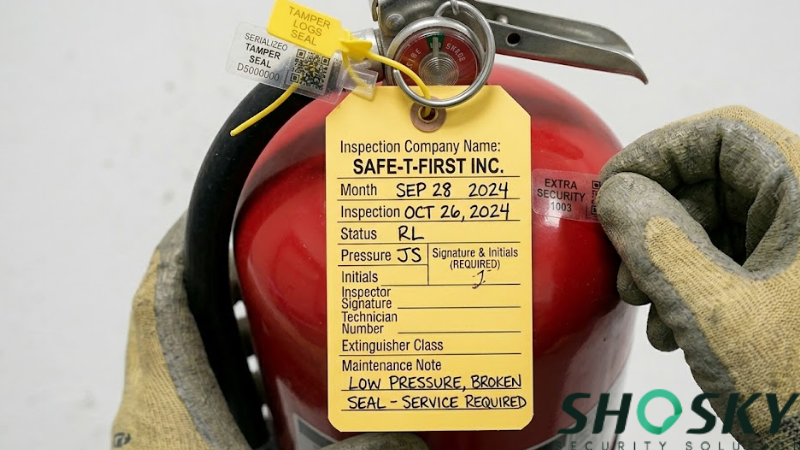
After completing the inspection tags, the final step involves attaching them securely to the cylinder neck or handle assembly. The tags must remain highly accessible without ever interfering with rapid emergency use.
During this critical final attachment phase, safety inspectors must flawlessly execute the following secure mechanical protocol:
-
Simultaneous Mechanical Threading: Aggressively pass the polymer seal directly through the metal safety pull pin and the heavily reinforced tag grommet hole at the exact same time.
-
Authorized Seal Application: Strictly utilize a certified tamper-evident seal expressly manufactured with a precisely designated low break strength.
-
Clearance Lever Positioning: Position the physical tag completely cleanly to mathematically ensure it never physically entangles with the operating discharge lever.
-
Physical Pull Testing: Actively perform a light manual tug test to mathematically guarantee the tag cannot accidentally slip off during active transit or rough daily handling.
Flawlessly executing this final securing step completely locks in the corporate safety protocol. Without a properly updated and highly secure tag, perfectly functional fire extinguishers will be automatically considered noncompliant during intense state fire marshal audits or strict corporate insurance reviews.
The Critical Role of Tamper Seals in Fire Safety
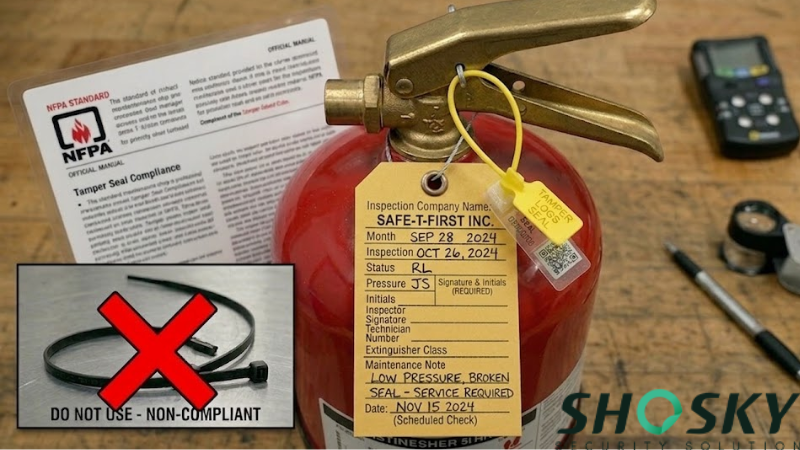
Inspection tags record the chronological history of fire extinguishers, but tamper seals serve the equally critical function of protecting the physical equipment itself. Once an authorized seal is threaded through the pull pin, it acts as an immediate visual indicator that the extinguisher has not been used, opened, or disturbed since its last inspection.
This small component carries a massive impact on safety and compliance by actively discouraging unauthorized handling. A highly visible seal deters personnel from casually pulling the safety pin or testing the extinguisher without leaving irreversible evidence behind.
Furthermore, because these seals are specifically engineered to snap under a precise amount of force, a broken or missing seal instantly signals to safety officers that the extinguisher may be depressurized and requires immediate professional servicing.
During formal audits, OSHA inspectors rely heavily on the integrity of these seals to confirm that the unit remains untouched and fully meets National Fire Protection Association (NFPA) emergency readiness expectations. Together, the tag and the seal create a cohesive safety system: the fire extinguisher inspection tag documents the maintenance history, while the seal guarantees the physical integrity of the fire suppression agent inside.
How to Choose the Right Fire Extinguisher Tamper-Proof Seals
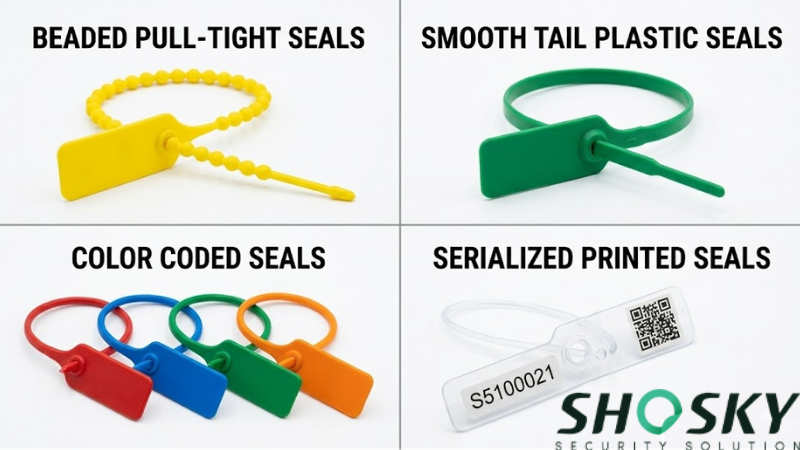
Different fire extinguishers require different tamper seals depending on the environment, inspection process, and shipping conditions. Businesses should consider break strength, material quality, compliance standards, and price before purchasing stock.
The following table breaks down the main options in a practical way for day-to-day use:
| Seal Type | Design Strength | Ideal Environment | Key Advantage | Common Limitation |
|---|---|---|---|---|
| Beaded Pull Tight Seals | Medium, controlled break range | Offices, retail spaces, schools | Fast emergency access with a clear break point | Not ideal for heavy industrial wear |
| Smooth Tail Plastic Seals | High durability, reinforced lock body | Warehouses, factories, logistics hubs | Resists accidental pulls and rough handling | Slightly harder to remove during urgent response |
| Color Coded Seals | Medium strength with visual tracking focus | Multi-site facilities, scheduled inspection systems | Simplifies monthly inspection identification | Color tracking needs consistent record discipline |
| Serialized Printed Seals | Medium to high, traceable locking system | Regulated industries, audit-heavy environments | Strong compliance tracking with unique ID marking | Requires accurate log matching to avoid confusion |
Each seal type supports a different level of operational control. Facilities with frequent movement of fire equipment often need stronger seals, while audit-driven environments rely more on traceability and record matching.
A proper choice comes down to balancing safety access with compliance control. Fire extinguishers must stay secure during daily use, but still remain easy to access when a real emergency demands fast action.
FAQs
Why can I not use a standard zip tie on a fire extinguisher?
Standard industrial zip ties are manufactured with high tensile strength and cannot be broken by hand. In a fire emergency, a standard zip tie will prevent a person from removing the safety pin. You must use specialized, low-break-strength tamper-evident seals that easily snap at roughly 11 to 15 pounds of pulling force.
How often must fire extinguisher tags be checked?
According to NFPA 10 and OSHA regulations, fire extinguishers must undergo a quick visual inspection every single month. This includes checking the pressure gauge, ensuring the tamper seal is fully intact, and properly initialing and dating the physical inspection tag attached to the cylinder.
What happens if a fire extinguisher tamper seal is broken?
If a tamper seal is found broken or missing during a monthly check, the extinguisher must be immediately removed from service. It needs to be fully inspected by a certified professional to determine if it was discharged, then properly recharged, re-pinned, and sealed with a brand new tamper-evident security tag before returning to service.
Complete Your Fire Safety System Today with Shosky Security’s Solutions
Fire extinguisher inspection tags and tamper seals are not just paperwork or small add-ons. They form a connected system that helps businesses track inspection history, confirm equipment condition, and maintain compliance during audits. When both are used correctly, they reduce confusion during emergencies and support faster on-site decision-making.
At Shosky Security, we offer durable tamper-evident security solutions, serialized seals, and inspection label solutions for fire equipment distributors, maintenance providers, and commercial clients across the USA and Canada. Contact us today for pricing, stock availability, and support with your fire equipment inspection process.