
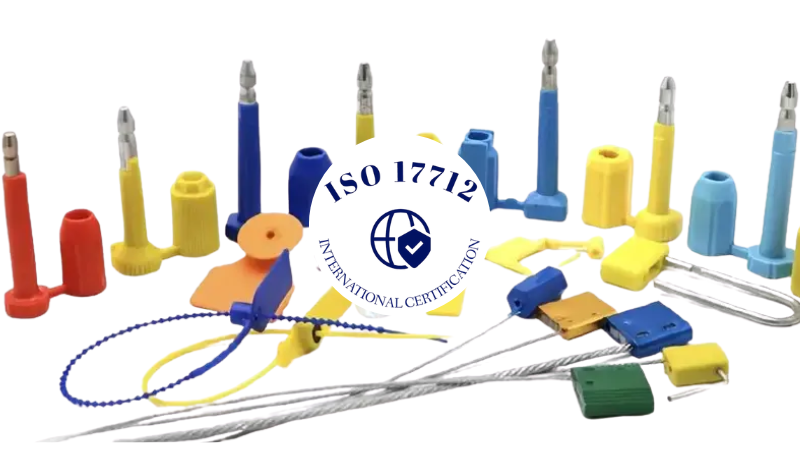
Cargo crime continues to rise across global supply chains. According to the BSI and TT Club’s 2024 Cargo Theft Report, 71% of incidents occurred while goods were in transit. Key regions like North America and parts of Asia have reported increasing use of seal tampering and unauthorized resealing as a tactic to avoid detection during inspections.
To address this, ISO 17712-certified security seals have become mandatory for shippers moving goods across borders. These seals are not just a formality. They are integral components of global security programs like C-TPAT and play a direct role in customs clearance and physical cargo protection. This guide breaks down exactly what these mechanical seals are and how to implement them effectively.
What is the ISO 17712 Standard for Security Seals
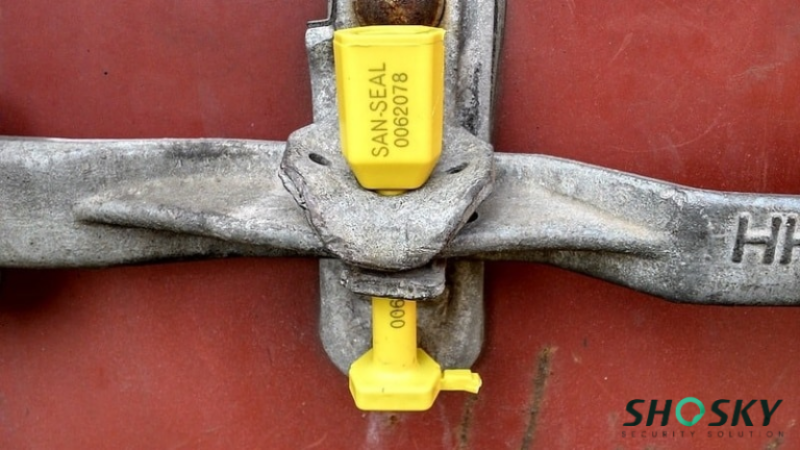
ISO 17712 is an international standard developed by the International Organization for Standardization. It defines the specific mechanical requirements and testing procedures for security seals used on cargo containers.
To ensure a seal can withstand the harsh realities of global trade, the standard mandates compliance across three core areas:
- Mechanical Testing: Seals must undergo rigorous physical testing to determine their ultimate failure points under extreme force.
- Tamper Evidence: Manufacturers must design the seals to ensure any covert entry attempts leave permanent, irreversible visual footprints.
- Manufacturer Auditing: The production facilities themselves must be ISO 9001 certified and regularly audited to prevent serialization duplication.
The ISO 17712 standard is backed by input from customs bodies, transportation experts, and global security organizations. Its requirements are recognized globally because they create a rigorous baseline for seal strength, durability, and tamper resistance, regardless of the country of origin or destination. This universal benchmark helps streamline border checks and reduce costly security disputes.
Furthermore, compliant security seals are an absolute prerequisite for participating in international trade frameworks, which include the following programs:
- C-TPAT (Customs-Trade Partnership Against Terrorism): Enforced by U.S. Customs and Border Protection for all domestic port entries.
- AEO (Authorized Economic Operator): The global standard for streamlined customs clearance across European and Asian borders.
- WCO SAFE Framework: The foundational security baseline utilized by international customs authorities to flag high-risk containers.
Integrating these validated seals into your supply chain is the only proven method to maintain fast-track clearance status with international customs agencies.
The 3 Official Classifications of ISO 17712 Container Seals
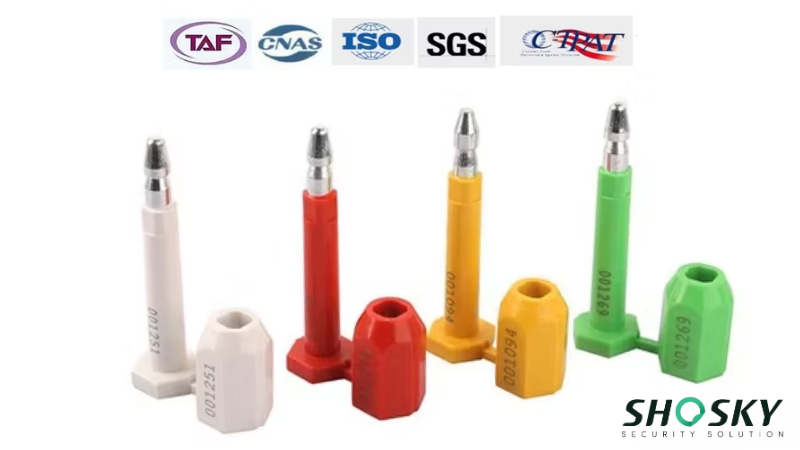
ISO 17712 classifies container seals into 3 distinct categories based on their mechanical strength, laboratory testing criteria, and tamper-resistance levels. These classes are engineered to match the specific risk profile and monetary value of the cargo being transported.
Below are the three official classifications, integrated with their third-party laboratory certification requirements:
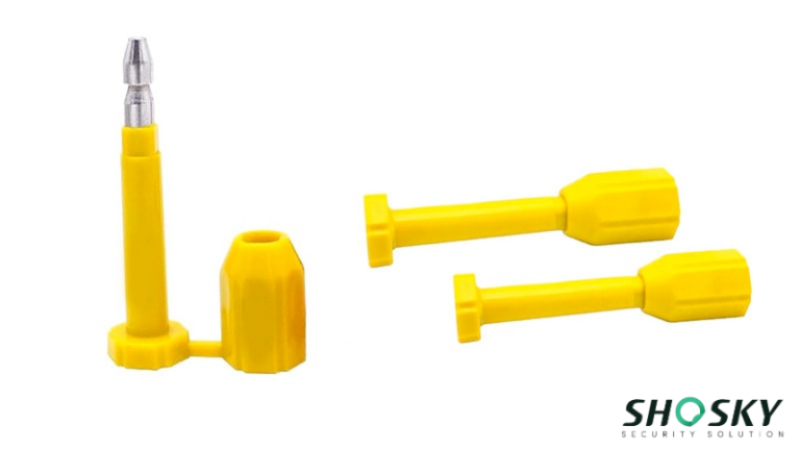
- High-Security Seals (H Class): Built specifically for international intermodal shipping, these heavy-duty barrier seals must withstand a minimum tensile pull force of 2,248 lbs (10.0 kN). Certified by ISO/IEC 17025-accredited laboratories, bolt seals in this category must feature a solid carbon steel pin with a minimum locking head diameter of 0.71 inches (18mm) to prevent tool-assisted pull-through attacks.
- Security Seals (S Class): These seals provide intermediate mechanical strength and highly visible tamper evidence. They are engineered to withstand a tensile force threshold between 500 lbs and 2,247 lbs. Typically utilized for domestic overland logistics, bonded warehouse transfers, and regional multi-drop trucking, they are manufactured using a blend of high-grade aluminum and specialized aircraft cables.
- Indicative Seals (C Class): Manufactured primarily from lightweight polypropylene or thin tin-plated steel, these devices are not designed to resist physical force. They fail at thresholds below 500 lbs and serve exclusively as a visual indicator to reveal tampering on internal utility meters, clinical medical kits, retail inventory bins, and airline catering carts.
To guarantee that any chosen seal class stands up to real-world scrutiny, every compliant device must incorporate the following visual tracking elements:
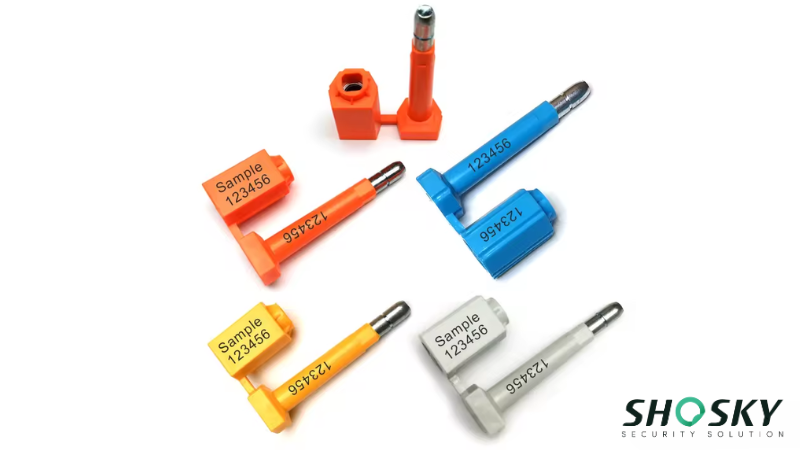
- Permanent Laser Serialization: Unalterable, matching numbers must be etched onto both the locking pin and the barrel to prevent part-substitution.
- Anti-Spin Technical Design: High-security bolt seals must utilize a notched configuration that prevents the pin from spinning within the barrel under high-speed drill attacks.
- Custom Identification Seals: Incorporating proprietary corporate logos or 2D data-matrix barcodes allows for instantaneous digital tracking via mobile scanners.
Implementing these proprietary traceability protocols completely eliminates the possibility of a criminal using generic off-the-shelf replacements to hide their theft.
ISO 17712 2010 vs. 2013: Why Clause 6 Tamper Testing Matters
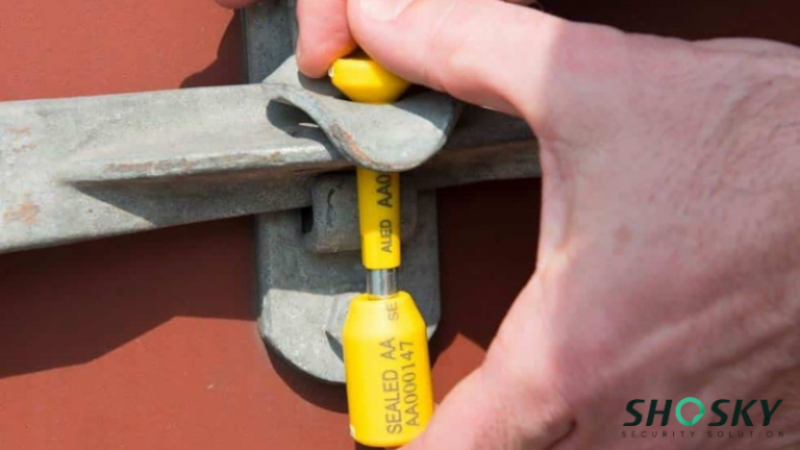
The ISO standard has gone through critical updates to address modern supply chain threats. While early iterations focused purely on raw physical strength, the 2013 update introduced Clause 6, establishing a revolutionary methodology for independent tamper-evidence testing.
| Standard Version | Mechanical Strength Focus | Clause 6 Tamper Testing | C-TPAT / Global Acceptance |
|---|---|---|---|
| ISO 17712:2010 | Basic testing for tensile and impact forces. | Not Included | Non-compliant. Obsolete for modern international shipping. |
| ISO 17712:2013 | Enhanced metrics with H-class fixed at 2248 lbs. | Mandatory Integration | The absolute regulatory standard required by global customs. |
| Current 2026 Status | Strict enforcement of accredited lab reports. | Audited Tamper Evidence | Mandatory for high-risk cross-border transport. |
Reviewing this compliance evolution is critical for any international procurement team. Customs programs like C-TPAT demand absolute compliance with the 2013 version.
Sticking to pre-2013 seals exposes your company to severe noncompliance penalties, voided cargo insurance policies, and extensive delayed port clearance. Supply chain management must always verify that its supplier strictly adheres to these current protocols before placing a bulk order.
When Are ISO 17712 Seals Strictly Required in Global Trade
ISO 17712 seals are rarely optional in global trade. They are strictly enforced by international law, corporate insurance policies, and maritime contracts. Their utilization goes far beyond routine logistics security.
High-security mechanical barriers are strictly required across the following global shipping scenarios:
- Cross-Border Intermodal Freight: Every maritime container crossing international waters must utilize an H-class seal applied at the factory origin.
- C-TPAT Port Entries: Any container bound for a United States port of entry without a verified H-class seal faces an immediate quarantine.
- Regulated Industry Cargo: High-theft asset networks, such as aerospace electronics, defense weaponry, and pharmaceuticals, mandate physical seals by default.
Failing to apply a compliant seal can cause disastrous financial repercussions. When a container arrives with a missing or mismatched seal number, customs officials view it as an active security breach. This results in the container being held for manual inspection, delaying delivery schedules and accumulating massive port demurrage fees.
Ready to Get ISO 17712 Security Seals for Your Cargo?
Start With A Low Minimum Order Quantity
How to Select and Deploy ISO 17712 Seals (5-Step Checklist)
Procuring high-quality hardware is only the first phase of supply chain security. To prevent catastrophic procurement errors, logistics teams must follow a precise procurement and operational checklist.
Here are the five practical steps required to successfully select and deploy your security seals:
1. Evaluate Cargo Valuation and Risk Hotspots
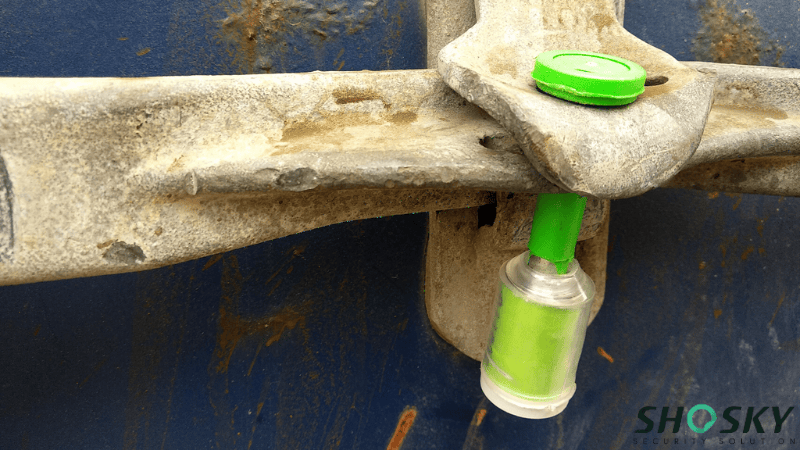
Your security investment must directly scale with the total financial risk of your shipment. It is critical to calculate the total retail or raw material value of your container contents prior to hardware selection.
High-value cargo demands maximum structural resistance. When routing goods through known cargo theft hotspots, implementing heavy barrier options is nonnegotiable. Key information to prioritize during risk evaluation includes:
- Total Cargo Valuation: Establish a clear monetary threshold where high-security bolt seals become mandatory.
- Transit Route Hazard Profiles: Identify documented pilferage corridors, long port dwell times, or high-risk border crossings.
- Budget Optimization: Utilize lighter S-class options only for low-risk domestic transfers to reduce operational costs.
By aligning your hardware choices with these specific environmental parameters, you prevent overspending while securing vulnerable supply chain points.
2. Determine Bolt Seals vs. Cable Seals Form Factors
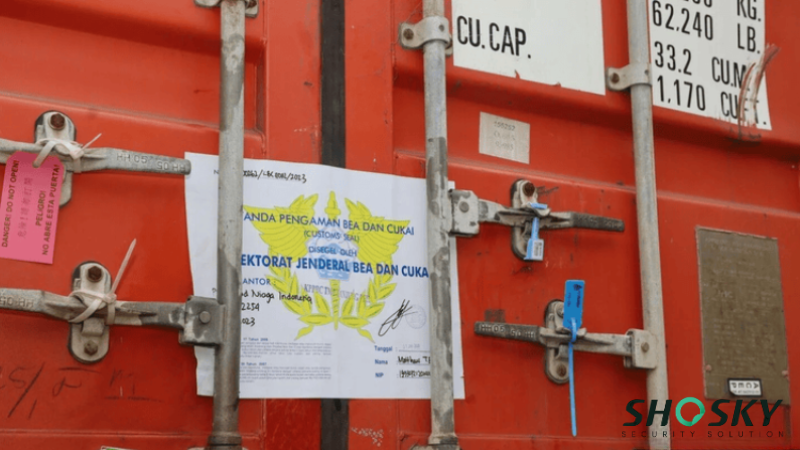
You must match the structural geometry of the seal to the physical locking mechanism of your transport container. Different container designs require distinct locking form factors to prevent bypass vulnerabilities.
Rigid bolt seals provide unyielding strength for traditional intermodal shipping container doors. However, certain logistical setups require flexible solutions. Key factors to consider when choosing form factors include:
- Locking Bar Alignment: Use straight steel bolt pins exclusively for containers with perfectly aligned locking apertures.
- Aperture Flexibility: Deploy heavy-duty cable seals for railcar doors or misaligned container latches that straight bolts cannot fit.
- Cable Thickness Specifications: Ensure all selected security cable seals maintain a minimum thickness of 1/8 inch to comply with structural testing criteria.
- Application Versatility: Leverage adjustable-length cable seals to secure liquid tanker transport valves and bulk cargo hatches.
Selecting the correct physical configuration ensures that the seal cannot be easily bypassed or stressed during transit vibrations.
3. Integrate Custom Identification Countermeasures
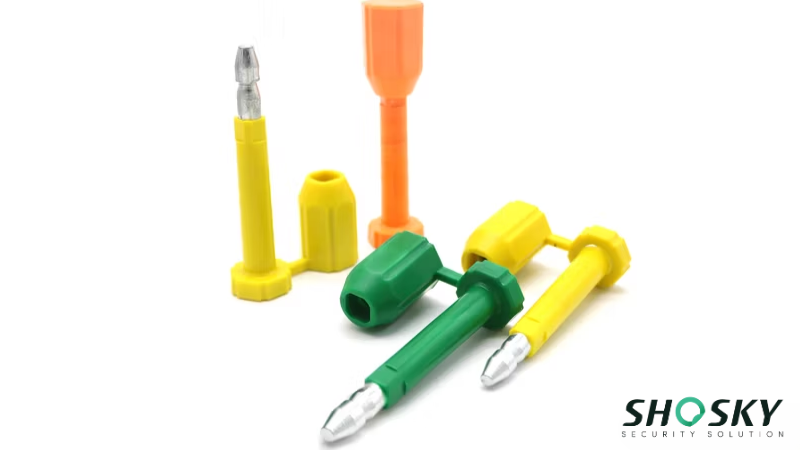
Procuring unique, customized hardware is essential to defeating sophisticated cloning techniques. Never purchase generic, off-the-shelf security seals from public online marketplaces.
Criminals can easily buy identical blank seals to substitute for the ones they breach. Customization creates an immutable layer of digital and visual validation. Key customization requirements to incorporate include:
- Proprietary Corporate Logos: Laser-engrave clear company branding onto the seal body to guarantee immediate origin authentication.
- Sequential Alphanumeric Numbering: Utilize unique, non-repeating serial sequences to eliminate the possibility of replica substitution.
- Advanced 2D Data-Matrix Barcodes: Integrate scannable barcodes to enable rapid, error-free digital tracking via mobile logistics applications.
- Color-Coded Logistics Tracking: Assign distinct colors to specific distribution facilities, destination ports, or cargo priority tiers.
Implementing these proprietary security identifiers makes it impossible for a thief to replicate your packaging profile undetected.
4. Audit the Vendor’s ISO/IEC 17025 Credentials
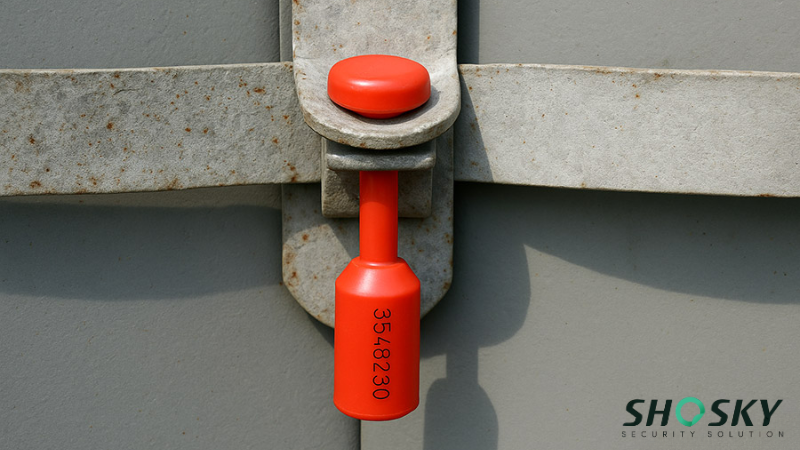
A mechanical seal is only as reliable as the independent testing facility that validated its design. Shippers must aggressively audit their suppliers to ensure actual compliance with international laws.
Many low-cost vendors claim compliance without possessing third-party laboratory verification. Working with unverified suppliers puts your entire cross-border shipment at risk of border seizure. Key compliance credentials you must verify include:
- Active ISO/IEC 17025 Laboratory Accreditation: Confirm that the testing lab is independently certified to perform mechanical stress testing.
- Official Clause 6 Compliance Documentation: Request full testing reports validating the seal’s tamper-evident properties.
- Transparent Manufacturing Serialization Logs: Ensure the vendor maintains absolute database control to prevent serial number duplication across global batches.
Thoroughly vetting your manufacturing partners shields your business from regulatory penalties and ensures seamless customs clearance.
5. Enforce the Standard VVTT Operational Protocol
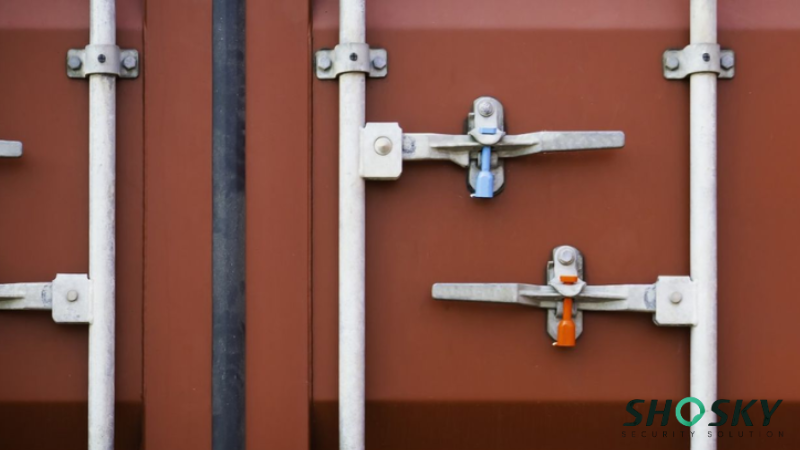
The strongest steel barrier will completely fail if your warehouse staff applies it incorrectly. Security depends heavily on human execution and structured terminal workflows.
Logistics managers must train loading teams to treat seal application as a formal regulatory process rather than an administrative afterthought. This process requires a universal check method. Key operational checkpoints within the VVTT framework include:
- View: Visually inspect the entire seal housing for pre-existing cosmetic manufacturing defects, cracks, or structural fractures.
- Verify: Cross-reference the laser-etched serial numbers against the official shipping manifest and Bill of Lading to ensure an exact match.
- Tug: Pull down forcefully on the pin and barrel configuration to ensure the internal locking ring has fully snapped into place.
- Twist: Manually rotate the bolt seal assembly to confirm that the locking mechanism cannot be unscrewed or reversed through covert force.
Enforcing the standard VVTT protocol at the loading dock provides a legally binding audit trail that protects your company from cargo claims disputes.
Industries Require ISO 17712 High-Security Seals
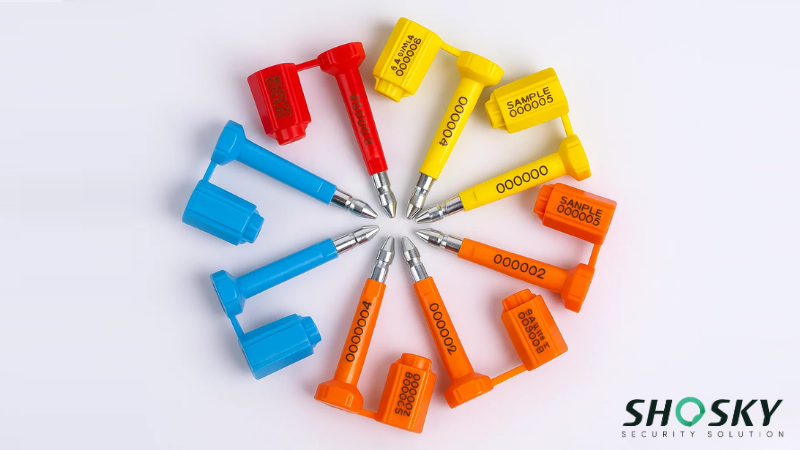
Industries managing high-value or highly sensitive cargo rely entirely on ISO 17712 Seals to protect their operational integrity and profit margins. Below are examples of how specific sectors deploy these barriers in the real world:
- Automotive OEMs: Toyota, Volkswagen, Ford, Hyundai, and GM use heavy-duty H-seals when moving engine blocks and transmissions between Asia and Europe. These seals protect shipments during long, multi-border routes.
- Retail Distributors: Walmart, IKEA, Costco, H&M, and Target apply ISO 17712 cable seals to bonded containers moving between warehouses. They help prevent tampering during inland transport and customs checks.
- Medical Exporters: Pfizer, Moderna, Bayer, GSK, and Novartis ship temperature-sensitive or controlled drugs using bolt seals with serial numbers. These seals support FDA rules and traceability.
- Electronics Brands: Samsung, Apple, Dell, Lenovo, and Sony seal tech shipments with barcode-tagged cable seals. This helps track containers and flag tampering in risky transit zones.
Each specific industry leverages custom-engineered seals that align perfectly with their cargo sensitivity, shipping routes, and legal compliance burdens. A proactive investment in the correct hardware directly translates to minimized cargo shrink and optimized profit margins.
FAQs
Is ISO 17712 a general requirement for all international shipments?
No, ISO 17712 seals are not legally required for every single international package. However, they are strictly required for full container load (FCL) cargo traveling through high-security routes or entering specific customs-controlled zones.
What is the exact difference between ISO and C-TPAT requirements?
ISO 17712 is the mechanical manufacturing standard that dictates how strong a seal must be. C-TPAT is the specific supply chain security program that legally enforces the mandatory use of those ISO-compliant seals for shipments bound for the United States.
Where can I procure authentic, certified ISO 17712 seals?
You must purchase certified ISO 17712 seals directly from accredited security hardware manufacturers, such as Shosky Security, who can provide valid independent laboratory testing documentation.
Secure Your Supply Chain with Shosky’s Certified ISO 17712 Seals
ISO 17712 seals aren’t just about ticking boxes; they’re about protecting your cargo, brand, and bottom line. If you ship containers across borders, especially to the U.S., using certified high-security tamper-evident solutions and seals is no longer optional.
Whether you’re in automotive, retail, or pharma, the right seal helps prevent losses and clears customs faster. Know the rules, choose the right type, and work with trusted suppliers.
Shosky Security offers ISO 17712:2013 certified tamper-evident seals that meet today’s global shipping standards. We help you stay compliant, reduce delays, and protect your cargo from start to finish. Need certified seals fast? Contact us now!