
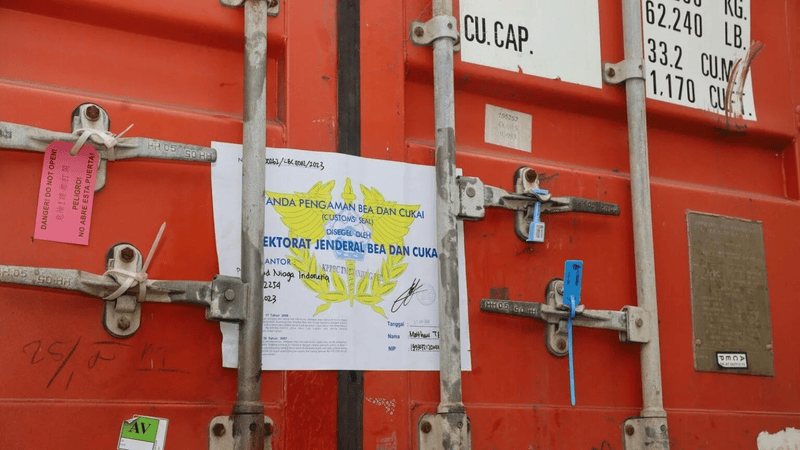
According to the latest joint supply chain fraud report by CargoNet and the TAPA, reported cargo theft incidents across intermodal networks spiked by 57% year-over-year, accounting for over 1.3 billion dollars in direct inventory losses. Organized crime syndicates are increasingly bypassing passive physical security infrastructure through deceptive pick-ups and strategic tampering.
This technical reference guide provides a definitive answer to what a container seal is, analyzes the precise testing thresholds of official ISO 17712 classifications, and outlines the mandatory standard operating procedures required to apply and remove security seals safely.
What Are Container Security Seals?
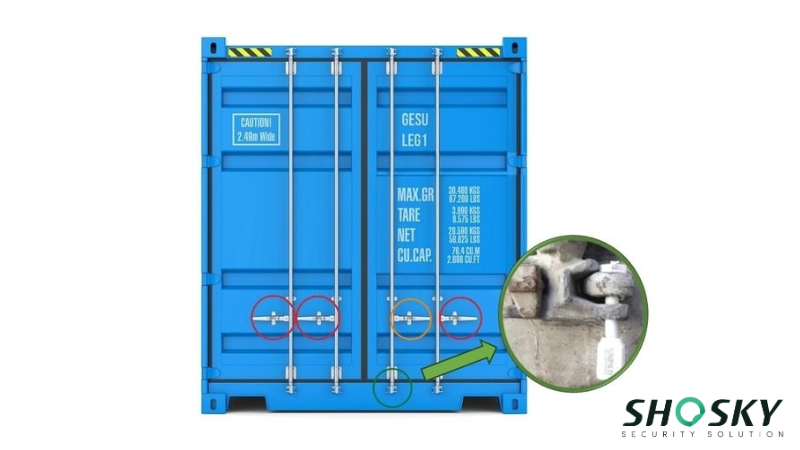
A container security seal is defined as a specialized, single-use mechanical locking mechanism engineered to secure the door locking rods, latches, or hasps of intermodal shipping containers and transit trailers. Unlike traditional padlocks that focus purely on resisting brute force, a security seal is engineered primarily as an irreversible auditing device.
Data from the BSI Consulting and TT Club Global Cargo Theft Report notes that approximately 75% of freight crimes target over-the-road trucks and containerized transport during the transit phase. To protect investments against these vulnerabilities, a professional-grade container seal must possess the following foundational characteristics:
- Tamper-Evident Architecture: Engineered to scratch, fracture, or deform permanently at the slightest unauthorized entry attempt to ensure breaches cannot be concealed.
- Serialized Auditing Traceability: Laser-engraved with non-repeating alphanumeric tracking strings and high-contrast barcodes to bind the physical lock directly to the digital shipping manifest.
- Single-Use Destruction: Manufactured with irreversible internal locking rings that render the component completely unusable and impossible to reassemble once cut.
- Environmental Material Fortification: Built from heavy-duty galvanized metals and UV-stabilized polymers to endure severe oceanic climates and chemical exposures.
By integrating these active security features, container seals transform from simple locking mechanisms into comprehensive auditing tools. This guarantees that any interference is immediately visible, deterring internal theft and providing logistics teams with the irrefutable evidence needed to maintain a secure chain of custody.
What Makes Container Security Seals Unbreakable?
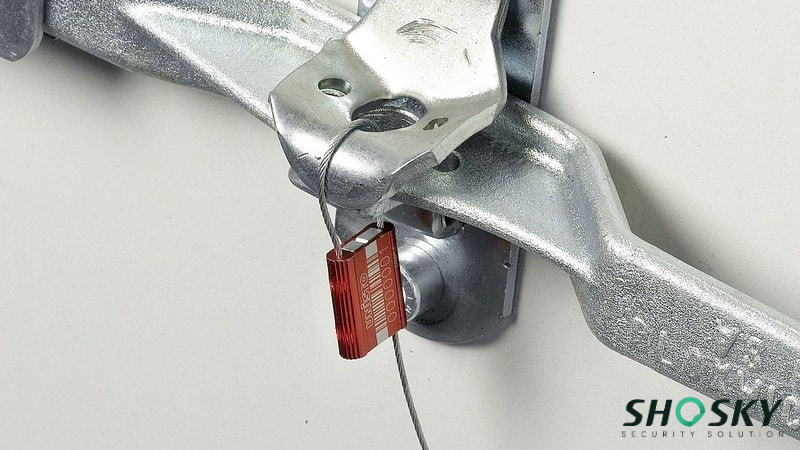
To optimize a facility’s procurement strategy, logistics managers must evaluate the underlying raw materials that dictate a seal’s mechanical integrity. Choosing cheap materials for international sea freight often leads to brittle seals that shatter under normal port vibrations, triggering false tampering alarms.
The table below outlines the core raw material specifications and performance parameters utilized in professional-grade tamper-evident seals:
| Seal Component | Base Material | Engineering Rating | Failure Indicator |
|---|---|---|---|
| Locking Pin Core | Hardened Carbon Steel | High Shear Resistance | Mechanical Fracture |
| Outer Protective Cap | High-Impact ABS Plastic | UV and Crack Resistant | Color Stress Whitening |
| Internal Lock Ring | Tempered Spring Steel | High Tensile Engagement | Permanent Metal Fatigue |
| Flexible Cable | Aircraft Galvanized Wire | Anti-unraveling Shear Rating | Strand Separation |
Selecting the right combination of these raw materials allows procurement teams to build a resilient frontline defense tailored to their specific shipping corridors. For instance, investing in high-impact ABS coverings prevents environmental cracking during winter transport, while hardened carbon steel pins ensure that opportunistic criminals cannot bypass the lock without industrial tools.
ISO 17712 Security Standards: Class I, S, and H Seals
To establish a uniform baseline for international commerce, the U.S. Customs and Border Protection (CBP) and global enforcement agencies rely on the ISO 17712 standard. This international mandate establishes uniform procedures for the physical testing, auditing, and manufacturing processes of mechanical seals.
1. Indicative Seals (ISO Class I)
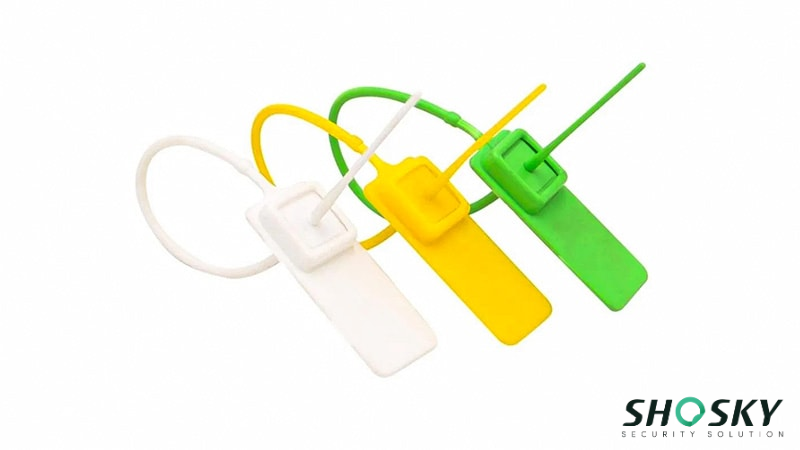
Indicative seals represent the baseline tier of tamper evidence. They are manufactured primarily from lightweight polypropylene plastics or thin metal tins.
- Mechanical Strength Threshold: Under ISO 17712 Clause 5 testing, these seals possess minimal tensile strength and can be broken cleanly by hand, light utility knives, or household scissors. They withstand a maximum pulling force below 1,000 Newtons.
- Logistics Use Case: Deployed exclusively to confirm if an empty shipping container has been breached post cleaning, or for low-risk domestic distribution routes where physical security is handled by closed warehouse gates.
Utilizing Class I seals effectively prevents opportunistic tampering on local routes and provides visual audit trails, though they should never be relied upon as physical barriers for high-value freight.
2. Security Seals (ISO Class S)
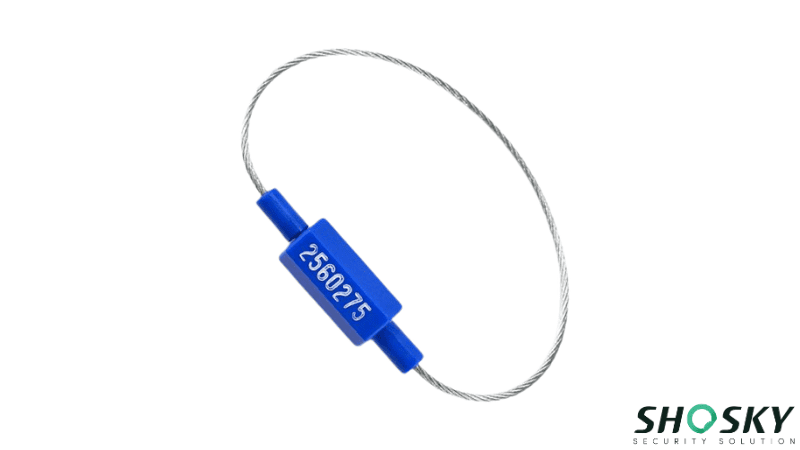
Security seals provide an intermediate layer of physical deterrence. This category incorporates braided galvanized steel wires combined with rugged aluminum locking blocks, or specialized padlock designs.
- Mechanical Strength Threshold: These seals are engineered to offer moderate barrier capacity. They cannot be broken by hand and require standard industrial wire cutters to sever, offering between 2,220 Newtons and 10,000 Newtons of pulling resistance.
- Logistics Use Case: Ideal for cross-border rail freight, domestic intermodal trailer swapping, and securing internal high-value cages within regional fulfillment centers.
By upgrading to Class S, regional logistics managers can secure mid-value domestic cargo against targeted theft and blunt-force impacts without incurring the extreme costs associated with heavy barrier locks.
3. High-Security Seals (ISO Class H)
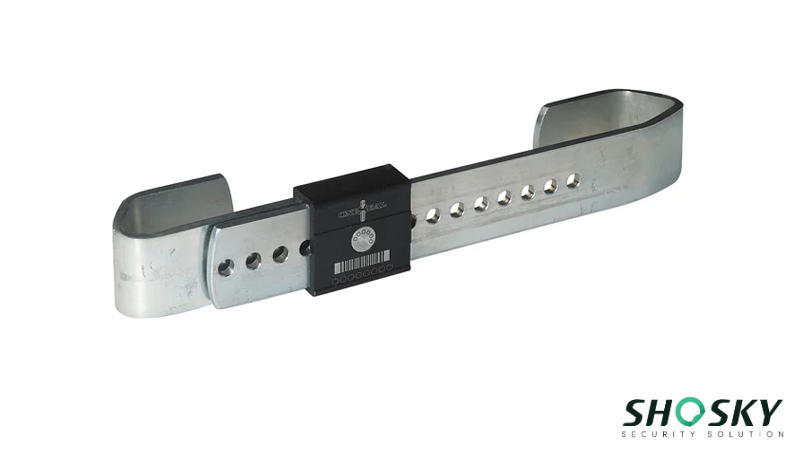
High-Security seals represent the absolute pinnacle of physical barrier protection. This classification comprises heavy-duty carbon steel bolt seals and massive, multi-rod barrier locks.
- Mechanical Strength Threshold: To achieve a certified “H” stamp, the seal must undergo brutal independent laboratory testing. It must withstand a minimum of 10,000 Newtons of direct tensile pull, alongside severe shear, bending, and impact tests conducted at extreme temperatures (-27°C to 18°C) according to ISO 17712 Annex A. Furthermore, under Clause 6, manufacturers must prove their products incorporate built-in anti-spin mechanisms to defeat sophisticated friction drilling techniques used by organized theft rings.
- Logistics Use Case: Legally mandatory for C-TPAT compliance on all maritime containers entering the United States, as well as high-risk global sea freight.
Deploying Class H seals is not just a security best practice; it is a strict legal requirement that guarantees high-liability maritime cargo clears international customs without costly administrative delays.
Commercial Procurement: Bolt, Cable, and E-Seals
While international customs agents look at legal ISO classifications, warehouse procurement managers must source container seals based on their specific physical form factor. Matching the physical shape to the container’s latch hardware optimizes the speed of the daily manual sealing processes.
1. Industrial Plastic Seals
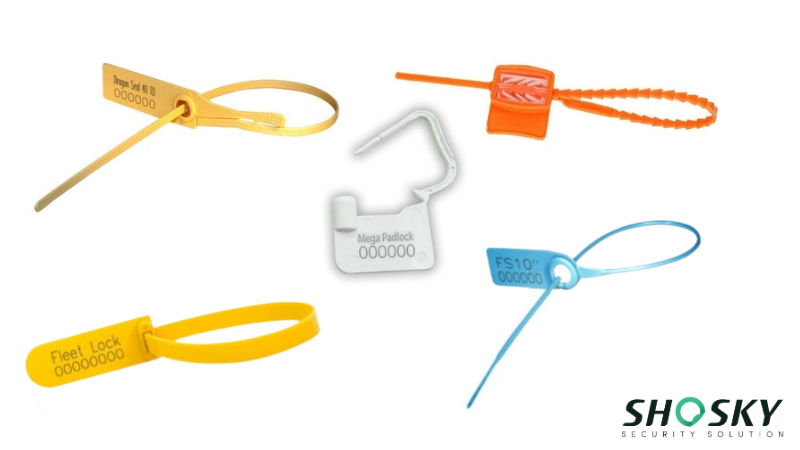
Falling strictly under the Class I category, plastic seals are highly cost-effective, single-use strips that utilize flexible strap dimensions.
- Key Features: Offers excellent color-coding capabilities and high-contrast thermal printing for sequential barcodes. Threads through tiny apertures easily.
- Primary Application: Best suited for short-haul retail distribution, warehouse tote boxes, and airline catering carts where physical theft risk is minimal.
While cost-effective and efficient for inventory management, these plastic variants act strictly as visual deterrents and auditing flags rather than physical theft barriers.
2. Heavy-Duty Bolt Seals
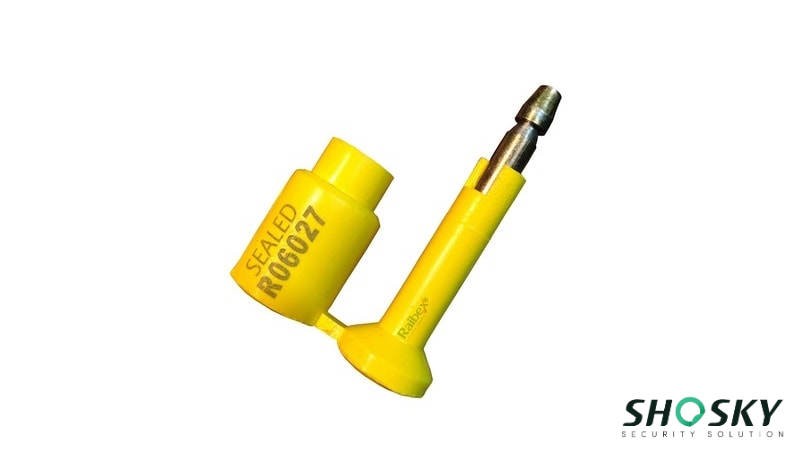
Corresponding strictly to the Class H standard, bolt seals are the ultimate mechanical backbone of international maritime shipping.
- Key Technical Features: Features a thick carbon steel pin that snaps permanently into an ABS-coated locking barrel. The robust physical structure strictly requires 36-inch compound cutters to remove safely.
- Primary Application: The default mandatory standard for high-value intermodal containers, cross-border trucking, and shipping units exposed to open port environments.
The sheer physical resilience of the carbon steel bolt makes this seal the non-negotiable industry standard for defending global supply chains against forceful entry.
3. Flexible Steel Cable Seals
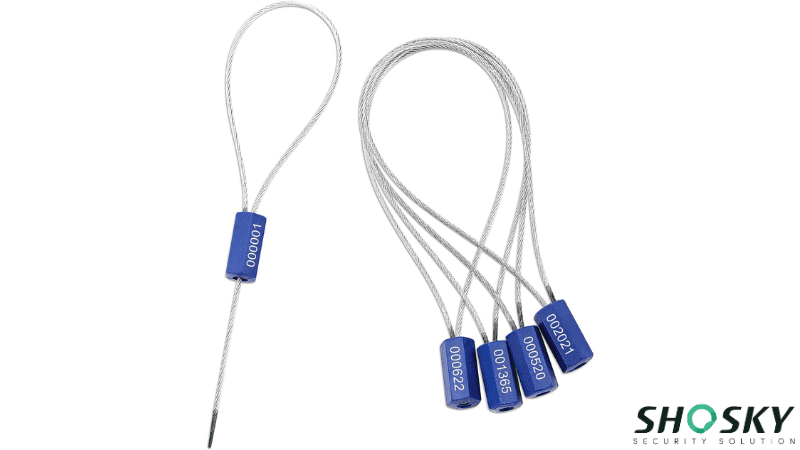
Available in both Class S and Class H ratings (depending on wire thickness), their flexible braided steel cables make them highly versatile for irregular locking hardware.
- Key Technical Features: Once tensioned, the seal locks permanently. When severed by industrial cutters, the multi-strand wire automatically unravels and frays, preventing criminals from seamlessly re-welding the pieces together.
- Primary Application: Perfect for securing irregular tanker valves, chemical hatch doors, or bent container door latches where rigid bolt seals cannot properly fit.
This flexibility allows procurement teams to implement high-security protocols on customized bulk fluid transport or aging hardware that traditional rigid bolts cannot accommodate.
4. Smart Electronic Seals (E-Seals / RFID)
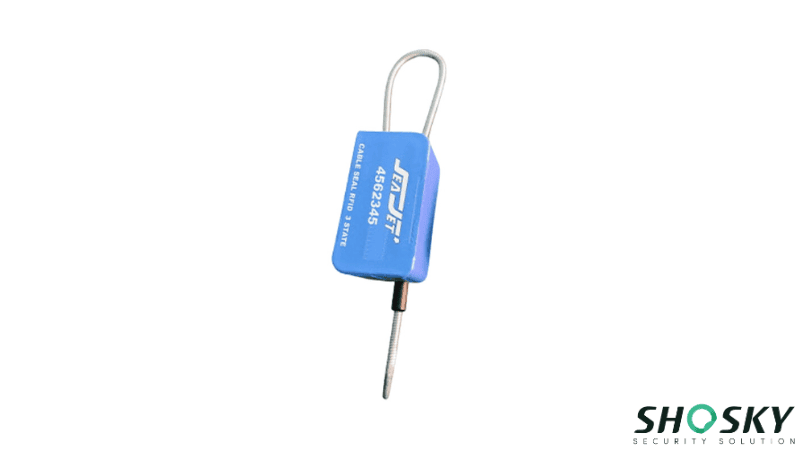
Smart e-seals represent the premium digital tier of modern supply chains, enhancing an H-class physical base with an embedded active or passive RFID chip.
- Key Technical Features: Allows port gate readers to scan and verify the container status wirelessly within seconds. Advanced IoT models transmit real-time remote tampering alerts and GPS coordinates to cloud dashboards.
- Primary Application: High-value, time-sensitive tracking scenarios—such as pharmaceutical cold chains and aerospace component transit—where eliminating physical tracking gaps is a strict corporate requirement.
Integrating RFID and IoT technology into the sealing process transforms passive physical security into an active, real-time logistics tracking ecosystem, offering total visibility over the cargo’s journey.
How to Apply a Container Security Seal: The VVTT Verification Protocol
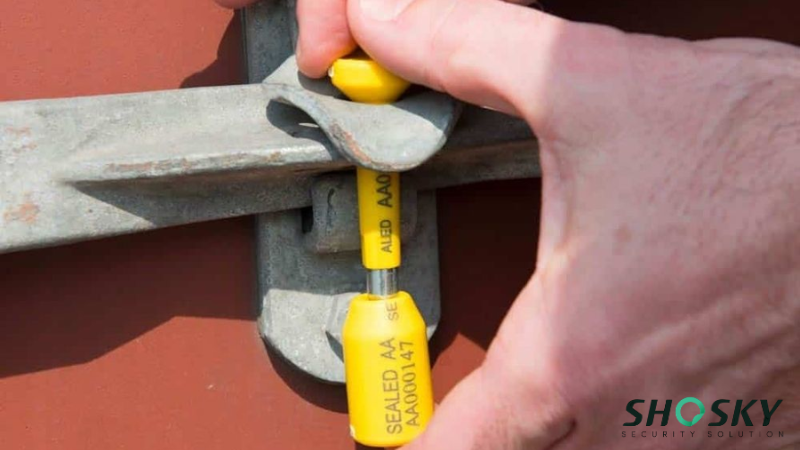
Even a premium ISO Class H bolt seal is rendered useless if warehouse dock workers deploy it incorrectly. The global shipping industry standardizes application through a strict standard operating procedure known as the VVTT verification protocol.
- V for View: The operator must visually inspect the container door locking handles and the hasp itself. Check for signs of rust degradation or pre-existing tool marks, as criminals often bypass the seal entirely by removing the container door hinges.
- V for Verify: The logistics manager must read the unique serial number laser etched onto both the bolt pin and the locking barrel. Verify that these numbers match perfectly and correspond exactly to the data printed on the official shipping manifest.
- T for Tug: Thread the metal bolt cleanly through the primary locking slots on the right side of the container door. Push the pin into the locking barrel until it snaps. The dock worker must apply a violent downward pulling force to confirm that the internal spring steel ring has fully trapped the pin.
- T for Twist: Attempt to twist and rotate the barrel mechanism manually. A correctly applied high security bolt seal will spin smoothly within its housing but will never pull apart or back out of the lock chamber.
Enforcing the VVTT protocol as a mandatory warehouse standard operating procedure ensures that the legal chain of custody is established flawlessly before the carrier leaves your facility. This simple mechanical routine prevents false tampering accusations and clears liability handover checkpoints efficiently.
Destination Unboxing: How to Remove a Container Security Seal Safely
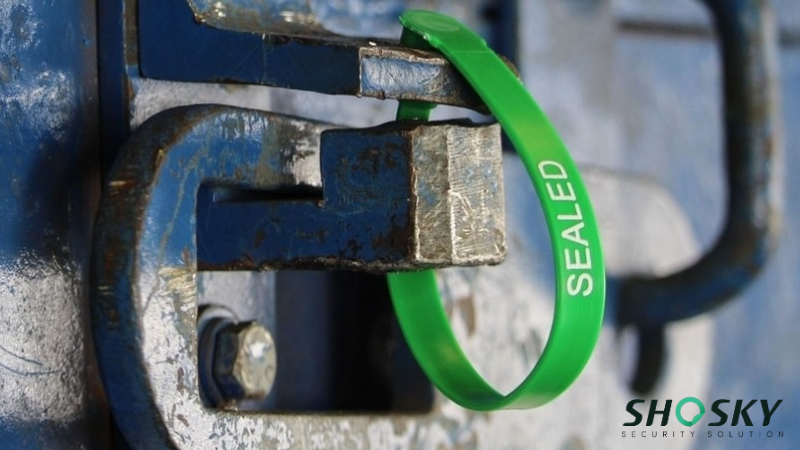
Executing seal extraction at the destination receiving dock requires disciplined safety measures to protect personnel from high-tension metal snaps and ensure container hardware is preserved.
- Pre-Extraction Audit: Before deploying cutting tools, rerun the Twist and Tug check. Inspect the seal body for hairline cracks or adhesive residues to ensure a thief did not cut the seal mid-transit and attempt to glue it back together.
- Close the Logistics Manifest Log: Record the physical serial number into your warehouse management software to officially close the chain of custody before the container doors are opened.
- Deploy Heavy Leverage Tooling: Standard hand tools cannot crack a hardened carbon steel Class H seal. Operators must deploy industrial 36-inch compound leverage bolt cutters or portable pneumatic angle grinders to execute the cut safely.
- Execute the Right Angle Cut: Position the jaw blades at a sharp right angle directly over the center of the steel shaft. Apply steady body weight pressure to slice the bolt in a single clean motion.
Establishing these strict extraction rules keeps high-speed unloading bays on schedule and protects reusable shipping containers from costly hinge damage caused by improper prying.
Expert Tip from Shosky Security
When train or dock workers attempt to apply bolt seals, they occasionally make the mistake of leaving the seal dangling loosely on the outer edge of the door mechanism. This exposure leaves the seal vulnerable to being crushed accidentally by crane spreaders during high speed port container stacking. Always instruct your warehouse team to place the bolt seal in the designated Securacam position located at the very bottom of the door rod where the steel frame shields it from external mechanical impacts.
FAQs
Are high-security container seals legally required for all international shipments?
Yes, for specific major markets. In the United States, Customs and Border Protection mandates, through the C-TPAT program, that all inbound maritime shipping containers be secured with an ISO 17712-certified High Security seal. Failing to use this specific class will result in severe customs delays and manual inspection fees.
Can a bolt seal be bypassed or glued back together by thieves?
No. High-quality ISO-certified bolt seals feature an internal anti-spin locking mechanism. Once the metal pin engages the locking barrel, it is permanently trapped. If a thief cuts the pin, the internal structure shatters, making it mechanically impossible to glue the metal shaft back together strongly enough to withstand a manual tug inspection.
How do I verify the authenticity of an ISO 17712 container seal?
Procurement managers must request physical documentation from the manufacturer. A genuine high security seal factory will provide a recent testing certificate from an independent accredited laboratory proving the seal successfully passed the specific mechanical tensile, shear, and impact tests required by the global standard.
Ensure Maximum Protection For Your Container With Shosky!
In conclusion, the use of container seals plays an essential role in preventing theft, tampering, and damage during international shipping. Whether you choose an Indicative, Security, or High-Security seal, each type offers distinct advantages based on the level of protection required. By selecting the appropriate seal, you can ensure the safety of your cargo and maintain the trust of your customers and partners throughout the shipping process.
Don’t compromise on security, so choose Shosky Security. Our range of ISO 17712-certified seals ensures your precious cargo remains safe and traceable. Get in touch with us for personalized recommendations and further details!