

Every year, cargo theft costs global supply chains an estimated $50 billion, according to the BSI and TT Cargo Theft Report. Often, the problem comes down to one simple mistake: using the wrong seal. That error can trigger customs rejections, voided insurance, or lost goods.
So, understanding the difference between wire seals and cable seals is essential for protecting your cargo and your bottom line. This article breaks down the core differences between wire and cable seals to help you match the right seal to your specific security needs.
What Are Wire Security Seals
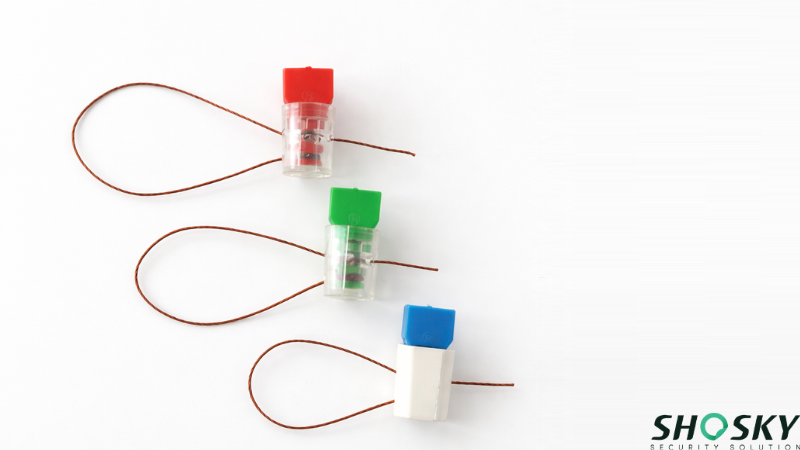
Wire security seals are a type of security seal that consists of a thin metal wire, usually a single strand, threaded through a plastic or metal locking chamber. Once locked, the wire forms a loop that cannot be reopened without visible damage.
They are classified as indicative seals. This means they signal that tampering occurred. However, they do not physically stop it. A standard pair of wire snips or heavy scissors can cut through them in seconds.
Wire seals are ideal for low-risk, small-aperture applications where durability and tamper evidence matter more than creating a strong physical barrier. Common uses include:
- Utility meters and industrial valves
- Fire extinguishers and safety equipment
- Small toolboxes and storage cabinets
- Retail display cases and point-of-sale equipment
These seals are cost-effective and easy-to-apply tamper-evident packaging solutions. However, they are not suitable for high-value assets or shipments crossing international borders.
What Are High Security Cable Seals
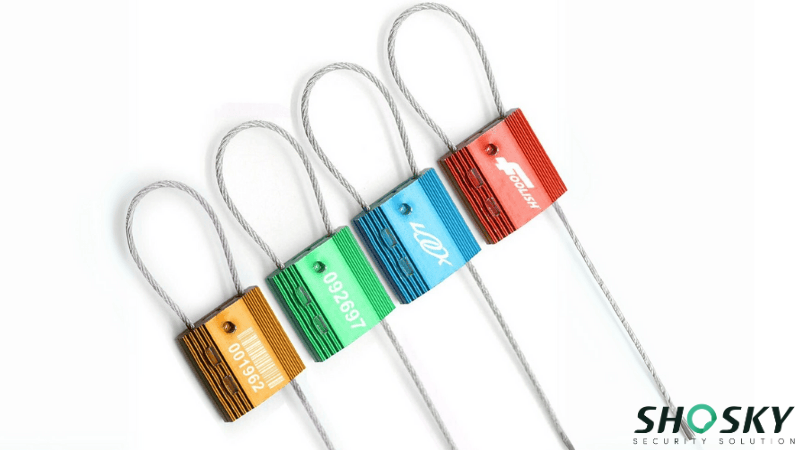
High security cable seals are heavy-duty seals designed to protect shipments from tampering. They feature thick, braided steel cables (1.5mm to 5mm) that lock into a metal body, which cannot be reopened without cutting.
Unlike wire seals, cable seals provide both tamper evidence and a physical barrier against unauthorized entry. Removing them requires bolt cutters or specialized cable cutter tools that most opportunistic thieves do not carry.
High security cable seals are used in:
- Shipping containers and trailer doors
- Rail cars and intermodal freight
- Pharmaceutical and food-grade logistics
- Government and military cargo
- High-value retail and wholesale distribution
For international shipping and cross-border logistics, many regulatory bodies require ISO 17712-certified security seals. Cable seals engineered to meet this standard are approved for securing shipping containers under C-TPAT and other customs compliance programs. This makes them essential for international shipping across regulated trade lanes.
The Core Difference Between Wire and Cable Seals
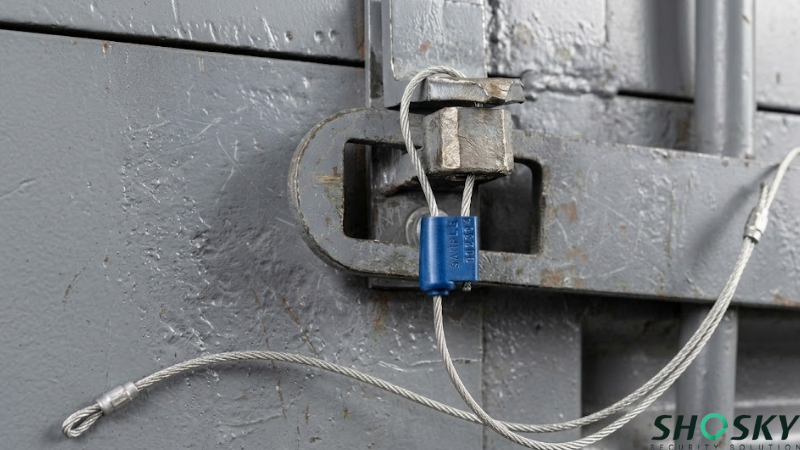
The difference between wire and cable security seal types comes down to 3 following features:
1. Tensile and Breaking Strength
Wire seals are weak by design. A single strand of metal offers minimal resistance. Cable seals, built from multiple twisted strands, have tensile strength that can exceed 1,000 kg depending on the cable diameters used. The thicker the cable, the stronger the seal. That’s why they play a crucial role in high-security applications.
2. Application and Removal
Wire seals offer fast application and removal for small-scale shipments. Cable seals require industrial tools and leave visible evidence if tampered with. Sellers worldwide rely on this variety to reduce risks and keep the chain of custody intact on complex routes.
3. Security Level
Wire seals monitor. Cable seals defend. Both are tamper-evident metal seals. But only cable seals serve as a true physical barrier. Both seal types offer more security than plastic category alternatives, but the gap between wire and cable is significant when it comes to specific security applications.
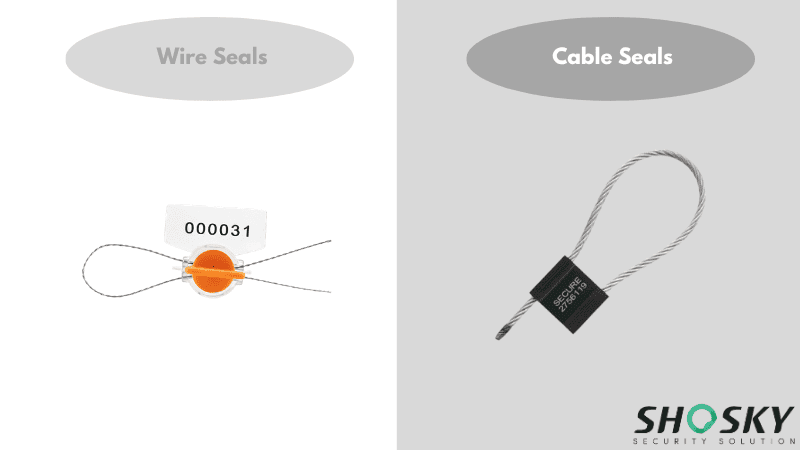
The following table breaks down the key differences between wire seals and cable seals:
| Feature | Wire Seals | Cable Seals |
|---|---|---|
| Primary Function | Tamper indication only | Tamper evidence + physical barrier |
| Thickness | Thin single wire (< 1mm) | 1.5mm to 5mm braided cable |
| Breaking Strength | Low: standard wire snips | High: bolt cutters required |
| Tool Needed for Removal | Wire snips or scissors | Bolt cutters or cable cutters |
| Best Use Case | Utility meters, valves, fire extinguishers | Shipping containers, trailer doors, rail cars |
Awareness of seal differences helps you match the right type to each shipment and maintain compliance throughout the supply chain.
Ready to Get the Right Security Seals for Your Business?
Start With A Low Minimum Order Quantity
How to Choose the Right Seal for Your Supply Chain?
Selecting the correct cable seal or wire seal is a calculated risk-management decision. To prevent cargo theft, optimize packaging budgets, and avoid international customs penalties, procurement teams should evaluate their logistics routes using this 4-step framework:
Step 1: Define the Required Security Threshold
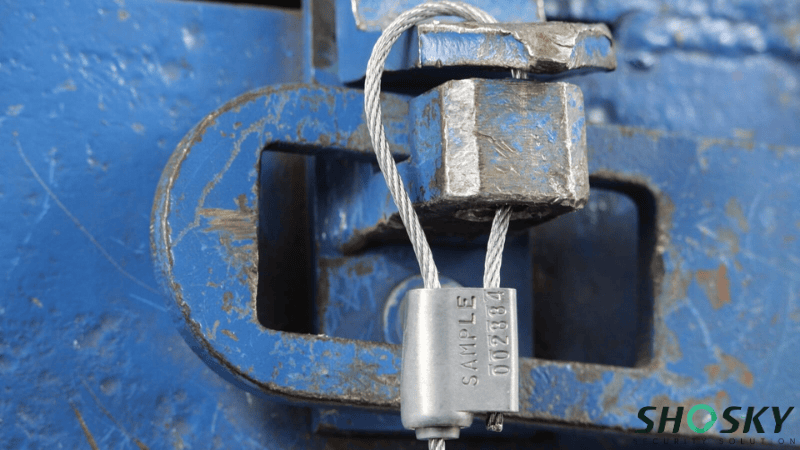
If the primary goal is monitoring unauthorized access to internal warehouse cages, utility meters, or domestic short-haul trucks, specify wire seals. They provide immediate visual tamper evidence at a fraction of the cost, prioritizing operational efficiency over physical defense.
Conversely, when transporting high-value and high-risk cargo like electronics, pharmaceuticals, or luxury goods, you must deploy a physical barrier. Specify cable seals with a minimum diameter of 3.5mm to guarantee a tensile strength capable of withstanding over 1,000 kg of brute force.
Step 2: Mandate ISO 17712 Compliance for Cross-Border Transit
International maritime shipping and cross-border rail logistics operate under strict regulatory frameworks like C-TPAT. Applying a standard wire seal to an international shipping container will trigger immediate customs holds, inspections, and potentially severe fines.
To ensure smooth cross-border freight operations, procurement must explicitly demand ISO 17712 “H” (High Security) certified cable seals. Always require the manufacturer to provide current, independent laboratory testing certificates for Clause 6 compliance before authorizing the purchase.
Step 3: Match Materials to Environmental Stress
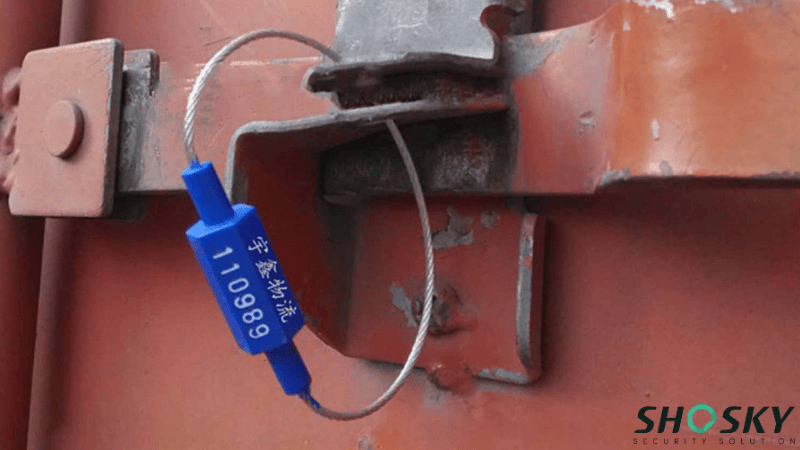
A security seal is only effective if it survives the physical journey without degrading. Procurement teams must evaluate the specific environmental hazards of their supply chain, ranging from extreme temperature fluctuations to heavy physical vibration.
For ocean freight exposed to corrosive saltwater, specify cable seals with anodized aluminum bodies and galvanized aircraft cables. For outdoor utility applications, upgrade wire seals to 304 stainless steel or UV-resistant PVC-coated wires to prevent rust and false-positive snapping from metal fatigue.
Step 4: Optimize the Chain of Custody (Serial Tracking)
Physical security is functionally useless without accurate data logging to prove the chain of custody remained intact. Logistics managers must determine exactly how their receiving facilities track incoming freight and match the seal’s marking technology to those internal systems.
Avoid standard ink-printed serial numbers, which easily degrade from friction or chemical spills during transit. Demand deep laser-engraved barcodes, QR codes, and sequential numbers to ensure perfect first-pass read rates for automated scanning guns and eliminate manual data entry errors at busy checkpoints.
FAQs
Q1: Do wire security seals meet ISO 17712 high security standards for international ocean freight?
No. Basic wire seals do not meet international ISO 17712 high security testing standards. Cross-border intermodal ocean containers are legally required to use certified heavy-duty cable seals or bolt seals to comply with C-TPAT regulations and avoid severe customs rejections at the port of entry.
Q2: What specific cutting tools are required to remove heavy-duty high-security cable seals?
Because heavy-duty cable seals utilize multiple intertwined high-carbon steel strands, standard wire snips will simply jam the tool. Receiving dock personnel must strictly utilize professional bypass cable shears specifically hardened to cleanly sever dense metallic braided cables exceeding 3.0 millimeters in diameter.
Q3: Can aluminum housing cable seals prevent sparks in volatile or highly flammable chemical environments?
Yes. Aerospace-grade aluminum is inherently non-sparking upon direct mechanical impact. This specific metallurgical property makes anodized aluminum housed cable seals highly recommended and totally safe for securing hazardous chemical valves, aviation fuel depots, and volatile liquid petroleum transport tankers.
Q4: How does multi-strand braided cable provide better physical tamper evidence than single-strand wire?
When a high-security braided cable seal is physically severed, the individual high-carbon steel strands instantly unravel and violently expand outward, known as wire fraying. This irreversible physical destruction makes it mathematically impossible for sophisticated criminals to reinsert the cut wire to hide their tracks.
Q5: Are custom serialized cable seals required for maintaining strict C TPAT chain of custody compliance?
Yes. To maintain absolute C TPAT minimum security criteria, enterprise companies must continuously procure cable seals featuring permanent 1064 nm laser-etched sequential serial numbers or highly encrypted barcodes. This mathematical integration ensures flawless digital chain of custody tracking and immediately flags unauthorized mid-transit seal substitutions.
Get High-Quality Security Seals from Shosky Security
Wire and cable seals serve different roles in supply chain security. Wire seals suit low-risk, internal, or indicative uses, while cable seals protect high-value shipments, containers, and international cargo. Both tamper-evident seal types can be customized in length, diameter, color, and material, and should be paired with visual checks, serial tracking, and proper removal tools for full tamper-evident protection.
Not sure which seal is right for your specific security needs? Shosky Security offers expert guidance and custom tamper-evident seal solutions. Contact us today to browse the full range of security seals and discuss your needs.