
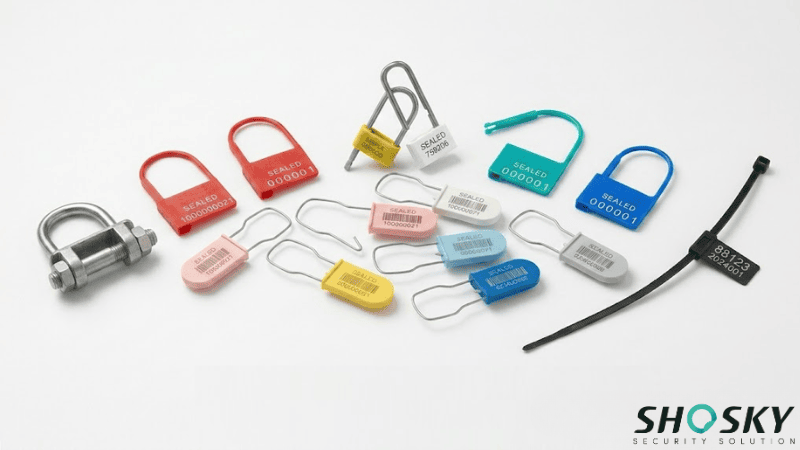
Securing assets is no longer just about keeping people out. It is also about proving when someone got in. Padlock security seals have become a standard tool across utilities, healthcare, aviation, and global logistics for exactly this reason.
These security seals provide visible, traceable evidence of tampering. Something a traditional padlock cannot do. This guide covers the different types of padlock seals and what procurement teams need to know to choose the right one for any application.
Padlock Seals vs Traditional Locks: Why Make the Switch?
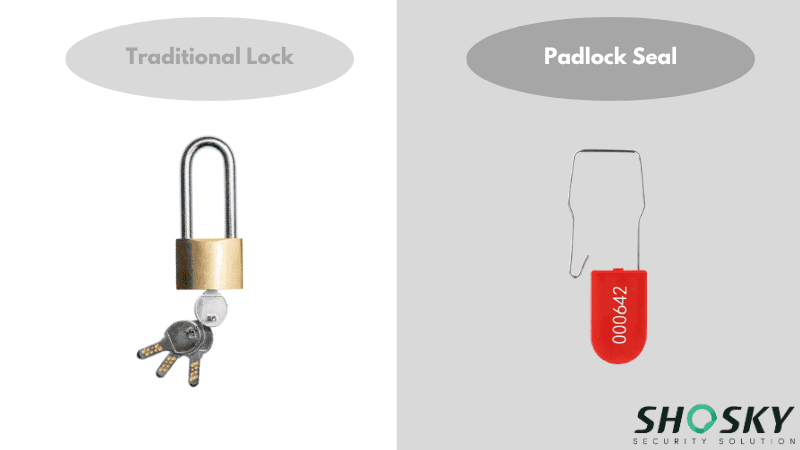
A traditional padlock physically blocks access. A padlock security seal does something different. It records that access happened. Once a seal is broken, the evidence is permanent and visible.
Many industries are shifting toward these tamper-evident solutions for several practical reasons. Below are three main advantages driving this growing shift in B2B asset management:
- No key management overhead: Padlock seals use a simple click-to-close mechanism. Authorized staff can break a seal by hand or with light tools during emergencies. No key holder is required.
- 100% accountability: Each seal carries a unique serial number. Once broken, it cannot be replaced with an identical substitute. This creates a clean legal audit trail that traditional locks cannot produce.
- Lower cost at scale: Single-use plastic padlock seals and wire padlock seals cost a fraction of a metal lock. There are no replacement keys, no locksmith fees, and no maintenance costs.
According to the Association of Certified Fraud Examiners, asset misappropriation accounts for 86% of all occupational fraud cases. Much of it goes undetected because traditional locks leave no audit trail. A consecutively numbered padlock seal closes that gap by providing undeniable proof of entry.
The Three Pillars of Padlock Security Seal Classification
Each padlock security seal serves a defined purpose based on material, strength, and structure. Some focus on light indoor use, while others handle harsher conditions. The following sections break these categories into clear groups to make selection easier for different operational needs.
Plastic Padlock Seals (The Lightweight Solution)
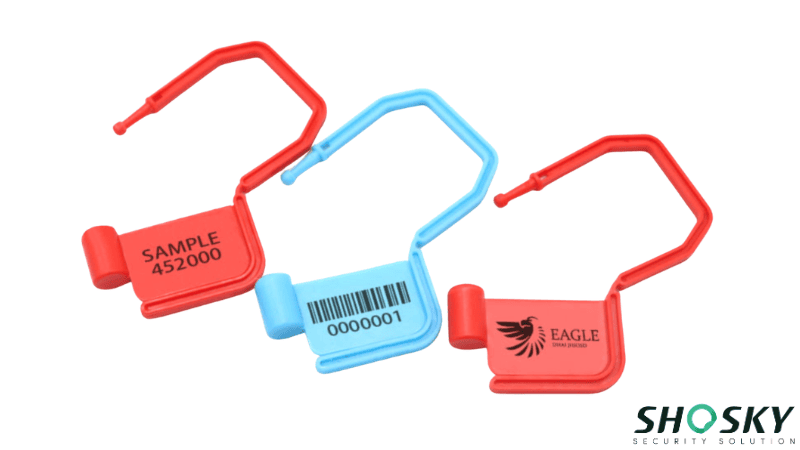
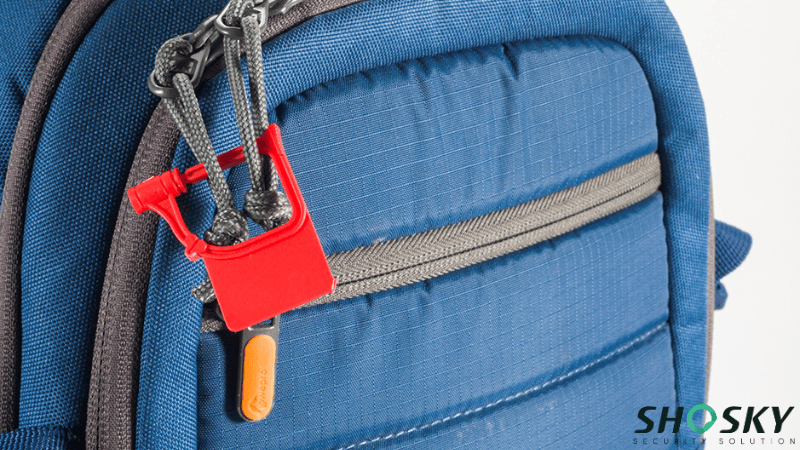
A plastic padlock uses a molded plastic body with an integrated loop or wire hasp. The structure includes a defined break point, which allows controlled removal when needed.
Most plastic seals are made from polypropylene (PP) or high-density polyethylene (HDPE). These seals are available in a wide range of colors, including blue, red, green, yellow, orange, black, white, and gray.
These lightweight seals offer several distinct technical advantages for controlled indoor environments:
- Electrical Safety: The non-conductive plastic body ensures safe use in electrical environments and heavily resists indoor corrosion.
- Permanent Traceability: Supports custom laser marking for unique numbers, barcodes, or text, ensuring long-term readability even under regular handling.
Rapid Emergency Access: Engineered with controlled breaking strength to allow immediate manual removal without tools.
Because of their balance between ease of use and high visibility, procurement teams frequently specify plastic seals for the following applications:
- Emergency Response: First aid kits and emergency medical cabinets require fast, controlled access for regulatory compliance.
- Commercial Transit: Retail storage facilities and airline service beverage carts that need lightweight, highly visible security.
- High-Volume Consumables: Short-cycle supply chain applications where low unit cost and high stock turnover are primary procurement priorities.
Their lightweight design and cost-effectiveness make them incredibly easy to maintain in bulk stock for fast-moving operations.
Wire Padlock Seals (The High Precision Solution)
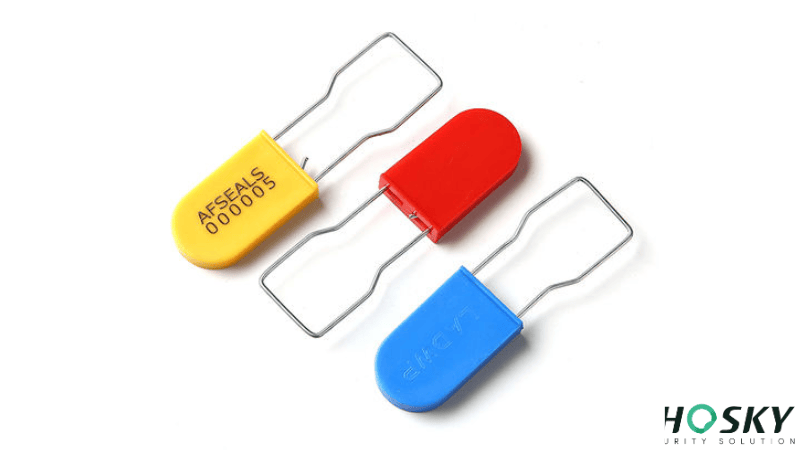
The wire padlock has a plastic body with a galvanized or stainless steel wire hasp. This design allows the seal to adapt to different locking points. The wire hasp can pass through narrow or misaligned openings where rigid designs fail.
These seals improve flexibility. The combination of a plastic body and metal wire gives a balance between usability and strength, making it a common security seal in technical environments.
Upgrading to a wire-based design provides enhanced technical protection for complex or misaligned locking points:
- Enhanced Durability: The reinforced stainless steel wire hasp resists pulling and cutting, providing a higher level of protection against physical tampering.
- Controlled Access: Removal strictly requires wire cutters, adding a mandatory mechanical layer of access control.
- High Installation Flexibility: Easily secures technical environments with confined spaces or awkward locking configurations.
The increased durability and installation flexibility make wire padlock seals the standard choice for several demanding scenarios:
- Utility Infrastructure: Electric meters and gas valve sealing systems requiring strict municipal compliance and tracking.
- Equipment Compliance: Heavy industrial equipment where precise sealing and controlled mechanical access are mandatory.
- Inspection Auditing: Routine monitoring and inspection points where visible tamper evidence is critical for operational control.
- Confined Installations: Technical environments with limited installation space or highly irregular, misaligned locking configurations.
This robust construction guarantees reliable security performance even when subjected to unexpected mechanical stress.
Metal and Tin Padlock Seals (The Extreme Environment Solution)
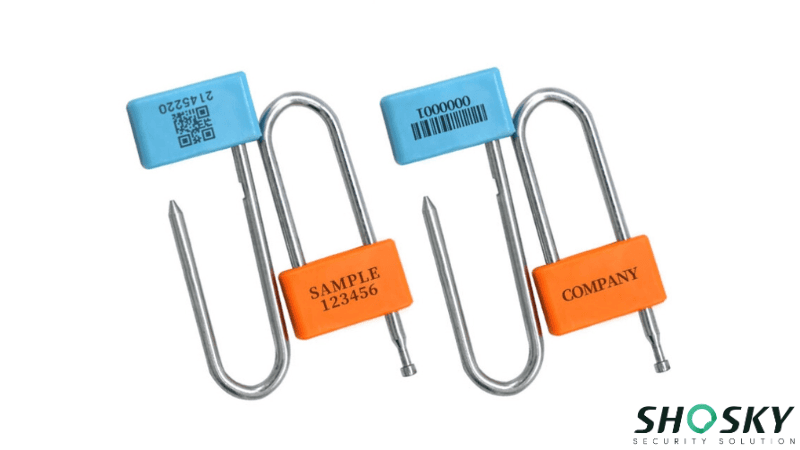
Metal-based padlock security seals are made entirely from stainless steel or tin-plated materials. These seals do not use a plastic body. The full metal construction removes weak points found in mixed-material designs and gives the seal a uniform structure.
Each seal is built to maintain a secure locking position and provide clear evidence of tampering once broken. The design also supports consistent performance in systems that require strict access control and regular inspection.
Choosing a full metal construction unlocks superior technical resilience against severe environmental threats:
- Extreme Weather Resistance: Stainless steel resists prolonged UV exposure, harsh chemicals, and extreme temperature variations without becoming brittle.
- Maximum Tamper Resistance: The uniform metal structure heavily resists forced removal, maximizing security in high-risk zones.
- Long-Term Stability: Withstands continuous mechanical stress, completely eliminating the structural degradation found in plastic alternatives.
Given their exceptional physical durability, metal padlock seals are highly recommended for the following heavy-duty applications:
- Chemical Storage: Hazardous material facilities require highly corrosion-resistant and chemically stable sealing solutions.
- Rail & Freight Transport: Global logistics systems facing long-duration exposure to harsh, unpredictable outdoor environments.
- Heavy Industry: Manufacturing operations where extreme mechanical durability and impact resistance are strict engineering requirements.
- Outdoor Machinery: Remote equipment securing applications exposed to severe weather and ongoing environmental stress.
- Long-Term Deployment: Permanent or semi-permanent installations where drastically reduced replacement cycles optimize maintenance budgets.
Their ability to clearly highlight any tampering attempts makes them a highly reliable tool for strict regulatory compliance.
Top 3 Industries Replacing Traditional Locks with Padlock Seals
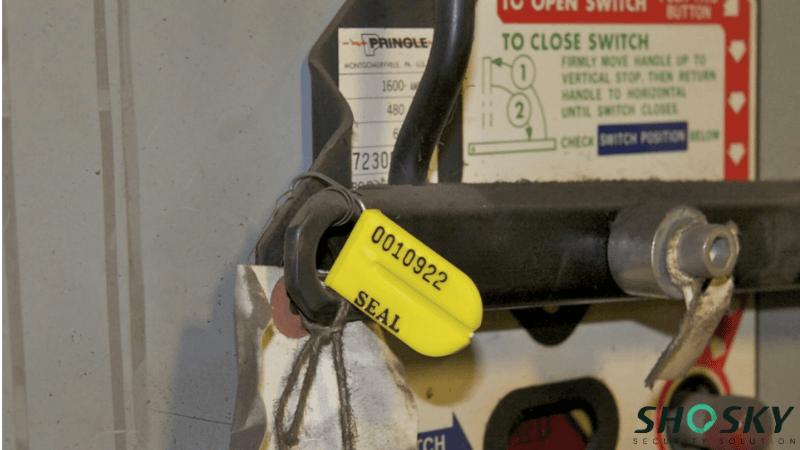
Padlock security seals have replaced traditional locks in many sectors where visibility and traceability matter more than repeated access control. The table below shows key industries where this shift is most visible.
| Industry | Application | Key Benefit |
|---|---|---|
| Aviation and Catering | Service trolleys and beverage carts | Prevents pilferage and allows quick access without keys |
| Healthcare and Pharmacies | Emergency first aid kits and medical storage | Immediate visibility of access and restocking needs |
| Utility and Energy | Electric meters, gas valves, and field equipment | Ensures billing accuracy and prevents unauthorized use |
A 2024 logistics security report notes that over half of surveyed utility and transport companies have increased adoption of single-use sealing systems to reduce unauthorized access and improve traceability. Aviation and healthcare remain the fastest adopters due to strict compliance requirements.
Expert Tip from Shosky Security: The Laser Etching Advantage When specifying padlock seals for outdoor utilities or chemical environments, always mandate laser-etched serial numbers rather than hot-stamped ink. Ink stamping can degrade rapidly under UV sunlight or chemical spills, permanently destroying your audit trail. Laser etching physically burns the serial number into the polymer or metal substrate, guaranteeing permanent readability and legal admissibility regardless of the environmental stress.
3 Critical Procurement Steps for Specifying Padlock Seals
When choosing a seal, procurement teams need to follow a structured process to match security needs with real conditions. The following steps outline a simple approach that helps improve consistency and reduce selection errors.
- Step 1: Analyze Environmental Exposure: Outdoor use needs stainless steel or metal wire. Indoor use can rely on a plastic padlock. Matching the seal to its environment helps extend service life and maintain stable performance.
- Step 2: Mandate Permanent Laser Etching: Each padlock seal should carry a unique number or barcode through laser marking. Clear identification improves tracking, audits, and accountability across operations
- Step 3: Define Removal Protocols: Decide early if removal happens by hand or requires wire cutters. Setting this standard early helps prevent misuse and ensures the right balance between access and security.
A clear procurement framework reduces uncertainty during selection and keeps specifications aligned across different teams. It also helps standardize decisions so each seal performs as expected in its intended environment. Over time, this leads to more reliable sealing practices and better control over assets.
FAQs
Q1: Can a padlock security seal be reused after removal?
No. Padlock seals are a single-use tamper-evident solution. Once the internal locking mechanism breaks or the wire is cut, it cannot be applied again, ensuring absolute proof of access.
Q2: What is the difference between a plastic padlock seal and a wire padlock seal?
A plastic padlock uses a full plastic body and loop designed for lightweight indoor use and manual removal. A wire padlock seal adds a stainless steel wire hasp, providing extreme flexibility for tight utility meters and requiring tools to remove.
Q3: Can padlock seals be customized with a company logo or barcode?
Yes. Every padlock seal can be laser-printed to include a unique sequential number, high-density barcode, or custom corporate logo. Custom options are highly recommended to prevent unauthorized seal replacement.
Q4: What materials are best for outdoor padlock seals?
For prolonged outdoor exposure, stainless steel wire padlock seals or full tin-plated metal seals are required. They resist UV degradation, freezing temperatures, and harsh chemical exposure better than standard plastics.
Q5: How do padlock seals improve utility meter security?
By securing electric and gas meters with consecutively numbered wire padlock seals, utility companies can instantly detect if a customer has bypassed the meter to steal energy, legally protecting their revenue streams.
Get Custom Padlock Security Seals from Shosky Security
Traditional locks tell you nothing. A broken padlock seal tells you everything: who had access, when the seal was applied, and that the chain of custody was compromised. Across healthcare, utilities, aviation, and logistics, that difference translates directly into fraud prevention, regulatory compliance, and operational trust. With consistent use, padlock security seals improve oversight and reduce blind spots in operations.
Shosky Security provides high-quality tamper-evident solutions, including padlock security seals designed for reliable traceability. Contact us and place your order today to strengthen your security system with trusted padlock security seals.