
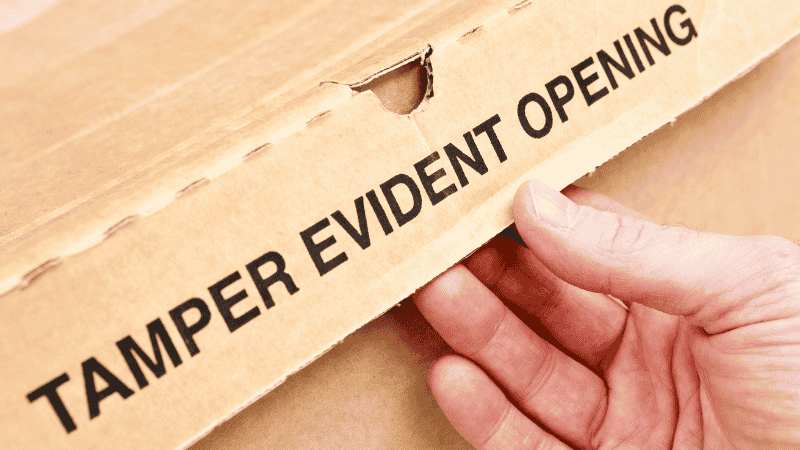
Cargo theft and product tampering are escalating threats in modern supply chains. According to reports by the ATA (American Trucking Associations), these incidents are becoming more frequent and sophisticated every year.
Tamper-evident packaging serves as a crucial line of defense against unauthorized access and potential contamination. It protects your products and establishes confidence among consumers who expect to receive their purchases untouched. In this guide, we explore the 4 Pillars of Security Packaging (Tapes, Bags, Labels, and Seals) to help you build security, integrity, and customer satisfaction.
What is Security Tamper-Evident Packaging?
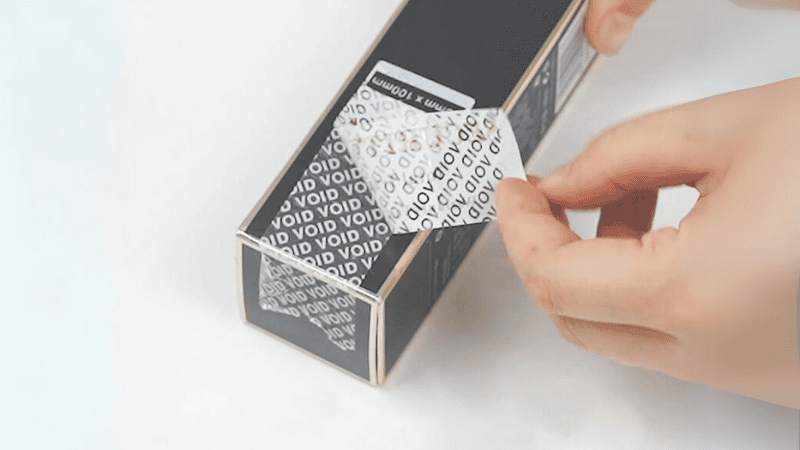
Tamper-evident packaging refers to specialized materials designed to reveal if a container or package has been opened or compromised. The goal is not just to make the package hard to open (that is “tamper-resistant”), but to make it impossible to open without leaving a trace.
The core mechanism of these solutions relies on a simple rule: Self-Destruction upon Removal.
- If a thief peels a security tape, it leaves a “VOID” message.
- If someone cuts a security bag, the heat-welded seams show distortion.
- If an intruder tries to lift a label, it fragments into pieces.
This “visual evidence” principle is crucial for the chain of custody. It allows receivers to reject compromised shipments immediately, protecting your brand from liability and your customers from contaminated or stolen goods.
The 4 Pillars of Security Tamper-Evident Packaging Solutions
At Shosky Security, we categorize effective tamper-evident solutions into four main types. Choosing the right one depends on what you are securing.
1. Tamper-Evident Security Tapes (For Logistics)
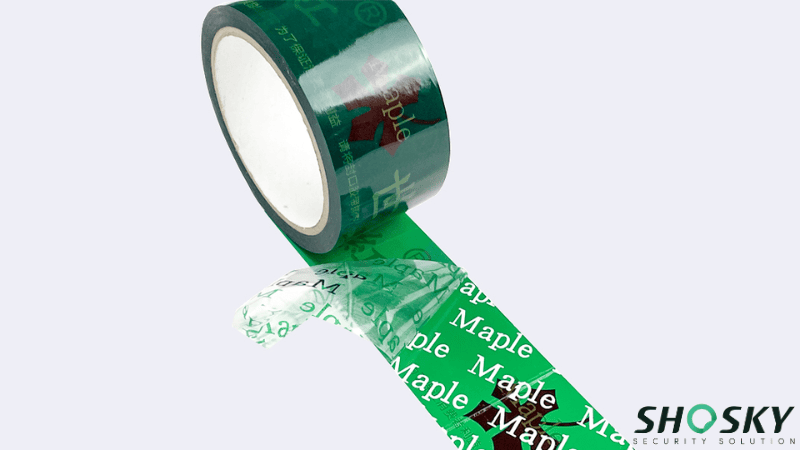
Security tape uses thin adhesive films to secure a container and create a barrier at its opening. It is used primarily for secondary product packaging, such as shipping cartons and pallets.
Security tapes come with an innovative idea. They utilize a multi-layer construction consisting of a top film (usually PET), a release agent, and an aggressive acrylic adhesive. As someone attempts to remove the tape, the layers separate. The top film peels off, but the adhesive layer remains bonded to the carton, leaving behind a bold “VOID” or “OPEN” message.
There are 3 different transfer ways of security tapes, you can choose the suitable one based on your needs:
- Total Transfer Tape: Leaves a permanent residue on the box. Ideal for disposable packaging like cardboard.
- Partial Transfer Tape: Leaves part of the “VOID” message on the box and part on the tape. Ideal for semi-reusable packaging.
- Non-Transfer Tape: Leaves the surface clean, but the tape itself shows the “VOID” message. Ideal for expensive reusable crates or glass surfaces.
You can use simple security tapes to secure any bag, or get security bag tapes to add a second layer of protection to tamper-evident bags.
Best For:
- Logistics & 3PL: Securing shipping boxes to prevent pilferage (theft of a few items from a full box).
- High-Value Retail: Shipping electronics, sneakers, or luxury goods.
- Pallet Security: Wrapping pallets to ensure no boxes are removed during transit.
2. Security Tamper-Evident Bags (For Assets & Documents)
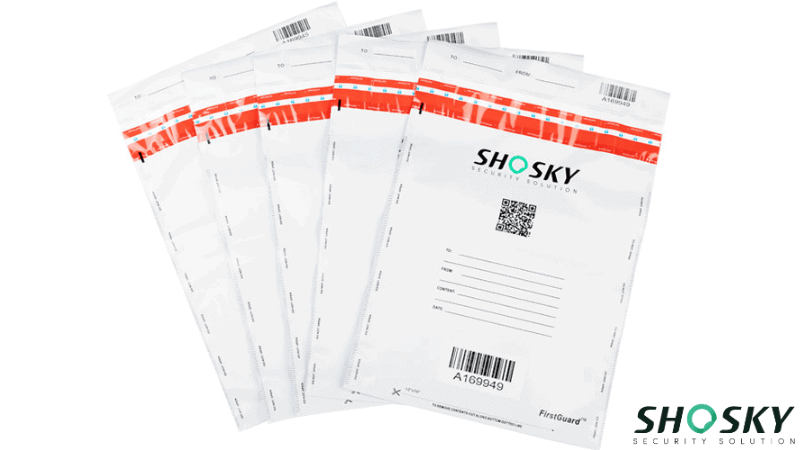
Security bags (often called STEBs or Evidence Bags) are self-contained security environments. They are made from durable, multi-layer co-extruded film that can secure important items like legal documents, cash deposits, and forensic evidence.
These bags are typically made from Co-extruded (Co-ex) film, which combines multiple layers of plastic for superior tear resistance. The core security feature is the closure system. It uses a high-security tape that reacts to environmental attacks:
- Heat: Using a heat gun turns the tape red.
- Cold: Using Freon spray creates “VOID” markings.
- Saliva/Solvents: Chemicals cause the ink to dissolve.
You can also get them customized with a QR code, protected number, or writable film printing for chain-of-custody tracking.
Best For:
- Cash in Transit: Bank deposit bags for safely moving money.
- Aviation: Duty-free bags (STEBs) for liquids.
- Law Enforcement: Evidence bags to preserve DNA or physical evidence.
3. Tamper-Evident Labels (For Product Integrity)
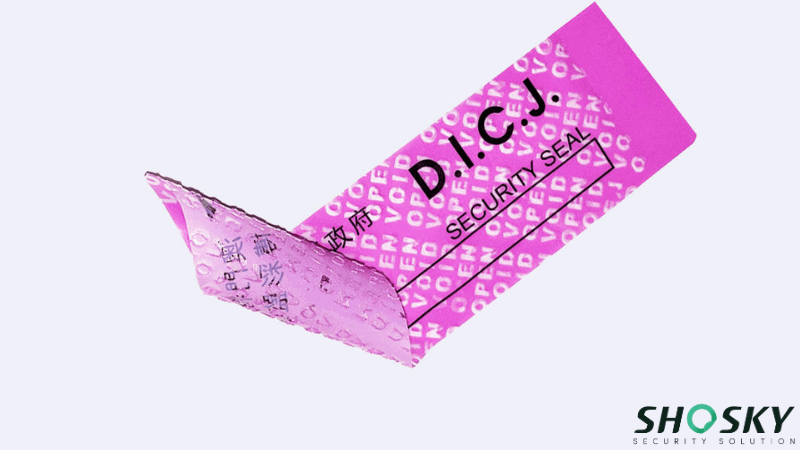
A tamper-evident label consists of adhesive paper material on one side and plain paper on the other. It sticks to the container surface. Once lifted off, the sticky residue on the surface provides evidence of tampering attempts. There are many types of label Seals that you can choose according to your needs:
- Destructible Labels: These labels tear apart if anyone tries to break off the seal. On top of that, they are made of eggshells, so they are an excellent option for those looking for eco-friendly tamper-evident solutions.
- Completely or Partially Transfer Labels: Once removed from packaging, entirely or partially transferable labels imprint some words on the package, making it evident that someone tried to tamper with it.
- Zero Residue Labels: Want the surface of the package to be clean? Go for No-residue label seals. They do not leave any messages once peeled off.
Similar to security tapes, a tamper-evident label also has 3 different transfer ways. You can choose one based on factors like desired size and aesthetic preferences.
Best For:
- IT & Electronics: Warranty void stickers on screws.
- Access Control: Sealing server racks or aircraft doors.
- Pharmaceuticals: Sealing medicine boxes.
4. Security Seals (For Heavy Logistics)
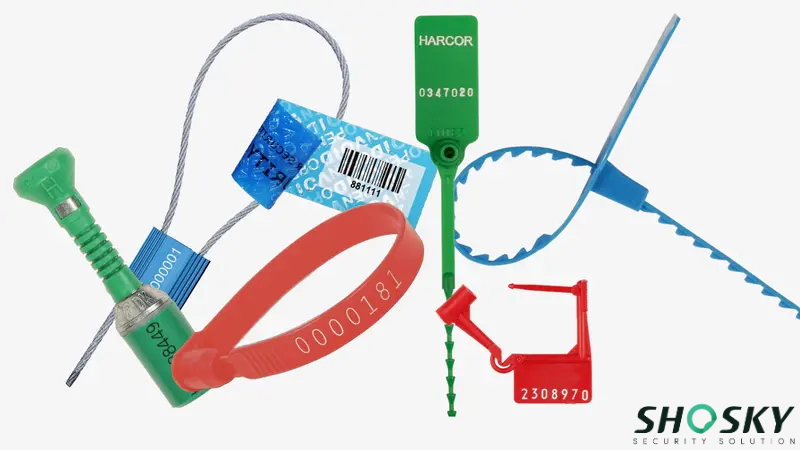
If you are looking for robust solutions for heavy logistics, consider security seals. Unlike tapes and labels, which rely on adhesives, these rely on mechanical strength. These mainly consist of wires, straps, or bolts that need to be physically cut or broken to open a package or door.
There are three main types of seals tailored to different security levels:
- Plastic Seals (Indicative): Used for tote boxes, airline carts, and medical kits. They don’t provide physical protection, but show visual evidence if broken.
- Cable Seals: Made of steel wire, used for securing valves or uneven locking mechanisms.’
- Bolt Seals (Barrier): Used for shipping containers. These are heavy-duty metal seals that require bolt cutters to remove, meeting ISO 17712 standards for high-security ocean freight.
Another type of security seal worth mentioning is the aircraft security seal. They can be used to secure doors to prevent unauthorized access, keep security equipment safe, and transfer cargo without any damage.
Best for:
- Shipping Containers: Securing ocean freight against smuggling.
- Trucking: Locking trailer doors to prevent cargo substitution.
- Utility Meters: Preventing tampering with electric or water meters.
Choosing the right solution depends on what you are protecting. To help you decide sooner, here is a quick look:
| Solution Type | Primary Application | Security Mechanism |
|---|---|---|
| Security Tape | Shipping Cartons, Pallets | Adhesive Residue (VOID) |
| Security Bags | Cash, Liquids, Evidence | Heat/Cold Sensitive Tape |
| Security Labels | Product Packaging, Warranty | Fragmentation or Residue |
| Security Seals | Trucks, Containers, Carts | Physical Breakage |
Industry Applications: Who Needs These Solutions?
Different industries face different threats. A one-size-fits-all approach rarely works when the stakes involve millions of dollars or critical legal evidence. Here is how Shosky’s specialized solutions apply to specific sectors to mitigate risks.
Logistics & Supply Chain
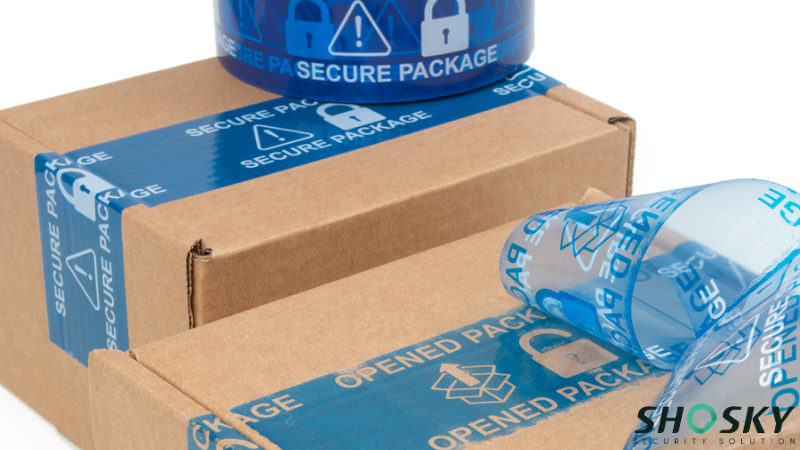
“Pilferage” is the silent killer of profit margins. In busy distribution centers, thieves often open a shipping carton, remove a single high-value item like an iPhone or a luxury watch, and reseal the box with standard clear tape. The theft is often not discovered until the customer opens the package days later.
Solution: Red/Blue VOID Tape
This material aggressively bonds to cardboard fibers. It creates an immediate visual deterrent because it makes resealing impossible without leaving a messy, irreversible “VOID” residue. Thieves act on opportunity and speed; when they see the security tape, they typically move on to an easier, unsecured target.
Banking & Financial Services
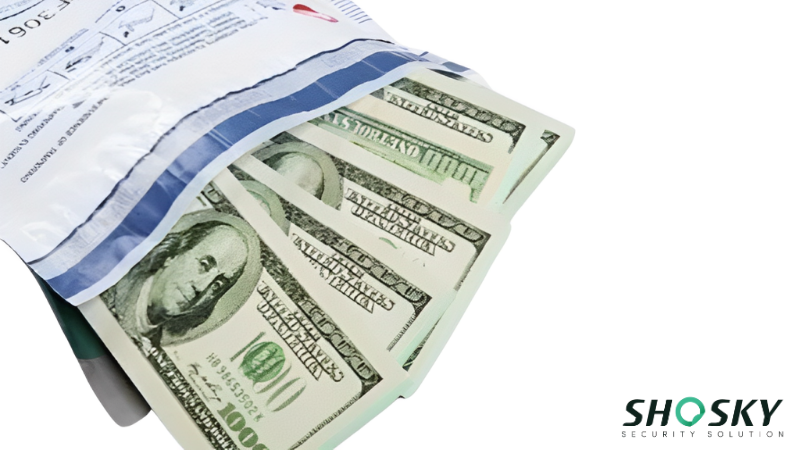
Internal theft or loss of cash during transit between branches and vaults. The risk here is not just financial loss but the collapse of trust and accountability within the organization.
Solution: Deposit Bag
These are essential for Cash-in-Transit (CIT) operations. They hide the contents from view to reduce temptation and utilize serialized barcodes for digital tracking. This ensures a flawless audit trail for every bag from the moment it leaves the branch until it reaches the vault.
Law Enforcement & Government
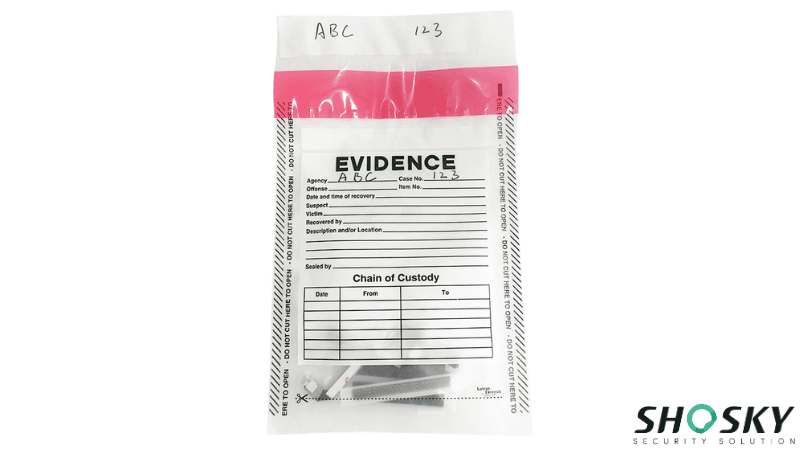
Evidence tampering can ruin a court case. If the “Chain of Custody” is broken or questioned by a defense attorney, critical evidence can be dismissed, potentially allowing a criminal to go free.
Solution: Evidence Bag
Evidence Bags with strict chain-of-custody writing panels. The closure system uses high-security tape that reacts to heat, cold, and solvents, ensuring the bag is robust enough to prevent any form of covert entry or manipulation during storage.
Aviation & Travel Retail
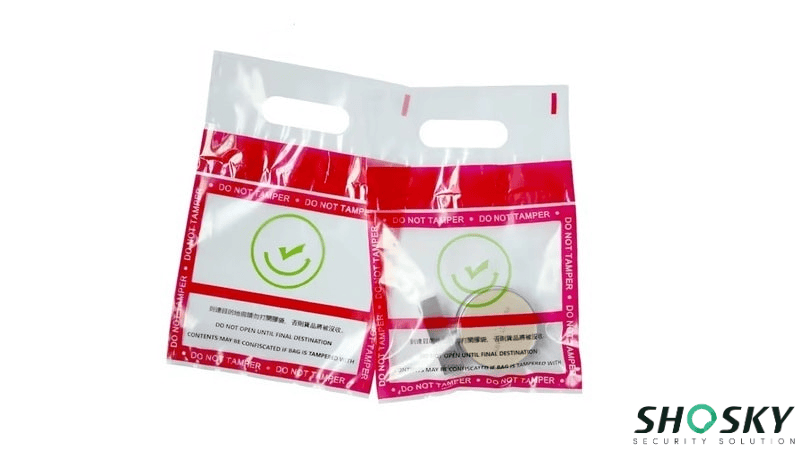
Smuggling illicit goods or non-compliance with strict international liquid regulations are serious problems these days.
Solution: ICAO Compliant STEBs (Duty-Free Bags)
These are mandatory for transferring passengers. These transparent bags allow security officers to inspect liquids visually without opening the sealed environment, ensuring passenger safety while maintaining retail revenue.
How to Choose the Right Tamper-Evident Solution?
Choosing the wrong security packaging can be a costly mistake. If the adhesive fails in the cold or if the label peels off too easily, your security investment is wasted. Consider these four critical factors and ask yourself one question before ordering to ensure you get the right protection.
1. The Substrate (Surface)
The most common reason for failure is mismatching the adhesive to the surface. You must ask: What are you sticking it to?
- Paper/Cardboard: For standard shipping boxes, use Total Transfer labels or tape. You want the security resin to chemically bond with and stick to the paper fibers. This ensures that peeling the tape destroys the box surface, leaving undeniable proof.
- Metal/Glass/Plastic: For reusable containers like plastic crates or rental equipment, use Non-Transfer labels. These reveal a “VOID” message on the label itself when peeled, but leave the surface clean. This saves your team from having to scrape off sticky residue every time a crate is returned.
- Texture: Rough or porous surfaces require a thicker adhesive layer, known as “high tack,” to flow into the gaps and create a secure bond.
2. The Environment

Adhesives are chemicals, and they react to their surroundings. So here is an important question to consider: Where will the package go?
- Extreme Cold: Standard adhesives can become brittle and pop off in freezers. If you ship frozen food or medical supplies, you need cryogenic-grade adhesive that remains tacky even at -40°C.
- Outdoor: UV light degrades standard rubber-based tape quickly. Ensure your security labels are UV-resistant if your pallets are stored outdoors or on tarmacs to prevent the security message from fading.
3. Overt vs. Covert Security
Generally, the use of tamper-proof packaging can deter some malicious individuals, as it increases the difficulty of committing crimes. The visible security solution is a good way to stop tampering. But do you want to stop the thief? Or catch them?
- Overt (Visible): Features like bold “VOID” messages and holographic patterns act as a “Keep Out” sign. They are good for deterrence and stopping opportunistic theft before it happens.
- Covert (Hidden): Features like UV invisible ink or micro-text hidden in the design line. These are good for authentication and catching internal theft. Since the thief does not know the mark is there, they cannot attempt to replicate or hide it.
4. Customization Needs
Off-the-shelf solutions are good for basic needs, but custom-branded solutions are the gold standard for security. Here is the reality that if a thief can buy the same generic “red security tape” on Amazon that you use, they can open your box, steal the goods, and reseal it with their own roll. The crime becomes invisible.
Always print your company logo, specific color codes, or a unique, sequential serial number on your tape and bags. This might increase the cost a little, but it makes your packaging impossible to replicate and ensures that the package arriving at the destination is exactly the same one that left your facility.
FAQs
Q1: How does tamper-evident packaging work?
Tamper-evident packaging features the use of special closure items that leave a visible sign when someone tries to tamper with it. For example, blister packaging, plastic seal bands, shrink bands, etc. These cannot be opened unless tampered with.
Q2: Can tamper-evident packaging be eco-friendly?
Tamper-evident packaging may or may not be eco-friendly. Previously, regular plastic was used. But with the biodegradable options available, most industries have now switched to eco-friendly packaging like mylar bags.
Q3: Is tamper-evident packaging cost-effective?
The cost of buying raw materials, manufacturing, and packaging can be a little high initially. However, it prevents product recalls and builds loyal customers. So, tamper-evident packaging can be cost-effective in the long run.
Conclusion
Tamper-evident packaging is a crucial element in protecting the integrity of products across industries, especially in sectors where security and accountability are paramount.
These seals not only deter tampering but also provide clear evidence when interference occurs, ensuring that businesses can maintain trust, safeguard their goods, and comply with regulations. Whether in law enforcement, correctional facilities, or consumer goods packaging, tamper-evident solutions offer an effective, visible safeguard against unauthorized access. Are you ready to get your tamper-evident packaging solution?
Get Tamper-Evident Packaging Solutions from Shosky!
Shosky Security specializes in offering high-quality tamper-evident packaging that ensures the security of your products throughout their journey. With various customizable options, our seals are designed to meet your specific security needs, enhancing protection and compliance. Don’t leave your goods vulnerable—Contact us today to explore our solutions and confidently secure your products.