
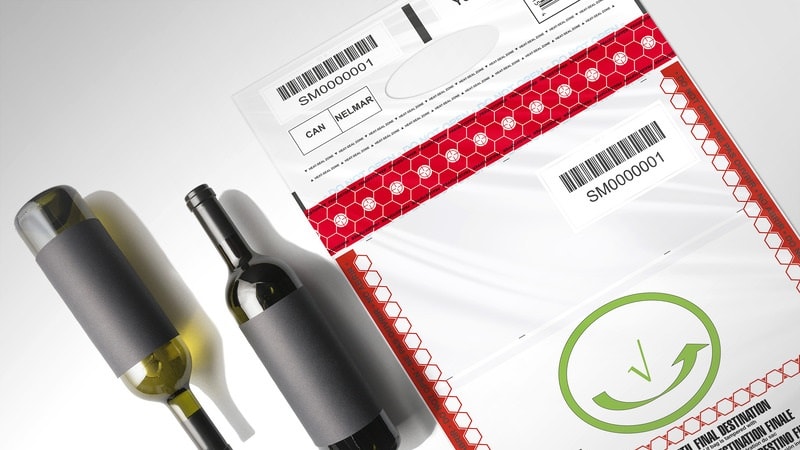
Airport security has become increasingly strict, especially when it comes to carrying liquids and other restricted items. To address this, aviation authorities have implemented rules requiring duty-free purchases to be packed in special bags.
Duty-free bags, particularly Sealed Tamper-Evident Bags (STEBs), prevent unauthorized access to restricted items and ensure compliance with security regulations.
In this article, we’ll explore the different types of duty-free bags and their role in air travel security. We’ll also discuss how these tamper-evident solutions work, how they affect security screenings, and what travelers need to know before making duty-free purchases.
What Is a Duty-Free Bag and How Does It Work?
A duty-free bag, officially known as a Secure Tamper-Evident Bag (STEB), is a highly regulated, sealed plastic pouch used by airport retailers to secure Liquids, Aerosols, and Gels (LAGs).
Designed strictly to the exacting specifications of ICAO Document 8973 Appendix Four, its primary function is to provide an unbroken cryptographic chain of custody. This advanced physical barrier guarantees that restricted items are never maliciously tampered with or covertly replaced with hazardous liquid explosives during chaotic international connecting flights.
To achieve this uncompromised security, the bag utilizes a precisely engineered fifty-micron-thick co-extruded polymer that permanently locks the internal receipt. This allows Transportation Security Administration officers to instantly verify the exact retail terminal origin and purchase timestamp without ever breaking the sterile retail seal.
If the seal remains intact, the traveler can seamlessly bring the items into the country without paying additional taxes or duties. However, if the bag is opened or damaged before passing through customs, the items instantly lose their duty-free status and face immediate confiscation.
Traveler’s Guide: Duty-Free Bag Rules for Connecting Flights
If you are flying directly to your final destination, duty-free rules are straightforward. However, if your journey includes a layover and a connecting flight, you must follow strict international transit rules to avoid having your expensive purchases confiscated at the security checkpoint:
- Do Not Open the Bag: The STEB must remain fully sealed until you reach your absolute final destination. Even if you simply want to test a luxury perfume during a long layover, breaking the tamper-evident seal instantly invalidates the security status of the entire package.
- The Receipt Must Be Visible: The original proof of purchase must be permanently sealed inside the transparent bag facing outward. Security officers must be able to read the exact purchase date and flight number through the high-clarity film to mathematically ensure the timeline matches your current boarding pass.
- TSA and US Connections: If you are traveling to the United States with a connecting flight, the TSA strictly requires that liquids over 100 milliliters be packed in a transparent, pristine STEB. If the bag appears tampered with, it will be entirely banned from your carry-on baggage.
By understanding and following these strict transit rules, passengers can protect their valuable purchases from confiscation. To accommodate these global security requirements, airports and retailers rely on several distinct variations of secure packaging.
Want to Get Standard-Compliant Duty-Free Bags?
Start With A Low Minimum Order Quantity
4 Types of Duty-Free Bags
Not all duty-free bags are engineered the same. The type of carrier you receive heavily depends on the retail items purchased and the exact security threshold of your flight path. By understanding the distinct features of these four primary categories, procurement managers can perfectly match their retail packaging to strict aviation protocols.
1. Sealed, Transparent Security Bags (STEBs)
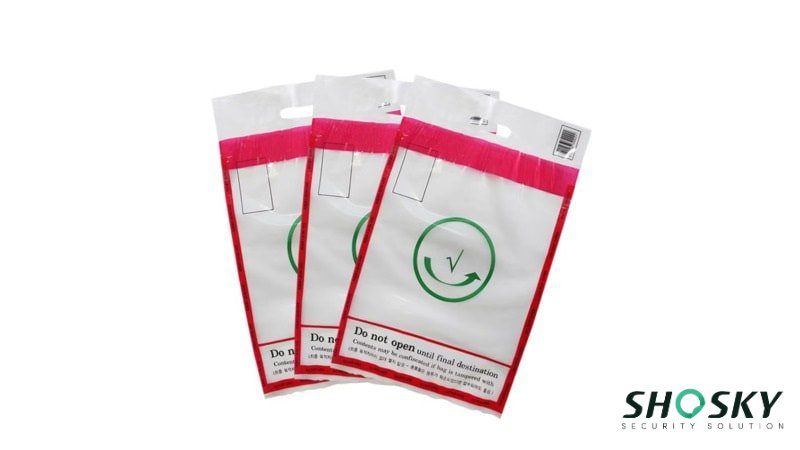
Sealed transparent security bags are legally necessary for carrying restricted liquids through secondary airport checkpoints. Designed strictly to ICAO standards, these specialized pouches are the mandatory core component of global airport security for transporting high-volume alcohol and premium perfumes across international borders.
-
Level 4 Tamper Evident Closures: The security seal utilizes highly aggressive acrylic adhesives that violently self-destruct and display a permanent VOID message if exposed to an industrial heat gun at eighty-five degrees Celsius or liquid Freon at minus fifty degrees Celsius.
-
Ninety-Nine Point Nine Percent Optical Clarity: Manufactured from optical-grade clear plastic, this extreme transparency ensures that security X-ray scanners achieve perfect first-pass read rates on internal barcodes, drastically reducing manual inspections.
-
Fifty Micron Polymer Durability: The robust fifty micron thickness combined with wide skirt side welding ensures heavy glass premium liquor bottles do not burst the bag while passengers navigate chaotic terminal transfers.
By combining these exact forensic features, STEBs physically prevent unauthorized access to restricted items during complex international layovers. This uncompromised chain of custody completely eliminates the risk of immediate customs confiscation and guarantees the sterile status of the contents.
2. Standard Branded Duty-Free Shopping Bags
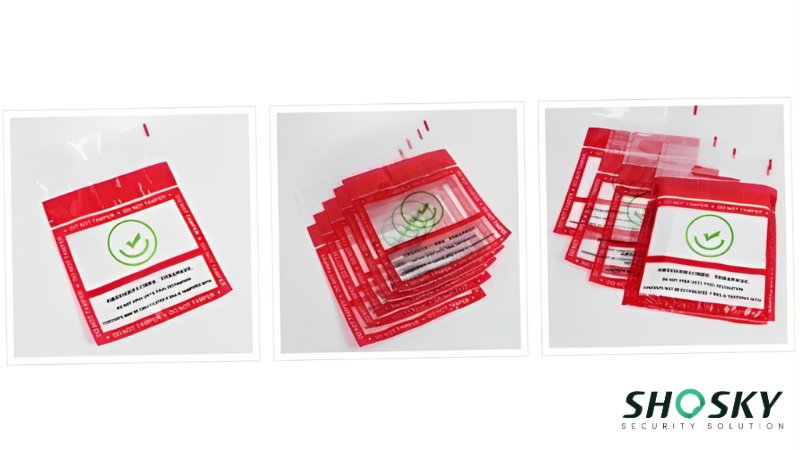
Standard branded duty-free shopping bags are the common commercial carriers utilized exclusively for general dry merchandise that does not fall under strict liquid transportation restrictions. Retailers deploy these convenient carriers for items like premium chocolates, dry cosmetics, and local souvenirs.
-
Unsealed Open Top Design: These standard bags completely lack tamper-evident closures, allowing passengers immediate access to their purchased dry goods without breaking any aviation security protocols.
-
High Visibility Custom Branding: Featuring prominently printed corporate logos and vibrant colors, these bags transform the standard carrier into a highly effective mobile marketing tool for the retail store across the entire terminal.
-
Standard Retail Material Construction: Engineered primarily for temporary carrying convenience and aesthetic appeal rather than forensic aviation security or heavy-duty puncture resistance.
While these standard bags provide an excellent customer shopping experience and make carrying multiple items effortless, they possess absolutely no forensic tracking capabilities. Therefore, they cannot legally be used to transport restricted liquids, aerosols, or gels across international borders under any circumstances.
3. Custom Duty-Free Bags
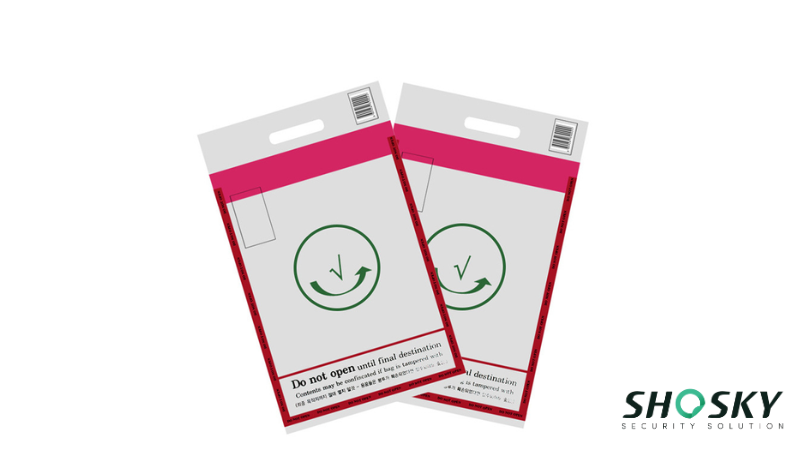
Custom duty-free bags are specially designed structural carriers reserved for highly lucrative premium purchases, adding a massive touch of sophistication to the overall shopping experience. These elevated carriers are traditionally reserved for limited edition alcohol bottles, elite designer perfumes, and expensive luxury watches.
-
Reinforced Structural Handles: Meticulously engineered to comfortably support the extreme weight of premium glass bottles and heavy luxury packaging without tearing.
-
Custom Tactile Finishes: Utilizes high-end materials and specialized printing techniques that physically demonstrate the immense financial value of the enclosed retail purchase.
-
Integrated Padded Protection: Advanced luxury variants often include specialized internal cushioning to prevent cosmetic damage to expensive items during severe flight turbulence.
These elevated carriers seamlessly enhance the customer experience while serving as a powerful mobile marketing asset for global retail brands operating inside exclusive terminal zones. However, unless they are specifically equipped with an ICAO-compliant void seal, they remain strictly restricted to dry goods or direct point-to-point flights.
4. Eco-Friendly & PCR Duty-Free Bags (The Future of Retail)
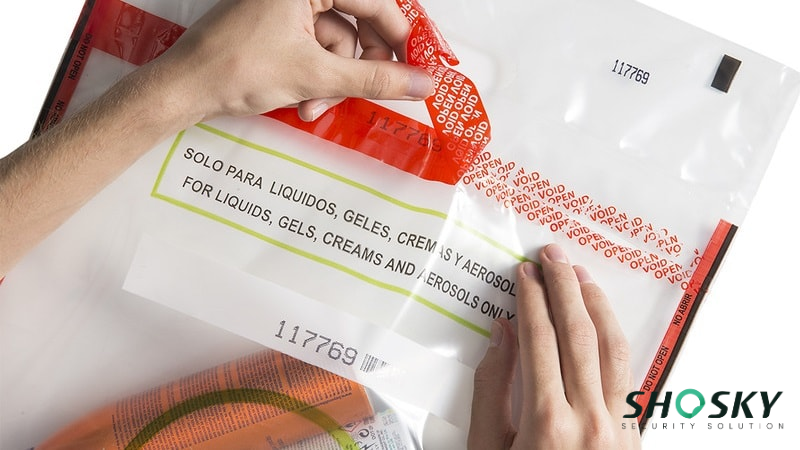
As environmental sustainability dominates global priorities, manufacturers now engineer advanced security bags utilizing post-consumer recycled plastic resins or fully biodegradable polymer compounds. These sustainable alternatives represent the undeniable future of modern aviation retail packaging.
-
Certified PCR Polymer Construction: Aggressively lowers the global carbon footprint of retail operations while maintaining the exact fifty-micron tensile strength required to prevent catastrophic seam ruptures.
-
Uncompromised ICAO Compliance: Maintains the exact same Level 4 tamper-evident security matrix and 99.9% optical transparency as traditional virgin plastics.
-
Environmental Goal Alignment: Helps airport authorities and global retail chains rapidly achieve their strict Environmental, Social, and Governance carbon reduction targets without risking passenger safety.
This perfect fusion of corporate sustainability and forensic security ensures that green material options never compromise severe aviation protocols. Retailers can confidently protect their high-value liquids from tampering while simultaneously participating in massive global environmental protection initiatives.
The Anatomy of an ICAO-Compliant STEB (What Buyers Must Know)
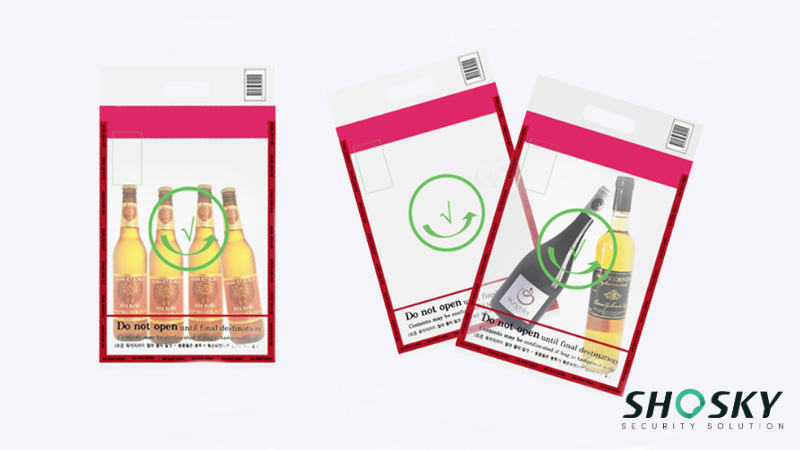
For airport authorities and duty-free retailers, sourcing compliant bags is a strict regulatory matter. A generic plastic bag with a sticky seal will fail customs inspections. A true ICAO-compliant STEB must feature the following manufacturing specifications:
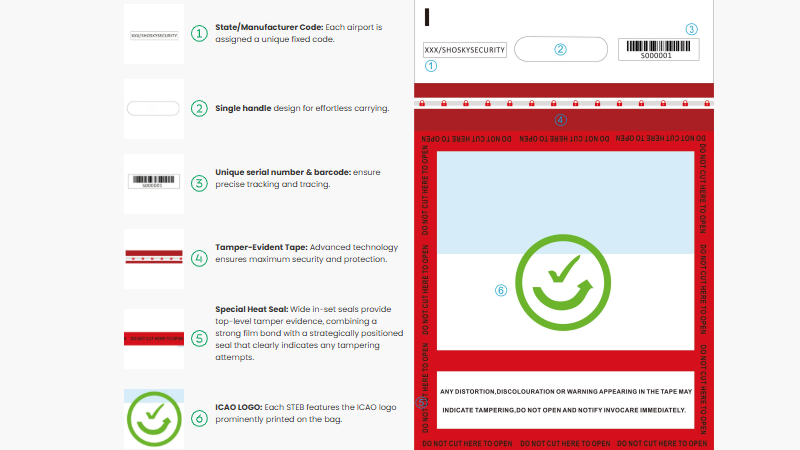
- Level 4 Tamper Evident VOID Tape: The closure must utilize highly aggressive acrylic adhesives. If peeled, heated with an industrial heat gun at 85 degrees Celsius, or frozen with liquid Freon at minus fifty degrees Celsius, the tape must violently self-destruct and display a permanent hidden VOID message.
- Internal Receipt Pocket: Security protocols strictly dictate that the proof of purchase cannot be altered. High-quality STEBs feature a structurally sealed internal pouch where the receipt is physically inaccessible without utterly destroying the bag exterior.
- Fifteen-Character State and Manufacturer Code: Every bag must be printed with a unique ICAO tracking format consisting of a three-letter state code followed by the manufacturer registration number and sequential barcodes. This serialized data ensures absolute digital traceability.
- High Clarity Co-Extruded Film: The plastic must be precisely fifty microns thick to guarantee exceptional puncture resistance, yet boast exceptional optical transmittance so scanners can read receipts without suffering from surface laser glare.
Knowing these strict ICAO specifications is just the first step for procurement managers. To guarantee that a STEB actually performs under the pressure of international transit, buyers must look closely at how these bags are physically constructed on the factory floor.
From Resin to STEB: The Manufacturing Process of Duty-Free Bags
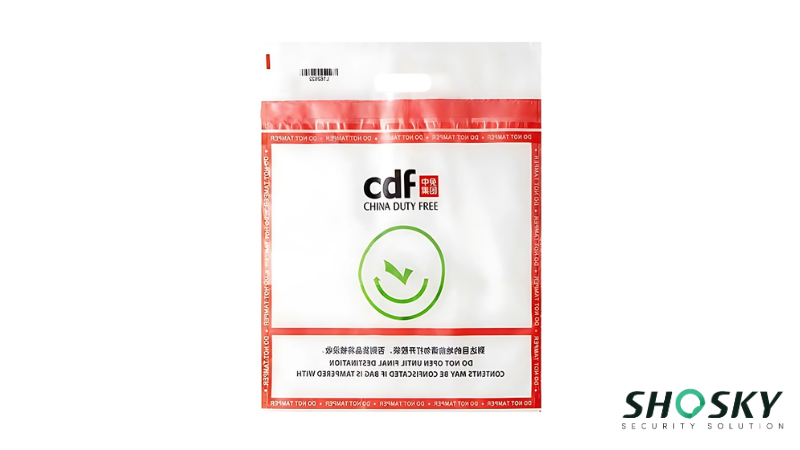
For procurement managers, understanding how STEBs are made ensures you are partnering with a true source manufacturer. The production of a high-security duty-free bag involves several advanced engineering steps:
-
Blown Film Extrusion: Engineers utilize fully recyclable REACH-compliant low-density polyethylene resins. The film is extruded to exact fifty-micron technical tolerances to ensure maximum tensile strength against bottom seam ruptures.
-
High Speed Flexographic Printing: Unique state codes and sequential security barcodes are applied using specialized UV-resistant inks that are chemically formulated to resist heavy smearing even if exposed to pure alcohol or highly concentrated luxury perfumes.
-
Hot Melt VOID Tape Coating: A proprietary Level 4 tamper-evident adhesive matrix is applied precisely to the closure flap under strict climate-controlled factory conditions, ensuring rapid curing.
-
Wide Skirt Heat Sealing: This advanced manufacturing technique creates a massive thermal bond along the structural edges of the polymer film, actively preventing side seam bursts during turbulent international flights.
At Shosky, we control every step in-house, from extruding high-clarity films to applying proprietary VOID adhesives. This end-to-end manufacturing power guarantees our STEBs exceed the complex international aviation laws that govern their global use.
Global Duty-Free Bag Regulations and Compliance
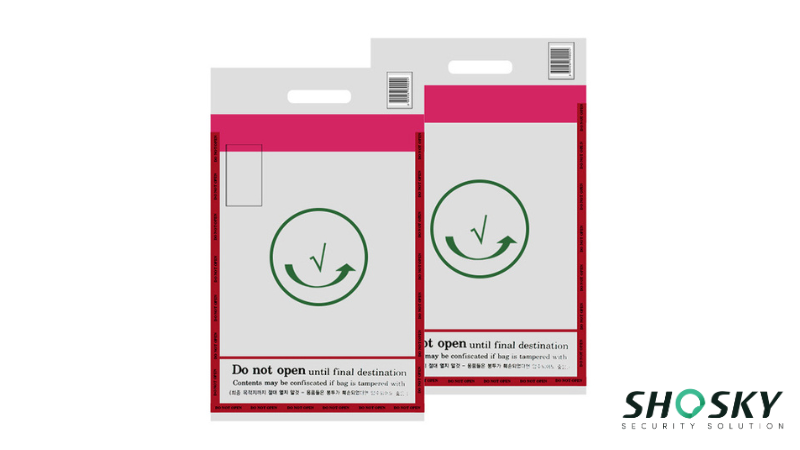
International aviation authorities, including TSA, IATA, and ICAO, set strict security protocols for duty-free packaging to prevent unauthorized tampering. These global standards ensure that sealed bags carrying liquids over 100ml remain unopened during transit. Security personnel rigorously inspect both the physical seal and the enclosed receipt; any signs of tampering typically result in the immediate confiscation of the goods.
Beyond unified ICAO standards, individual airlines and airports often enforce localized regulations. For instance, certain international transit hubs may restrict duty-free LAGs (Liquids, Aerosols, and Gels) during specific layovers, sometimes requiring passengers to transfer these items to checked baggage. For retailers and procurement managers, understanding these regional variances is critical to providing the right compliant packaging and reducing post-purchase friction for travelers.
Because these regulations vary significantly between airlines and international borders, passengers often get confused about what they can and cannot do with their sealed purchases. This confusion has led to several persistent myths that can easily disrupt a journey or lead to confiscated items.
Common Misconceptions About Duty-Free Bags
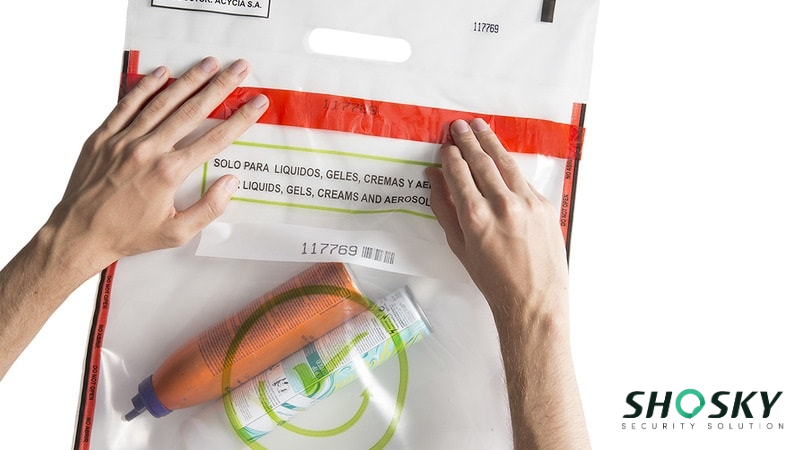
Many travelers make wrong assumptions about how duty-free bags work, especially when flying internationally. These misunderstandings can lead to delays, extra screening, or even having your items taken away. Let’s clear up some of the most common myths:
| Myth | Fact |
|---|---|
| All duty-free bags are tamper-proof | Only Sealed Tamper-Evident Bags (STEBs) have security seals that show signs of tampering. Regular branded duty-free shopping bags do not offer this protection. |
| Duty-free bags can be opened and resealed without issues | Once a STEB is opened, it cannot be resealed. Breaking the seal before reaching the final destination may result in confiscation at security checkpoints. |
| You can bring unlimited duty-free bags on board | Airlines and airports may restrict the number or size of duty-free purchases in cabin baggage. Customs regulations may also apply, leading to taxes or confiscation. |
| Duty-free bag regulations are the same worldwide | Different countries and airlines have varying policies on liquid restrictions, duty-free bag acceptance, and security rules. Travelers should check regulations before buying duty-free goods. |
Understanding these facts can help you avoid surprises during your journey. Always check airline and airport rules before buying duty-free items, and make sure your bag stays sealed until you reach your final destination.
FAQs
Q1: Can I open my duty-free bag on the plane?
No. You must not open your sealed duty-free bag during your flight. If your journey involves a connecting flight, opening the bag will break the security seal, and your liquids will be confiscated by security at your transit airport.
Q2: Can I take a duty-free bag on a connecting flight?
Yes, provided that the liquids are sealed inside an ICAO-compliant Secure Tamper-Evident Bag (STEB), the bag shows no signs of tampering, and the original receipt is clearly visible inside the pouch.
Q3: What happens if my duty-free bag is opened before security?
If the tamper-evident seal is broken before you pass through a transit security checkpoint, the items lose their secure status. Any liquids, aerosols, or gels over 100ml (3.4 oz) will be confiscated and disposed of by airport security.
Q4: What is the difference between a standard duty-free bag and a STEB?
A standard duty-free bag is just a branded carrier for general merchandise. A STEB is an ICAO-regulated security product made of thick transparent film, featuring a Level 4 tamper-evident void closure and internal receipt pockets, mandatory for transporting liquids across international borders.
Q5: Do tamper-evident duty-free bags expire?
While the plastic film lasts for years, the high-security adhesive used in the VOID tape typically has a shelf life of 1 to 2 years. Retailers should store them in climate-controlled environments to maintain optimal adhesive performance.
Avail ICAO-Approved Duty-Free Bags From Shosky Now!
Duty-free bags play an important role in travel security and convenience. By using sealed tamper-evident bags (STEBs) correctly, travelers can protect their purchases and comply with aviation security rules. To truly elevate your travel experience and guarantee the safety of your duty-free goods, consider investing in reliable, high-quality STEBs.
Shosky Security specializes in custom tamper-evident solutions, including Sealed Tamper-Evident Bags (STEBs), security tapes, and labels designed for airport security and duty-free retail. Our high-performance solutions ensure product integrity and compliance with international aviation standards. Contact us today and enhance security for duty-free purchases!