
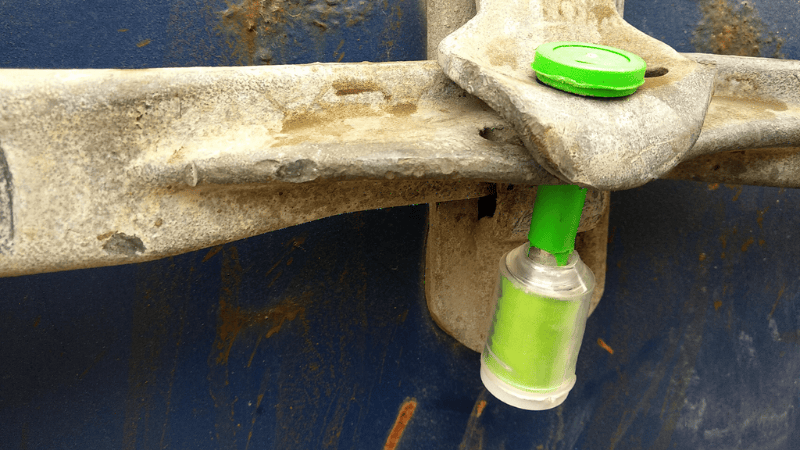
A rejected freight load is one of the most expensive disruptions in logistics. It eats into tight profit margins, delays operations, and damages the carrier’s reputation. A seal that doesn’t match shipment records often triggers a refusal at the receiving point. Industry data shows cargo theft costs carriers more than $125 million in one year, with many incidents linked to seals that were weak or not checked properly.
High-quality, tamper-evident trailer seals are more than just compliance tools. They are the frontline defense against theft, undetected tampering, and costly disputes. Below, we break down the root causes of rejected loads and how to match the right security seal to your specific freight.
The Anatomy of a Rejected Load: Why Cargo Gets Refused

High-value freight can be rejected in transit for various reasons. One common issue comes from refrigerated trailers delivering perishable food. Cheap plastic seals often become brittle and snap in freezing temperatures or under high-pressure washes, triggering false tamper alerts. This can stop a load instantly, even if the cargo is intact, wasting time and resources for the company.
Another problem arises when thieves exploit the “phantom seal” trick. They cut the original security seals, pilfered the cargo, and replaced the broken seal with a generic one that matched in color. Receivers often focus on the Bill of Lading number, and even a single-digit mismatch during the receiving audit will lead to rejection. This shows that visual checks alone are not enough to protect high-value shipments.
Fleet managers can save loads from rejection by using verified high-security seals and tracking every unique seal number in a centralized system. A clear record of serial numbers, combined with driver photo verification or digital feedback, helps reduce errors and ensures smooth delivery.
The Best 3 Tamper-Evident Trailer Seals for Freight Protection
Different types of tamper‑evident security seals address various freight needs. Selecting the right seal depends on cargo value, transport type, and compliance requirements. Here’s a detailed look at the most common options:
1. Numbered Truck Seals
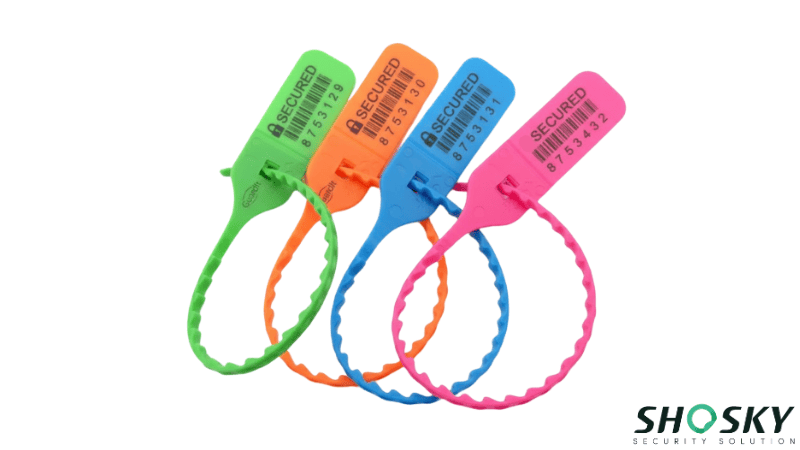
Standard plastic truck seals are the backbone of domestic logistics for general freight. They are indicative seals designed to show clear evidence if a trailer door has been opened. Every legitimate seal features a unique identifier, often laser-etched or hot-stamped, ensuring the seal cannot be replicated or altered. Recording this exact number on the BOL creates a verifiable chain of custody from dock to delivery.
When a discrepancy occurs (like a number that doesn’t match the documentation), it immediately signals a potential problem, saving time and resources during customs checks or routine events.
Benefits:
- Track each seal’s movement with a tamper-proof, unique identifier
- Match numbers across the bill of lading, packing list, and customs documentation content
- Detect substitution attempts; a replaced seal will never carry the original number
Beyond security, numbered seals provide proof during audits, insurance claims, or dispute resolution. Shippers who don’t use numbered sealing may struggle to show that an item left the facility intact, making these seals essential for accountability and compliance.
2. Reefer Trailer Seals
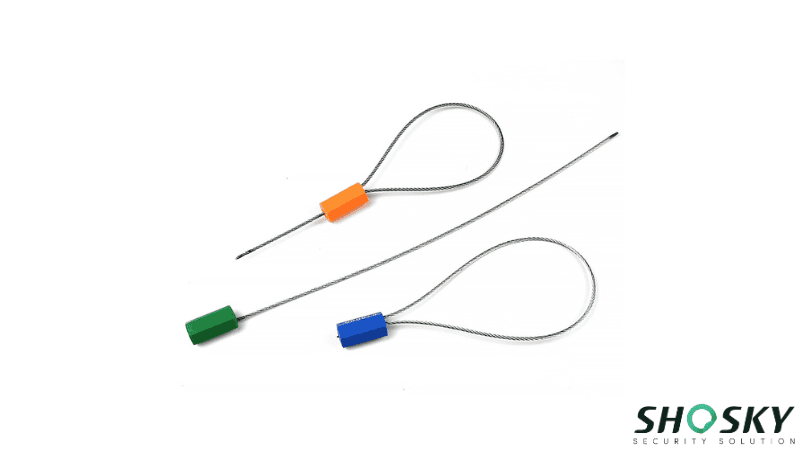
Standard plastic can shatter in sub-zero environments. Reefer trailer seals are manufactured from specialized heavy-duty polymers or metal cables designed to remain intact in freezing temperatures and withstand high-pressure trailer washes, making them suitable for temperature-controlled cargo.
Cold-chain failures are costly. A broken, removed, or improperly applied seal can trigger a rejected load, product recall, or regulatory investigation under the Food Safety Modernization Act (FSMA). Even leaving a seal unchecked for a free inspection event can lead to compliance issues, showing the importance of selecting the right seal for the unit’s temperature range.
Benefits:
- Provide visual evidence of physical tampering or temperature without weather-related false alarms
- Protect perishable items from unnoticed cold-chain exposures
- Meet rigorous FSMA, HACCP, and other cold-chain compliance requirements
Using reefer trailer seals properly helps carriers explore weak points in their cold-chain handling and prevents issues that could affect their certification status or reputation. Seals rated for the actual operating temperature reduce the risk of costly problems in transit.
3. High-Security Bolt Seals
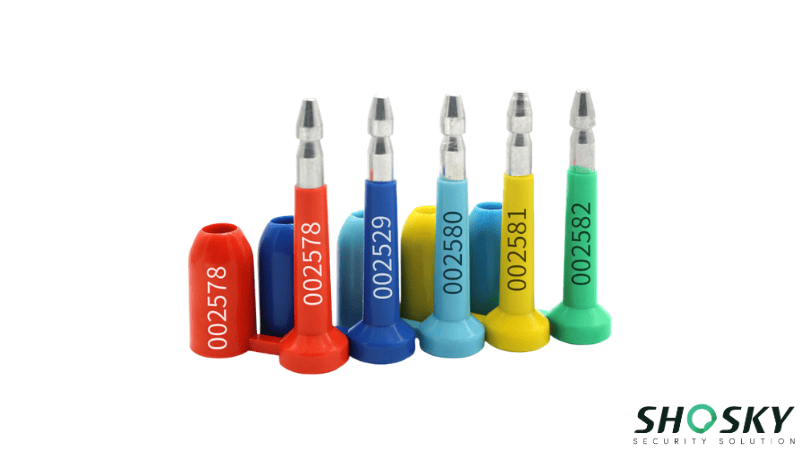
High-security bolt seals are built from hardened carbon steel, with solid pins and locking barrels that resist cutting, twisting, or pulling. Unlike standard plastic truck seals, they are designed to physically block unauthorized access from the start. Any forced removal leaves clear visual evidence and requires heavy-duty bolt cutters.
These seals are ideal for cross-border, high-value freight, international shipments, and routes at risk of theft. They can meet customs requirements, including C-TPAT, and display serial numbers for verification. Using them properly creates a secure chain of custody that covers each item from dispatch to delivery.
Benefits:
- Protect high-value freight on domestic and international routes
- Support compliance with customs and security frameworks
- Meet ISO 17712 high-security classification for strength and durability
Certification ensures that these seals perform under stress, giving carriers confidence that the seal will not fail during transit or inspections. Returning to the documentation for verification is simple, and the record of each seal helps resolve events and disputes efficiently.
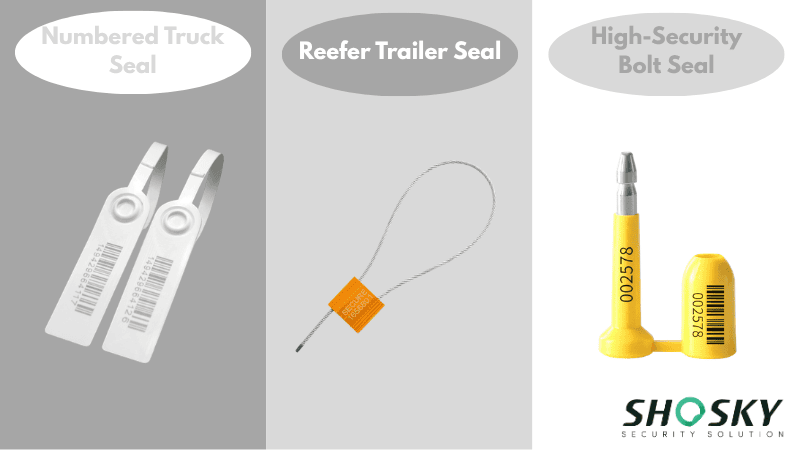
Use the table below to quickly match the right tamper-evident trailer seal to your specific logistical requirements:
| Seal Type | Key Features | Best For |
|---|---|---|
| Numbered Truck Seals | Unique serial numbers, tamper-evident, traceable | Standard freight requiring a chain-of-custody |
| Reefer Trailer Seals | Flexible materials, temperature indicators, cold-resistant | Perishable or temperature-sensitive cargo |
| High-Security Bolt Seals | Hardened steel, high-force resistance, ISO 17712 certified | High-value or high-risk freight, international routes |
Choosing the right seal reduces risk, supports compliance, and provides verifiable proof of security. Using the table as a guide helps ensure each load gets the protection it needs, while simplifying audits and inspections.
How Fleet Managers Can Enforce a Zero-Rejection Seal Policy
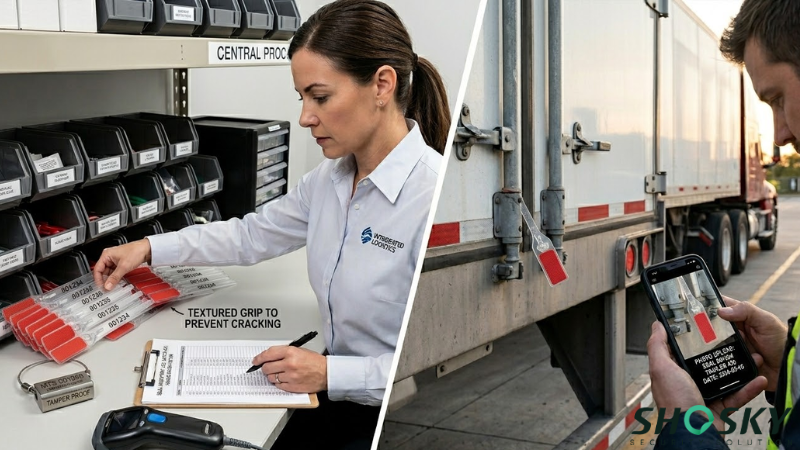
A strong seal policy depends on how the system is built, not how drivers react on the road. Fleet managers need control over how security seals are selected, stored, and used across every truck and trailer. Here are the steps fleet managers can follow to enforce a zero-rejection seal policy:
- Step 1 – Centralize Procurement: Stop letting dispatchers purchase random seals from unauthorized vendors. Work with a verified supplier to standardize seal category, maintain serial order, and control quantity across the fleet.
- Step 2 -Track and Assign Inventory: Keep seals categorized by batch and assign them to a specific terminal or driver account. Logging quantity and serial ranges helps avoid mix-ups and missing records.
- Step 3 – Require Driver Proof: Ask drivers to upload a time-stamped photo that shows the sealed trailer and matching number. This step adds a clear record before departure and helps catch any problems early.
- Step 4 – Set a Clear Inspection Process: Train drivers on what to do if a seal is cut during a highway patrol inspection. They should document the event, get paperwork signed, and apply a new seal from approved stock
When these steps are followed, seal handling becomes simple and controlled. Managers can learn from past issues, close gaps in the process, and reduce the chances of rejected loads across the fleet.
What to Do If a Trailer Seal is Broken or Missing
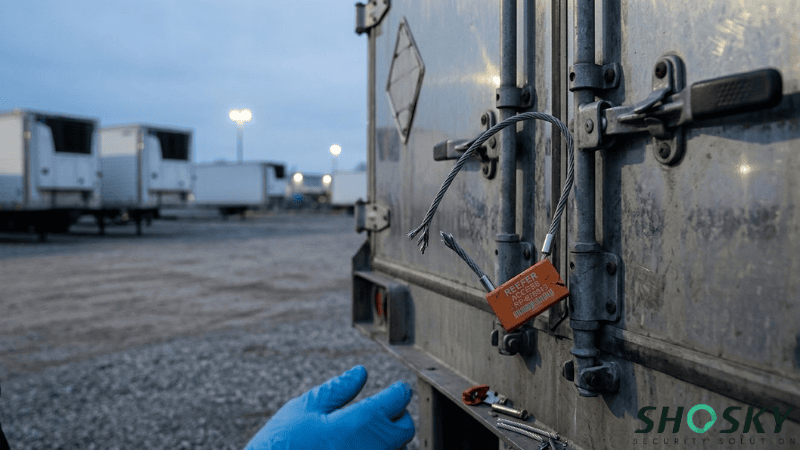
Even with the best security protocols, anomalies happen. A seal might be broken during a highway inspection, or worse, compromised by cargo thieves. Handling this situation incorrectly at the receiving dock guarantees a rejected load and an expensive insurance battle. Here is the strict protocol your team should follow if a trailer arrives with a broken, missing, or mismatched security seal:
- Do Not Open the Trailer Doors: This is the most critical rule. If the receiving team opens the doors before documenting the breach, they assume liability for any missing or damaged freight.
- Quarantine the Shipment: Direct the driver to a secure holding area away from the main unloading docks. Do not allow the driver to leave the premises or interact with the cargo.
- Document the Evidence: Take clear, timestamped photos of the trailer doors, the locking mechanism, and the compromised seal. If a “phantom seal” was applied, photograph the serial number to prove it does not match the Bill of Lading.
- Notify All Parties Immediately: The receiver must contact the carrier’s dispatch team and the original shipper right away. Provide the photographic evidence and hold the freight until all parties agree on the next steps.
- Conduct a Joint Audit: When authorized to open the doors, conduct a blind tally (a complete itemized inventory count) with the driver present. Document every shortage or damaged pallet before signing the delivery receipt with a “Subject to Count and Condition” clause.
Having this protocol in place turns a chaotic security breach into a managed, documented event, protecting both the carrier and the shipper from unfair financial losses.
FAQs
Q1: What happens if DOT or Customs breaks my trailer seal for an inspection?
DOT or Customs breaking a seal is standard for inspections; your cargo remains protected, but documenting the event with photos helps prevent rejected loads.
Q2: Who is financially responsible for a rejected load due to a broken seal?
The shipper or carrier may bear costs depending on the contract, but using high security seals like bolt seals or cable seals can help protect against disputes.
Q3: Can a receiver reject a load if the seal is intact but the numbers don’t match the BOL?
Yes, mismatched seal numbers can trigger rejection since accurate documentation is required to prevent rejected loads.
Q4: What if the seal number is unreadable due to weather or road grime?
If a number cannot be verified, the receiver may reject the load. To prevent this, use high-quality seals with laser-engraved numbers, and always require drivers to wipe down the seal and take a clear photo before departure.
Q5: Can we use heavy-duty cable seals instead of bolt seals for high-value freight?
Yes. If your trailer has misaligned or warped door latches where a rigid bolt seal won’t fit, you can use an ISO 17712 certified high security cable seal. They provide the same legal compliance as bolt seals but offer physical flexibility.
Conclusion
Preventing rejected loads starts with clear, consistent freight security. Tamper‑evident trailer seals are a core tool. When you choose the right type and use it correctly, you protect your cargo, reduce disputes, and build trust with customers. If you want to strengthen your freight security, review the options above and match them to your freight profile.
Secure Your Freight with Shosky Security Seals
Protect your shipments from tampering with tamper-evident trailer seals from Shosky Security. Reduce rejected loads and strengthen supply chain security. Contact us today or email us to find the best seal for your needs and keep your cargo safe!