
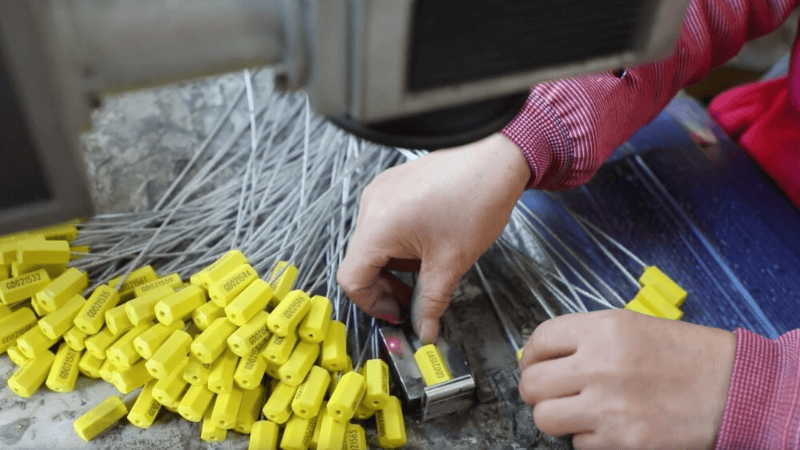
The traditional lead seal remains one of the most highly searched and historically trusted mechanical security devices in the global logistics and utility sectors. Used since Roman times to mark ownership and secure high-value goods, the lead seal provides immediate, irreversible physical evidence that an item has not been opened or tampered with during transit.
For procurement teams, the question is no longer what a lead seal can do. The question is which lead-free security seals can replace it without adding cost, training time, or supply risk. This article talks about the five strongest lead seal alternatives on the market, and how they provide tamper-evidence against unauthorized access without the worker safety and disposal issues lead carries
What is a Traditional Lead Seal and How Does It Work?
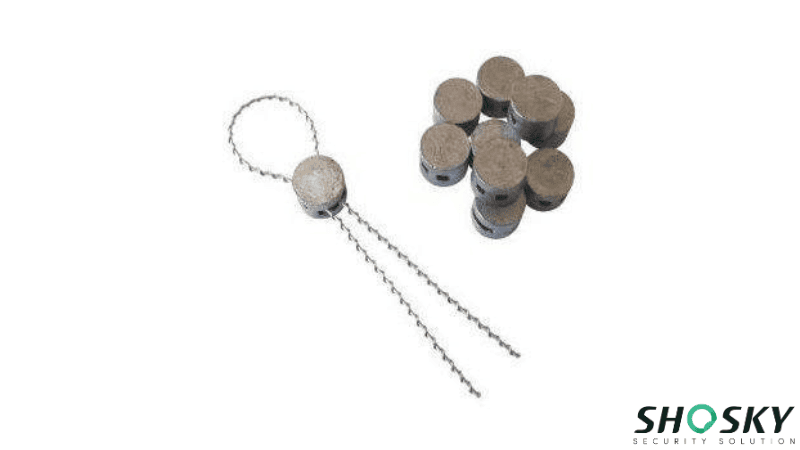
A traditional lead seal is a highly malleable, heavy-metal physical security device designed to permanently clamp onto a sealing wire. Its core engineering advantage lies in the unique physical properties of raw lead: it is incredibly soft, highly resistant to environmental corrosion, and holds an embossed shape permanently once compressed.
To establish a secure chain of custody, field technicians rely on the following standard specifications:
- Standard Dimensions: A professional-grade lead seal is typically manufactured at 5 mm in thickness and is available in standard industrial diameters of 8 mm or 10 mm.
- The Wire Matrix: The seal features two internal parallel channels designed to thread multi-strand galvanized steel, copper, or nylon-coated wire.
- The Crimping Mechanism: Field operators secure the device using specialized sealing pliers. The pliers apply extreme mechanical compression, crushing the soft lead around the wire threads to create a permanent, non-slip friction lock.
- Custom Embossing: The sealing pliers usually feature custom-engraved dies. During compression, the pliers permanently emboss the company logo, date code, or inspector ID directly into the face of the lead seal, making unauthorized duplication nearly impossible.
Once a lead seal is properly crimped, the only way to access the secured asset is to physically cut the wire, thereby destroying the seal and providing immediate visual proof of tampering.
Why Procurement is Moving Away from the Lead Seal
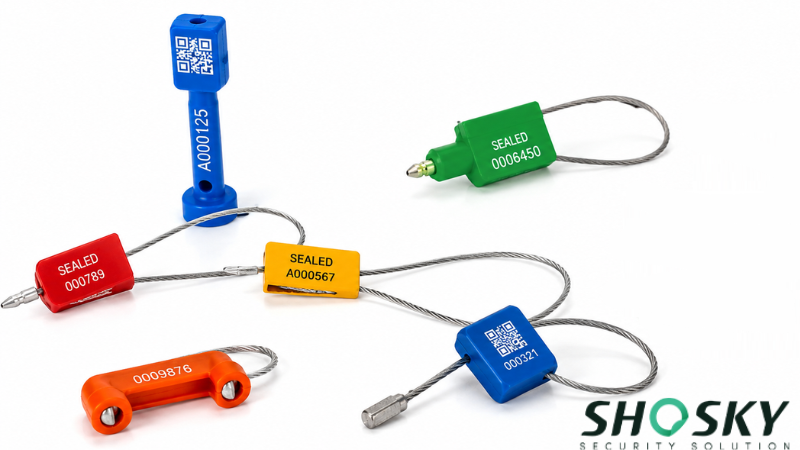
Shifting your operational inventory away from heavy metals is driven by an aligned network of occupational health and environmental safety directives. Organizations can no longer treat hazardous substance mitigation as a secondary sustainability goal because non-compliance now triggers immediate legal and financial exposure.
To satisfy international compliance auditors, procurement teams must evaluate their security hardware inventory against the following strict regulatory benchmarks:
- OSHA Permissible Exposure Limits: Federal mandates fix the maximum allowable lead particulate exposure to 50 μg/m³ over a standard eight-hour shift.
- OSHA Action Level Compliance: Reaching a threshold of 30 μg/m³ triggers mandatory, continuous workplace air monitoring and expensive medical surveillance programs.
- EU RoHS Substance Restrictions: International trade laws strictly prohibit the inclusion of lead within modern electrical, electronic, and utility meter apparatus.
- REACH Chain of Custody Obligations: European chemical directives require industrial shippers to maintain meticulous material declarations for all transit packaging.
Documenting your legacy hardware inventory against these global safety standards provides auditing bodies with verifiable proof that your transition roadmap is actively underway. Failure to implement these non-toxic updates exposes your organization to immediate border rejections and severe civil litigation.
Ready to Get Lead-Free Security Seals for Your Business?
Start With A Low Minimum Order Quantity
The 5 Best Engineered Lead Seal Alternatives
Lead seals once secured meters, fire safety equipment, bank bags, confidential documents, aviation equipment, and cargo. Today’s alternatives cover the same range, with materials that skip the toxicity.
However, one distinction worth clearing up first: lead sealant is not the same thing as a lead seal. Silicone sealant is a flexible compound used to fill gaps and joints. A lead seal is a physical security device, crimped or locked shut to show if something’s been tampered with. The five security seal types below replace that second function.
1. Polycarbonate Plastic Meter Seals
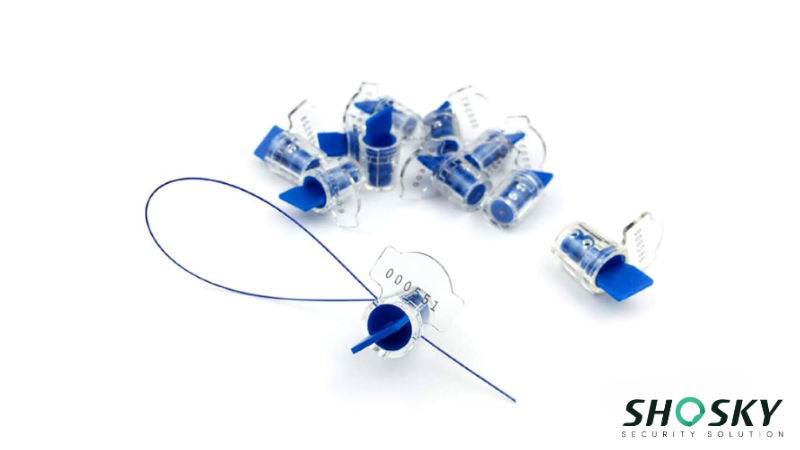
Polycarbonate plastic meter seals provide the most direct, tool-compatible replacement for securing gas and water utility infrastructure. They are engineered to substitute for traditional metal discs without forcing departments to redesign their field deployment kits.
Procurement directors specify polycarbonate hardware to leverage the following mechanical specs:
- Tooling Compatibility: These devices use your existing standard field-sealing pliers, eliminating the cost of procuring a secondary tool.
- Visual Tamper Evidence: The specialized polycarbonate resin exhibits immediate, irreversible stress whitening when subjected to internal prying forces.
- Color Coded Zoning: Manufacturers ship these units in pre-sorted bulk packs of red, yellow, blue, or green to streamline regional utility fleet audits.
Deploying these rigid polymer caps allows field technicians to execute rapid compliance checks from a distance of two meters. This eliminates the necessity of physical contact during routine utility tracking schedules.
2. High-Temperature Aluminum Crimp Seals
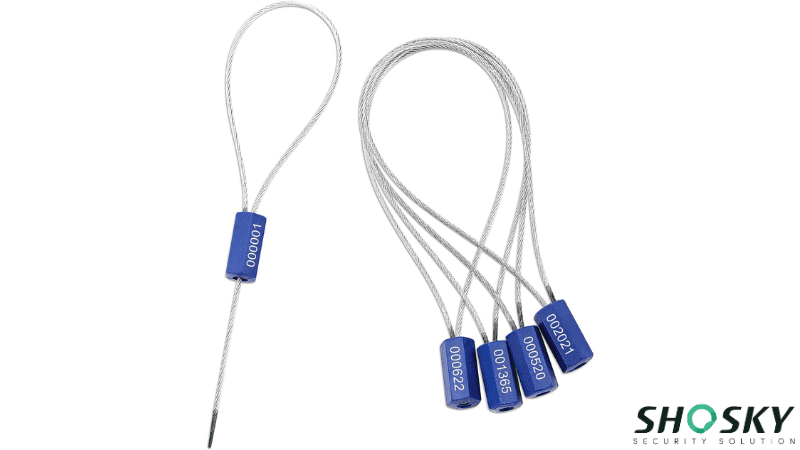
High-temperature aluminum crimp seals are engineered specifically to withstand severe outdoor industrial environments where traditional plastics melt. They provide an exceptional non-toxic barrier across heavy asset networks exposed to volatile chemicals.
These rugged metallic discs deliver the following physical performance metrics:
- Thermal Resilience: The structural aluminum alloy maintains total sealing integrity in operating environments exceeding 600°F.
- Anodized Protection Layers: Features specialized chemical coatings that completely repel saltwater corrosion, chemical splashes, and intense UV exposure.
- Wire Application Versatility: Clamps permanently onto multi-strand stainless steel wire or galvanized steel wire configurations using standard compression tools.
Aluminum seals split into two categories: tool-free designs and crimp styles built around stainless steel wire or galvanized steel wire. Both keep a silver finish that holds up well under visual inspection. Anodized color options, including red, orange, blue, and green, or yellow, give color-coding fleets a way to sort assets at a glance.
3. Integrated Security Wire Seals
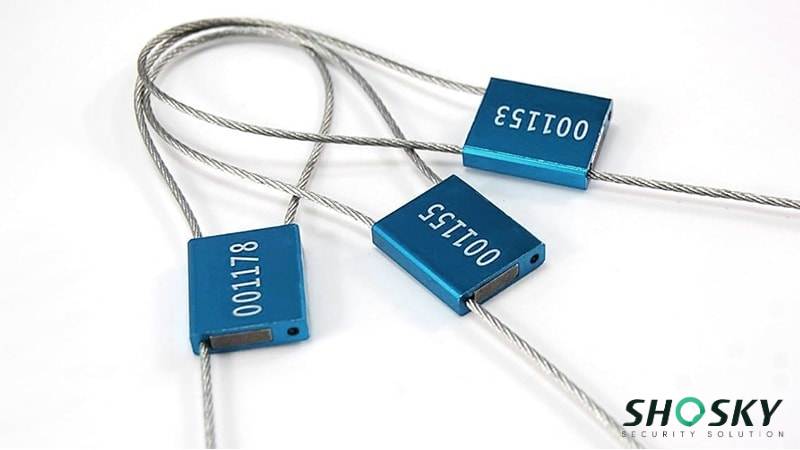
Integrated security wire seals combine the locking mechanism chamber and the sealing wire into a single pre-assembled asset to optimize installation speed. This unified design entirely eliminates the logistical friction of managing separate supply spools in the field.
Field operations prioritize integrated wire units based on the following workflows:
- Tool-Free Internal Locking: Operators pass the pre-attached wire through the latch and manually rotate the internal plastic head to lock it permanently.
- Simplified Inventory Control: Supplying the body and wire as a single line item reduces warehouse tracking complexity across multiple regional depots.
- Substrate Material Variations: Available with high-tensile stainless steel wire for outdoor lines or copper wire for low-risk indoor setups.
Utilizing integrated units drastically reduces field labor hours during high-volume equipment panel and transport cart sealing cycles. Technicians execute secure closures in less than five seconds without carrying heavy manual crimpers.
4. Plastic Padlock Seals
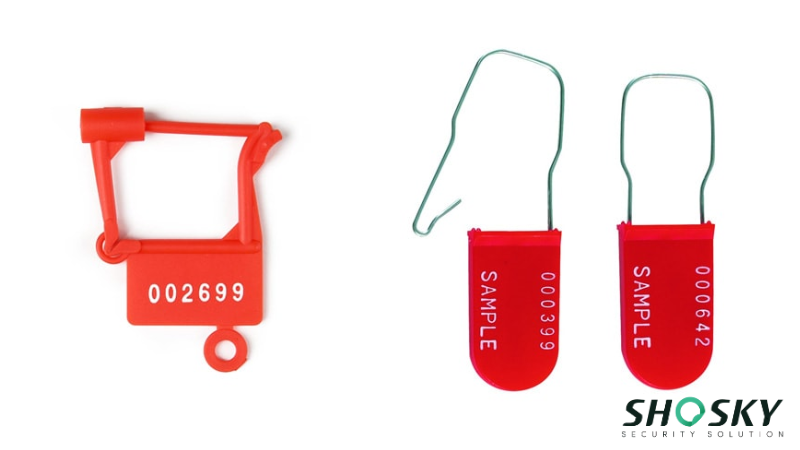
Plastic padlock seals use a pull-through locking design that snaps shut by hand. They show up most in aviation, medical logistics, cargo handling, and food distribution, anywhere a fast, tool-free seal matters.
Logistics managers specify padlock seals to enforce the following tracking metrics:
- Calibrated Tensile Thresholds: Provides a secure breaking strength of 80 lbs, preventing accidental snags while remaining easy to detach in an emergency.
- Flat Flag Tracking Surfaces: Features an enlarged structural area perfect for hosting laser-etched serial numbers or scannable QR codes.
- Audit Traceability: Serialized numbering ranges allow inventory software to instantly identify missing seals during routine compliance audits.
A clear serial sequence also helps teams spot missing seals during audits. For shipping applications, cable seals that meet ISO 17712 and C-TPAT requirements may be required for container security, since ISO 17712 sets performance and testing standards for high-security seals used in freight transport. Match the seal type to the risk level and shipping route, not the other way around.
5. PCR Eco-Friendly Seals
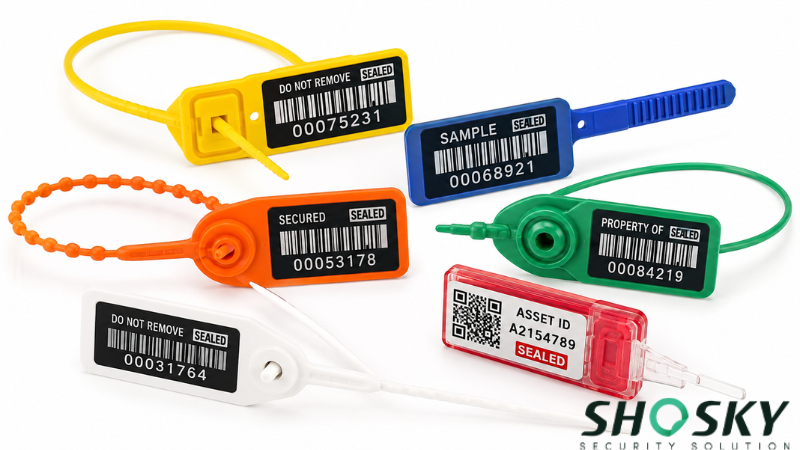
Post-consumer recycled plastic seals deliver robust tamper evidence while directly supporting corporate ESG carbon reduction metrics. They ensure that your security transition aligns perfectly with modern zero-waste corporate mandates.
Procurement teams evaluate these eco-friendly options using the following engineering baselines:
- Sustainable Material Matrix: Manufactured utilizing high-density post-consumer recycled resins that match the tensile performance of virgin polymers.
- Custom Laser Engraving: Supports high contrast permanent laser etching for consecutive serialization and corporate logos without utilizing toxic inks.
- Traceable Supply Streams: Sourced exclusively from verified recycling channels backed by complete material declarations and batch traceability certifications.
Specifying post-consumer recycled alternatives allows procurement teams to retire toxic heavy metals while actively hitting corporate zero-waste objectives. They provide an uncompromised mechanical lock that proves your organization handles asset security and environmental protection with equal gravity.
Technical Comparison of Lead Seal Alternatives
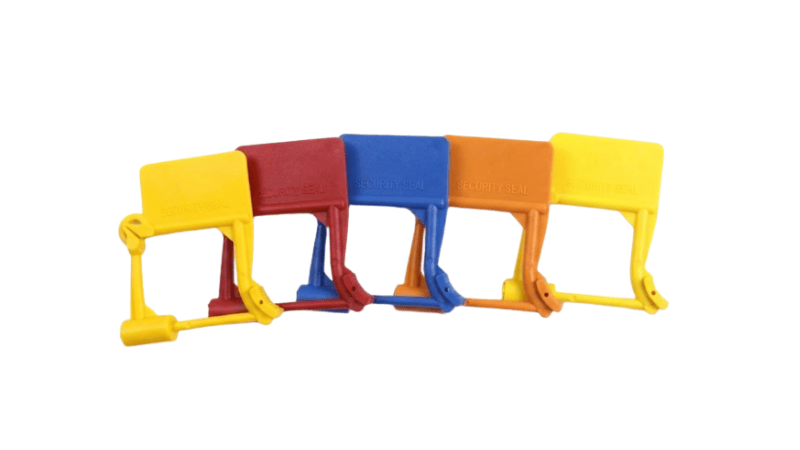
Procurement teams can find the right fit among these seal types by matching tool requirements to existing field kits first, then narrowing by application.
| Seal Type | Material | Application method | Typical Diameter | Tamper evidence |
|---|---|---|---|---|
| Polycarbonate Meter Seal | High-strength plastic | Crimping pliers | 8mm | Stress whitening |
| Aluminum Crimp Seal | Aluminum alloy | Crimp or hand application | 8mm to 10mm | Deformed metal |
| Integrated Wire Seal | Stainless steel wire, plastic head | Twist to lock | Cable gauge varies | Broken wire or lock |
| Plastic Padlock Seal | Polystyrene blend | Pull-through lock | Flat flag profile | Broken locking loop |
| PCR Eco Seal | Recycled plastic | Pull-through or fixed loop | 8mm to 10mm | Broken locking point |
All five categories above can meet ISO 17712 and C-TPAT requirements for cargo and high-value asset security when sourced from a certified supplier. Most ship in red, yellow, or blue for quick visual sorting on a loading dock, with red reserved by many fleets for high-priority assets.
How to Phase Out the Lead Seal in Your Supply Chain
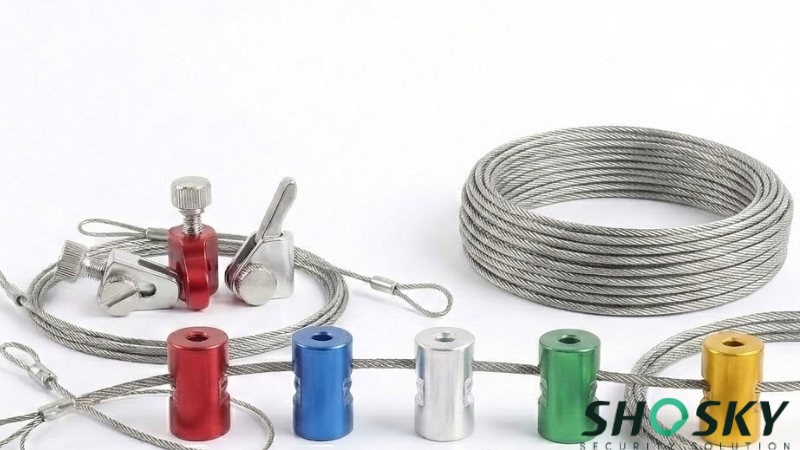
A lead-free transition should start with a site-level review. Do not approve seals after a short office check alone. Procurement directors must never authorize bulk contract orders based solely on desktop reviews or marketing datasheets.
To guarantee structural success, operations managers must enforce the following four-phase field testing sequence:
- Environmental Stress Testing: Submerge sample seals in rigorous environmental testing chambers across a thermal range of -40°F to 140°F to check for material splitting.
- Human Factors Evaluation: Measure real-world field installation speed with technicians wearing heavy protective industrial gloves to optimize field workflows.
- ERP Serialization Auditing: Verify that the manufacturer’s consecutive serial numbers and barcodes integrate seamlessly with your central tracking software.
- SOP Update Synchronization: Authorize new security training modules, distribute alternative hardware packs, and permanently retire legacy lead handling procedures.
Locking these field test metrics into your approved vendor lists ensures total supply chain resilience during regulatory compliance shifts. Once a seal type clears every step, update your facility master specifications and destroy old instructions to prevent field application errors.
FAQs
Do non-lead security seals comply with RoHS and REACH directives?
Yes. Our polycarbonate and aluminum security seals are certified 100 percent heavy metal free, satisfying all global RoHS and REACH material restrictions. This certification eliminates hazardous waste liabilities and ensures smooth compliance reporting during environmental audits.
Can plastic padlock seals withstand extreme outdoor weather conditions?
Yes. High-quality plastic padlock seals utilize UV-stabilized polystyrene blends that resist structural degradation and fading during extended outdoor exposure. They maintain an 80 lbs breaking strength across volatile regional climate shifts.
What happens to polycarbonate meter seals if a perpetrator applies high heat?
Polycarbonate resins exhibit immediate, permanent stress whitening and structural deformation under heat. This thermal reaction makes it impossible for an intruder to soften and manipulate the device without leaving clear visual evidence.
Do I need to buy new sealing pliers when transitioning to aluminum seals?
No. Our industrial aluminum crimp seals are meticulously engineered to lock securely using your department’s existing standard legacy lead crimping tools. This operational compatibility completely eliminates alternative tooling capital expenditures.
Transition Your Fleet with Shosky’s Lead-Free Security Seals
Lead-free security seals give buyers a safer route for utility, shipping, aviation, industrial, and logistics applications. Start with field testing, then select the material and locking type that fits the job.
Shosky Security supplies lead-free wire seals, cable seals, meter seals, aluminum seals, and custom security seals for industrial and logistics applications. The range includes stock products and custom designs with colors, numbering, barcodes, QR codes, and logos. Contact us today to place your order or leave a message for any other inquiries.