
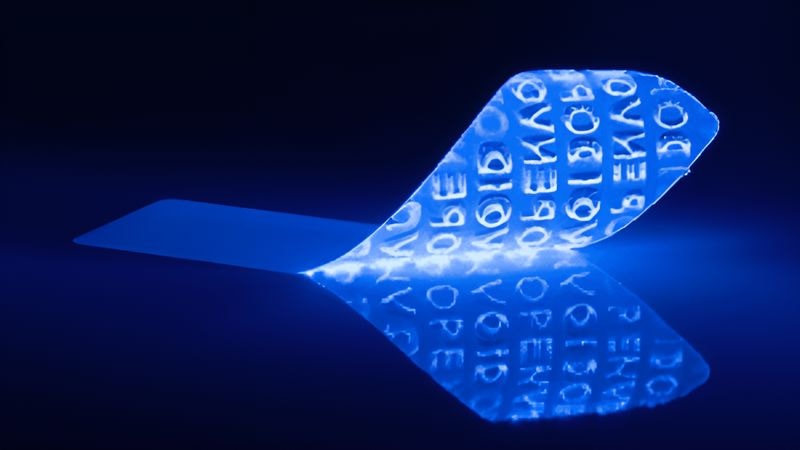
Security breaches through package tampering continue to plague businesses worldwide. The Retail Customer Experience study found that 73% of customers permanently avoid brands after receiving tampered products. This means packaging security is no longer a “nice to have” but a requirement for brands that want to protect trust. One effective solution is the use of UV ink in tamper-evident packaging.
UV ink makes tampering detectable without disrupting the appearance of the packaging. It adds covert protection that only appears under ultraviolet light, giving both inspectors and customers an additional layer of verification. In this article, we will explore how UV ink works, how it enhances security labels and tapes, and why many industries now rely on it as part of their protection system.
What Is UV Security Ink and How Does It Protect Packaging?
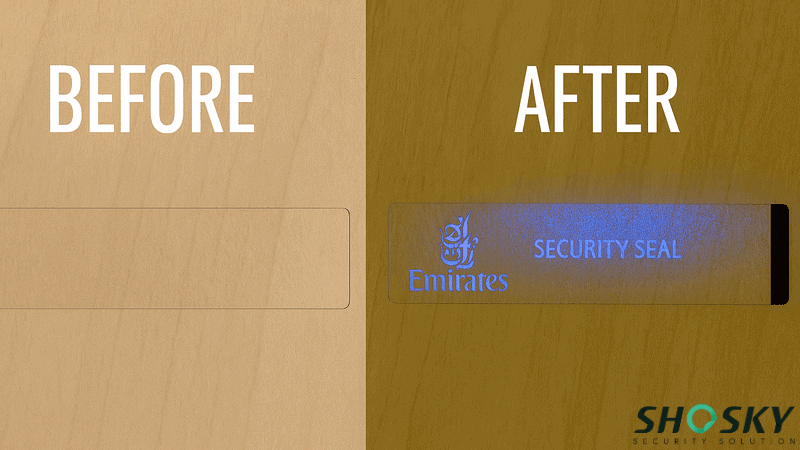
UV security ink is a specialized chemical formulation that remains completely invisible to the naked eye under normal lighting conditions. It only glows brightly when exposed to a specific ultraviolet blacklight.
This reaction relies on fluorescence. The ink contains proprietary microscopic pigments that absorb invisible UV radiation and immediately re-emit it as visible light. Security printers utilize several advanced variations of this technology:
- Invisible Fluorescent Ink: Stays completely hidden on the packaging substrate until scanned with a dedicated UV light source, serving as the global standard for covert security.
- Bi Fluorescent Ink: Changes from one distinct color to another when the inspector switches the light source from long-wave to short-wave UV light, making replication mathematically impossible for counterfeiters.
- Multi-Wavelength Security Ink: Reacts only to highly specific, narrow UV wavelengths (such as exactly 365nm or 395nm), ensuring generic commercial blacklights cannot trigger the glow effect.
Because the specific spectral signature and chemical composition of the ink are heavily guarded trade secrets, it is extremely difficult for rogue factories to replicate the exact glow color and intensity. Deploying these sophisticated inks upgrades your packaging from a simple container into an active authentication device.
Overt and Covert Security Features: Where UV Security Ink Fits In
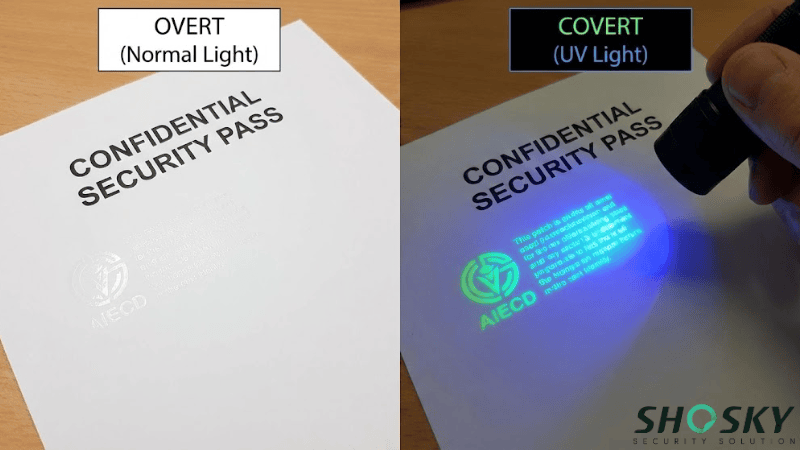
A robust corporate anti-counterfeit strategy never relies on a single point of failure. Security engineers categorize physical packaging defenses into two primary layers that must work together.
- Overt Visual Features: Provide immediate visual deterrence through elements like holographic foils, color-shifting inks, and destructible VOID tamper-evident tape. These act as the frontline defense for end consumers.
- Covert Hidden Features: Require specialized tools to verify. Invisible UV security ink, micro text, and embedded taggants fall into this category, serving specifically for official supply chain audits and customs inspections.
Overt features are excellent for customer reassurance, but they are always the first target for counterfeiters. Covert features like invisible UV serial numbers create a trap for criminals. A fake package might look perfect to the naked eye, but a quick scan with a UV flashlight on the receiving dock instantly reveals the missing authentication mark.
How UV Ink Enhances Tamper-Evident Labels and Tapes
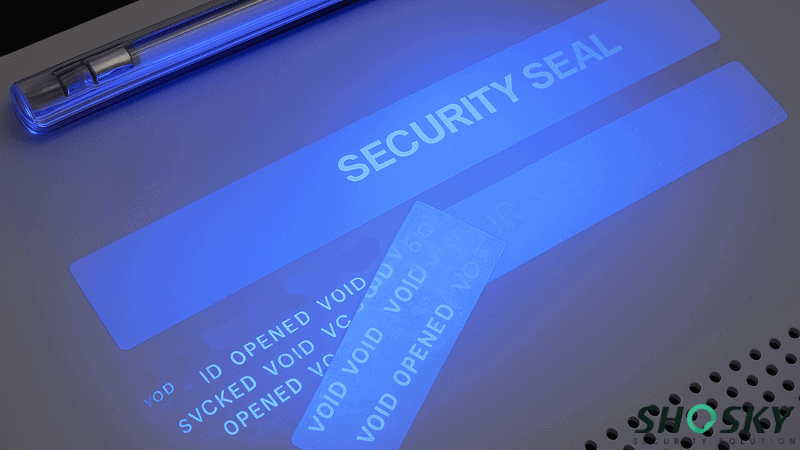
UV ink is rarely deployed as a standalone print on a cardboard box. It reaches its maximum commercial effectiveness when chemically bonded with physical tamper-evident layers.
- Covert Serial Numbering on Tapes: Embeds invisible sequential tracking codes directly into the security tape, allowing warehouse teams to verify the exact chain of custody without alerting potential internal thieves.
- Hidden VOID Verification: Prints the corporate logo or a secondary warning message in UV ink directly over the mechanical VOID release layer. If a criminal attempts to slice and re-glue the tape, the continuous UV pattern is permanently destroyed.
- Under Surface Label Printing: Applies the fluorescent ink to the adhesive underside of a security label. The authentication mark remains perfectly protected from physical abrasion and chemical spills during harsh logistics transit.
Combining physical tamper evidence with invisible digital verification creates a dual-layer protection system. It ensures that even if a criminal manages to bypass the physical lock, they will inevitably fail the covert optical inspection.
Where UV Security Ink Is Used: Real Industry Applications
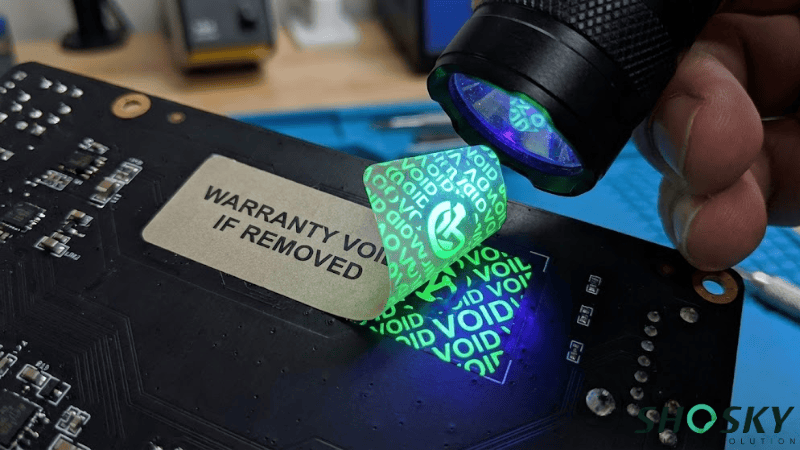
The extreme versatility and low application cost of UV ink make it a staple security feature across highly regulated and high-risk global sectors.
- Consumer Electronics: Major technology firms use invisible UV markings on internal warranty seals to detect fraudulent hardware repairs and identify grey market part swapping.
- Pharmaceutical Supply Chains: Drug manufacturers print invisible batch codes on medicine bottles, allowing rapid wholesale authentication without cluttering the small label with extra visible text.
- Luxury Retail Goods: High-end fashion brands utilize invisible UV watermarks on authenticity cards and retail tags to allow boutique staff to instantly spot sophisticated fakes returned by fraudsters.
- High Value Logistics: Secure armored transport providers use UV-coded carton tapes to ensure the physical chain of custody remains completely intact from the secure warehouse to the final retail destination.
By embedding security directly into the packaging consumables, these industries successfully maintain absolute brand integrity while simultaneously accelerating their receiving and inspection workflows.
The Pros and Cons: Evaluating UV Security Ink
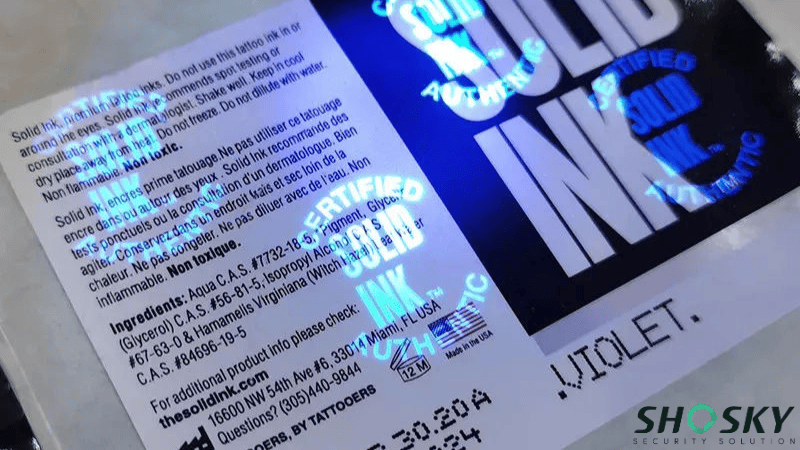
To make an informed procurement decision, facility managers must weigh the significant operational advantages of UV ink against its practical field limitations.
The Key Commercial Benefits
- Rapid Authentication: Offers instant visual verification during high-speed warehouse inspections without requiring expensive internet-connected scanning hardware.
- Seamless Brand Aesthetics: Blends invisibly into high-end retail packaging, ensuring strict marketing design guidelines are not compromised by ugly security warnings.
- Highly Cost-Effective: Adds only marginal fractional costs per unit when integrated directly into the master roll manufacturing process for security labels and tapes.
The Operational Limitations
- Requires Physical Hardware: Demands that warehouse receiving staff, border inspectors, or retail clerks are actively equipped with functioning UV flashlights to perform the verification.
- Environmental Degradation: Fades gradually if exposed to prolonged direct sunlight. Procurement teams must specify UV-stabilized over-laminates if the packaging is stored outdoors.
- Supplemental Use Only: Fails to physically deter a casual thief because the security layer is invisible. It must always be paired with overt physical locks or VOID tapes.
Understanding these operational boundaries ensures procurement teams do not treat UV ink as a magic bullet. It must be strategically integrated as one component of a broader packaging security architecture.
UV Ink vs. Other Tamper-Evident Technologies
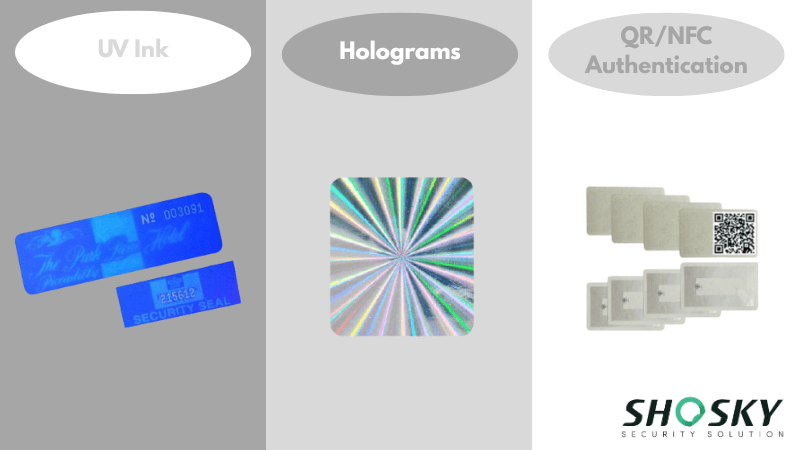
When architecting a secure packaging system, businesses must evaluate how UV ink compares against competing authentication technologies regarding deployment cost and verification speed.
The following table provides a rapid procurement breakdown of the primary security technologies available in 2026.
| Feature / Tech | UV Ink | Holograms | QR/NFC Authentication |
|---|---|---|---|
| Visibility | Invisible under normal light | Always visible | Visible (QR), not secure by sight |
| Verification Method | UV/blacklight equipment | Visual inspection | Mobile device/app |
| Tamper-Evident | Yes, breaks on tampering | Sometimes removable | No physical tamper layer |
| Traceability | Compatible with serialization | Limited | High, system-based |
| Anti-Counterfeiting | Strong with the hidden message | Moderate, can be copied | Varies, depending on the system |
| Cost | Moderate | High | Varies (software + hardware) |
| Ease of Implementation | Easy to apply on labels, tapes, and surfaces | Needs lamination or adhesives | Requires tech integration |
| Shelf Life | Long, stable inks | Can degrade over time | Depends on tech maintenance |
While holograms act as a visible “Do Not Enter” sign for casual thieves, UV ink acts as a hidden security camera. It does not just warn criminals; it actively traps them during the auditing process.
- UV Ink vs Holographic Foils: Holograms are visually impressive but highly susceptible to optical copying by well-funded counterfeiters. UV inks rely on proprietary chemical formulations that are exceptionally difficult to reverse engineer.
- UV Ink vs Digital RFID/NFC: Electronic tracking offers superior digital data collection but costs significantly more per unit. UV ink provides a fail-safe, offline authentication method that cannot be hacked, spoofed, or disabled by electronic interference.
How to Choose the Right UV Ink Security Solution
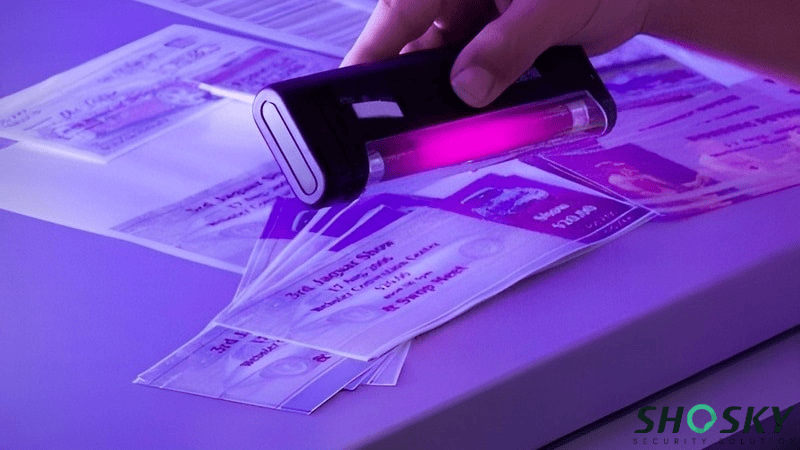
Selecting the optimal security ink requires strict alignment with your specific packaging substrates and warehouse inspection protocols. Follow these essential procurement steps to guarantee performance.
- Assessing Substrate Compatibility: Ensure the UV formulation chemically bonds with your specific packaging material. Coated plastics, rough corrugated cardboard, and thermal paper all require entirely different ink viscosities to prevent smudging or flaking.
- Determining Detection Hardware: Define the exact inspection environment. High-speed pharmaceutical lines require fixed automated UV laser scanners, while manual retail audits only require inexpensive handheld 365nm LED flashlights.
- Evaluating Production Volume: Partner with a manufacturer capable of integrating the UV printing directly into their flexographic or digital press runs to eliminate secondary processing costs for massive enterprise orders.
- Customizing the Formulation: Demand proprietary ink blending from your security partner. Utilizing off-the-shelf generic UV ink provides minimal security, as criminals can easily purchase the exact same chemical formulation online.
Executing these procurement steps ensures your security investment performs flawlessly under the physical stresses of global logistics while remaining entirely invisible to unauthorized personnel.
Expert Tip from Shosky Security
A catastrophic and highly common procurement error occurs when buyers fail to match the ink wavelength with the inspection hardware. If you purchase proprietary security tape printed with 395nm UV ink, but your warehouse auditing team uses standard 365nm UV flashlights, the ink will not fluoresce properly. Always procure your invisible ink packaging and your testing hardware from the same verified security manufacturer to guarantee perfect optical calibration.
FAQs
Does invisible UV security ink fade or degrade over time?
Yes, standard fluorescent pigments can degrade if subjected to prolonged exposure to direct sunlight or harsh chemical environments. However, for logistics operations requiring long-term outdoor storage, procurement teams can specify UV curable varnishes and chemical over-laminates that protect the invisible ink and guarantee a multi-year shelf life.
Can counterfeiters easily copy invisible UV ink packaging?
It is extremely difficult. While generic novelty UV ink is available commercially, professional packaging manufacturers use proprietary bi-fluorescent blends and custom chemical signatures. A counterfeiter would need access to expensive mass spectrometry laboratory equipment just to identify the specific optical wavelength of the authentic ink before they could even attempt to replicate it.
Can UV security ink be applied directly to rough shipping cartons?
Direct printing on highly porous materials like recycled corrugated cardboard often causes the ink to bleed and lose its sharp fluorescent edge. For rough substrates, industry best practice is to print the UV security features onto a high-gloss tamper-evident tape or polymer security label, which is then applied to the carton.
Upgrade Security with Shosky UV Ink Technology
UV ink adds a strong layer of protection to tamper-evident tapes and labels. It makes hidden messages and signs of tampering easy to detect under ultraviolet light. This boosts product security, protects sensitive documents, and helps confirm authenticity. For businesses looking to upgrade security measures, UV ink is a smart, effective, and proven choice.
Shosky Security’s UV ink solutions offer top-tier protection for your products. Detect tampering easily and ensure authenticity with our advanced security labels and tapes. Get in touch for personalized solutions today!