
Procurement teams deal with real risks. Once a security tape fails, it leads to damaged goods, rejected shipments, or security breaches. Not all adhesives perform the same under pressure, temperature shifts, or storage conditions.
This complete guide breaks down solvent-based adhesives and water-based adhesives for tamper-evident packaging solutions. It explains their chemistry, limits, and best uses.
Solvent-Based Adhesives: Maximum Industrial Durability
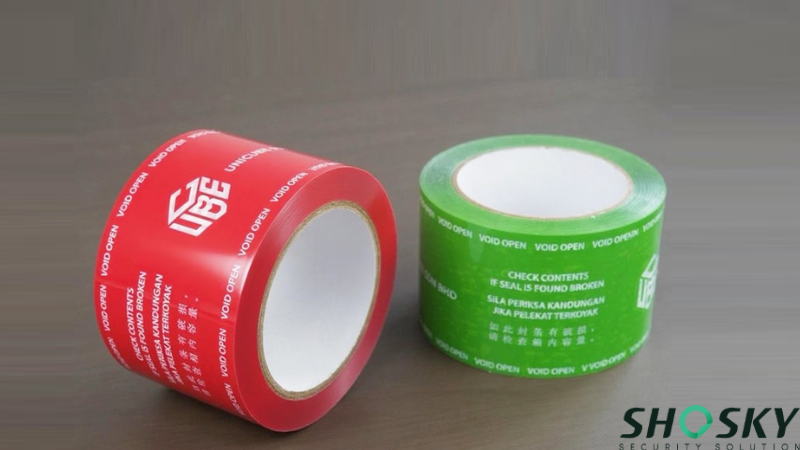
Solvent-based adhesives are built for heavy-duty applications where standard adhesive tape may fail. Their structure supports strong bonding, high resistance, and long-term durability. Despite a global shift toward sustainable alternatives, the industrial solvent-based adhesives market continues to see robust growth.
Projections indicate the sector will expand to approximately $18.46 billion by 2026 as heavy-duty sectors prioritize bond integrity over lower-cost alternatives. The best B2B applications of solvent-based adhesives include:
- Cold storage packaging and freezing environments
- Hazardous material transport tape
- Outdoor asset tracking labels
- Aerospace and security tape systems require robust security
The Chemistry
Solvent-based adhesives rely on organic solvents to dissolve acrylic polymers. During the production process, these solvents evaporate and leave behind a dense adhesive layer. This structure forms tightly packed adhesive molecules. The result is strong bonding with high cohesion. The adhesive layer remains stable even under stress.
The Performance Gain
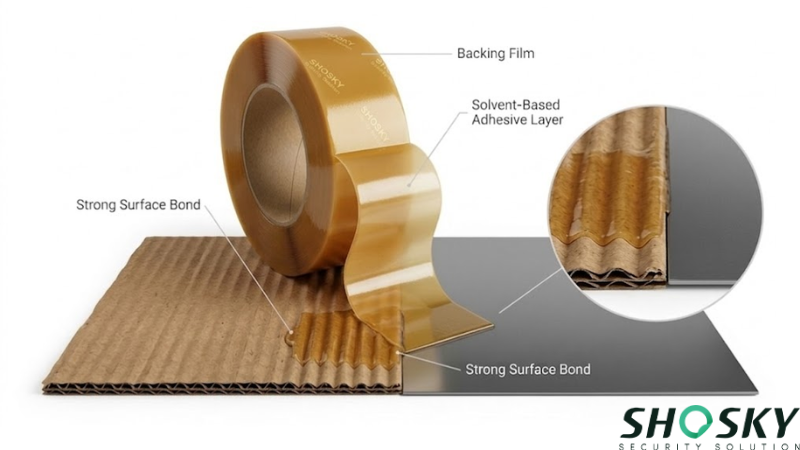
Solvent-based acrylic adhesives deliver unmatched mechanical strength, particularly on challenging packaging materials. Their primary performance advantages include:
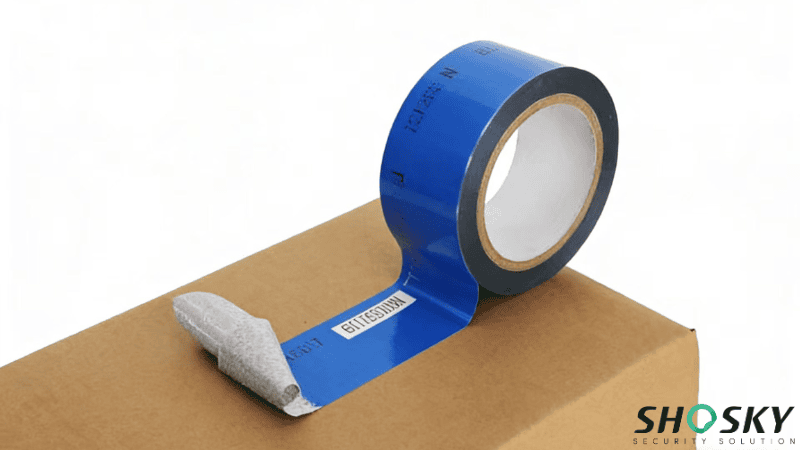
- Differential Adhesion on Plastics: They excel on low surface energy (LSE) substrates like polypropylene courier bags. The adhesive bond to the plastic is stronger than its bond to the tape film, guaranteeing the hidden “VOID” message triggers perfectly during removal attempts.
- Extreme Weather Resistance: These adhesives easily withstand moisture, intense heat, and harsh chemicals. This chemical stability makes them strictly required for outdoor logistics and rugged global transit routes.
- Long Term Optical Clarity: They resist yellowing and degradation over time, ensuring that any custom-printed branding or serial barcodes on the security tape remain highly scannable and professional.
Trade-offs
Solvent-based adhesives release volatile organic compounds during drying. These emissions contribute to air pollution and require ventilation. Because of this, the European Chemicals Agency (ECHA) has classified numerous organic solvents as substances of very great concern.
This has led to reformulation requirements and higher regulatory compliance costs for manufacturers. They also require careful handling due to flammability. So, overall, the production and use of solvent-based adhesives come with higher safety risks and operational costs.
Water-Based Adhesives: The Eco-Friendly Standard
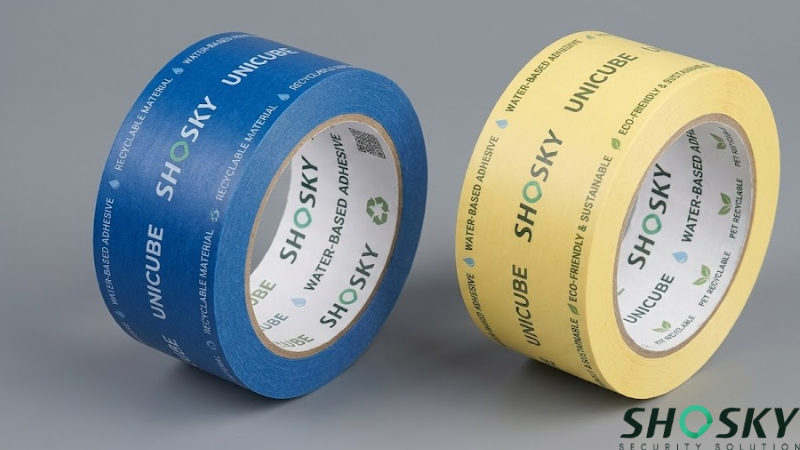
The global water-based adhesive market reached USD 23.9 billion in 2024. And it is projected to reach USD 45.1 billion by 2033. This growth shows a clear shift in packaging operations toward water-based adhesives.
Water-based adhesives are widely used in modern packaging due to their safer profile and lower environmental impact. They offer reliable performance for standard conditions and support cost-effective operations. The best B2B applications of water-based adhesives include:
- Corrugated box sealing
- Retail labels and indoor storage
- Water-activated tape systems
- E-commerce packaging
The Chemistry
Water-based adhesives use water as the carrier. Acrylic polymers are dispersed in an emulsion or dispersion system. As water evaporates, the adhesive molecules bond together and form a stable network. This process creates a less dense structure compared to solvent-based acrylics.
The Performance Gain
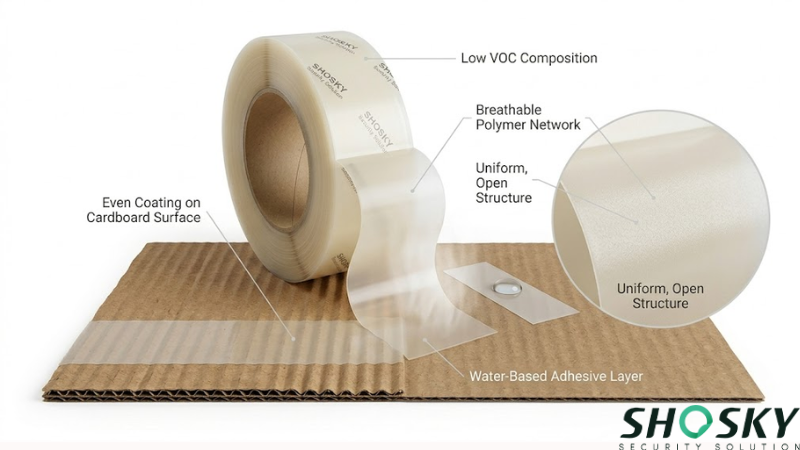
Water-based acrylic adhesives offer distinct operational and structural advantages when applied to the right materials, specifically highly porous substrates. Their core benefits include:
- Mechanical Fiber Interlocking: On corrugated cardboard, the water carrier penetrates deeply into the porous paper fibers. Upon evaporation, the polymers lock into the carton, triggering a destructive VOID message or tearing the carton surface if tampered with.
- Ultra Low VOC Emissions: They produce extremely low volatile organic compounds (containing less than 50 g/L VOCs), creating a vastly safer workplace compared to traditional 500 g/L industrial solvent systems.
- Cost-Effective Compliance: Their non-flammable chemical profile completely eliminates the need for expensive warehouse ventilation systems and hazardous chemical storage, significantly lowering operational costs for indoor e-commerce fulfillment centers.
Trade-offs
According to EPA research, water-based adhesives have lower performance in demanding environments than solvent-based systems.
These adhesives struggle in extreme conditions. Moisture and freezing temperatures reduce bond strength. When water evaporates slowly in cold storage, drying times increase. The adhesive can lose tack and fail.
Solvent Based vs Water Based Adhesive: Performance Comparison
A side-by-side comparison helps clarify how each adhesive performs under real conditions. The differences below focus on factors that directly impact packaging reliability, cost, and safety.
| Factor | Solvent-Based Adhesives | Water-Based Adhesives |
|---|---|---|
| Bond strength | High | Moderate |
| Temperature resistance | Excellent (extreme heat and cold) | Limited (poor below freezing) |
| Moisture resistance | High | Low to moderate |
| LSE plastic adhesion | Excellent | Poor |
| VOC emissions | High | Very low to zero |
| Production cost | Higher | Economically viable alternative |
| Drying time | Fast | Slower |
| Eco-friendliness | Low | High |
| Surface compatibility | Works on plastic and low surface energy | Best on paper and porous surface |
| Safety | Requires ventilation | Safer and solvent-free |
These differences highlight why adhesive selection should match the application. Each factor plays a role in long-term performance, from storage conditions to surface type and handling requirements.
How to Specify the Right Security Tape: A 3-Step Framework
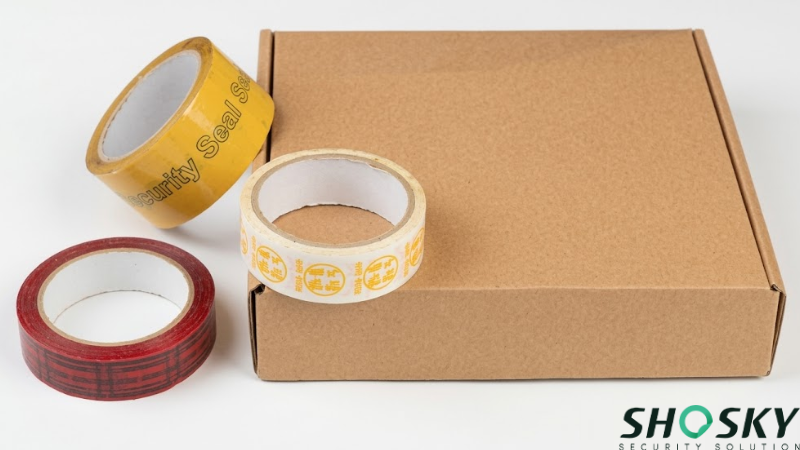
To ensure a tamper-evident seal of a tape remains functional throughout the entire supply chain, procurement teams must follow these three critical steps:
- Step 1: Evaluate the Transit Climate: Environmental conditions of transit and storage define adhesive performance. Cold environments require solvent-based systems, while stable indoor conditions support water-based adhesives.
- Step 2: Assess the Surface Substrate: Corrugated cardboard works well with water-based systems. Plastics, metals, or contaminated surfaces need stronger solvent-based adhesion.
- Step 3: Review ESG and Compliance Goals: Water-based tapes support sustainability targets. Solvent-based options remain necessary for high-risk or extreme conditions.
A careful match between adhesive type and operating conditions strengthens security. It helps security tapes hold up under stress and supports smooth, worry-free logistics.
FAQs
Q1: Can water-based adhesive tape be used in freezer conditions?
No. Water-based adhesives lose their tack and bond strength in freezing environments. The water carrier can crystallize, causing the security tape to fail and peel off smoothly without ever triggering a tamper-evident warning.
Q2: Why are solvent-based adhesives more expensive?
They require organic solvents, controlled production environments, and specialized ventilation systems to handle volatile organic compounds (VOCs). These strict safety and manufacturing requirements increase the overall production costs.
Q3: Do both adhesive types support tamper-evident security applications?
Yes, both types can function perfectly as security tapes. Solvent-based adhesives provide superior performance on challenging plastic surfaces and in harsh outdoor climates. Water-based adhesives are highly effective and eco-friendly for standard indoor corrugated cardboard packaging.
Q4: Which adhesive type is better for low surface energy (LSE) plastics?
Solvent-based adhesives are significantly better for LSE plastics, such as courier bags and shrink films. They possess the chemical bite required to create a strong, destructive bond, ensuring the hidden VOID message appears instantly upon unauthorized removal.
Q5: Are water-based adhesives more environmentally friendly?
Yes. Water-based adhesives produce very low volatile organic compound (VOC) emissions, typically containing less than 50 g/L. This non-flammable profile makes them a safer and highly sustainable option for modern eco-conscious supply chains.
Get the Right Adhesive Type from Shosky Security!
Tamper-evident packaging solutions’ reliability and security start with the right adhesive. Solvent-based adhesives maintain strong bonds on tough surfaces and extreme climates. Water-based adhesives offer a safer, eco-friendly solution for typical indoor and e-commerce packaging. Knowing which adhesive to use minimizes failures and operational risk.
Shosky Security offers a wide range of adhesive tapes, including solvent-based and water-based options. Our solutions meet high standards for packaging, security, and tamper-evident applications. Contact us today to explore our products and request samples.