
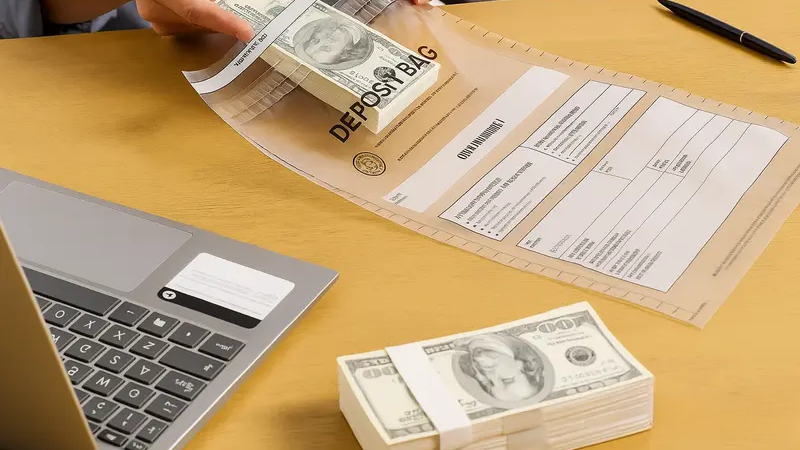
Handling cash and sensitive documents without the right deposit bag is a risk many businesses still take. From internal shrinkage to lost audit trails, the consequences can be serious. According to the 2024 ACFE Report to the Nations, cash theft accounted for 42% of asset misappropriation cases, many linked to poor handling procedures.
Tamper-evident bank deposit bags are designed to fix that. But not every bag offers the same protection. Some tear under weight, others fail to seal properly, and many don’t support audit tracking. This guide helps you avoid those problems by choosing the right material, size, and security features for your needs.
The Hidden Crisis: Why Secure Deposit Bags Are Non-Negotiable
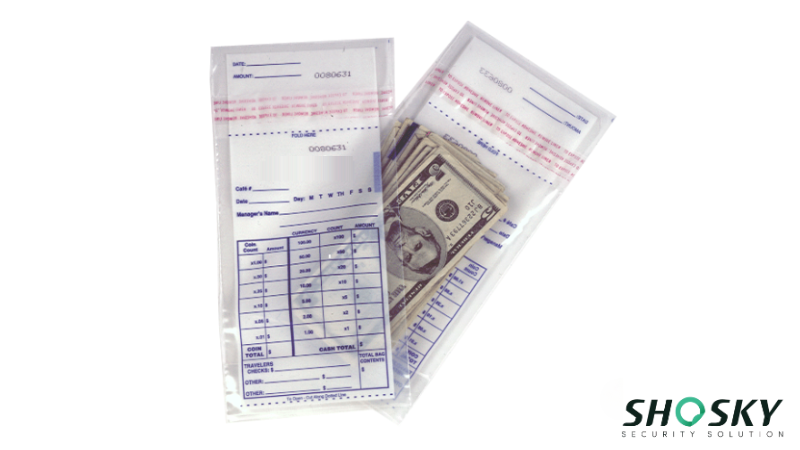
Using an unsecured envelope or a basic retail pouch might seem cost-effective initially, but it exposes your entire cash management system to significant avoidable risks.
A professional tamper-evident deposit bag is a non-negotiable security tool because it actively protects your assets and corporate reputation through physical deterrence and digital traceability. It achieves this by serving three primary functions:
- Preventing Internal Shrinkage: A deposit bag acts as your absolute first line of defense against employee theft and opportunistic manipulation. High-security bags make unauthorized access immediately obvious, ensuring that any tampering during shift handovers is permanently recorded.
- Maintaining a Verifiable Audit Trail: Proper financial audits depend entirely on clear chain-of-custody documentation. Sequential numbering and barcode tracking capabilities ensure a flawless, traceable timeline for each deposit to support legal investigations if discrepancies arise.
- Ensuring Industry Compliance: Banking regulations and armored car services like Brink’s or G4S require strict security measures for cash transport. Using certified tamper-evident packaging guarantees that your business meets the rigorous compliance criteria mandated by external financial institutions.
When viewed together, these three functions demonstrate that a secure bank deposit bag is not a simple office supply accessory. It is a core component of your internal financial controls that bridges the gap between physical cash and digital accounting. Implementing these bags immediately signals a culture of accountability to your staff and external auditors.
Industry Standards: Who Needs High-Security Money Bags
A 2022 joint study by the NRF and the University of Florida found that retail shrinkage rose to 1.6% of total sales, with employee theft being the biggest driver. This is often triggered through unsecured deposit practices in specific environments.
- Retail and E-commerce Hubs: Utilize bags for daily cash drops, shift handovers, and secure returns processing to prevent cash swapping at the register level.
- Hospitality and Restaurant Groups: Rely on secure bags for end-of-day bar collections and tip pool distributions where high-volume cash handling is performed under low-light or high-stress conditions.
- Logistics and CIT Providers: Require heavy-duty bags for internal or third-party cash-in-transit (CIT) operations to maintain an unbreakable chain of custody during transport.
- Education and Nonprofits: Use tamper-proof bags for field donations, fee collection, and community event money to prevent the loss of public trust and charitable funds.
- Banking and Financial Services: Mandate the use of Level 4 security bags for internal vault transfers and ATM replenishment where the value of the assets justifies the highest available protection.
Selecting a bag that matches these industry-specific norms helps businesses avoid costly compliance issues and operational delays. By tailoring the bag type to the specific risk level of the industry, facility managers can optimize their security budget without compromising on the safety of their frontline personnel or financial assets.
Decoding Material Science: Reusable vs. Single-Use Deposit Pouches
The material you choose affects everything from your daily operational costs to your legal compliance status. Procurement teams must evaluate the physical environment of their cash transport to select the appropriate substrate, balancing the immediate costs of disposables against the long-term maintenance of reusables.
Polyethylene Plastic Deposit Bags (Single-Use)
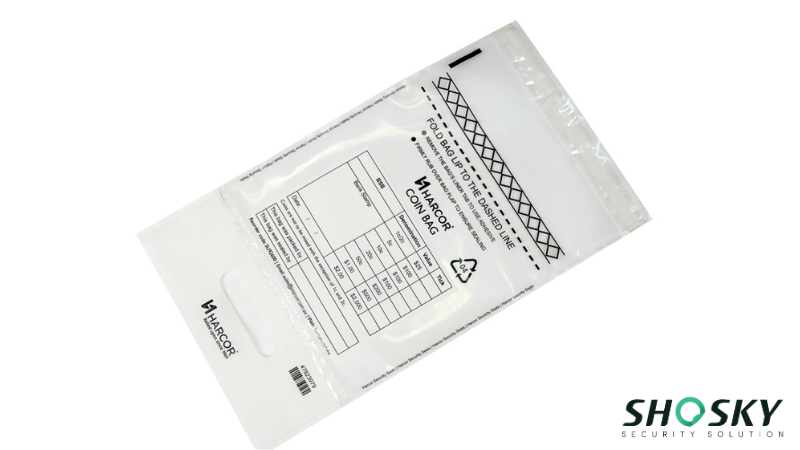
Plastic deposit bags dominate the retail and banking sectors due to their supreme cost-effectiveness and high-security tamper-evident closures. These lightweight solutions provide immediate visual evidence of tampering because the security tape is designed to self-destruct upon unauthorized opening.
- Multi-layer Co-Extruded Film: Resists heavy stretching and sharp punctures to ensure loose coins and sharp document staples do not breach the packaging during rough transit.
- Transparent Film Options: Allow bank tellers and armored car guards to visually verify the contents and internal deposit slips instantly without needing to break the security seal.
- Opaque Privacy Films: Hide high-value contents from public view during transport through public spaces to reduce the risk of targeted external robbery.
Choosing single-use poly bags essentially outsources your security enforcement directly to the packaging material itself. Because these bags absolutely cannot be resealed once closed, they eliminate the need for complex internal key management systems and immediately flag any unauthorized access during transit.
Heavy Duty Nylon and Fabric Bags (Reusable)
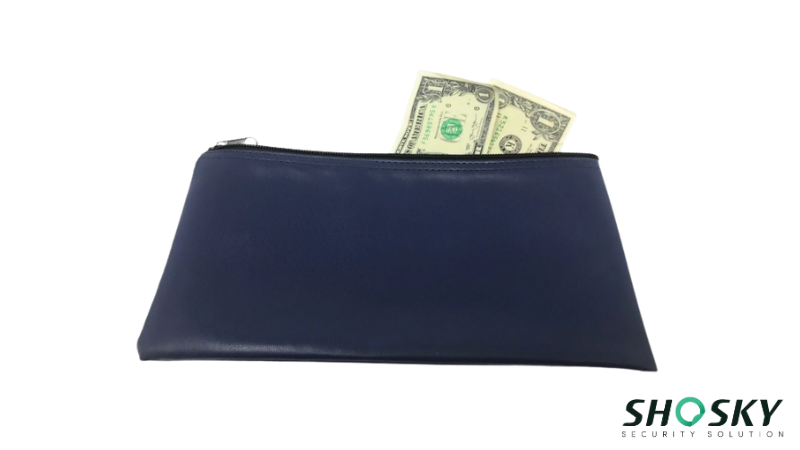
Fabric deposit bags offer superior durability for businesses requiring long-term reusable solutions for internal transport. Their robust construction makes them ideal for localized armored car services and dedicated internal cash handling operations within casinos or large hotel resorts.
- High Denier Water Resistant Canvas: Protects valuable currency and delicate paper checks from severe environmental weather damage during outdoor transit between corporate facilities.
- Integrated Metal Locking Mechanisms: Utilize heavy-duty metal zippers combined with keyed locks or numbered security seals to provide reliable physical barriers against opportunistic theft.
- Reinforced Bottom Panels: Withstand extreme weight capacities, allowing logistics teams to transport massive quantities of rolled coins without experiencing fabric blowout.
Investing in reusable heavy-duty bags requires a higher initial capital outlay but delivers exceptional long-term ROI for closed-loop corporate transport systems. However, procurement teams must implement strict internal key control protocols to ensure the integrated locks are not secretly compromised by staff members.
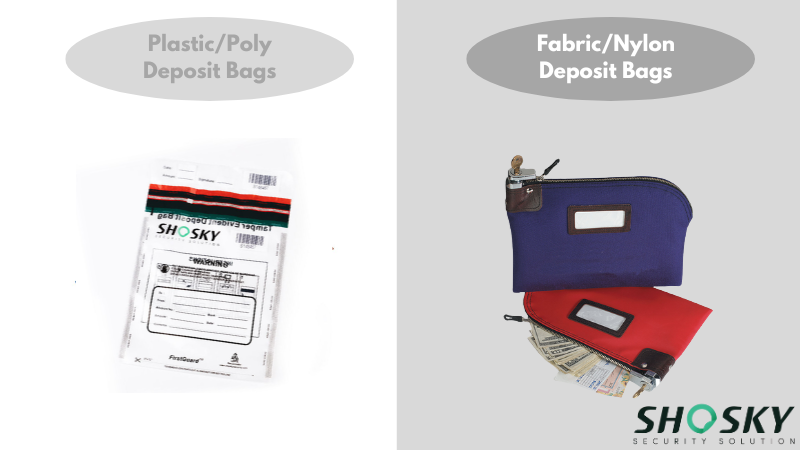
To help procurement teams quickly evaluate the financial and operational trade-offs between these two substrates, the following comparison table highlights the core differences in lifespan, security application, and ideal use cases.
| Material Type | Durability | Reusability | Cost | Best Use Case |
|---|---|---|---|---|
| Plastic/Poly | Medium | Single-use | Low | High-volume retail, Quick inspection needs |
| Fabric/Nylon | High | Multi-use | Medium | Armored transport |
Selecting the right material is a strategic decision that impacts the speed of your reconciliation process. While plastic bags offer a “set and forget” security model with built-in audit trails, fabric bags require a dedicated management system to track the physical keys and ensure the bags are returned to the correct facility.
Essential Security Features for Safe Deposit Compliance
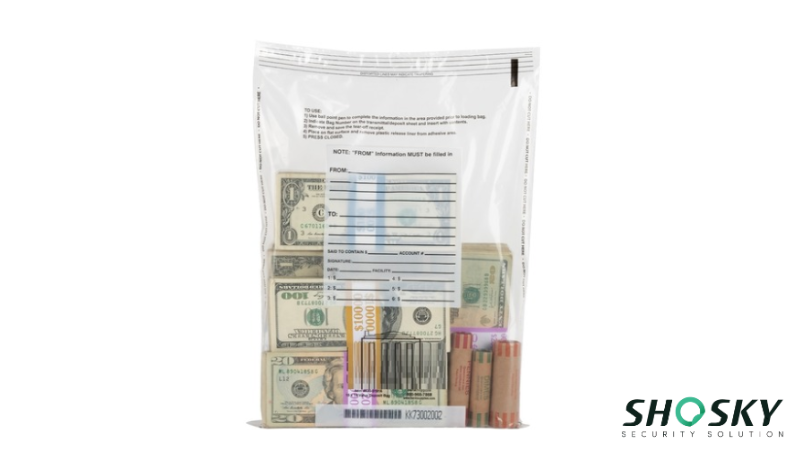
Once you have decided on the material, your procurement focus must shift to the specific security components. These technical features are what actively deter criminals and create your legal audit trail.
- Level 4 Tamper Evident Tape: Activates irreversible “VOID” or “OPENED” hidden messages immediately when subjected to mechanical peeling, extreme freezing gas, or chemical solvent attacks.
- Micro Printed Edge Seams: Features highly detailed, continuous text along the welded borders of the bag, making it mathematically impossible for thieves to cut the side open and seamlessly reseal it.
- Sequential Barcode Integration: Connects physical bags directly to your enterprise inventory management software, ensuring instant digital reconciliation the moment the bag arrives at the central vault.
- Tear Off Receipt Tabs: Provides the originating cashier with a physical, customized receipt bearing the exact serial number of the sealed bag to establish immediate personal accountability.
The integration of these features creates a “Total Security” environment where the cost of attempting a theft far outweighs the potential gain. For procurement managers, specifying these features in every RFP ensures that the chosen supplier provides a product capable of withstanding both external attacks and internal misappropriation.
Size Matters: Selecting the Right Capacity for Daily Cash Drops
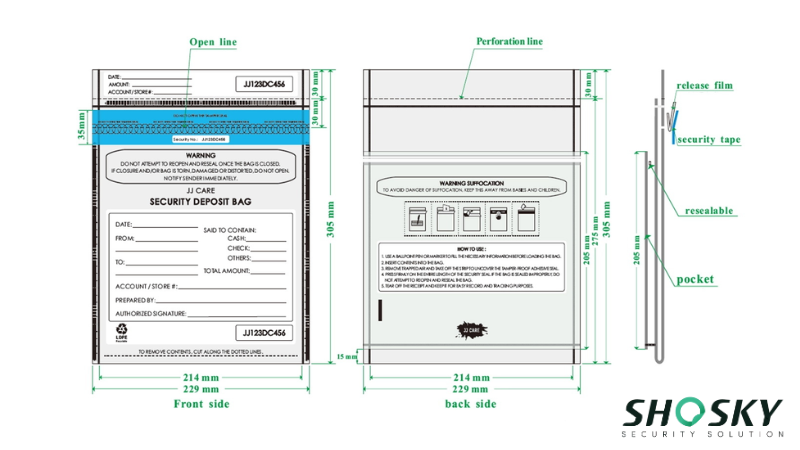
Using the wrong size deposit bag frequently leads to dangerous overstuffing, which compromises the adhesive seal. Conversely, using oversized bags for small deposits wastes valuable procurement budgets. Match your daily deposit volume to the appropriate dimensions below.
Small Capacity Bags (6″ x 9″ to 9″ x 12″)
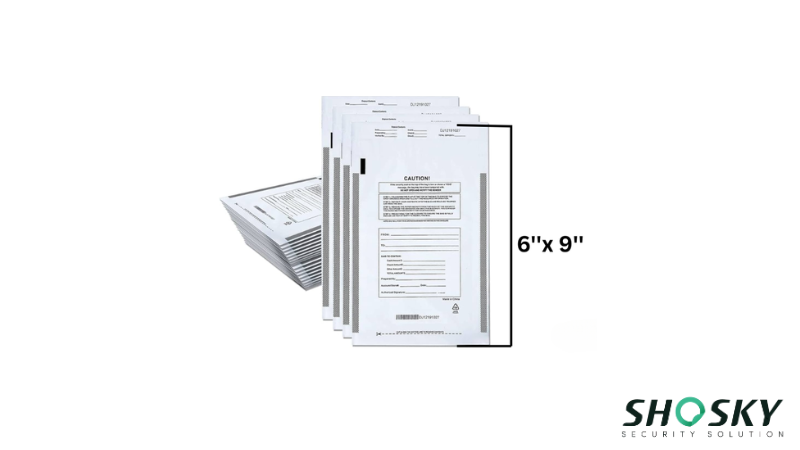
Small-sized bags are ideal for light daily use. They’re often used by:
- Independent Retailers: Managing single register cash drops.
- Cafes or Food Trucks: Securing shift earnings in tight mobile spaces.
- Local Service Providers: Transporting daily service receipts.
These bags hold cash, checks, receipts, and coins from a single register or shift. They’re compact enough to fit in lockboxes or safes without taking up space.
They’re usually clear or semi-transparent, helping verify contents at a glance. Some also come with pre-printed receipt pouches or writable panels for internal tracking. Because they use less material, they’re also a smart option for keeping costs low.
Medium Capacity Bags (12″ x 16″)
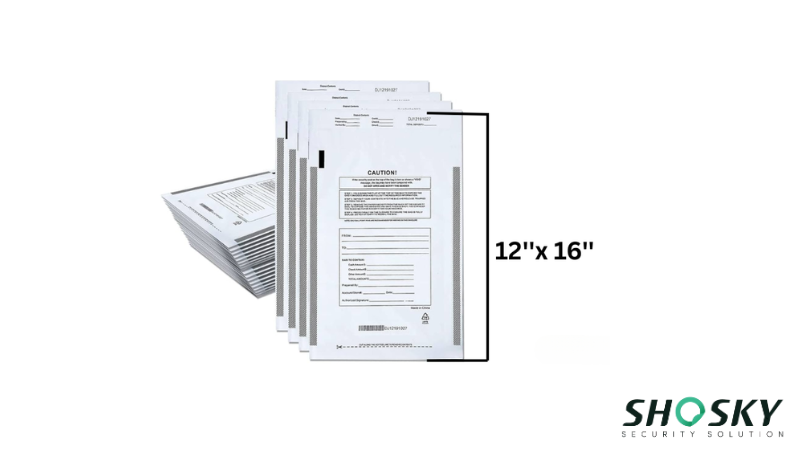
Medium-sized bags are the most versatile. They offer the best balance between space and portability. You’ll often find them used by:
- Multi-register Retail Stores: Consolidating funds from several checkout lanes.
- Chain Restaurants: Managing heavy daily cash flow and tip distributions.
- Medical or Dental Offices: Handling high volumes of client copayments securely.
These bags comfortably hold multiple bundles of cash, deposit slips, and checks. They’re often designed with double-sealed edges and tamper-evident closures for added security.
Some models come with barcoded tracking zones and reinforced seams to prevent accidental tearing. If your daily orders include various items or documentation, medium bags help keep everything in one place, well-organized, and safe.
Large Capacity Bags (16″ x 20″ and above)
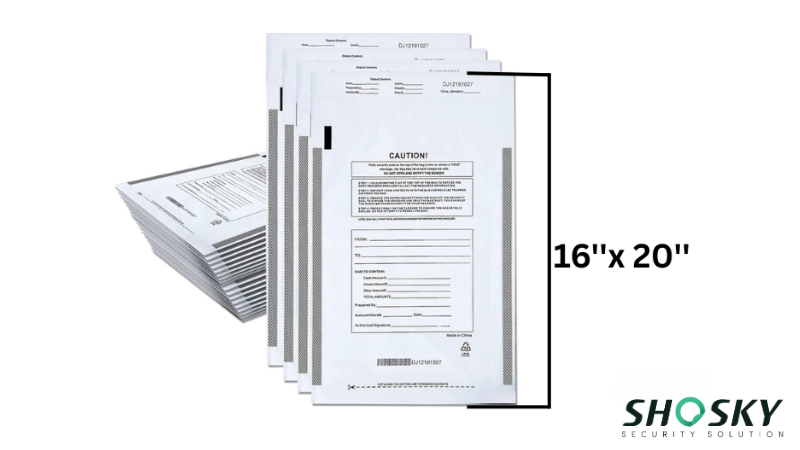
Large deposit bags are designed for heavy-duty use. These are most often used by:
- Supermarkets: Processing massive daily coin and cash volumes.
- Department Stores: Aggregating funds from multiple store floors.
- Courier Services: Handling high-volume bank deposits for third-party clients.
Large bags can store bulk coins, large sums of cash, or batches of end-of-day paperwork. Most are made with thicker gauge plastic or heavy-duty fabric, reducing the risk of rips under weight. Some include built-in pouches for labeling or chain-of-custody forms.
If you’re transporting multiple registers’ contents or high-volume packs, large bags are the reliable choice. Just ensure the quantity you move justifies the size, so you’re not wasting materials or space.
Optimizing Traceability and Custom Branding for Your Deposit System
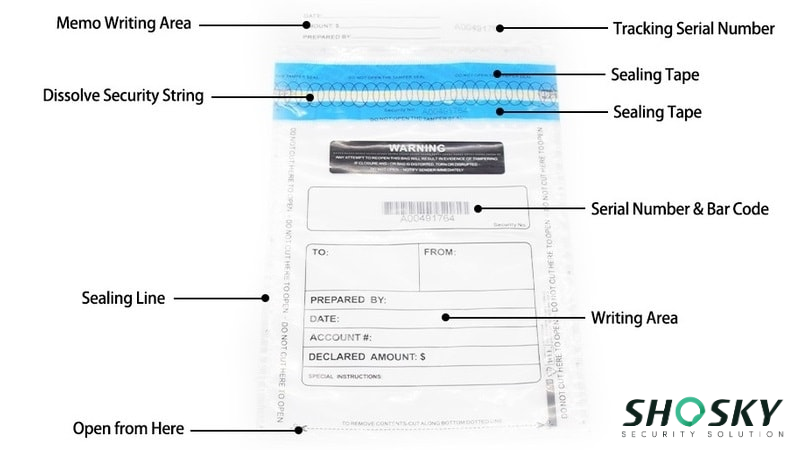
Beyond the core physical construction, your chosen deposit bag must actively enhance your daily operational workflow. The final selection criteria should focus on digital traceability and professional presentation during banking interactions.
- High Contrast Writable Panels: Utilize specialized textured surfaces that aggressively absorb standard ballpoint ink, preventing thieves from wiping away recorded deposit amounts or authorizing signatures.
- Custom Corporate Branding: Deters opportunistic theft by visibly marking high-value cash shipments with your proprietary corporate logo while establishing strong commercial credibility with your banking partners.
- Instructional Printing: Includes clear, step-by-step sealing instructions on the bag surface to ensure that even entry-level staff can perform a perfect security seal every time.
Customization is the final layer of a sophisticated security strategy. By including your corporate identity on the bag, you create a psychological deterrent that signals to potential thieves that the asset is part of a monitored, professional supply chain.
Furthermore, customized instructions reduce the rate of “false tamper” alarms caused by staff members incorrectly sealing the bags.
Expert Tip from Shosky Security
Never allow retail staff to overstuff a single-use deposit bag to save on consumable costs. Overstuffing creates severe mechanical stress on the welded seams and the tamper-evident closure. If the bag bursts during transit, it instantly voids the chain of custody and creates a massive liability nightmare during the bank reconciliation process. Always instruct your team to maintain at least a two-inch clearance below the sealing line.
FAQs
What is the highest level of tamper-evident security available for plastic deposit bags?
Level 4 security is considered the industry maximum. It ensures the security tape visually fractures and displays a permanent VOID message when attacked by mechanical lifting, extreme heat, freezing sprays, or liquid chemical solvents.
Can single-use plastic deposit bags hold heavy, loose coins without breaking?
Yes, provided they are manufactured using high-micron co-extruded polyethylene. Procurement teams handling heavy coinage should specify bags with dual-welded side seams and bottom fold construction to prevent weight blowouts during transit.
How does sequential numbering on a bank deposit bag prevent employee theft?
Sequential numbering creates a flawless chain of custody. If a bag goes missing between the retail store and the bank vault, management can instantly identify the exact serial number that vanished and hold the specific handling personnel legally accountable.
Secure Your Business with Bank Deposit Bags from Shosky
Selecting the right bank deposit bag requires careful consideration of materials, size, security features, and compliance requirements specific to your business operations. The right bag can cut risks, improve accountability, and support your business’s bottom line. So, don’t compromise your security; protect your business with professional-grade deposit bags.
Looking for tamper-evident, durable, and compliant bank deposit bags? Shosky Security offers high-quality bags designed to handle cash, checks, and documents with confidence. Whether you need single-use or reusable options, we’ve got the right fit for your workflow. Browse our full range today and contact us to get the perfect deposit bag to protect your business.