
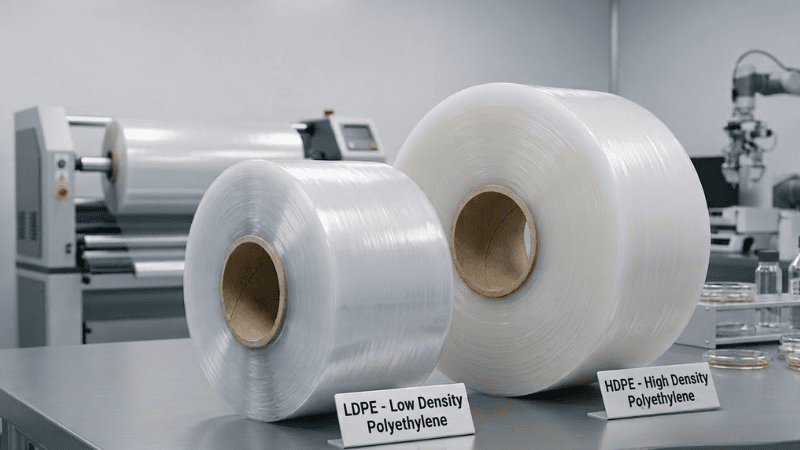
Security bags play a critical role in protecting valuable items during transit and storage. However, when selecting the material for a bag, most buyers evaluate it on the basis of gauge thickness, print quality, and price per unit. These factors matter, but they do not address the most common point of failure in the field: VOIDING Failure.
A bag can meet thickness specs and still fail if the adhesive does not bond properly to the surface. Both HDPE and Polypropylene carry low surface energy by default. This guide breaks down how these two materials differ on that front, and what procurement teams should verify before approving a supplier specification.
How Material Choice Impacts Tamper-Evident Security Bags
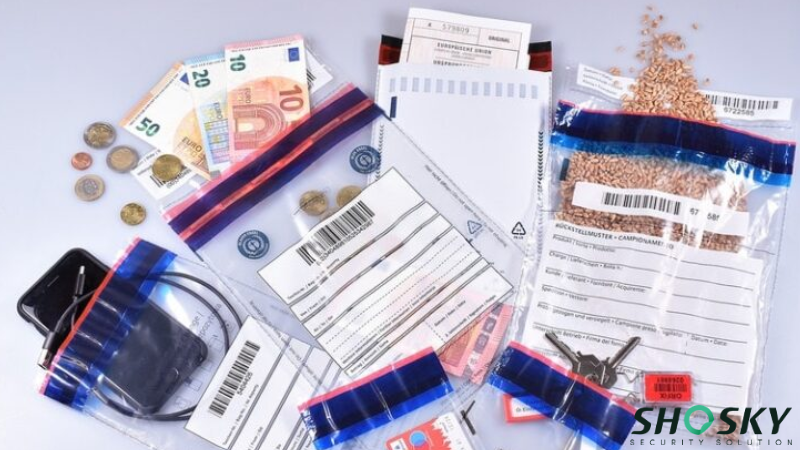
A tamper-evident bag is only as reliable as the bond between its film and its closure system. When the two do not work together, the bag becomes a vulnerability dressed as a security measure.
Both HDPE and polypropylene are low-surface-energy plastics. This means both materials are virtually “non-stick” by nature. Without special treatment, any tape won’t stick to them. Even if it sticks, it can be lifted cleanly without leaving any evidence.
Professional tampering methods expose this low-surface-energy weakness instantly. Fraudsters frequently utilize the following three advanced attacks to bypass weak adhesives:
- Freon Freezing: Embrittles the adhesive layer, allowing the tape to lift without tearing the plastic film.
- Heat Guns: Soften the security glue until it releases cleanly from the plastic substrate.
- Chemical Solvents: Dissolve the adhesive bond at a molecular level to erase visual evidence.
Against any of these methods, a weakly bonded tape offers zero physical resistance. To prevent these catastrophic failures, a manufacturing process called Corona Treatment is strictly required.
This electrical discharge treatment raises the film’s surface energy to a level where the high-tack adhesive anchors permanently. This makes clean removal mechanically impossible without triggering a permanent VOID pattern.
Whether your base material is HDPE or polypropylene, verified Corona treatment is an absolute necessity to secure your chain of custody.
What Is HDPE (High-Density Polyethylene)
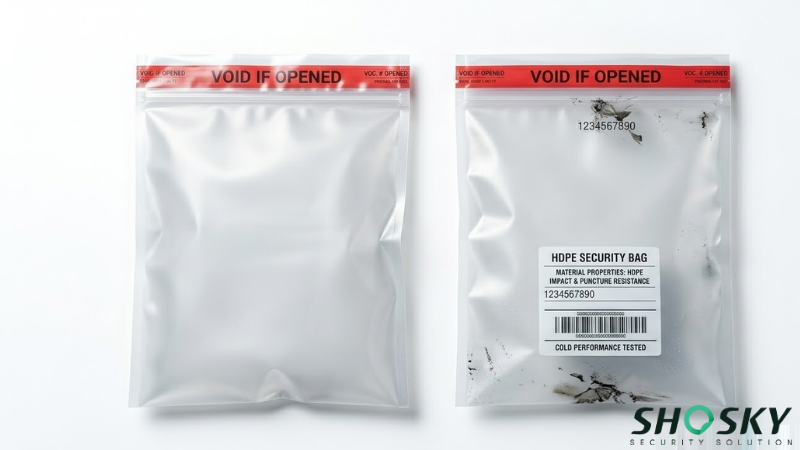
HDPE is a dense, durable plastic known for its puncture resistance and flexibility under load. It performs well in heavy-duty applications, such as cash-in-transit and industrial logistics, where bags must withstand rough handling and repeated stacking. Its strength makes it ideal for carrying heavy bundles or loose contents without stretching or tearing.
The critical factor for HDPE in security applications is ensuring consistent surface treatment. Properly treated HDPE allows adhesives to bond at the molecular level, producing clear and irreversible VOID evidence if the bag is tampered with. Procurement teams should request batch-level surface energy data and verify that storage conditions preserve the treated surface.
Best Use Case: HDPE is the standard for heavy-duty deposit bags. It can hold 50+ lbs of loose coins or bundled currency without stretching or bursting during rough Cash-in-Transit (CIT) handling, making it the preferred choice for banks and cash logistics companies.
What Is Polypropylene (PP / BOPP / CPP)
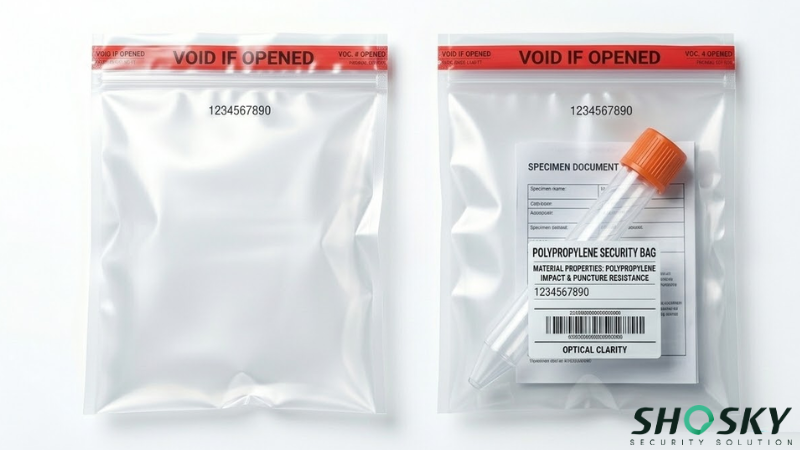
Polypropylene offers a different set of advantages. Its high clarity allows contents to be inspected without opening the bag, making it suitable for police evidence bags, medical specimen transport, and retail security applications. The material is stiff and maintains its shape, which helps produce a clean break when force is applied, aiding visual verification of tampering.
PP also requires surface treatment to achieve reliable adhesion for tamper-evident. Its slightly higher natural surface energy compared to HDPE allows adhesives to perform more consistently when treated, but untreated PP can still fail. For cold-chain transport, co-extruded or modified PP grades are recommended to prevent brittleness near sealed areas.
Best Use Case: PP is ideal for clear security bags. It is commonly used in Police Chain of Evidence bags, airport duty-free STEB bags, and medical specimen transport, where barcode scanning and photographic inspection through the bag are essential. Its transparency ensures traceability and verification without compromising security.
HDPE vs Polypropylene Bags: Direct Comparison
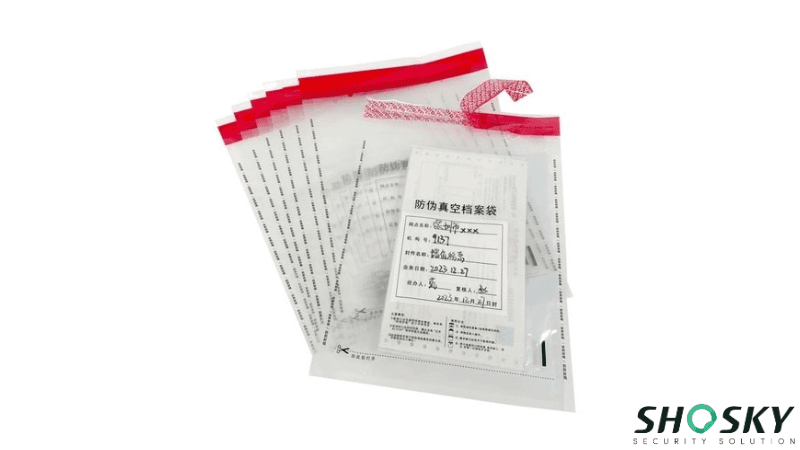
Choosing between HDPE and PP often comes down to the specific logistics environment. Cost, clarity, and load-bearing requirements must all be weighed equally.
The comparison table below highlights how these two polymers perform across the most critical industrial categories:
| Feature | HDPE (High‑Density Polyethylene Bags) | Polypropylene Security Bags |
|---|---|---|
| Strength | High impact resistance | Strong and stiff |
| Transparency | Moderate – not fully clear | High – very clear |
| Tear resistance | Excellent | Good |
| Heat seal | Moderate | Very good |
| Best use | Heavy loads, rough handling | Clear bags, visible contents |
| Cost | Lower | Slightly higher |
| Cold resistance | Very good | Good |
This technical overview helps procurement officers narrow down the material choice based on how the bag must perform in real-world operations, ensuring alignment with handling conditions and inspection protocols.
HDPE vs. Polypropylene in Security Bag Applications
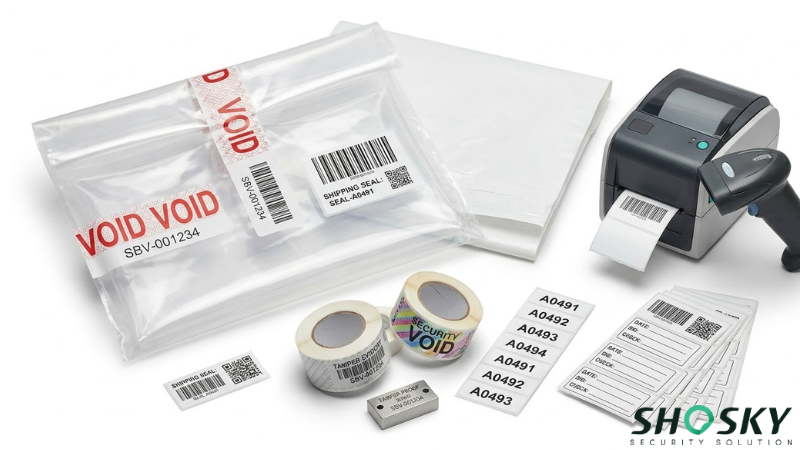
To understand why bags fail and how they perform under physical stress, we must look deeper into the polymer mechanics. When evaluating these two plastics for your supply chain, procurement teams must strictly compare the following four performance categories:
- Surface Energy and Adhesion
Untreated HDPE measures around 31 dynes/cm (a measurement of surface energy), while untreated PP hovers between 29 and 32 dynes/cm. Industrial manufacturing standards dictate that effective pressure-sensitive adhesion requires a minimum of 38 to 42 dynes/cm.
Therefore, both materials must undergo verified surface treatment for the VOID tape to function.
- Physical Tampering Mechanics
Under physical tampering, the two polymers behave very differently. Polymer mechanics dictate that HDPE will physically deform and stretch, showing gradual, visible damage. PP, being a more rigid substrate, fractures sharply and immediately.
According to the PMC Scientific Report parameters, this rigidity produces highly consistent VOID tape activation under peel-force testing, making PP an advantage in controlled environments where inspections follow a strict visual process.
- Cold-Chain Performance
Cold-chain performance is also a clear differentiator. Standard material testing proves that regular PP becomes highly brittle and prone to shattering below 0°C. However, Co-extruded CPP (Cast Polypropylene) maintains its flexibility down to 20 °C.
For medical or pharmaceutical procurement teams, specifying the wrong PP grade is a severe compliance gap.
- Unit Cost and Efficiency
Cost favors HDPE at equivalent gauges. For operations that do not need content to be visible through the film, HDPE delivers the same security performance. It comes at a lower unit cost. This applies only if batch-level surface energy verification is included in the supplier approval process.
By analyzing these specific material behaviors, supply chain managers can prevent critical packaging failures and select the most cost-effective polymer for their specific logistics network.
How to Spec the Right Bag for Your Operation?
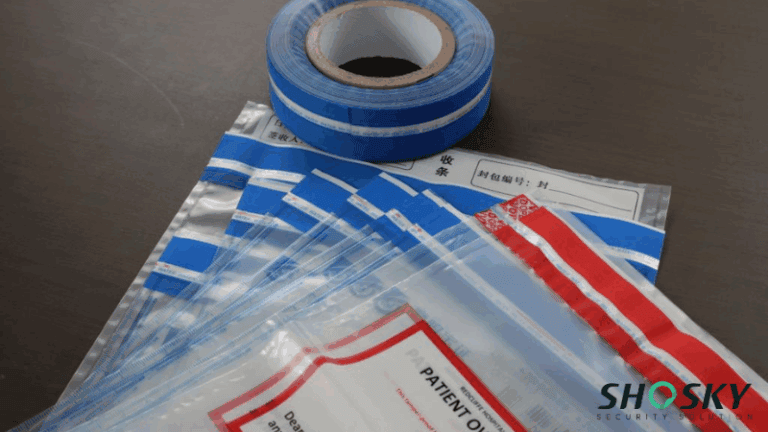
For procurement managers sourcing security bags at scale, the specification process is where most preventable failures are either caught or missed. A bag that performs well in a supplier’s QC environment may behave very differently after three months in warehouse storage or a rough cross-border transit run.
Before finalizing any Request for Quotation (RFQ) or supplier contract, procurement teams must clear the following three checkpoints:
- Step 1: Determine Payload Weight: For heavy coins, bullion, or dense currency, specify 3-mil to 5-mil HDPE. Most importantly, add batch-level dyne test data to your Service Level Agreement (SLA) to confirm the corona treatment is active at the time of shipment.
- Step 2: Determine Visibility Needs: If barcode scanning or rapid content inspection is required, specify high-clarity PP or CPP. For cold-chain use, demand written certification from the factory that the film is a co-extruded blend capable of withstanding sub-zero temperatures.
- Step 3: Test the Closure System: Request physical samples and test the VOID labels under actual heat and freezing conditions. Bags without verified surface treatment cannot be trusted. If the VOID message does not trigger instantly, reject the sample.
A well-built specification does more than select the right material. It locks in the surface treatment standard, validates the closure system, and creates a baseline that the supplier is accountable to across every production run. For operations where chain-of-custody integrity is a compliance requirement, accountability is not optional; it is the foundation that the entire security packaging system rests on.
FAQs
Q1: Can HDPE security bags be transparent?
HDPE bags are usually opaque (often white or grey) for heavy-duty use. Some lighter-gauge HDPE can be slightly translucent, but its optical clarity is severely limited compared to the glass-like transparency of Polypropylene (PP).
Q2: Which material is better for cold chain medical transport?
High-clarity PP or CPP is highly preferred because it allows seamless barcode scanning and content inspection. However, buyers must ensure the manufacturer uses a co-extruded polymer blend to prevent the bags from becoming brittle and shattering in freezing temperatures.
Q3: Are these security bags recyclable?
Yes, both HDPE (Recycle Code 2) and PP (Recycle Code 5) bags are fully recyclable. However, local industrial recycling capabilities may vary. Always check with your facility’s waste management provider to ensure compliance with sustainability targets.
Q4: Can both materials be custom printed with sequential barcodes?
Yes. Both HDPE and PP bags can be custom printed with sequential barcodes, QR codes, and alphanumeric serial numbers. This ensures strict supply chain traceability and verifiable tamper-evident tracking.
Conclusion
Both HDPE and polypropylene are the best security materials for tamper-evident bags. The difference lies in application fit. HDPE offers strength and reliable tamper evidence. Polypropylene provides clarity and easy content verification. Choose based on how the bag will be used in real conditions. A well-informed choice supports both security and smooth day-to-day operations.
Eliminate VOID Failure with Shosky’s Custom Security Bags
Work with a team that understands real-world handling! Shosky Security offers durable HDPE bags and clear PP solutions designed for secure transport. Reach out to us today and get your order started to improve your packaging standards.