
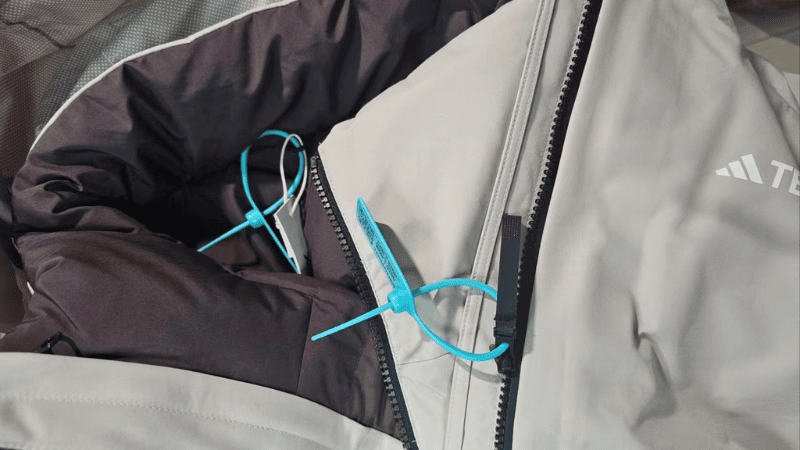
Return fraud has become one of the biggest operational problems in e-commerce. Recent industry reports estimate that return fraud accounts for more than $100 billion in annual losses. In 2023 alone, nearly 13.7% of returned merchandise was linked to fraud or policy abuse. Such frauds increase reverse logistics costs, slow down warehouse operations, and damage profit margins on high-value items.
Traditional return policies alone no longer provide enough protection. That’s why many retailers are moving toward physical verification tamper-evident solutions that create visible proof of tampering at the product level. This article looks at the role of these solutions in preventing return fraud in e-commerce and protecting retail margins.
A Closer Look at Modern Return Fraud Tactics

Return fraud continues to grow across e-commerce, fashion retail, electronics, and online marketplaces. Fraudsters take advantage of flexible refund policies, long return windows, and overloaded warehouse operations to push fraudulent returns through the system.
Many schemes look legitimate during the first inspection, which makes the return process harder for e-commerce retailers and logistics teams. In practice, distribution operations typically face three highly sophisticated methods of consumer inventory manipulation:
- Wardrobing Return Fraud: Consumers buy high-end apparel, wear it once for events, reapply tags, and return the items as unused. This form of fraud creates financial gain for the buyer while increasing lost sales for retailers. Visible wear is often minimal, and many return policies lack strict inspection during the refund process.
- Bricking and Swapping: Fraudsters buy expensive electronics, remove valuable internal parts, replace them with low-quality components or fillers, and return the product. This chargeback fraud style activity often involves stolen credit card purchases and leaves retailers with damaged or unsellable inventory.
- Cross Retailer Returns: Criminals purchase discounted goods from one retailer or source stolen items, then return them to another store at full price. This price arbitrage tactic exploits gaps in the refund process and can weaken customer loyalty while making misuse harder to detect.
The sophistication of these schemes highlights why retailers need multi-layered defenses. Fraudsters test systems constantly. They exploit busy holiday seasons and overwhelmed staff with return volume.
Without proper verification protocols and physical security measures, retailers remain vulnerable to significant losses across their return process.
Tamper-Evident Solutions for Return Fraud Prevention
Digital fraud detection tools matter, but physical protection still plays a major role in fraud prevention. Tamper-evident products create visible proof that an item has been opened, worn, swapped, or altered. They also help warehouse and logistics teams verify legitimate returns faster.
To establish an ironclad defensive perimeter at the warehouse receiving dock, ecommerce merchants deploy five primary types of tamper-evident hardware across their product units:
1. Tamper-Evident Security Labels
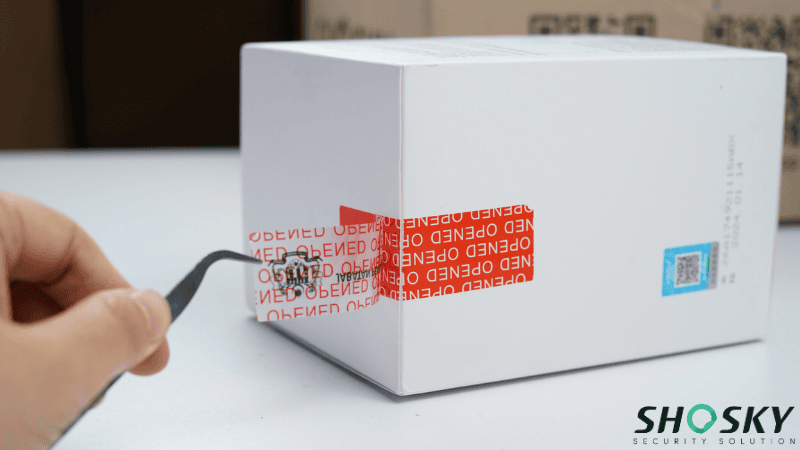
Tamper-evident security labels give ecommerce retailers clear visual proof when a product has been opened, altered, or swapped. Once removed, the label cannot return to its original condition, helping warehouse teams detect common fraud tactics tied to online fraud, receipt fraud, and fraudulent return attempts during inspection.
Depending on the specific packaging material, warehouse teams typically utilize these labels in several distinct configurations:
- Disposable VOID labels: Reveal permanent “VOID” or “OPENED” markings once removed, making resealing attempts easy to identify during return inspections.
- Fragile paper labels: Tear or break apart during removal, preventing reuse on opened or swapped products.
- Traceability QR code labels: Connect to order records, shipping details, and serial numbers, allowing warehouse teams to verify product history during returns.
Deploying these specialized labels yields the highest protective return when applied directly to small electronics, premium beauty products, jewelry, and light luxury goods, where item swapping poses a severe financial risk.
2. Tamper-Proof Seals and Security Tapes
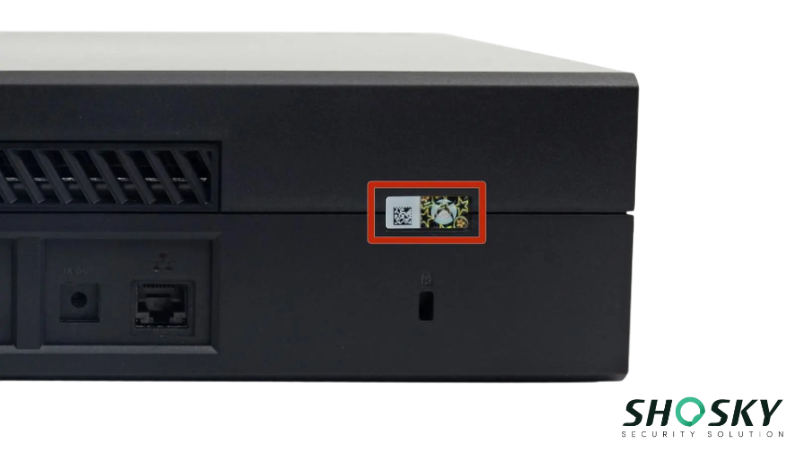
Tamper-proof seals and security tapes help retailers secure cartons and outer packaging during shipping and reverse logistics handling. Once opened, the seal or tape becomes permanently damaged and cannot be reused.
When securing transit cargo, logistics managers rely on several distinct formats to block unauthorized access:
- Disposable plastic steel wire seals: High-strength seals that break irreversibly when tampered with, leaving no way to reapply or hide the damage.
- Serialized tape patterns: Each shipment receives a unique serial code, creating a trackable record that prevents the same seal from appearing on multiple returns.
- Custom VOID messaging: Tape displays permanent “VOID” or “OPENED” text upon tampering, making unauthorized access immediately apparent during inspection.
Logistics managers find this heavy-duty enforcement most effective for large home furnishings, SaaS hardware components, bulk B2B freight shipments, and premium transit cargo where total carton security is absolutely critical.
3. Custom-Molded Tamper-Evident Packaging

Custom-molded tamper-evident packaging integrates physical security directly into the product packaging structure. The internal design is engineered so that any opening or removal causes permanent damage that cannot be repaired or hidden.
Industrial designers typically achieve this physical lockout through several specialized structural formats:
- Integrated foam molding: Precision-cut foam inserts that compress and deform permanently when the package is opened, preventing reuse or concealment.
- Vacuum-formed inner trays: Rigid plastic trays designed to crack or break when removed, destroying the structural integrity of the packaging.
- Exclusive snap-on clips: Forced opening directly damages the clip mechanisms, leaving visible evidence of tampering that warehouse teams can identify immediately.
- Structural locking systems: Packaging components physically interlock, requiring the destruction of multiple pieces to access the product inside.
This structurally integrated defensive strategy delivers unmatched security when engineered for premium consumer electronics, precision laboratory equipment, high-end luxury goods, and merchandise frequently targeted by organized empty box fraud.
4. Serialized Tamper-Evident Tracking
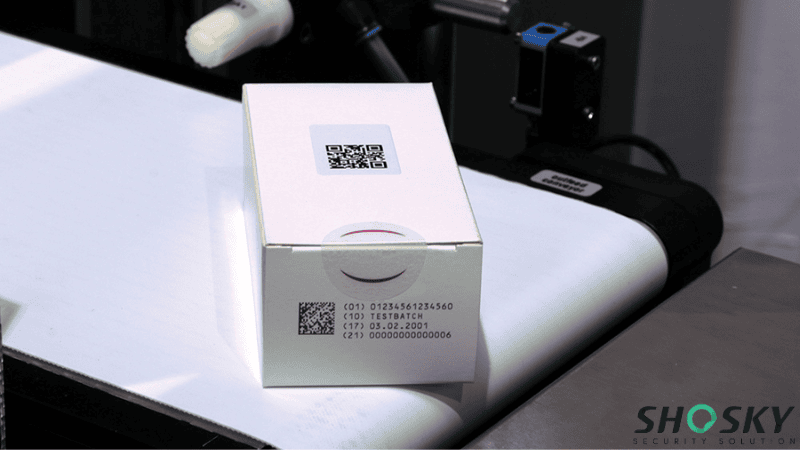
Serialized tamper-evident tracking assigns each product a unique identifier linked to order data, shipping details, and customer records. This creates a complete digital chain of custody that prevents the same item from being returned under multiple accounts or with fraudulent claims.
To achieve full traceability, modern auditing frameworks rely on several core elements:
- Unique serial numbers: Each unit receives a distinct code bound to the original order, transaction data, and customer account.
- Triple-verification system: Return inspection requires serial number matching, intact label verification, and unopened packaging confirmation before approval.
- Digital chain of custody: Serial codes create trackable records that log every step from shipment through return, making it impossible to hide product swaps or reuse.
- Pattern detection: The system flags suspicious return activity tied to the same serial number or customer account, alerting fraud teams to coordinated schemes.
Implementing this multi-layered digital tracking framework serves as an essential requirement for cross-border independent storefronts, complex B2B SaaS hardware environments, and enterprise-scale distribution networks that demand exhaustive audit trails.
5. Anti-Return-Fraud Smart Tags

Anti-return-fraud smart tags embed NFC or RFID technology directly into packaging or product labels. The chips are engineered to become inert when the package is opened, triggering real-time fraud alerts without requiring manual inspection.
Depending on the warehouse layout, these intelligent systems usually function through several interconnected mechanisms:
- NFC/RFID tamper-resistant chips: Embedded technology that expires or deactivates upon opening, rendering the tag useless for reuse or concealment.
- QR code verification: Staff scan codes at return centers to instantly verify chip status, confirming whether the package remains unopened or has been tampered with.
- Real-time backend alerts: Data uploads automatically to fraud detection systems, flagging suspicious activity and fraudulent orders before they reach approval.
- Automated flagging: The system identifies patterns across multiple accounts or serial numbers, catching organized fraud rings without manual review delays.
Deploying automated intelligent tagging serves as the ideal approach for time-sensitive distribution networks, ultra-high volume return sorting hubs, and decentralized B2B enterprises that require instantaneous verification across multiple global regions.
Establishing a Secure Return Verification Protocol to Fight Return Fraud
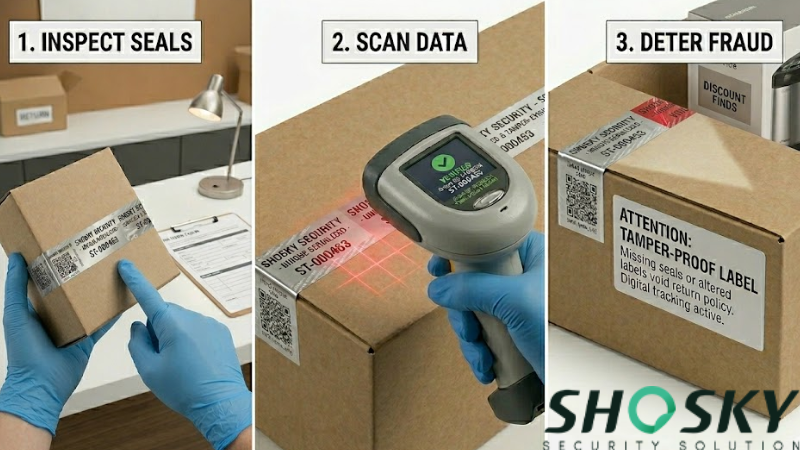
Physical security seals only work when staff actually inspect them. Many retailers fail here. They process returns too quickly without checking whether seals are intact. Fraudsters exploit this gap. A return verification protocol creates consistency.
It forces staff to follow standardized steps. Every return gets the same level of scrutiny regardless of busy periods or volume spikes. To successfully lock down your reverse logistics workflow, warehouse receiving teams must systematically execute a series of standardized validation checks:
- Immediate Visual Inspections: Warehouse staff should inspect the condition of the security seal, packaging, and serialized labels before approving any refund request. Missing tags, damaged seals, or signs of existing wear often indicate refund fraud or policy abuse.
- Digital Chain of Custody Audits: Serialized anti-wardrobing tags can link directly to the original customer order, transaction data, and return history. This helps retailers detect cross-account fraud, switch fraud, and suspicious return patterns tied to the same item.
- Visible Deterrence Integration: Clear notices on packaging and checkout pages discourage opportunistic fraud by explicitly informing customers that tampered products, missing seals, or altered labels may void the return policy.
- Rigorous Documentation Trails: Staff must log serial numbers, photograph physical tag conditions, and record findings to create a permanent audit trail that prevents the same item from being returned twice under different accounts.
Furthermore, warehouse teams need continuous training on emerging fraud patterns so they catch suspicious packages before financial approval. When retailers signal through physical verification that fraud detection is active, professional fraudsters quickly move on to easier targets.
The Financial ROI of Enhanced Return Security
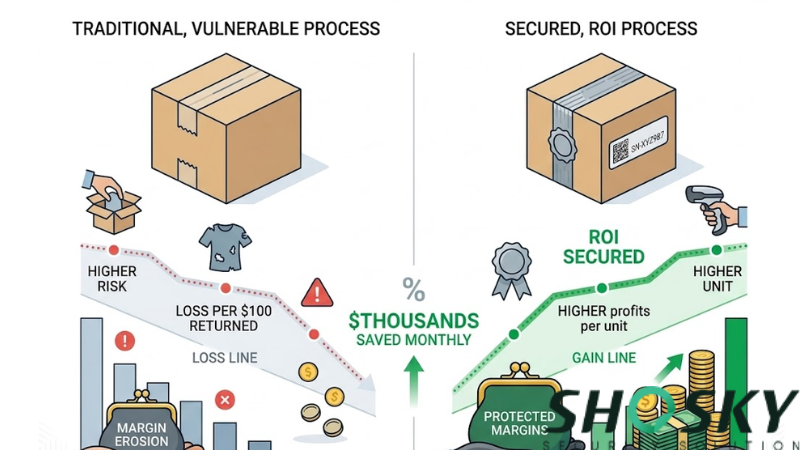
Return fraud creates direct financial pressure across shipping, inspections, labor, and reverse logistics operations. Fraudulent returns also reduce the resale value of returned merchandise, especially for high-value items and seasonal products.
When evaluated as a long-term capital investment, a standardized tamper-evident deployment actively recovers lost revenue across several core financial areas:
- Fast-Track Restocking (Reverse Logistics Efficiency): Intact seals and anti-wardrobing tags create a green channel in reverse logistics. When seals remain unbroken, items can skip full quality checks and go straight to restocking. This reduces inspection time, lowers labor load, and speeds up inventory turnover. Damaged seals trigger full inspection workflows.
- Reduction in Restocking Costs: Tamper-evident labels help filter out worn or altered returns before they re-enter stock. At the same time, they simplify handling for valid returns. Many operations cut secondary inspection costs by routing sealed items directly back into inventory.
- Winning Chargeback Disputes: Serialized VOID labels provide clear evidence in payment disputes. When chargebacks occur, retailers can submit photos of intact or broken seals linked to serial numbers. This strengthens proof and improves dispute success rates with payment gateways.
- Mitigation of Margin Erosion: Security seals help block refund abuse tied to swaps, fake returns, and used items. Many businesses recover steady losses by stopping fraudulent refunds before approval. This protects margins and stabilizes return workflows.
Industry studies show that retailers lose more than $10-14 for every $100 in returned merchandise due to return fraud and refund abuse. Physical security solutions help e-commerce merchants fight return fraud while protecting profit margins and maintaining a smoother customer experience for legitimate customers.
Expert Tip from Shosky Security: Leverage Serialized Photographic Proof
When fighting credit card chargeback disputes (friendly fraud), payment gateways demand irrefutable evidence. Instruct your reverse logistics team to photograph every tampered or broken serialized label at the exact moment it arrives at the receiving dock. This timestamped physical evidence, matched directly to the customer’s outbound order tracking number, is your highest converting asset to reverse fraudulent chargeback claims and save thousands in hidden operational losses.
FAQs
What exactly is wardrobing return fraud in e-commerce?
Wardrobing is a prevalent form of retail fraud where a consumer purchases high-end apparel, wears it for a specific event or social media photo shoot, and then returns it for a full refund. Applying prominent anti-wardrobing tags completely stops this practice, as the item cannot be worn in public without visibly destroying the tag.
How do security seals help win credit card chargeback disputes?
When a malicious buyer claims they received an empty box or the wrong item and initiates a chargeback, security seals provide hard evidence. If the retailer can provide photographic proof that the unique serialized security tape or VOID label was intact when shipped but tampered with upon return, payment gateways heavily favor the merchant in the dispute.
What does selective friction mean in reverse logistics?
Selective friction is a security strategy where fraud prevention tools only create obstacles for bad actors. For example, an anti-wardrobing tag creates massive friction for a fraudster trying to wear a dress to a party, but zero friction for an honest customer who simply tries the dress on at home and smoothly cuts the tag off if they decide to keep it.
Can intact security seals speed up the warehouse restocking process?
Yes. This is known as fast-track restocking. If an electronic device or luxury item is returned with its original tamper-evident seals and custom tape completely unbroken, reverse logistics staff can bypass lengthy and expensive quality control inspections, sending the item straight back to active inventory.
Take Control of Fraudulent Returns with Shosky Fraud Prevention Solutions
Return fraud has become a structural challenge for modern retail. Fraud rings and opportunistic customers take advantage of return windows, refund policies, and inspection gaps to claim full refunds on used, altered, or stolen goods. This creates long-term pressure on profit margins and weakens trust in the return process.
Shosky Security offers tamper-evident solutions designed to reduce fraud at the source. Our solutions help retailers create clear physical evidence when products have been opened or altered. This reduces ambiguity in the refund process and supports faster, more confident decision-making at the point of inspection. Contact us to build a stronger return protection system for your business.