
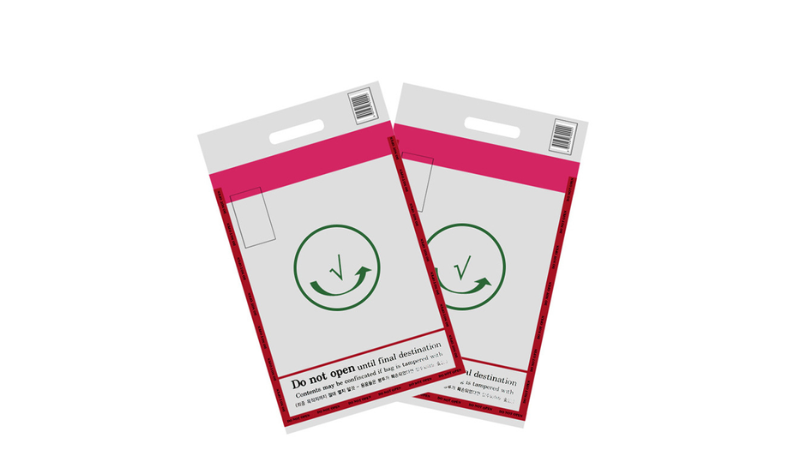
With more than 4.5 billion passengers flying internationally each year, the proper packaging of duty-free items has become essential. Airport retailers are now expected to follow strict packaging rules that help travelers move smoothly through security and board connecting flights without delays.
Duty-free bags play a key role in this process. They make sure purchased items are sealed, secure, and easy to inspect. However, these bags need to meet global standards to function correctly. In this article, we will break down the top 5 technical features to look for in high-quality duty-free bags. These features are vital for meeting strict aviation regulations and avoiding damage during transit.
What is an ICAO Compliant Duty-Free Bag (STEB)?
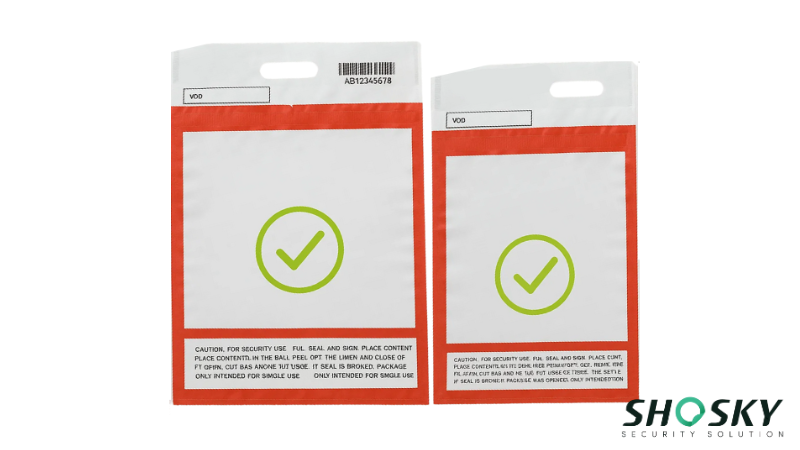
Duty-free bags, or STEBs (Security Tamper-Evident Bags), are specially designed bags utilized by duty-free stores to package duty-free items securely. These bags are primarily designed for transporting duty-free liquids, gels, and other duty-free products through airport checkpoints and onto international flights.
These bags are not random inventions; they are governed by strict protocols set by the ICAO (International Civil Aviation Organization). According to ICAO Document 8973, these bags must serve a dual purpose:
- For the Traveler: Provide an easy, durable means of carrying purchases through multiple airports.
- For Security Staff: Provide visual assurance that products have not been tampered with post-purchase.
Unlike regular carry-on bags, duty-free bags have distinct security features. These include tamper-evident security bag tape and strong adhesive closures. If someone attempts to open or tamper with the bag using heat, cold, or solvents, the seal shows noticeable marks, indicating that the products may have been tampered with.
When properly sealed, duty-free bags allow passengers to carry items that would otherwise be confiscated during security screening. For connecting international flights, these bags represent the only legal method to transport many duty-free purchases through intermediate security checkpoints.
5 Key Features Mandated by ICAO for Duty-Free Bags
The following sections break down the five key features that define high-quality duty-free bags, helping retailers and travelers alike make the best choices for safe and smooth international travel.
1. ICAO-Compliant Tamper-Evident Design
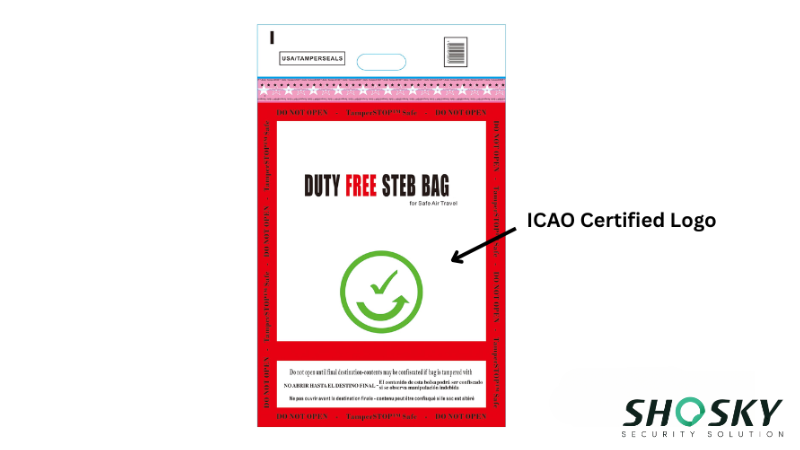
One of the most important features of high-quality duty-free bags is their tamper-evident design that must meet ICAO (International Civil Aviation Organization) standards. Research shows that properly implemented tamper-evident features can reduce security incidents related to duty-free items by up to 87%. This impressive statistic demonstrates why this feature tops our list.
A compliant STEB must feature a Level 4 Security Tape. This is the highest standard in tamper-evident technology.
- Physical Defense: The tape uses a high-tack acrylic adhesive. Any attempt to peel it manually will cause the film to delaminate, revealing a hidden “VOID” or “OPEN” message that is irreversible.
- Thermal Defense: Sophisticated thieves might use a heat gun to soften the glue. A Level 4 tape contains thermo-chromic ink that turns red or distorts when heated beyond a certain threshold (typically 60°C).
- Chemical Defense: Some may try to use freezing spray (Freon) or solvents to neutralize the adhesive. High-quality STEBs feature solvent-sensitive inks that bleed or dissolve, leaving clear evidence of a chemical attack.
For duty-free retailers, using bags with forensic evidence capabilities is essential. It protects the retailer from liability if a passenger claims a product was stolen or swapped during transit.
2. Durable, Puncture-Resistant Materials
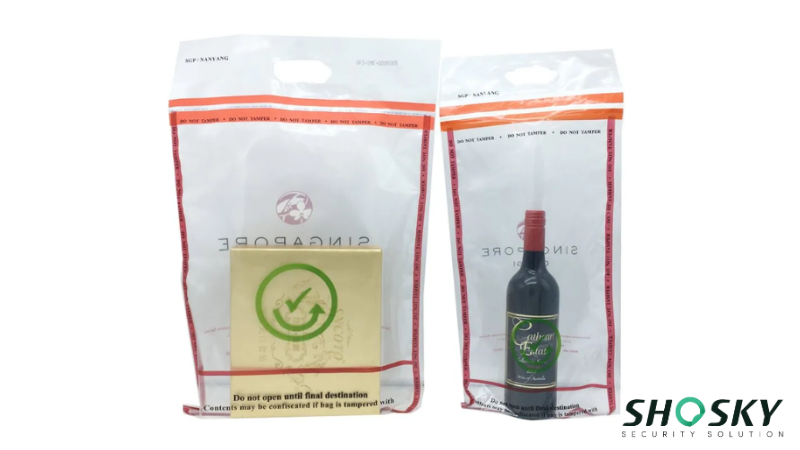
The journey from the duty-free shop to the final destination can be surprisingly rough on packaging. High-quality duty-free bags must withstand being stuffed into carry-on luggage, jostled through crowded terminals, and potentially transported across multiple flights.
To prevent this, leading manufacturers like Shosky utilize Co-extruded Films (Co-ex). Unlike a simple monolayer plastic bag, co-extrusion involves melting different types of plastic resin and blowing them together into a single, multi-layered sheet.
- Layer 1 (LDPE): Low-Density Polyethylene provides flexibility, allowing the bag to wrap around odd-shaped bottles without cracking.
- Layer 2 (LLDPE): Linear Low-Density Polyethylene provides superior puncture resistance and tensile strength.
- Layer 3 (Bonding): Ensures the layers do not delaminate.
A report from the IATA (International Air Transport Association) found that standard retail bags experienced a 25% failure rate during simulated airport handling tests. In contrast, multi-layer co-extruded STEBs had failure rates below 5%. This clear gap shows how critical strong, travel-ready materials are for protecting goods during transit.
Furthermore, for duty-free applications, the film thickness should typically be between 50 and 100 microns (2 to 4 mil), depending on the weight of the liquor bottles it is designed to hold.
For good waterproof sealing, the side welds should use proprietary wide welding (10-15mm) to ensure the bag can contain leaks if a bottle breaks inside, protecting the rest of the passenger’s luggage.
3. Transparent Panels for Security Inspection
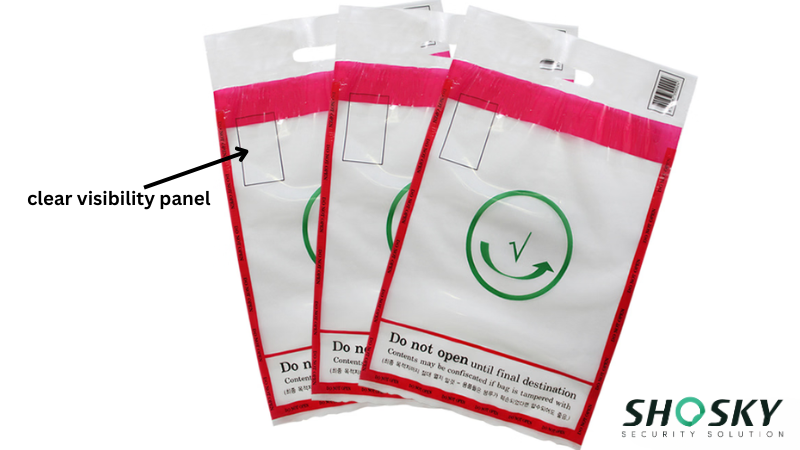
Visibility of contents remains one of the fundamental requirements for duty-free bags. Transportation Security Administration (TSA) and similar international authorities require that security personnel can visually inspect items without opening sealed bags.
The transparency requirement serves multiple purposes:
- Enables quick visual inspection at security checkpoints
- Allows verification that the contents match the purchase receipts
- Deters attempts to conceal prohibited items
- Streamlines the security screening process for travelers
According to airport efficiency studies, transparent duty-free bags can reduce security processing time by approximately 35 seconds per passenger carrying duty-free items. While this seems minimal, it translates to hundreds of hours saved daily at major hubs like Dubai or Heathrow.
Modern duty-free bags often incorporate specialized optical films that maintain clarity even after being folded or compressed. This ensures that contents remain visible regardless of how the bag is packed within a traveler’s carry-on luggage.
4. Custom Branding and Retail-Friendly Design
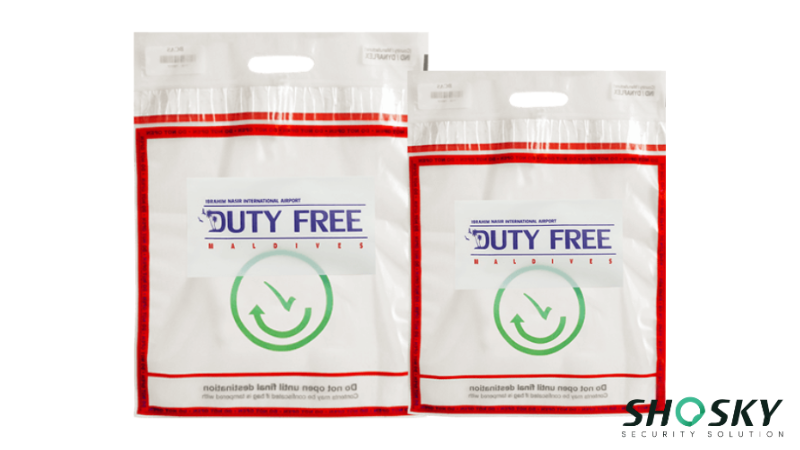
While security remains paramount, the marketing potential of duty-free bags shouldn’t be overlooked. For retailers, these bags represent mobile advertising that travels throughout terminals and potentially to destinations worldwide.
A 2023 retail study found that 68% of travelers could recall the specific duty-free retailer they purchased from when the bag featured distinctive branding. This recognition rate was nearly double that of purchases made with generic packaging.
Effective retail-friendly designs balance security requirements with brand visibility. The most successful implementations should include:
| Design Element | Security Function | Marketing Benefit |
|---|---|---|
| Clear windows | Content visibility for inspection | Product showcase |
| Colored security seals | Tamper evidence | Brand color reinforcement |
| Serialized coding | Authentication | Perceived premium quality |
| Custom printing | Compliance information | Logo and message placement |
| Specialized closures | One-time sealing | Unique brand experience |
Custom duty-free bags can significantly enhance the customer experience while maintaining strict compliance with international regulations. The investment in branded, high-quality bags typically yields returns through increased customer loyalty and brand recognition.
5. Documentation and Traceability
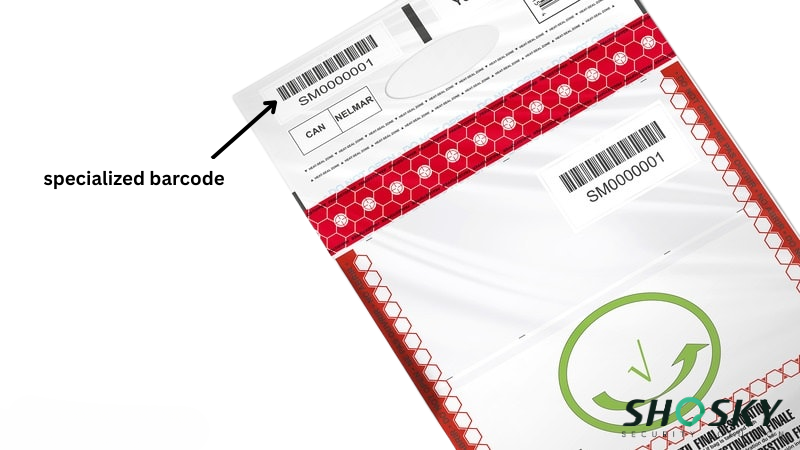
The final essential feature of premium duty-free bags is proper documentation handling. International regulations require that proof of purchase remain with duty-free items throughout the journey. If the receipt is lost or separated, the items are confiscated. This makes secure receipt storage crucial.
High-quality STEBs must include specific features for documentation:
- Internal Receipt Pocket: A dedicated slot inside the bag. This is crucial because stapling a receipt to the outside is risky—it can be torn off. An internal pocket seals the receipt in the same secure environment as the product.
- State Code & Manufacturer Code: This is the “fingerprint” of the bag. Every ICAO-compliant bag must print a 3-letter State Code (e.g., USA, SGP, FRA) indicating the country of origin, and a manufacturer code. This allows aviation authorities to trace the supply chain.
- Barcode Windows: The pocket should be positioned to allow barcode scanners to read the receipt without opening the bag, linking the purchase to the passenger’s boarding pass for inventory tracking.
The integration of these documentation features with point-of-sale systems has revolutionized travel retail. Modern duty-free shops can now link specific purchases to passenger itineraries, ensuring compliance with destination country regulations.
Duty-free bags should include scannable elements that allow quick verification at security checkpoints. An airport efficiency study indicated that duty-free bags with integrated barcode windows reduced secondary inspection rates by 64%, significantly improving passenger flow through security.
Duty-Free Bags (STEBs) vs. Standard Retail Bags
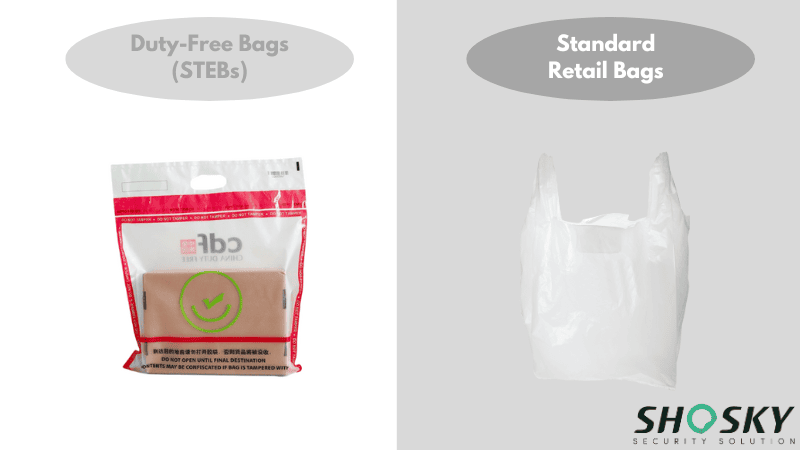
The crucial differences between duty-free bags and standard retail packaging explain why regular shopping bags cannot be used in airport retail environments. These distinctions go far beyond simple appearances; they are a matter of legal compliance.
| Feature | ICAO Compliant STEB | Standard Retail Bag |
|---|---|---|
| Tamper Evidence | Level 4 VOID Tape (Heat/Cold/Solvent resistant) | None or simple sticker |
| Material Strength | Co-extruded, >60 microns, Puncture-resistant | Monolayer, prone to tearing |
| Traceability | Unique Serial Number & State Code | None |
| Sealing | Permanent (Destructs on opening) | Re-openable |
| Liquid Containment | Wide welds to hold spills | Seams may leak |
| Security Status | Accepted at Transit Checkpoints | Confiscated immediately |
For retailers selling duty-free goods, using non-compliant bags is a financial risk. Confiscated items lead to customer complaints, refund requests, and potential fines from airport authorities for non-compliance.
Beyond Compliance: Enhancing Your Duty-Free Bags
While duty-free bags must meet specific security rules, retailers can go beyond the basics to improve both function and customer satisfaction. Adding smart, optional features helps stores stand out, especially for international travelers who buy duty-free items before they board the aircraft.
These added details aren’t required by regulations, but they offer strong value when designed with the travel experience in mind.
1. Ergonomic Handles for Traveler Comfort
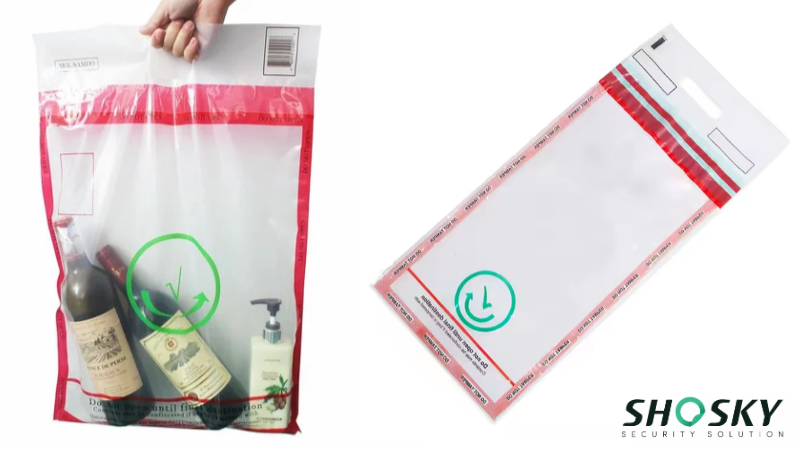
Travelers often have their hands full with carry-ons, suitcases, liquids, food, and travel documents. Getting through terminals can be stressful, especially when duty-free purchases add to the load. That’s why well-designed duty-free bags with comfortable handling features are so important. Here are some common designs for it:
- Reinforced Single Handles: Handles with smooth edges help prevent hand strain during long walks through the airport, while extra grip layers give better support for heavier items like bottles or gift boxes.
- Fold-flat Technology: Handles that fold flat allow the bag to slide easily into overhead bins without getting snagged and taking up too much space.
- Shoulder Straps: For heavy purchases (like 3-pack liquor promotions), adjustable straps let travelers carry the bag over the shoulder. This ergonomic upgrade directly correlates with higher average transaction values (ATV), as customers are less worried about carrying weight.
2. Enhanced Covert Security Elements
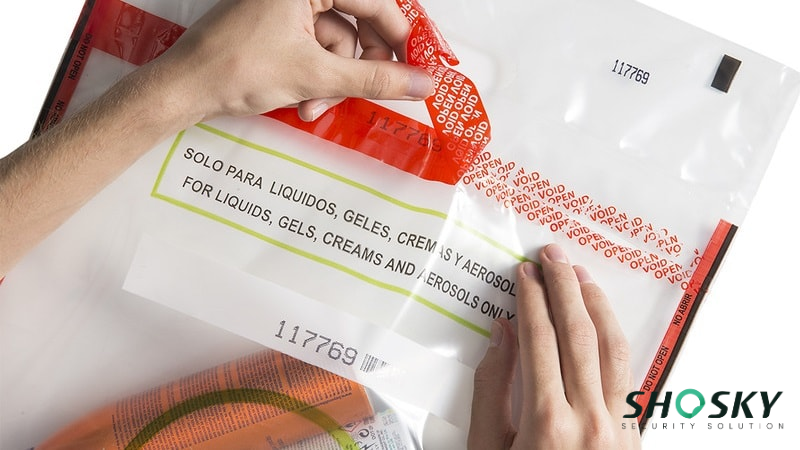
In some countries, duty-free stores deal with stricter customs checks or serve travelers connecting to high-risk zones. Others sell high-value goods like luxury cosmetics or electronics. In these cases, Covert (Hidden) Security is worth considering:
- UV Invisible Ink: Markings that only appear under UV light. This allows staff to verify authenticity instantly without alerting potential fraudsters.
- Holographic Tape: Custom holographic bands are extremely difficult to photocopy or reproduce, adding a layer of trust.
- Micro-text: Tiny text printed along the weld lines that looks like a solid line to the naked eye but is readable under magnification.
- Serialized codes: They are tied to a specific sale, passenger, and destination country, and are useful when items must be matched to a boarding pass or flight number.
3. Eco-Friendly Materials
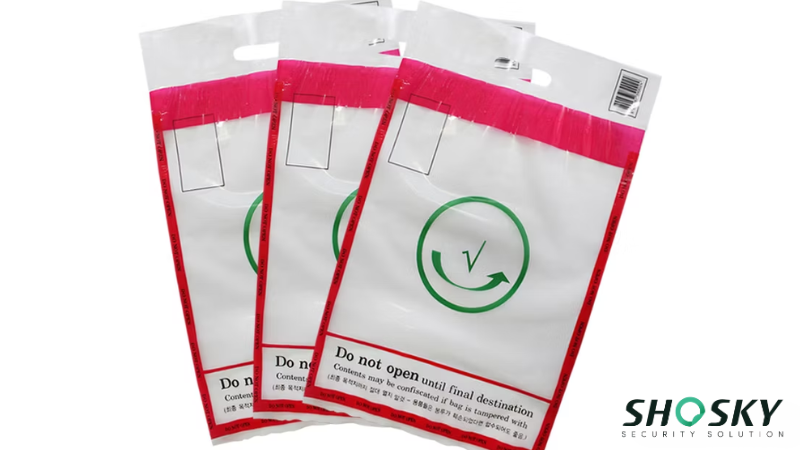
As travelers become more aware of sustainability and environmental issues, many expect duty-free stores to use packaging that’s better for the planet. The good news is that eco-friendly and sustainable tamper-evident packaging options don’t have to sacrifice safety or function.
Biodegradable plastics can still carry liquids securely, while recycled materials work well for non-critical parts of the bag, like outer sleeves or labels.
Using less ink also helps the bag break down more easily, especially when it’s tossed at the airport, hotel, or back home.
Adding clear recycling symbols makes it easier for passengers to dispose of the bag properly, no matter what country they’re in. This simple step can have a big impact. A recent survey found that over 75% of international travelers prefer shopping from brands that take steps to reduce packaging waste.
For duty-free retailers, that means smarter bags can do more than hold items; they can also improve customer satisfaction and influence purchase decisions, whether the bag ends up in a carry-on, checked baggage, or packed in a box for the next leg of the trip.
How to Ensure Your Duty-Free Bags Are Travel Compliant?
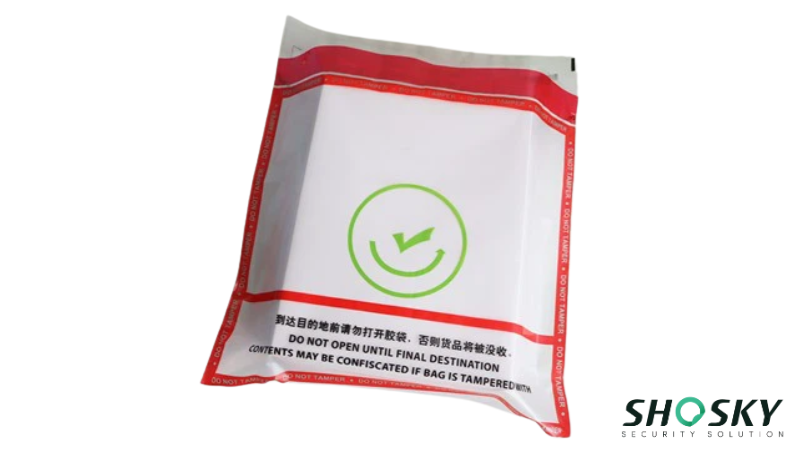
For retailers and packaging suppliers, ensuring compliance with constantly evolving international regulations presents significant challenges. The consequences of non-compliance can be severe, including customer dissatisfaction, inventory confiscation, and potential regulatory penalties.
Working with certified manufacturers like Shosky Security provides the surest path to compliance. A reputable supplier should perform the following tests on every batch:
- Tensile Strength Test: Pulling the film to ensure it meets the required load-bearing capacity (e.g., holding 5kg without stretching).
- Peel Test: Testing the security tape to ensure it reveals the “VOID” message before the film tears.
- Leak Test: Filling the bag with water to ensure the side welds are waterproof.
- Environmental Chamber Test: Subjecting the bag to -20°C and +60°C to ensure the adhesive performs in all climates.
Regular auditing of packaging inventory ensures continued compliance as regulations evolve. Many retailers implement quarterly compliance reviews that examine their entire duty-free bag supply against current standards.
FAQs
Q1: Are all duty-free bags tamper-evident?
No, only bags designed to meet airport security standards, like STEBs, include tamper-evident features.
Q2: What is the specific thickness required for a duty-free bag?
While ICAO doesn’t mandate a specific micron count, the industry standard for durability is typically between 50-80 microns for standard bags, and up to 100 microns for heavy-duty liquor bags.
Q3: Can I customize duty-free bags for my retail brand?
Yes, many suppliers offer custom printing, sizes, and security features tailored to your branding needs.
Q4: Do duty-free bags have an expiration date?
Yes, the high-tack adhesive used in the security tape typically has a shelf life (often 1-2 years). Retailers should practice “First-In, First-Out” (FIFO) inventory management to ensure the security features remain active.
Conclusion
Duty-free bags do much more than hold purchases. They are sophisticated security devices that bridge the gap between retail convenience and aviation safety. From Level 4 tamper-evident tapes to co-extruded durable films, every feature is engineered to support smooth travel.
For duty-free retailers, the choice of packaging impacts customer satisfaction, operational speed, and brand reputation. Don’t overlook the impact of quality packaging.
Upgrade Your Duty-Free Bag Features with Shosky
From tamper-proof seals to ergonomic handles, Shosky Security offers duty-free bags designed for safety and convenience. Our customizable, ICAO-compliant bags help retailers comply with global regulations while enhancing the shopping experience. Contact us today to request a sample kit and learn how our STEBs can secure your supply chain.