
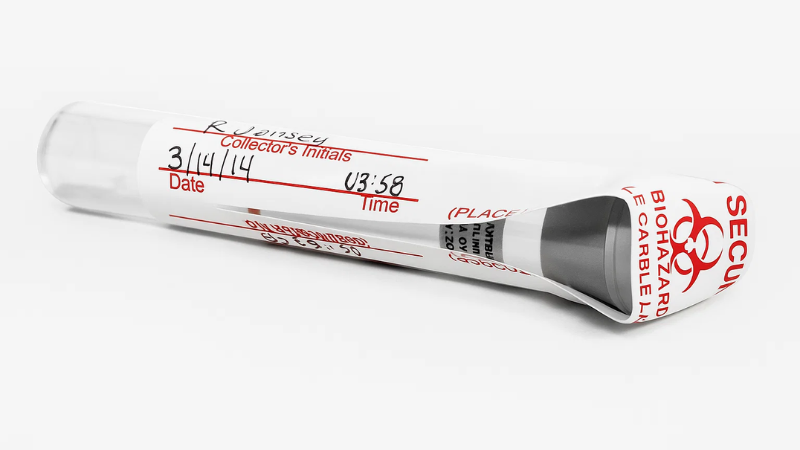
In clinical and research labs, even small specimen errors can have large consequences. A study published in the National Institutes of Health (NIH) found that over 60% of lab errors happen before analysis, often due to specimen mishandling. Errors at this stage can affect diagnoses, legal cases, and large-scale studies.
That’s why standards like HIPAA, ISO 15189, and forensic evidence guidelines require strict control over how samples are stored, transported, and accessed. And specimen security seals play a direct role in meeting these compliance demands as well. In this article, we’ll explain what specimen security seals are, how they work, and their main applications across various industries.
What Is a Specimen Security Seal?
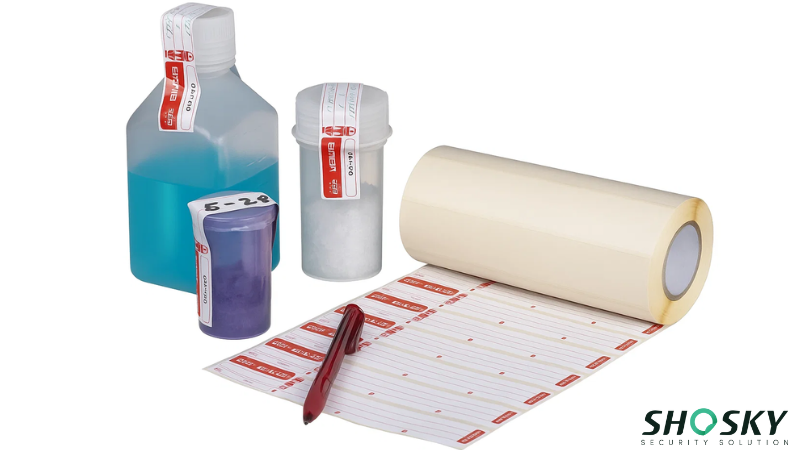
A specimen security seal is a tamper-evident adhesive barrier engineered to protect biological samples from covert substitution. Unlike standard shipping tape, these seals utilize aggressive chemical adhesives designed to bond permanently with low surface energy laboratory plastics and curved glass vials.
To meet strict medical and forensic compliance needs, these seals incorporate the following structural defenses:
- High-Bond Transfer Adhesives: Removing the seal instantly reveals hidden “VOID” messages or deposits a permanent residue onto the container.
- Frangible Substrates: Ultra-thin cast vinyl splinters into microscopic fragments upon any physical interference to make intact removal impossible.
- Audit-Ready Zones: Matte imprint strips and integrated barcodes allow technicians to log chronological dates and sample IDs directly using standard pens.
By deploying these mechanical defenses, laboratory directors establish an airtight physical audit trail. This immediate visual alert system ensures compromised samples are quarantined before ruining critical medical diagnoses or legal investigations.
How Specimen Seals Work for Tamper-Evident Security?
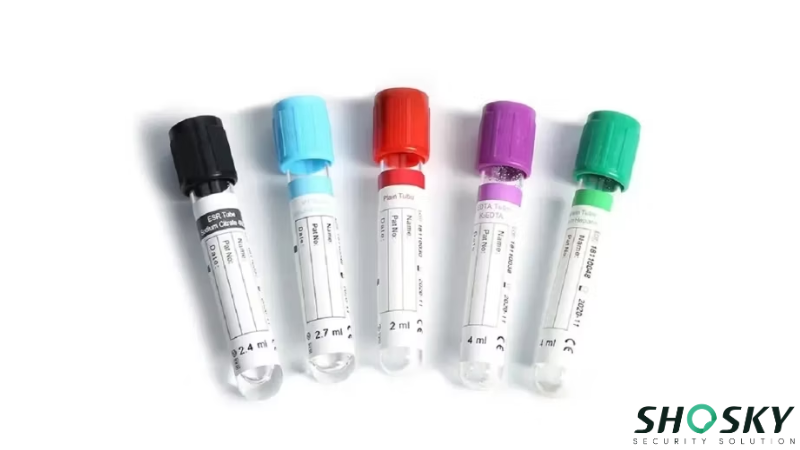
A specimen security seal is a highly specialized, tamper-evident adhesive barrier engineered to protect biological, forensic, or research samples from covert substitution. The core engineering function is to provide irreversible visual evidence of any unauthorized attempt to open, puncture, or compromise a sterile specimen container.
Unlike general shipping tape used in standard logistics, clinical specimen seals operate under severe regulatory constraints. They feature specific chemical adhesives designed to bond aggressively with low surface energy (LSE) laboratory plastics and curved glass vials.
The following technical matrix outlines the exact mechanical responses triggered by modern specimen seals when subjected to physical tampering:
| Feature | How It Protects |
|---|---|
| Tamper-Evident Design | Breaks, leaves residue, or displays a VOID message if disturbed |
| Unique Serial Numbers/Barcodes | Links each specimen to custody records for full traceability |
| Strong Adhesive/Locking System | Holds firmly so seals can’t be replaced without detection |
| Writable Surfaces | IDs, dates, and handler names can be easily written for quick tracking |
By deploying these specific chemical and mechanical defenses, facility managers drastically decrease the probability of unnoticed interference. This ensures that the chain of custody integrity remains legally binding across all clinical, forensic, and biobanking environments.
The 3 Primary Classifications of Laboratory Security Seals
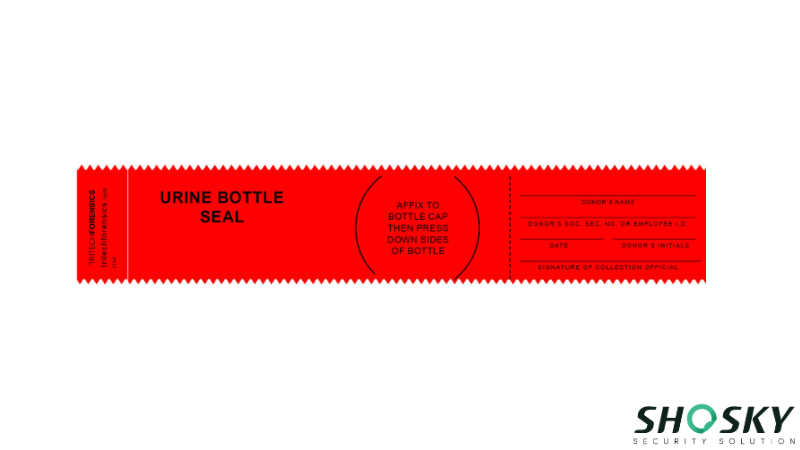
There are several engineered categories of specimen security seals. Procurement teams must match the specific adhesive chemistry to their unique sample handling environment. Deploying standard office supplies in a sterile laboratory environment leads to immediate adhesive failure.
Here are the three primary classifications of professional specimen security seals:
- Frangible Cast Vinyl Labels: These labels are manufactured from ultra-thin, highly destructible materials. They are engineered specifically for small, curved surfaces like test tubes. Any attempt to remove them causes the label to shatter into tiny pieces, making intact removal mathematically impossible.
- Cryogenic VOID Security Tape: Standard rubber adhesives crystallize and fail below freezing. Cryogenic security tapes utilize modified acrylic adhesives engineered to maintain high initial tack and reliable VOID separation even when submerged in liquid nitrogen at -320°F.
- Heavy-Duty Transport Bag Seals: These durable mechanical plastic closures and Level 4 adhesive tapes secure large biohazard transport pouches. They protect consolidated multi-vial shipments moving between regional clinics and central processing laboratories.
Selecting the precise seal format ensures that delicate vials and bulk transport bags receive appropriate, environment-specific protection. Custom color-coded variants further give labs an economical method to accelerate visual sorting and maintain flawless ISO compliance during internal audits.
Where Are Specimen Security Seals Strictly Mandatory?
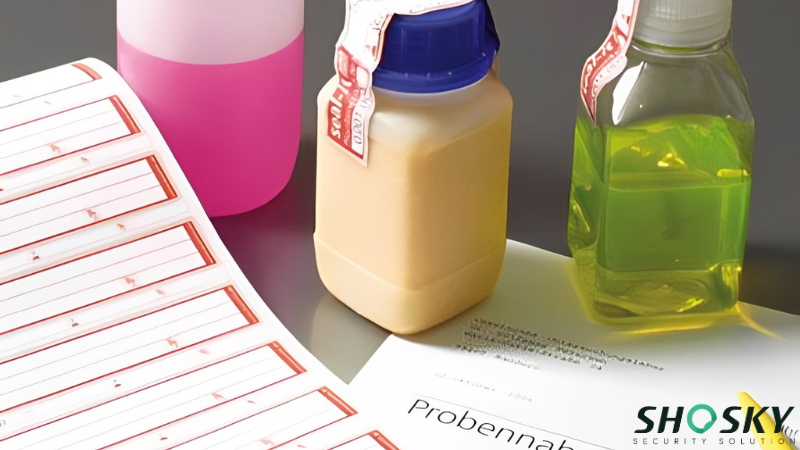
Security seals support a vast array of scientific disciplines where biological protection is critical. From securing DNA evidence to protecting proprietary pharmaceutical formulations, these seals prevent contamination and intellectual property theft.
The following scientific sectors strictly mandate the deployment of tamper-evident specimen seals to maintain operational legality:
- Forensic Chain of Custody: Security seals protect DNA swabs and toxicology screens from defense attorney cross-examinations. A single broken seal invalidates the biological sample and completely eliminates its legal admissibility in federal court.
- Clinical Pathology: Hospitals rely entirely on integrity seals to uphold diagnostic validity. Applying a frangible seal immediately after phlebotomy guarantees that the sample received by the pathology lab is exactly what was collected.
- Biobanking Storage: Modern biobanks preserve irreplaceable genetic material for decades. Implementing cryogenic-rated security seals ensures that these assets remain completely untampered throughout multi-decade longitudinal studies.
- Environmental Auditing: Field investigators secure groundwater samples using specialized EPA-compliant custody seals. Proper sealing prevents external environmental contamination during the long transit from remote industrial collection sites.
By standardizing sealing protocols across these diverse environments, research directors ensure that every biological asset arrives securely and remains scientifically viable.
Ready to Get Specimen Security Seals?
Start With A Low Minimum Order Quantity
3 Steps to Choose the Right Specimen Seal for Your Facility
Procuring the correct laboratory hardware requires a precise evaluation of temperature extremes, surface materials, and digital tracking requirements. To prevent catastrophic adhesive failures in the field, laboratory managers must thoroughly evaluate the operational checkpoints below.
Step 1: Analyze Storage Temperature Extremes
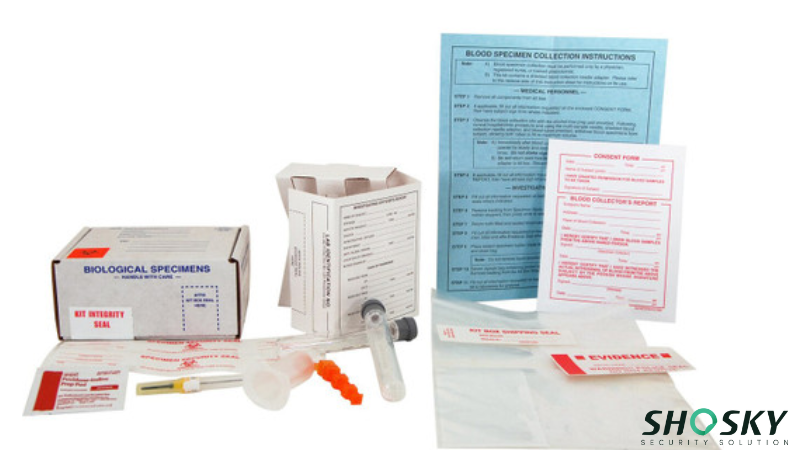
Temperature dictates the baseline adhesive chemistry required for your facility. If your laboratory processes standard clinical blood draws maintained strictly at room temperature, traditional high-tack acrylic seals perform flawlessly.
However, extreme environments require highly specialized formulations to prevent the adhesive from failing silently.
- Deep-Freeze Biobanking: Standard glue will freeze, turn brittle, and detach silently from the vial.
- Cryogenic Specification: You must specifically procure cryogenic-rated seals engineered to survive -320°F without compromising the active VOID trigger.
Matching the adhesive formulation to your storage temperature eliminates the risk of missing labels during critical sample retrievals.
Step 2: Determine Surface Energy and Substrate Geometry
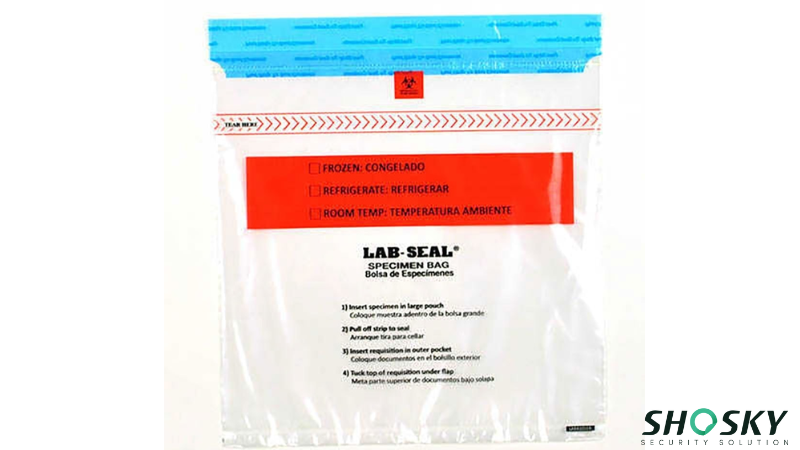
The physical shape and material composition of your container heavily influence seal selection. Procuring a rigid label for a curved tube will result in immediate edge lifting.
You must evaluate the specific physical characteristics of your primary specimen containers:
- Tight Curvatures: Small glass centrifuge tubes require highly flexible, frangible vinyl labels that can wrap securely around the radius without peeling back.
- Low Surface Energy Plastics: Securing flexible polyethylene biohazard bags requires an aggressive, high-coat-weight adhesive designed to bond instantly with LSE plastics.
Deploying the correct material substrate ensures the seal physically bonds with the container and cannot be bypassed mechanically.
Step 3: Implement Barcode and LIMS Tracking Integration
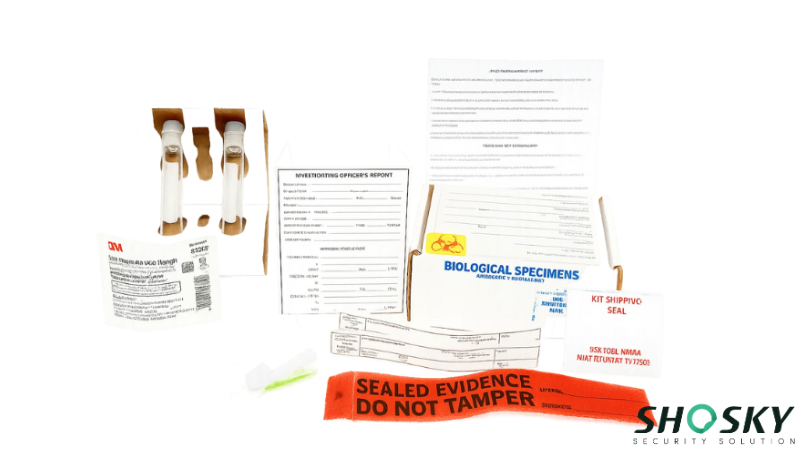
Modern laboratories must eliminate the severe human error generated by handwritten documentation and manual data entry. Ensure your selected specimen seals feature factory-printed, unalterable serialized barcodes or 2D Data Matrix codes.
Integrating these digital identifiers streamlines your entire custody protocol:
- Automated Data Logging: Scanning these intricate barcodes directly into your Laboratory Information Management System establishes a legally binding digital timestamp.
- Error Reduction: This integration completely eliminates the misidentification risks associated with illegible handwriting on tiny glass vials.
This digital integration transforms a simple mechanical seal into a comprehensive data management tool.
Best Practices for Executing the Specimen Sealing Protocol
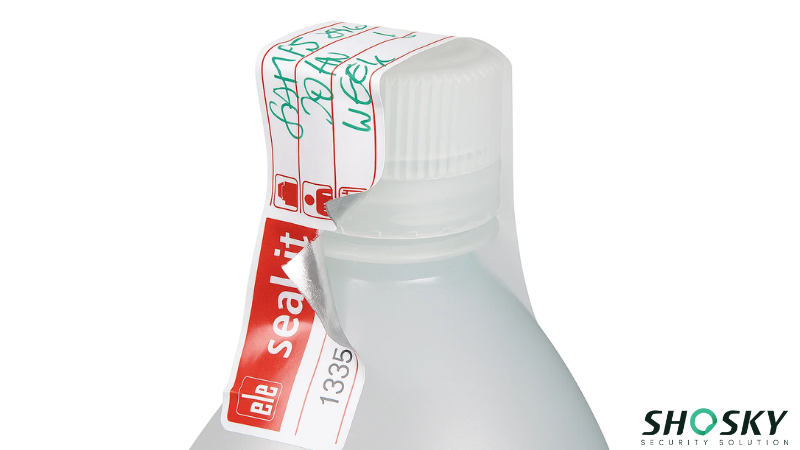
Specimen security seals only function correctly if applied with rigorous mechanical consistency. A premium cryogenic seal will still fail if laboratory personnel bypass standard operational protocols.
To establish an airtight chain of custody, laboratory staff must strictly follow this procedural application checklist:
- Prepare the Application Surface: Ensure the specimen container cap is securely fastened, and the exterior surface is completely free of moisture, chemical solvents, or frost.
- Apply Firm Mechanical Pressure: Press the seal firmly across the cap-to-vial boundary. The adhesive requires strong manual pressure to flow into the microscopic pores of the plastic or glass substrate.
- Execute the Signature Boundary Protocol: Instruct the handling technician to write their initials and the chronological date directly across the edge of the seal using a permanent ballpoint pen. Any physical peeling will permanently fracture the handwritten text.
- Conduct Physical Intake Verification: Receiving laboratory technicians must physically audit the seal upon arrival. If the label displays a “VOID” message or shows frangible tearing, the system must automatically quarantine the sample and trigger a supervisor compliance audit.
Consistent enforcement of these training parameters guarantees that facility inspections run smoothly and your laboratory maintains total compliance with HIPAA, FDA, and international ISO quality standards.
Incident Response Protocols for Breached Specimen Seals
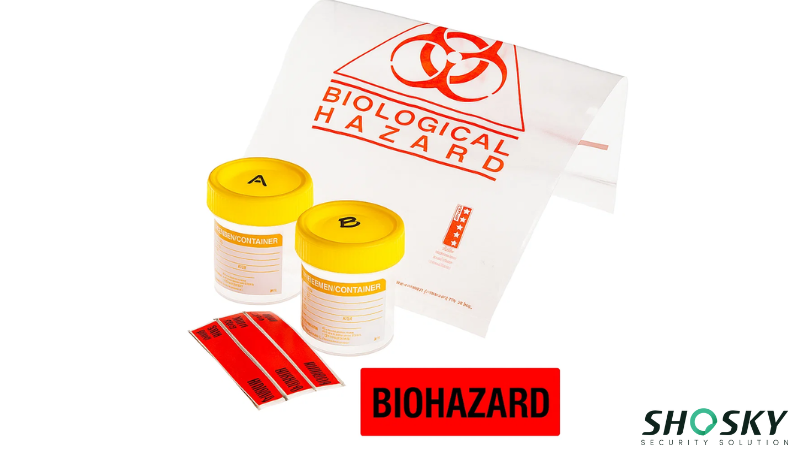
Establishing a strict incident response protocol is mandatory when technicians encounter a compromised specimen seal. A triggered VOID message or shattered frangible label indicates an active security breach that requires immediate administrative action.
Laboratory directors must train their intake staff to execute the following precise emergency steps to prevent contaminated assets from entering the testing workflow:
- Immediate Physical Quarantine: Technicians must halt processing instantly. The compromised sample must be relocated to a designated secure quarantine refrigerator to prevent active cross-contamination with sterile specimens.
- Photographic Evidence Documentation: Quality control staff must capture high-resolution images of the breached seal, the primary container, and the shipping manifest before manipulating the vial further.
- LIMS Database Flagging: The scanning technician must manually update the Laboratory Information Management System to reject the specific barcode. This creates a permanent digital record of the custody failure for auditors.
- CAPA Initiation: The laboratory director must trigger a Corrective and Preventive Action investigation. This process traces the logistical courier route to identify the exact point of unauthorized access or environmental failure.
Executing this rigorous response protocol guarantees that compromised biological assets are destroyed legally and safely. This strict compliance mechanism protects the laboratory from releasing false medical data or invalid forensic reports.
FAQs
Can tamper-evident specimen seals survive liquid nitrogen storage?
Yes, provided you specify the correct adhesive formulation. Our specialized cryogenic-grade acrylic specimen seals are chemically engineered to maintain aggressive adhesion and trigger VOID messages even when submerged in liquid nitrogen at -320°F without crystallizing.
Do specimen security seals comply with ISO 15189 and HIPAA standards?
Yes. Utilizing serialized, tamper-evident specimen seals establishes the mandatory physical and digital chain of custody required to satisfy ISO 15189 quality management systems and HIPAA patient data protection regulations during sample transport.
What protocol should laboratories follow if a specimen seal arrives broken?
Quarantine the sample immediately. Document the exact physical discrepancy with high-resolution photographs, log the compromised barcode in the LIMS database, and notify the originating collection site. Compromised samples cannot be utilized for diagnostic or forensic analysis.
Are frangible vinyl seals better than VOID tape for small medical vials?
Yes. Frangible cast vinyl is highly flexible and conforms perfectly to tightly curved glass or plastic centrifuge tubes. Instead of peeling, the material splinters into microscopic fragments upon interference, providing absolute visual evidence of tampering.
Get Reliable Specimen Security Seals from Shosky
Specimen security seals are an important tamper-evident solution that provides reliable protection against tampering and helps maintain the integrity of valuable samples. Their design allows easy tracking and documentation. So, proper use of these seals ensures secure, accurate, and compliant specimen handling.
When it comes to protecting valuable samples, Shosky Security offers high-quality specimen security seals. Our seals are engineered to maintain sample integrity across laboratories, research facilities, pharmaceutical production, and more. Contact us to get an instant quote or sample.