
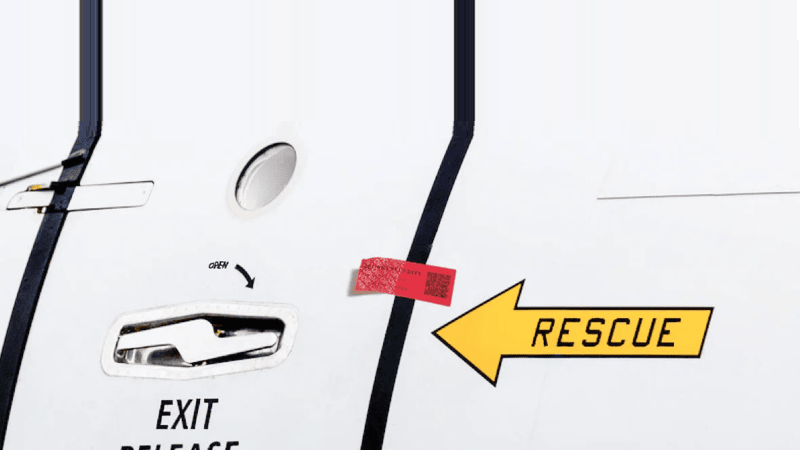
Ensuring the safety of passengers goes beyond the cockpit. It requires a locked-down supply chain for cargo, catering, and baggage. Unauthorized access to these items can lead to tampering, eventually sabotaging flight security.
However, by using specialized tamper-evident solutions, airlines and airport security teams can quickly detect any signs of interference, preventing any mishap. In this article, we will examine how tamper-evident technology bridges the gap between mechanical security and digital compliance, helping airlines meet stringent ICAO and IATA industry standards.
Common Flight Security Risks in 2026

Aviation security is a critical concern for airlines, airports, and regulatory authorities worldwide. In modern logistics, traditional locks are no longer enough to stop sophisticated threats such as:
- Unauthorized access to aircraft galleys, catering trolleys, and maintenance panels.
- Insider threats tampering with cargo or baggage during ground handling.
- Exploitation of security gaps for contraband smuggling or illicit goods.
Another major risk is aircraft tampering, where unauthorized individuals attempt to interfere with onboard systems, catering supplies, or maintenance equipment. Even minor breaches can compromise safety and lead to severe consequences.
To mitigate these risks, airlines must adopt comprehensive security strategies, including tamper-evident solutions, biometric authentication, and real-time monitoring systems.
Strengthening security protocols at every stage, from baggage handling to cargo transport, ensures compliance with aviation regulations and enhances passenger safety.
Regulatory Requirements for Aviation Security
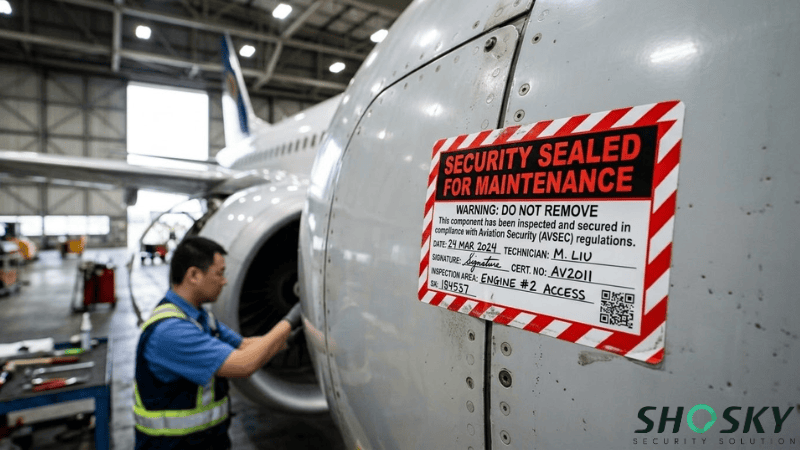
Aviation security is governed by strict regulations set by international organizations such as the International Civil Aviation Organization (ICAO) and the International Air Transport Association (IATA). These organizations establish security standards and guidelines to prevent any threats that could compromise flight safety.
Airlines and airports must follow these guidelines to ensure the protection of passengers, crew, and cargo. Compliance with aviation security regulations requires airports and airlines to implement tamper-evident solutions. These measures help detect and prevent unauthorized access to aircraft doors, catering carts, and sterile zones.
Proper documentation is also essential in maintaining security compliance. Airlines must keep detailed records of serialized security seals and baggage handling procedures. This documentation provides irrefutable evidence of security measures in place. It supports investigations into potential tampering and ensures that regulatory bodies can verify compliance during inspections.
4 Essential Tamper-Evident Solutions for Aviation Security
To translate regulations into operational safety, airport authorities rely on four key hardware categories to secure every touchpoint of the flight:
1. Security Tapes & Labels for Maintenance and Cargo
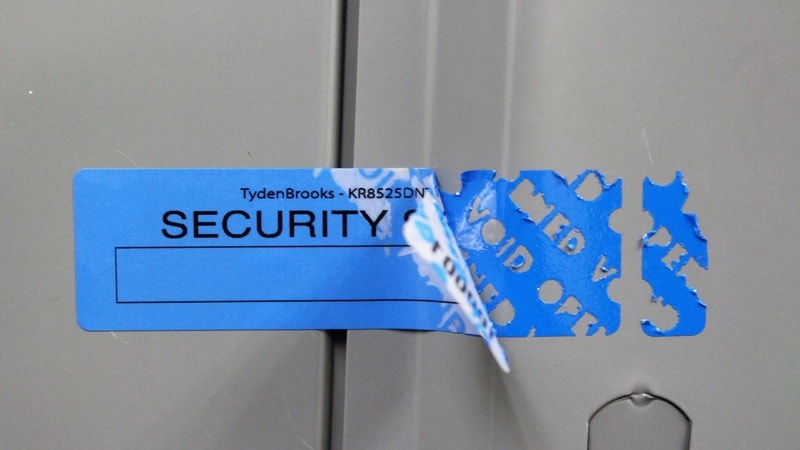
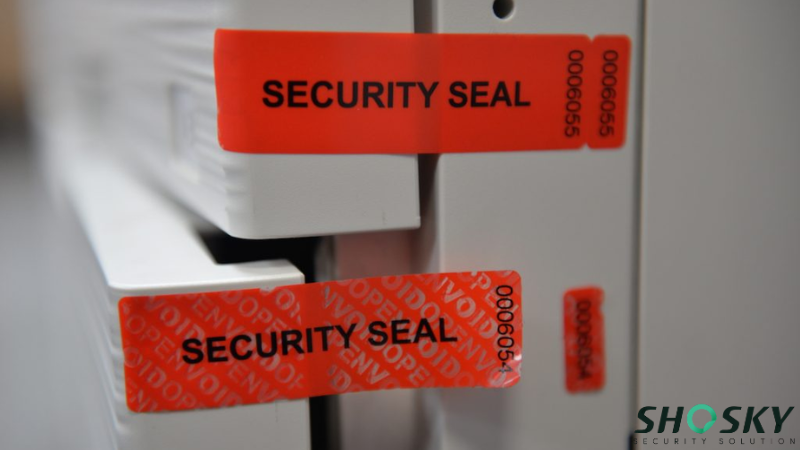
Security tapes and labels are the primary defense for aircraft maintenance (ACM) and cargo consolidation. These solutions leave visible VOID messages when removed, making tampering attempts easily detectable. Airlines use security tapes to seal oversized cargo pallets and LD3 containers to prevent supply chain theft.
Meanwhile, security labels are applied to aircraft interior panels, overhead bins, and IFE system access points. Any sign of peeling or residue triggers an immediate security response, ensuring that no unauthorized devices have been planted behind cabin walls.
2. Mechanical Security Seals for Doors and Fuel Tanks
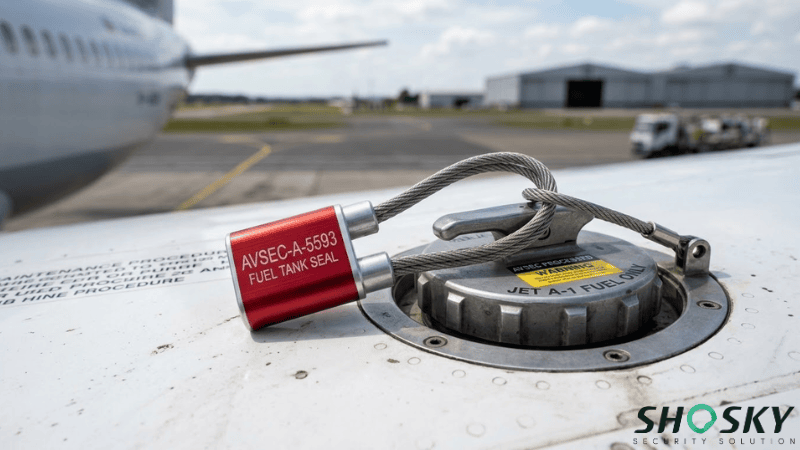
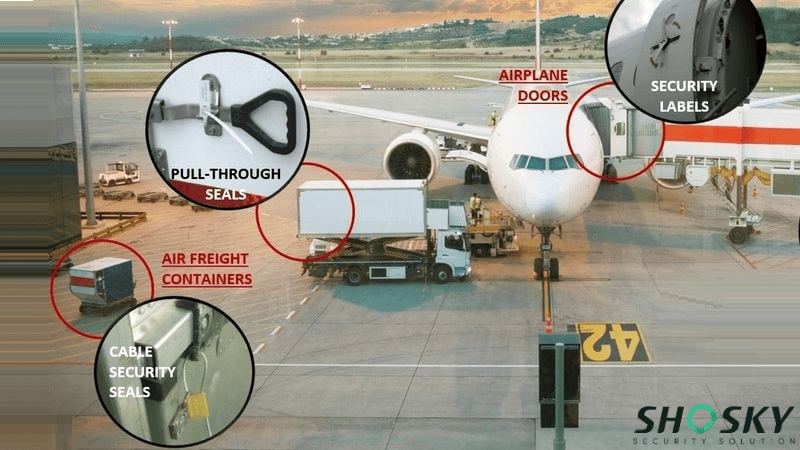
Aircraft security seals prevent unauthorized access to critical zones like fuel tanks, cargo holds, and catering trolleys. These seals act as a visible deterrent, ensuring only authorized personnel can access restricted areas.
Airlines typically use polypropylene pull-tight seals for catering carts due to their high visibility, while flexible cable seals are used for oddly shaped fuel valves and heavy-duty cargo doors. Using uniquely serialized seals eliminates the risk of an intruder breaking a seal and replacing it with a generic one from another source.
3. Tamper-Evident Bags for Duty-Free and Cash Handling
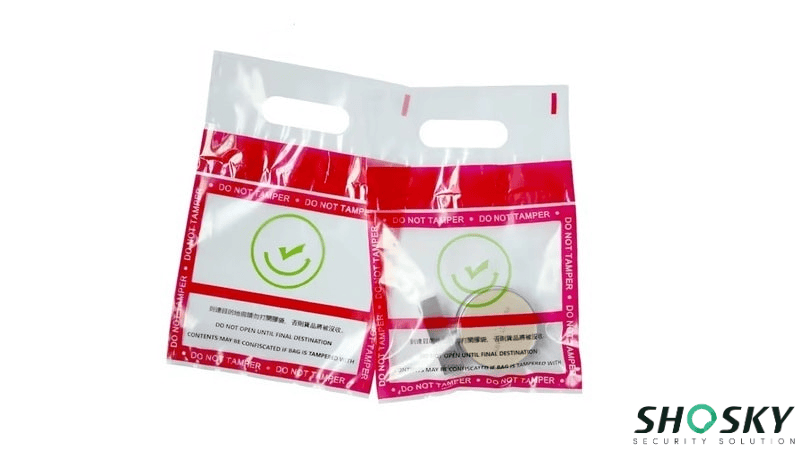
Tamper-evident bags, specifically ICAO-compliant STEBs (Security Tamper-Evident Bags), are mandatory for securing duty-free liquids and aerosols purchased at airport shops. These bags feature a high-security permanent adhesive closure that shows immediate evidence of tampering if someone tries to open them during a flight or at a transfer point.
Beyond duty-free, these bags provide secure storage for confidential flight documents and in-flight cash handling. They create a physical audit trail that confirms no unauthorized access occurred, maintaining a strict chain of custody for high-value assets throughout the entire journey.
4. Electronic E-Seals for Automated Tracking
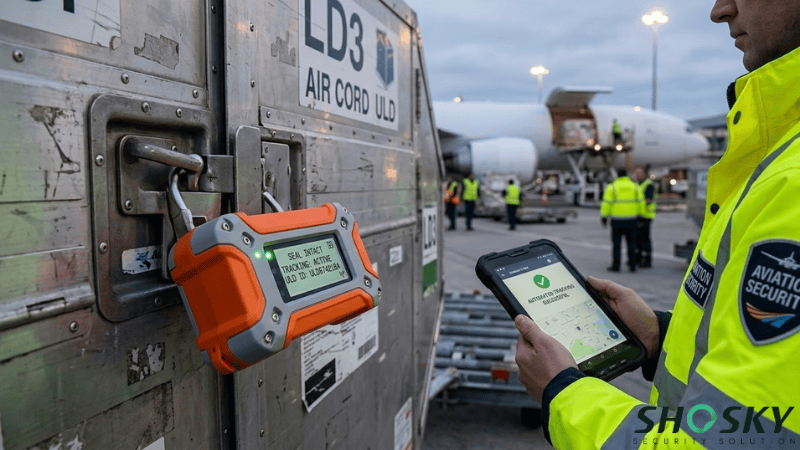
Electronic tamper-evident seals offer advanced tracking and monitoring capabilities for aviation security. Unlike traditional security seals, these digital solutions integrate RFID chips, GPS tracking, and real-time data transmission to detect and report any tampering attempts. Airlines use them for high-risk cargo, aircraft access points, and critical maintenance areas.
By providing instant alerts on seal removal or unauthorized access, these systems help security teams respond faster to potential threats. Many electronic seals store security logs that serve as evidence during investigations. Their ability to enhance aviation safety through real-time monitoring makes them an increasingly valuable tool in the industry.
To help you choose the right solution for your ground operations, let’s break down the main types of tamper-evident products and their key applications:
| Product Category | Key Aviation Applications | Core Security Feature | Best Used For |
|---|---|---|---|
| Security Tapes & Labels | Aircraft interior panels, LD3 containers, IFE systems | Leaves visible "VOID" residue upon removal | Maintenance checks and cargo consolidation |
| Mechanical Security Seals | Catering trolleys, fuel valves, cargo doors | Unique serialization and physical barrier | Securing restricted access zones |
| Tamper-Evident Bags | Duty-free liquids (STEBs), flight documents, cash | Permanent adhesive closure with physical audit trail | Maintaining chain of custody for valuables |
| Electronic E-Seals | High-risk cargo, sensitive maintenance areas | RFID tracking and real-time data transmission | Automated tracking and instant tampering alerts |
Each tamper-evident product addresses a different aspect of aviation security. By strategically combining these solutions, airlines can build a multi-layered defense system that prevents tampering, ensures compliance with international regulations, and strengthens overall passenger safety.
How to Implement Tamper-Evident Solutions in Flight Security
Integrating tamper-evident technology into airline security procedures requires a systematic approach that ensures effective implementation and ongoing monitoring. To successfully integrate tamper-evident solutions, airlines should follow these steps:
- Assess Security Risks: Identify high-risk locations that require tamper-evident security measures. Evaluate past security breaches and emerging threats to establish where tamper-evident solutions are most needed.
- Select the Right Products: Choose security seals, labels, or electronic tracking systems based on the application.
- Train Security Teams: Conduct regular training sessions to ensure staff can detect and handle tampering attempts. Reinforce training with hands-on exercises and updates on evolving security threats.
- Implement Monitoring Systems: To maximize the effectiveness of tamper-evident measures, airlines should implement robust monitoring systems. Data collected should be securely stored and analyzed to identify trends and improve security protocols.
- Conduct Routine Audits: Perform frequent security checks to ensure all tamper-evident measures remain effective. Establish a schedule for inspecting security seals, reviewing tracking records, and testing the durability of tamper-evident materials.
By following these steps, airlines can strengthen flight security and prevent unauthorized access to critical aircraft components, ultimately enhancing passenger safety and security.
Best Practices to Enhance Flight Security with Tamper-Evident Solutions
To maximize flight security, airlines should adopt the following best practices for their tamper-evident solutions:
- Partner with Reputable Providers: Work with trusted suppliers who provide high-quality, industry-compliant security solutions that can withstand the harsh conditions of air travel.
- Integrate Digital Tracking: Enhance security by using solutions with digital features like RFID tags, QR codes, and barcodes. These tools provide instant verification, reduce human error, and create a clear audit trail.
- Establish Strict Chain-of-Custody Protocols: Implement and enforce a detailed logging system to track the entire lifecycle of each seal, from application and inspection to removal. This ensures accountability and simplifies investigations.
By combining these practices, airlines can create a layered defense system that minimizes vulnerabilities and ensures regulatory compliance. More importantly, they build trust with passengers and stakeholders by showing a strong commitment to safety.
The Future of Flight Security with Tamper Evidence
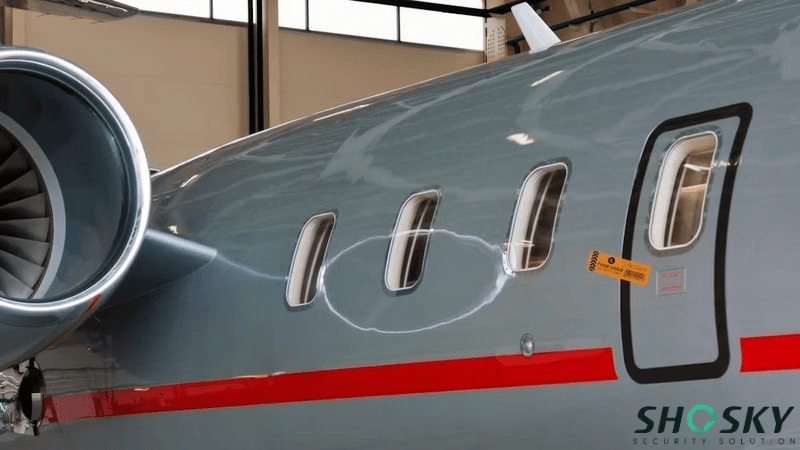
The future of flight security is closely tied to advancements in tamper-evident technology. Emerging trends point towards a more sophisticated and interconnected security ecosystem.
To stay ahead of emerging threats, the aviation industry is adopting several key innovations:
- Blockchain-Backed Digital Seals: These tools offer enhanced security through cryptographically secured identifiers linked to a tamper-proof digital record.
- Decentralized Audit Trails: An immutable record tracks every interaction with secured items throughout the supply chain, significantly reducing the risk of fraud and internal theft.
- Advanced Sensor Integration: Next-generation seals now monitor environmental conditions such as temperature and pressure in real time, triggering immediate alerts for any physical tampering attempts.
Securing the future of flight operations hinges on a collaborative approach. Airlines, security agencies, and technology providers must work together to integrate these innovations, ensuring smooth interoperability and strong cybersecurity amid evolving threats.
FAQs
Q1: What types of security seals are used for aircraft?
Polypropylene pull-tight seals are the industry standard for aircraft doors and catering trolleys. They are easy to apply and provide clear visual evidence if someone tries to open the door unauthorized.
Q2: How can airlines ensure tamper-evident seals are not bypassed?
Airlines should use uniquely serialized seals and maintain a digital log of every seal applied. This prevents intruders from breaking a seal and replacing it with a generic one from another source.
Q3: Can tamper-evident security solutions be used for cargo shipments?
Yes, tamper-evident bags and ISO 17712 compliant bolt seals are used to protect air cargo. They ensure the shipment remains sealed from the warehouse until it reaches the final destination.
Q4: How do tamper-evident bags assist with IATA compliance?
IATA requires a secure chain of custody for duty-free goods and sensitive cargo. Tamper-evident bags provide a physical audit trail that confirms no unauthorized access occurred during the flight or ground handling.
Q5: Are electronic RFID seals durable enough for aviation?
Yes, aviation-grade electronic seals are designed to operate in extreme temperatures and pressure changes. They provide continuous monitoring and real-time alerts even in harsh flight conditions.
Conclusion
Tamper-evident solutions play a crucial role in enhancing aviation security by preventing unauthorized access to aircraft, cargo, and baggage. With growing security risks, airlines must adopt high-quality security seals, labels, and tracking systems to ensure compliance with international aviation regulations.
Strengthen Flight Security with Shosky Today!
Shosky Security specializes in IATA-compliant tamper-evident seals, labels, and security tapes. Our customizable solutions help airlines enhance security and compliance with ICAO regulations. Contact us today for a free technical sample kit tailored for your ground operations.