

Standard printed ink permanently remains a single color, but highly advanced industrial packaging absolutely requires significantly more dynamic security indicators. Thermochromic inks completely abandon standard static pigments. They aggressively utilize highly engineered smart materials, perfectly encapsulated at the microscopic level, to actively shift color at specific thermal thresholds.
The global industrial ink sector primarily relies on two distinct chemical technologies to achieve this temperature-driven color shift: microencapsulated leuco dyes and highly sensitive liquid crystals. This comprehensive B2B engineering guide breaks down exactly how these chemical mechanisms work and aligns their physical applications directly with strict global supply chain compliance protocols.
How Thermochromic Ink Works: The Chemical Mechanisms
Thermochromic inks do not rely on standard pigments. They utilize highly engineered smart materials encapsulated at the microscopic level. The ink industry primarily relies on two distinct chemical technologies to achieve this temperature-driven color shift: Leuco Dyes and Liquid Crystals.
1. Leuco Dyes (Microencapsulated Phase Change)
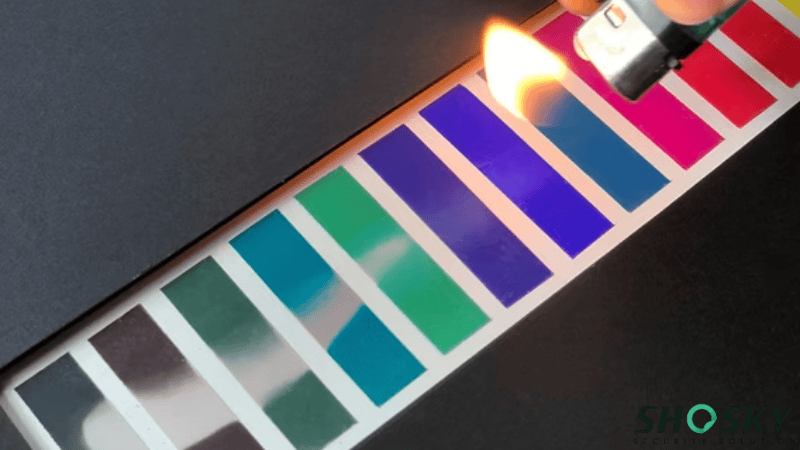
Leuco dyes represent the vast majority of thermochromic inks used in commercial packaging and tamper-evident security labels. These dyes are enclosed in millions of microscopic capsules, typically measuring between 3 and 5 microns in diameter. Each capsule contains three critical ingredients:
-
A colorant (the dye itself).
-
A color developer (a weak acid).
-
A specialized solvent (often a long-chain lipid).
The Mechanism: The solvent is chemically engineered to melt at a highly specific target temperature (the actuation point). When the ink is below this temperature, the solvent remains solid, holding the colorant and developer tightly together, rendering the ink a solid, opaque color. The moment the temperature rises and the solvent melts, the colorant and developer physically separate inside the microcapsule. The ink instantly becomes transparent, revealing whatever message is printed beneath it.
2. Liquid Crystals (High-Precision Thermal Mapping)
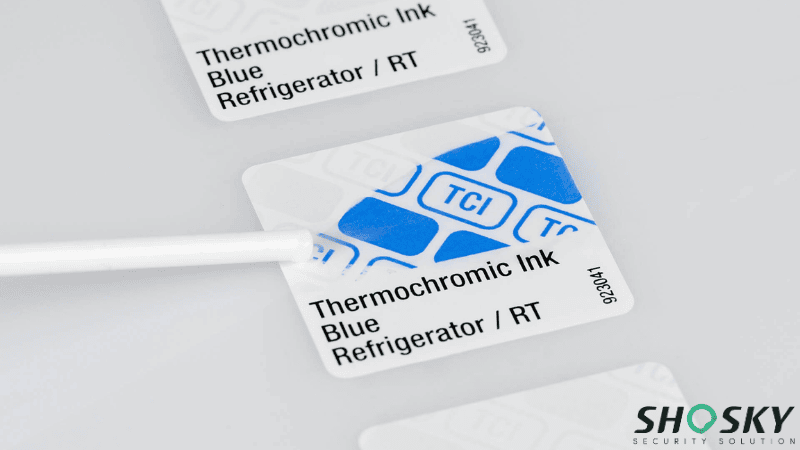
Liquid crystals provide high-precision, multi-color temperature mapping rather than a simple binary color shift. Unlike leuco dyes, liquid crystal formulations rely on:
-
A chiral nematic crystal structure.
-
A dark or black background substrate (to absorb light that is not reflected).
-
Precise thermal calibration layers.
The Mechanism: Liquid crystals physically twist and untwist their molecular structure as the ambient temperature changes. Depending on the exact degree of heat, this microscopic twisting reflects different wavelengths of visible light, producing distinct red, green, and blue phases. Because they are highly sensitive and significantly more expensive to manufacture, they are rarely used in high-volume consumer packaging and are strictly reserved for precision medical devices and specialized industrial sensors.
Ready to Implement Thermochromic Ink for Your Security Packaging?
Start With A Low Minimum Order Quantity
Irreversible vs. Reversible: The B2B Supply Chain Application
The most critical procurement decision when integrating thermochromic ink into product packaging is determining whether the chemical reaction must be reversible or irreversible. This choice dictates whether the ink serves as a consumer engagement tool or a strict chain-of-custody compliance monitor.
Consumer Brand Authentication (Reversible Thermochromic Ink)

Reversible inks change color when exposed to a specific temperature and return to their original state once the temperature returns to normal.
-
Touch-and-Reveal Security Seals: Luxury goods and electronics frequently utilize thermochromic ink set to an actuation temperature of 31°C (88°F)—the average temperature of human skin. A consumer can physically rub their thumb over a solid black security label. The localized body heat instantly turns the ink transparent, revealing a hidden “AUTHENTIC” micro-text. Once the finger is removed, the ink rapidly cools and turns solid black again, providing instant, tool-free verification that counterfeiters using standard CMYK ink cannot replicate.
Cold Chain Logistics and Tamper Evidence (Irreversible Thermochromic Ink)
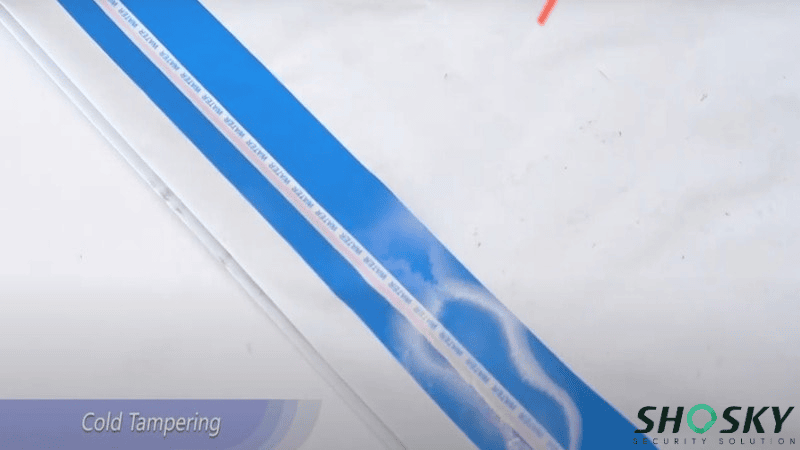
In highly regulated B2B logistics, particularly pharmaceutical supply chains governed by the Drug Supply Chain Security Act (DSCSA), reversible ink is entirely useless. If a shipment of mRNA vaccines requires strict storage at 2°C to 8°C per CDC vaccine storage guidelines, and the truck’s refrigeration unit fails for 3 hours before cooling back down, a reversible label would hide the breach.
-
Temperature Indicator Labels: To secure these supply chains, engineers deploy irreversible thermochromic inks. These specialized formulations undergo a permanent molecular collapse when a specific high or low-temperature threshold is breached. If the logistics container exceeds 8°C, the chemical ink permanently turns bright red. Even if the negligent logistics provider aggressively refreezes the product down to 2°C, the label remains permanently red. This provides undeniable physical evidence that the cold chain was compromised.
Thermochromic Ink vs. Photochromic (UV) Ink
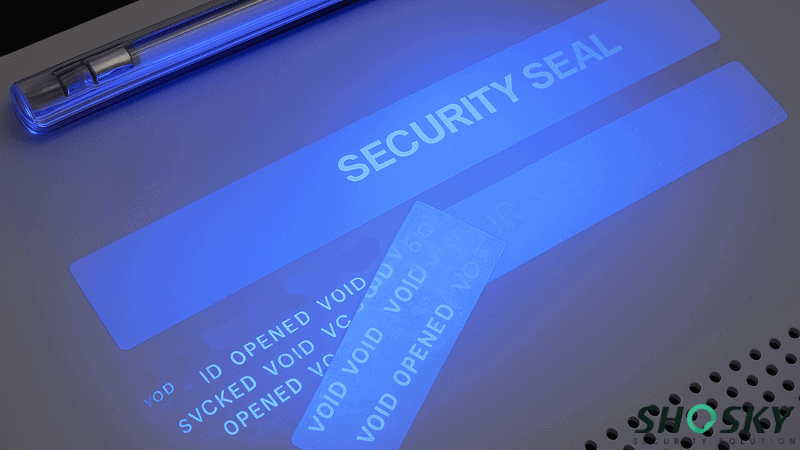
Packaging engineers frequently confuse thermochromic (temperature-changing) ink with photochromic (light-changing) UV ink. While both fall under the umbrella of smart security packaging, they serve entirely different forensic purposes.
| Engineering Specification | Thermochromic Ink Chemistry | Photochromic Security Ink |
|---|---|---|
| Primary Actuation Trigger | Extreme ambient temperature or localized body heat | Specific targeted wavelengths of active ultraviolet light |
| Common Chemical Agent | Microencapsulated Leuco Dyes or Chiral Nematic Liquid Crystals | Advanced Spiropyrans or highly specialized optical brighteners |
| Field Detection Method | Friction touch or severe refrigeration failure analysis | High intensity blacklight flashlight or direct intense sunlight |
| Primary B2B Application | Cold chain monitoring and perishable vaccine logistics | High speed covert warehouse sorting and hidden serial numbering |
Understanding this distinction ensures that supply chain managers deploy the correct physical security layer based on the actual environmental threat the product faces during global transit.
FAQs
Q1: Can irreversible thermochromic ink withstand extreme deep-freezing cold-chain logistics?
Yes, absolutely, provided you strictly utilize the entirely correct lipid solvent formula. Our premium cryogenic-grade thermochromic labels are chemically engineered to remain fully stable and flawlessly trigger permanent alerts even when plunging to -40 degrees Celsius without physically crystallizing.
Q2: Does thermochromic ink automatically satisfy strict FDA DSCSA pharmaceutical compliance regulations?
Irreversible thermochromic ink successfully meets the strict physical temperature-monitoring mandates explicitly required by federal regulators. However, massive enterprise logistics networks absolutely must combine these physical chemical indicators with serialized digital tracking barcodes to achieve total compliance.
Q3: What exact technical information do you heavily require to successfully quote a thermochromic sample kit?
We strictly require your exact housing material polymer, specific thermal activation baseline thresholds, and any specific optical tracking requirements. We will immediately dispatch a targeted sample kit perfectly matched directly to your actual precise logistics use case.
Integrating Temperature-Changing Ink into Your Security Strategy
Transitioning from standard static packaging to smart thermochromic solutions requires precise alignment among your packaging substrate, global transit environment, and final consumer interaction goals.
For high-volume consumer goods, replacing a standard paper seal with a touch-activated, reversible thermochromic label drastically elevates the product’s perceived value while simultaneously crowdsourcing your anti-counterfeiting efforts directly to your buyers. For high-liability enterprise shipments, integrating irreversible temperature indicator labels directly onto corrugated transport boxes meets strict FDA temperature-monitoring requirements and completely eliminates costly disputes over compromised perishable cargo.
Shosky Security engineers advanced, compliance-ready tamper-evident labels utilizing cutting-edge thermochromic technology. We partner with global supply chain directors to match exact chemical substrates with your unique transit environments. Contact our forensic packaging team today to request a technical specification sheet and explore custom temperature-reveal solutions for your brand.