
Across global trade, billions in freight value are delayed each year because of paperwork failures. Many of these problems come from documents that are torn, unclear, or not properly attached. A 2022 DHL report found that incomplete or damaged shipping documentation accounts for nearly 30% of all customs clearance delays at major international ports.
For procurement managers and operations directors, that is a financial and compliance risk that sits right at the packing station. Packing list envelopes address it at the source, before a shipment ever leaves the facility. This guide covers compliance requirements for packing list envelopes, and a cost comparison that gives procurement teams the numbers to justify switching from tape-based methods.
The Material Science of Heavy-Duty Packing List Envelopes
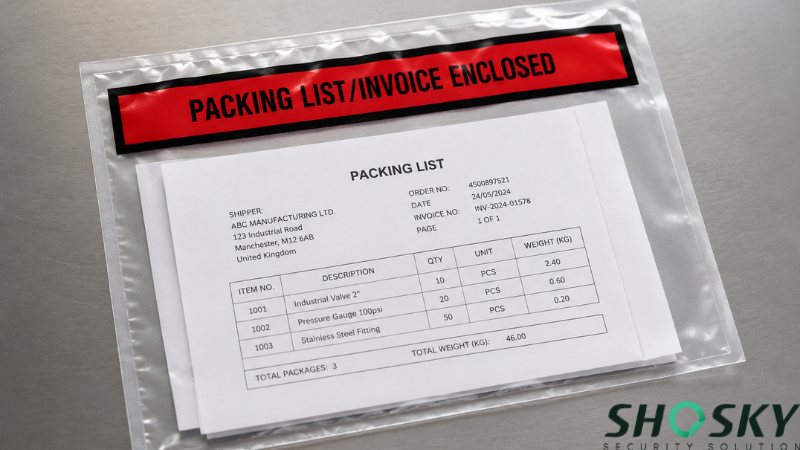
Heavy-duty packing list envelopes are constructed in distinct layers, each engineered to perform a specific function across the full shipping cycle. Here is how each layer holds up under real transit conditions.
- Optical Clarity for Automated Scanners: Premium clear packing list envelopes are made from Low Density Polyethylene (LDPE). The clear surface allows barcodes, packing slips, invoices, and other shipping documents to remain easy to scan without removing them from the pouch.
- Full Face Hot Melt Adhesive: Professional label pouches use full-surface hot melt adhesive across the complete backing area rather than a narrow perimeter strip. The bond holds firmly against cardboard boxes, plastic pallets, metal drums, and timber crates even under heavy stacking pressure.
- Weather Proof Barrier: The outer layer forms a sealed barrier against rain, snow, and oceanic humidity throughout transit. Customs forms, safety data sheets, and packing list details stay legible and ink-intact from dispatch to the recipient dock.
Taken together, these three layers form a complete document protection system that procurement teams can rely on across different shipment types, carrier networks, and climate conditions around the world.
Ready to Get Packing List Envelopes for Your Packaging?
Start With A Low Minimum Order Quantity
Carrier Compliance: Meeting TNT, DHL, and FedEx Standards
Major carriers like TNT, DHL, FedEx, UPS, and USPS require clear, accurate paperwork for international shipments. That’s why packing list envelopes use polyethylene film for durability, print clarity, and moisture protection to keep documents readable.
Some setups also use rigid flat mailers to keep papers flat, along with correct Commercial Invoice details to avoid customs delays. These features meet carrier visibility needs while protecting documents in transit. Two key specifications matter most at the operational level.
1. Standardized Dimensions
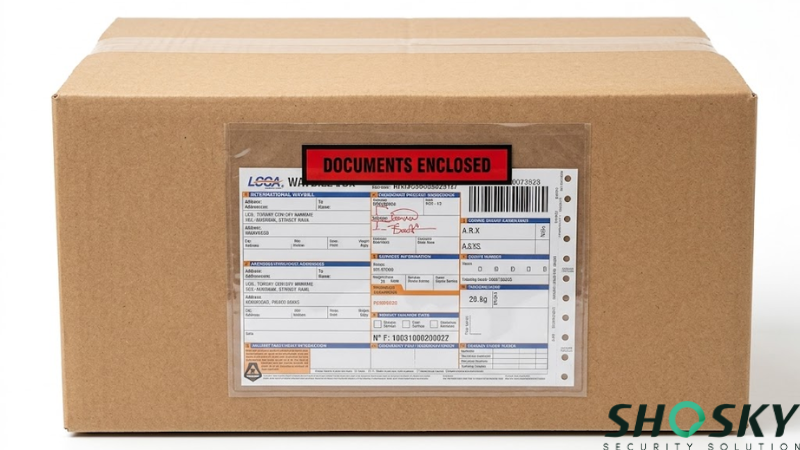
International carriers require shipping documents to stay fully visible and firmly attached on the outside of every package. When sizing is inconsistent, paperwork can fold, barcodes get blocked, or documents slip out during handling. Packing list envelopes address these issues by following standard document formats used in global shipping.
Most professional packing list envelopes are built around consistent sizing standards that procurement teams can depend on across carriers:
- Internal Dimensions: An internal space of approximately 240mm x 175mm accommodates standard document sets including folded A4 waybills, without forcing, creasing, or obscuring printed details
- Gusset Depth: A gusset of 2mm to 5mm allows the pouch to fill with combined document sets like the packing list, commercial invoice, and certificates of origin without straining the seams
- Body Stability: A rigid enough body structure keeps pressure off the adhesive layer when shipments measured in pounds are stacked on pallets during transit
- Outer dimensions optimized for scanning systems: Outer dimensions are matched to automated scanning systems at major sorting hubs across the United States and key international ports
USPS also requires customs documents to be attached externally for international shipping. Using one standardized packing list envelope size across carriers simplifies procurement and reduces SKU complexity in warehouse operations.
2. High Visibility Borders
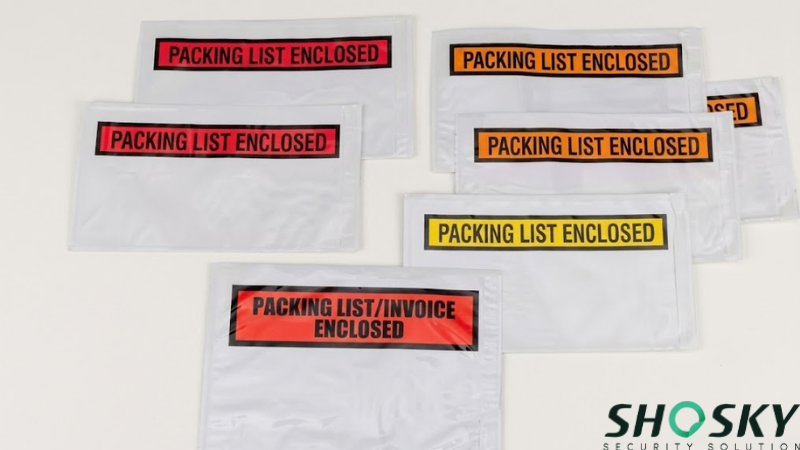
Sorting hubs process thousands of boxes every hour, and staff at those facilities rely on visual signals rather than reading text on every carton that passes through. A red border printed on a packing list envelope immediately communicates to customs officials and warehouse staff that the shipment contains international documents requiring a different handling route.
This visual coding system does specific operational work across the facility:
- Red Borders: They signal the presence of customs documents and MSDS safety sheets, protecting shipments from being routed incorrectly as domestic freight
- Orange Panels: Orange panels on invoice envelopes give the recipient at the destination dock an easy visual cue to locate and check the enclosed billing documents
- Clear Fronts: Clear fronts on shipping label sleeves allow barcode scanning without opening or removing any items from the pouch
- Printed Text Panels: Printed text panels add detailed descriptions of the pouch contents, helping customs officials in different countries and languages prepare the correct clearance paperwork without raising questions
Procurement teams sourcing packing list envelopes should add a variety of formats to their stock rather than defaulting to a single clear style. For example, operations shipping hazardous materials alongside standard freight will need both red MSDS envelopes and clear general-purpose pouches available at every packing station to ship items correctly without delays at customs.
How to Properly Apply Self-Adhesive Waybill Label Pouches
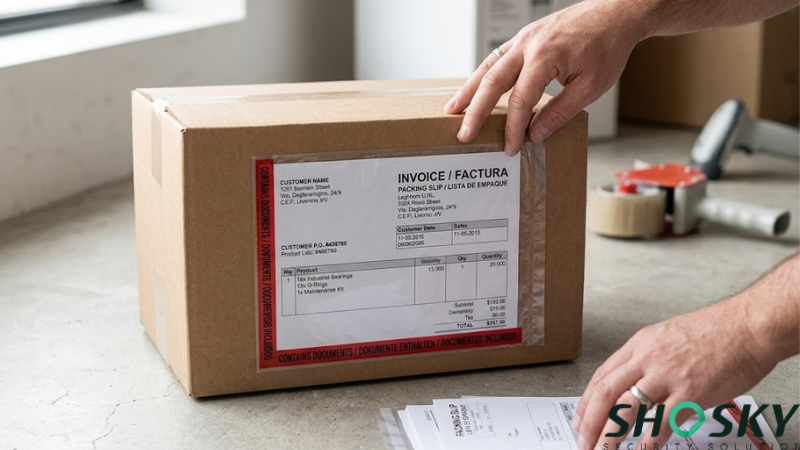
Consistent application keeps packing list envelopes bonded through sorting, conveyor handling, and customs inspection. Small placement errors at the packing station create document failures that show up much later in the shipment cycle.
Here’s a simple workflow teams can follow across packing stations to keep consistency high and reduce document errors during shipping:
- Surface Preparation: Clean dust, dirt, or moisture from the carton before application. A clean surface improves adhesion and helps the envelope stay attached during high-speed carrier handling.
- Flat Surface Only Rule: Avoid placing envelopes over seams, edges, or folds. These areas create gaps that weaken the bond and increase the risk of peeling during transit.
- Peel and Press Method: Insert documents with proper order and categorization, remove the backing fully, then press from the center outward to remove trapped air and activate full adhesion.
Strong, clear packing tape can be added along edges when extra sealing support is needed for long-distance shipments. Following these steps reduces document loss and improves shipping reliability.
Clear Packing List Envelopes vs Traditional Taping
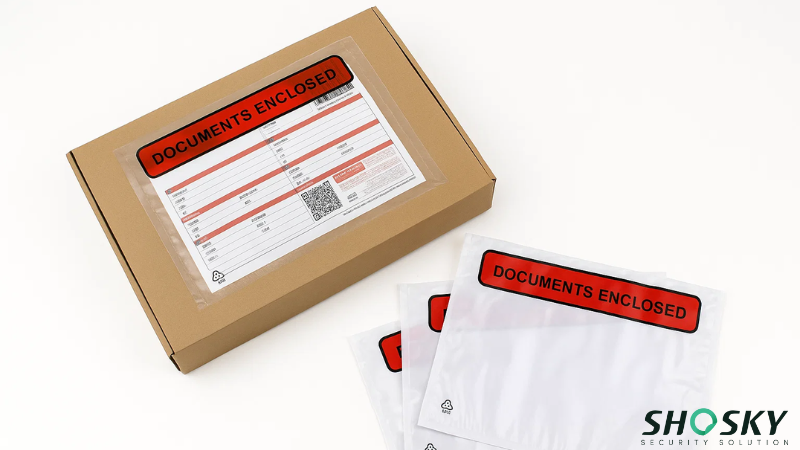
Many older warehouses still tape shipping documents directly onto cartons, but this outdated method exposes critical paperwork to dirt, moisture, and severe handling damage. Using dedicated packing list envelopes helps improve weather protection, keeps documents organized, and supports highly consistent handling across all logistics workflows.
The following matrix highlights the key differences between the two approaches and explains why top logistics teams have moved away from manual taping:
| Factor | Packing List Envelopes | DIY Tape Method |
|---|---|---|
| Barcode scan rate | 99%+ (LDPE zero glare) | 70-80% (tape reflection) |
| Weather resistance | Full seal, LDPE film | Partial, tape gaps |
| Application time | 10-15 seconds | 45-90 seconds |
| Carrier compliance | Standardized dimensions | Inconsistent |
| Staff error rate | Low (single peel and press) | High (multiple tape strips) |
| Cost per unit at volume | Lower with bulk stock | Higher due to labor cost |
| Document security | Sealed, tamper-evident | Open to slippage |
A recent supply chain study found that companies utilizing standardized shipping document processes reduced their freight exception rates by up to 37%. The labor time saved by switching from manual tape to self-adhesive label sleeves compounds massively across thousands of shipments per month, ultimately lowering your total cost of order fulfillment.
FAQs
Are packing list envelopes waterproof enough for ocean freight?
Yes. High-quality packing list envelopes utilize low-density polyethylene films and full-face hot-melt adhesives to create a completely sealed barrier. This protects sensitive commercial invoices and customs documents from oceanic humidity, rain, and salt spray during extended international maritime transport.
Do packing list envelopes stick to wooden pallets and crates?
Yes, provided you select envelopes equipped with industrial-grade hot melt adhesives. While standard office pouches fail on rough surfaces, heavy-duty logistics envelopes flow into the porous grain of raw timber, ensuring your documents remain firmly attached to wooden pallets.
Can automated sorting machines scan barcodes through the plastic envelope?
Absolutely. Premium clear packing list envelopes are manufactured using zero-glare polyethylene material. This optical clarity ensures automated laser scanners at major logistics hubs can instantly read waybill barcodes without requiring manual intervention or document removal.
What is the difference between a clear envelope and a panel envelope?
Clear envelopes are completely transparent, allowing maximum visibility for all enclosed documents. Panel envelopes feature a solid colored back or printed border, such as orange or red, which helps draw immediate visual attention to critical customs paperwork in a busy warehouse environment.
Secure Your Cross-Border Freight with Shosky
Reliable shipping starts with how documents are handled on the outside of each package. A stable packing list envelope helps ensure customs information stays visible through transit and inspection points. At Shosky Security, we offer packing list envelopes in clear, panel, and full-face styles, available in A4, A5, and custom sizes.
Shosky Security offers premium packing list envelopes in clear, panel, and full-face printed styles, available in standard A4, A5, and custom commercial dimensions. All our options are explicitly engineered for DHL, FedEx, UPS, TNT, and USPS compliance requirements. Procurement teams can request free samples before committing to a full stock order. Contact Shosky today to consult with our logistics experts and identify the exact envelope format required to secure your cross-border workflows.