
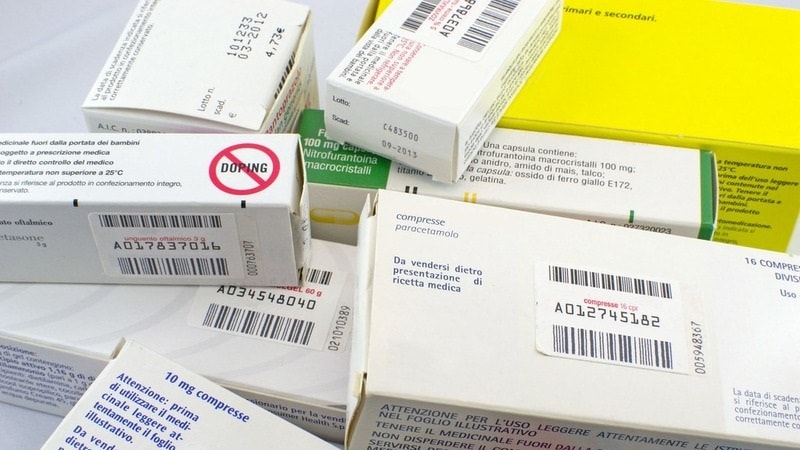
Counterfeit medicines are a silent crisis in the global healthcare system. According to the World Health Organization (WHO), approximately 1 in 10 medical products in low- and middle-income countries is substandard or falsified. Regulatory agencies like the FDA and EMA are aggressively cracking down on vulnerable supply chains, issuing massive fines for inadequate packaging security.
This is why regulatory bodies worldwide have stepped in. From the Falsified Medicines Directive (FMD) in Europe to the Drug Supply Chain Security Act (DSCSA) in the United States, the message is clear. Pharmaceutical packaging must be tamper-evident. In this guide, we will explore how tamper-evident pharmaceutical labels serve as the frontline defense for your products to help you choose the right solution for your packaging needs.
Why Pharmaceutical Packaging Compliance Needs Destructible Labels
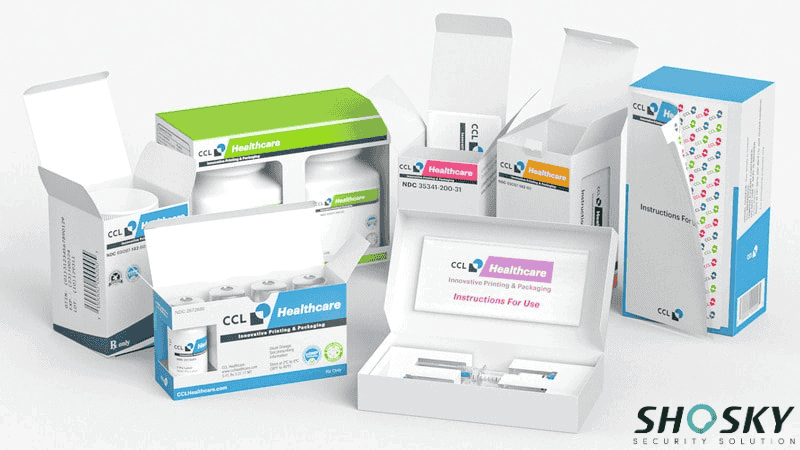
Compliance is the primary driver for packaging changes in the pharma industry. Regulations like ISO 21976 require medicinal products to have an “anti-tampering device” on the outer packaging before they can legally enter commercial distribution channels.
Ultra-destructible labels for medicine are widely considered the most efficient way to meet these standards. Unlike full body shrink wrap, which requires massive capital investments in new factory machinery, a pressure-sensitive security label can be applied using your existing standard labeling equipment. Beyond compliance, these labels offer three critical business advantages:
-
Instant Visual Assurance: Patients and pharmacists can instantly verify if the seal is perfectly intact before dispensing or purchasing the medication, preventing accidental consumption of adulterated goods.
-
Corporate Liability Protection: A clearly broken seal instantly shifts the legal responsibility away from the manufacturer and flags the logistics handler if the contents are altered during highway transit.
-
Premium Brand Integrity: High-quality security seals visually signal to the consumer that the product inside is a genuine, heavily protected premium medication.
These advantages make destructible labels not just a legal necessity, but a strategic investment in your brand’s longevity and consumer trust.
The Physics of an Ultra Destructible Label for Medicine
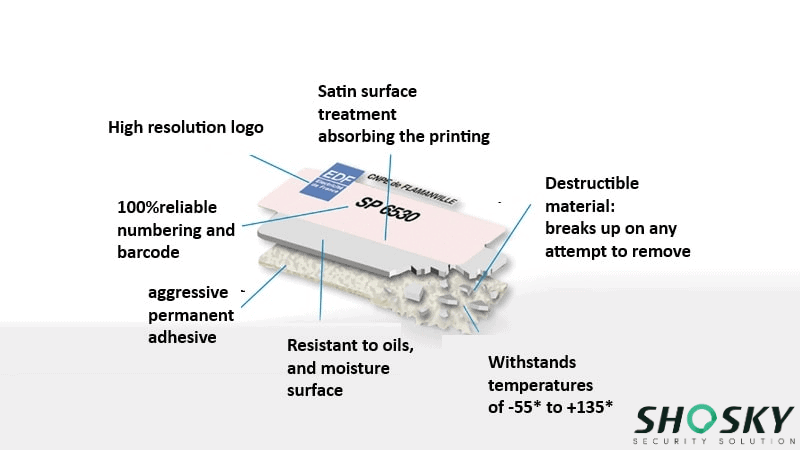
You might be wondering what makes these security labels fundamentally different from standard paper stickers. Standard commercial labels are manufactured from durable polymer films that thieves easily bypass using standard heat guns and razor blades. In the medical field, that exact durability represents a catastrophic security vulnerability.
Tamper-evident labels operate on a deliberate and highly engineered imbalance of physical forces. They rely on a material property known as frangibility. The physics involved are incredibly effective:
-
Low Tensile Strength: The face stock material is specifically engineered to be incredibly weak when pulled.
-
Aggressive Bond Strength: The specialized acrylic or rubber adhesive is formulated to bite permanently into the packaging substrate.
-
Irreversible Fragmentation: When combined, the label is physically incapable of withstanding the mechanical force required to peel it off the box.
When an unauthorized individual attempts to peel this label off a medicine carton or glass vial, the bond between the glue and the packaging remains far stronger than the label material itself. The result is immediate fragmentation. The label shatters into tiny eggshell-like pieces that absolutely cannot be put back together. This irreversible physical damage provides forensic evidence of tampering that is mathematically impossible to hide.
Comparing Destructible Label Materials for Pharma Applications
Not all destructible labels are created equal. A label that works perfectly on a flat cardboard box might fail miserably on a small glass vial with a tight curve. Choosing the right tamper-evident pharmaceutical labels heavily depends on your specific packaging substrate and environmental storage conditions.
To help you navigate the options, we have created this material selection matrix. Use this to match your packaging type with the correct security label:
| Label Material Type | Best Surface Application | Key Technical Advantage | Frangibility Level |
|---|---|---|---|
| Foamtac (Foam Vinyl) | Small Diameter Bottles, Vials, Syringes | Flexible; No edge lifting on curves; Layers separate upon removal. | High |
| Destructible Synthetic Paper | Flat Cardboard Cartons, Large Bottles | Smooth Printing Surface; Excellent for barcoding; Tears paper fibers. | Medium-High |
| Holographic Destructible | High-Value Boxes, Biologics | Visual Authentication; Prevents copying; Combines branding with security. | High |
| Clear VOID Seal | Printed Retail Boxes | Transparent; Does not obscure branding text; Leaves "VOID" residue. | N/A (Residue based) |
Selecting the right material from this table ensures that your security label survives the supply chain while failing precisely when attacked. Now, let’s dive into this part.
Foamtac Destructible Label Material

For many pharmaceutical applications, Foamtac is the superior choice. It is a unique, destructible vinyl with a foam-like, layered structure that solves the problem of labels lifting off surfaces.
Key Features:
- Zero Memory Effect: It does not try to “flatten out,” meaning it won’t lift off the edges of curved bottles.
- Layered Destruction: When tampered with, it separates into layers like a delaminating sponge.
- Soft Texture: It conforms perfectly to small diameters like test tubes and syringes.
This combination of features makes Foamtac the industry standard for securing small, high-value vials that require absolute seal integrity.
Co-extruded Destructible Synthetic Paper
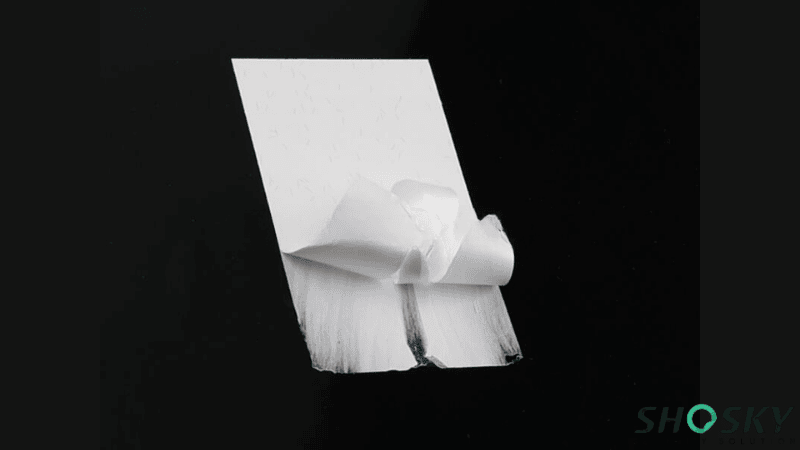
Co-extruded, destructible synthetic paper is made from PP synthetic paper, the workhorse for sealing standard paper cartons. It is slightly stiffer than foam, which gives it a smoother surface finish ideal for high-resolution printing. It is a cost-effective solution for outer packaging where the surface is flat.
Key Features:
- Superior Printability: The smooth face stock is perfect for printing sharp barcodes, serial numbers, and small regulatory text.
- Fiber-Tear Bond: The adhesive is formulated to aggressively bite into paperboard, tearing the box fibers upon removal.
- Cost Efficiency: It offers a lower price point compared to foam or holographic options, making it suitable for high-volume runs.
For manufacturers sealing thousands of outer cartons daily, this material provides the perfect balance of security, print quality, and budget.
Holographic Ultra Destructible Label Material
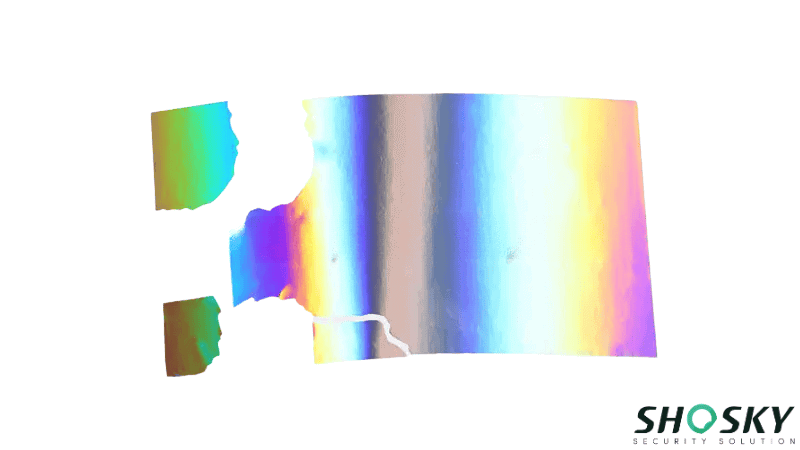
If you want to combine security with brand protection, holographic ultra-destructible label material is the answer. This material uses tough vinyl with a shiny holographic layer. This makes it both attractive and secure.
Key Features:
- Tamper Evidence: The destructible nature prevents the package from being opened without damage.
- Anti-Copying: The complex custom hologram is extremely difficult for counterfeiters to replicate.
- Visual Appeal: The shiny finish signals a premium product, enhancing shelf appeal.
By integrating optical security with physical fragility, these labels offer a double layer of defense against sophisticated counterfeiting rings.
Ready to Get Tamper-Evident Packaging Solutions for Your Business?
Start With A Low Minimum Order Quantity
Advanced Anti-Counterfeit Drug Packaging Features
Modern tamper-evident pharmaceutical labels can be smart as well as strong. Integrating technology into your labels transforms them from a passive seal into an active data carrier.
1. Serialization and Track & Trace
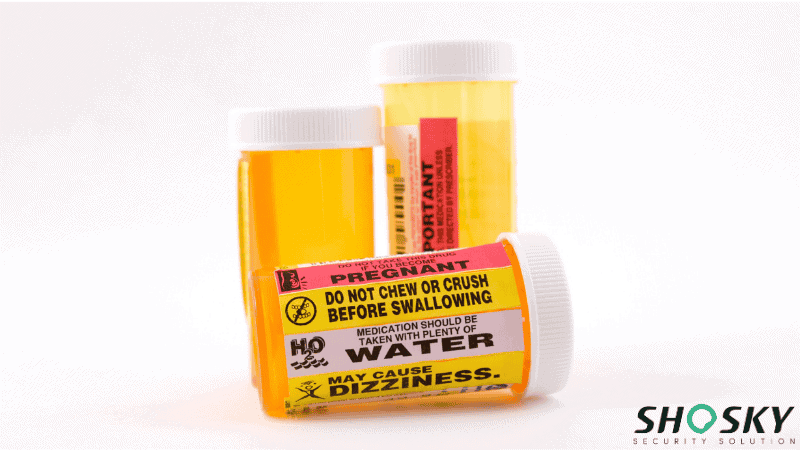
Supply chain transparency is vital. Destructible labels can be printed with variable data, such as unique serial numbers, QR codes, or Data Matrix codes. To understand the real-world impact of this technology, consider the gray market. When a global vaccine manufacturer recently discovered their subsidized products were being illegally diverted and sold at massive markups in wealthier nations, they deployed serialized destructible labels.
By scanning the unique QR codes on the diverted boxes, they traced the exact leak directly back to a corrupt authorized distributor. Because the labels shattered completely upon removal, the thieves could not bypass the tracking system without utterly destroying the packaging, allowing the manufacturer to instantly close the revenue leak.
2. UV Invisible Inks
For an extra layer of hidden security, Shosky can print invisible markings with UV invisible ink that only show up under UV light. This is a powerful tool for your internal quality control teams to spot fake products quickly without alerting the counterfeiters.
3. Micro-Text Printing
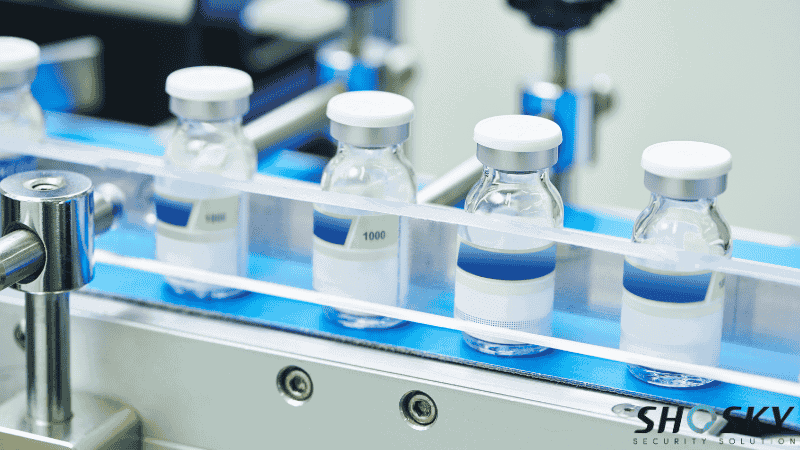
This involves printing extremely small text that looks like a solid line to the naked eye but is readable under magnification. Standard photocopiers or digital printers cannot reproduce this level of detail. Adding micro-text to your destructible label makes it nearly impossible for counterfeiters to clone your packaging design accurately.
By layering these covert and digital features onto your physical labels, you create a “smart” packaging system that is exponentially harder for criminals to defeat.
Application Scenarios: Where to Use Tamper-Evident Pharmaceutical Labels
Effective security requires placing the right label in the right spot. Here are the three most common application points for anti-counterfeit drug packaging.
Sealing Small-Diameter Vials and Bottles
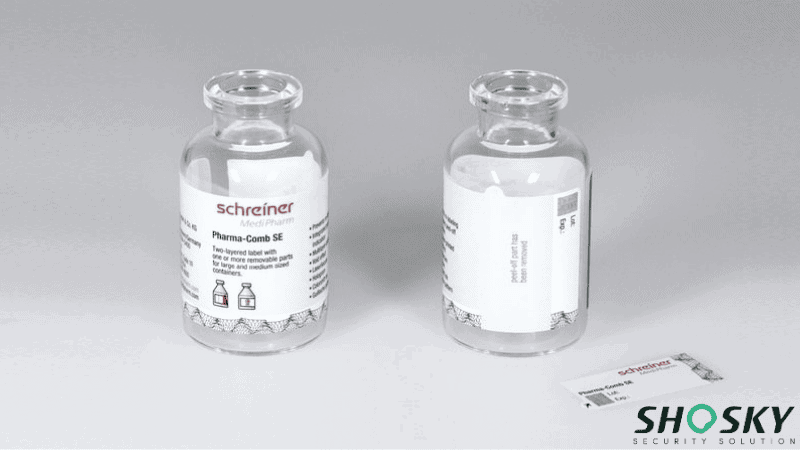
Small glass vials, test tubes, and eye drop bottles present a unique physics challenge known as the “memory effect.” Because the label is wrapped around a very tight curve (often less than 20mm in diameter), stiff materials naturally want to straighten back out. This causes the edges of standard labels to lift or “wing up” after a few weeks, creating a false impression of tampering.
Beyond just solving the lifting issue, this foam matrix provides exceptional defense against advanced physical tampering. We recently partnered with a pharmaceutical brand whose international distributors were gently heating and peeling standard paper seals to dilute liquid cough syrup with water. After upgrading their primary packaging to Foamtac destructible labels, the theft stopped instantly. When corrupt handlers attempted to heat and peel the new labels, the foam matrix fractured into microscopic layers, rendering the tampered bottles visibly destroyed and entirely unsellable.
Securing Outer Cardboard Cartons

Most blister packs and injectable trays are sold inside a paperboard carton. Under regulations like the EU Falsified Medicines Directive (FMD), this outer carton must have a verification feature to prevent contents from being swapped. A clear or white ultra-destructible label for medicine placed over the tuck flap is the industry standard solution.
However, thieves often use a technique called “steaming” to melt standard adhesive and peel stickers off without damage. To defeat this, our labels use a solvent-based acrylic adhesive that aggressively penetrates the paper fibers. If a thief tries to peel it, the label will not just break; it will tear the surface of the carton box itself (known as “fiber tear”), rendering the packaging visibly unsellable.
Sealing Plastic (HDPE/PP) Pill Containers
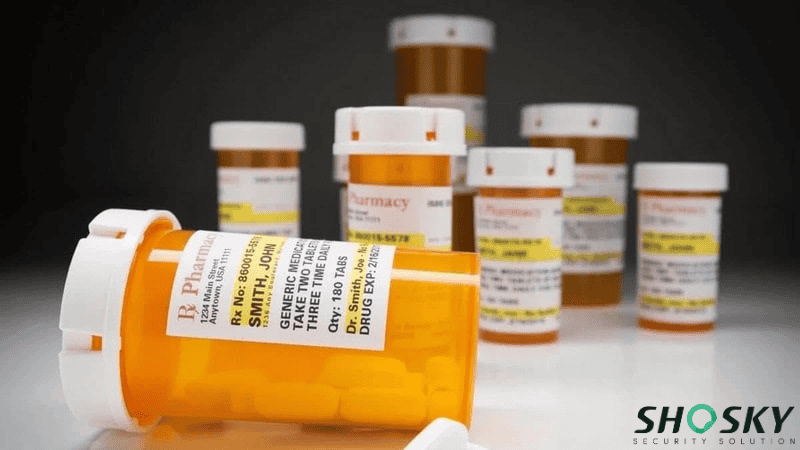
While glass and paper are easy to bond to, plastic containers present a different challenge. Most pill bottles for over-the-counter medicines or supplements are made from HDPE (High-Density Polyethylene) or PP (Polypropylene). These are known as “low surface energy” materials. In simple terms, these plastics are “slippery” to adhesives. A standard security label might sit on the surface without actually bonding, allowing a thief to peel it off cleanly after a few hours.
For these containers, you need a destructible label with a specially formulated high-tack rubber or hybrid adhesive. This adhesive is designed to “wet out” quickly on plastic surfaces, creating an instant, permanent bond. This ensures that even on a slippery plastic cap, the label will shatter immediately if someone tries to twist it open.
FAQs
Q1: Can ultra-destructible labels for medicine be applied by automated machinery?
Yes. However, the tension settings on your application machinery must be carefully adjusted. Materials like co-extruded synthetic paper and Foamtac are specifically designed to remain highly stable on high-speed labeling lines without breaking prematurely.
Q2: Are these labels fully compliant with the EU Falsified Medicines Directive?
Yes. A high-quality destructible label that shatters and leaves permanent visible evidence of opening perfectly satisfies the strict FMD requirement for a certified anti-tampering device.
Q3: Do these security labels work effectively on plastic and glass bottles?
Yes. Premium security adhesives are specifically formulated to bond permanently to highly challenging low surface energy substrates like High Density Polyethylene, standard Polyethylene Terephthalate, and cold glass surfaces.
Q4: Can I print variable QR codes directly on destructible materials?
Absolutely. Our premium security labels are fully compatible with thermal transfer and UV inkjet printing for creating highly durable, unique serial numbers.
Q5: What is the primary difference between a void label and an ultra destructible label?
Void labels are made from durable film that stays entirely intact but leaves a hidden text message like VOID on the box when peeled. Destructible labels physically shatter into hundreds of tiny pieces. Destructible labels are heavily preferred for pharmaceutical cartons because they offer a higher level of absolute physical security.
Improve Your Medicine Safety with Shosky Now!
Ensuring medicine safety with ultra-destructible label solutions is not just about avoiding fines. It is about protecting the patients who rely on your products for their health. In a world where supply chains are complex and counterfeiting is sophisticated, a fragile label is your strongest defense.
Whether you need the flexibility of Foamtac for small vials or the optical security of holographic seals for high-value boxes, the right material makes all the difference. Don’t leave your packaging integrity to chance.
Shosky Security specializes in advanced tamper-evident solutions. We specialize in anti-counterfeiting. This keeps your products safe and compliant with industry standards. Contact us today to find the best security labeling solution for your business!