
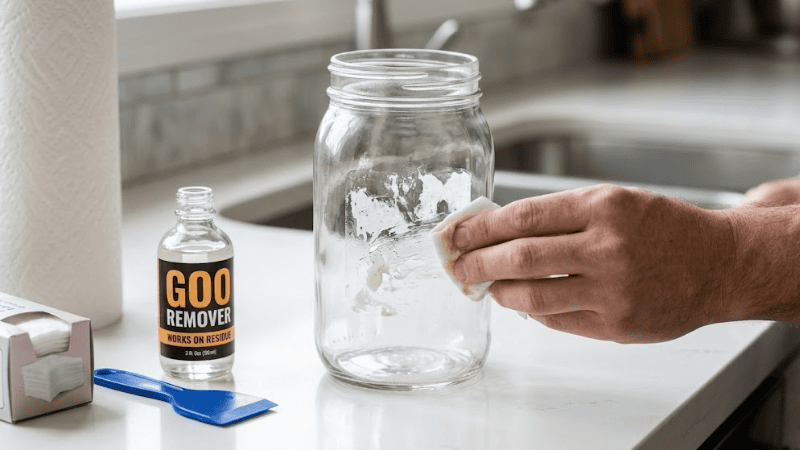
Removing sticker residue is rarely as simple as peeling off a label. Modern tamper-evident solutions are built to resist temperature shifts and environmental factors like UV light. Once applied, they bond tightly to the surface. And removing them often turns into a slow job that spreads sticky residue instead of lifting it clean.
That challenge shows up across homes, repair shops, and large industries. A study on pressure-sensitive adhesive systems notes that stronger bonding improves durability in transit, though it also increases the effort required for removal. This article covers proven methods that help lift residue clean without extra effort.
6 Practical Methods to Remove Tape Residue Safely
Different surfaces require different approaches. A method that works on glass may damage certain plastics or coated materials. The methods below focus on safe removal while keeping the surface intact.
1. Alcohol Cleaning for Glass and Metal
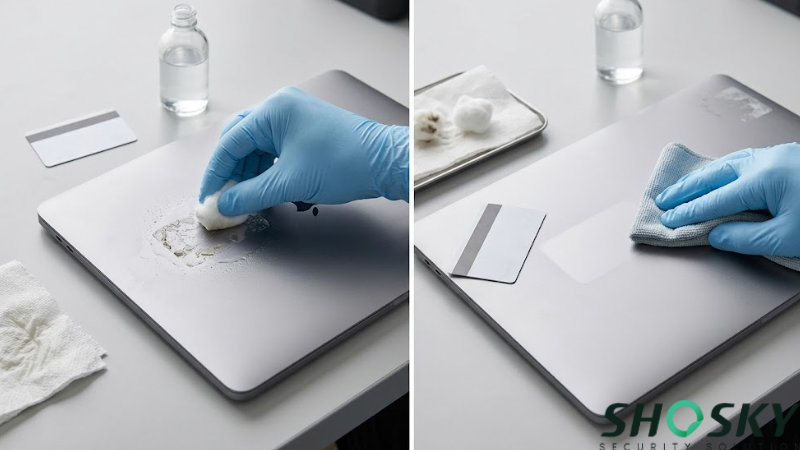
Alcohol works fast on adhesive residue because it dissolves the bond at a chemical level. It is widely used in industries where clean glass and metal surfaces matter, such as electronics and security equipment.
Steps to follow:
- Soak a paper towel or cotton ball in isopropyl alcohol
- Press it onto the sticker residue and let it sit for a few minutes
- Wipe firmly to lift the softened glue
- Repeat on thick residue if needed
- Use a plastic card to remove any remaining residue
Best use cases: This method is typically suited for glass panels, stainless steel surfaces, and aluminum components. It is commonly used during equipment maintenance, security label replacement on electronic devices, and the cleanup of barcode or security labels in logistics and warehouse operations. Fast evaporation helps maintain a clean surface without delaying workflow.
2. Heat Application for Labels on Sensitive Surfaces
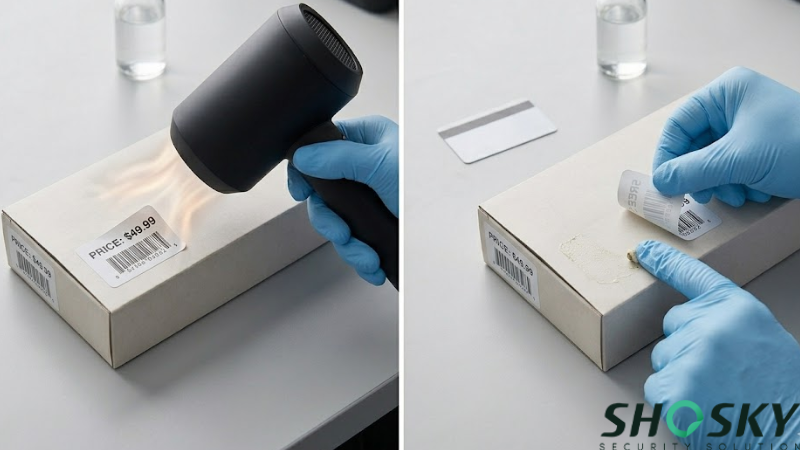
Heat loosens the adhesive without adding liquid. It works well when dealing with labels on electronics, retail boxes, or coated cardboard, where moisture can cause damage.
Steps to follow:
- Use a hair dryer on a warm or hot setting
- Apply heat for 30 to 60 seconds
- Gently peel the label once the adhesive softens
- Rub off leftover sticky residue using your fingers
- Use a plastic scraper if needed
Best use cases: This method is commonly applied in electronics servicing, retail inventory management, and packaging operations where labels are attached to coated cartons or device surfaces. It works best on both acrylic-based adhesives and rubber-based adhesives.
3. Oil-Based Removal for Plastics and Wood
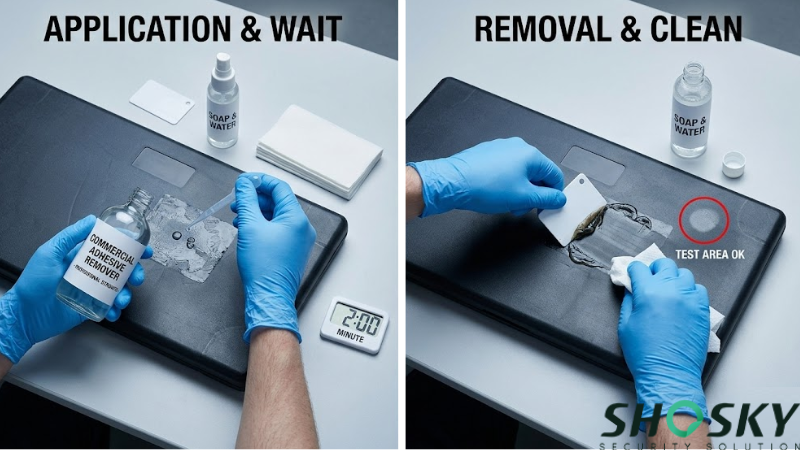
Oil breaks down sticky stuff by reducing the adhesive grip. It is a safe option for plastics and finished wood where strong chemicals may damage the material.
Steps to follow:
- Apply olive oil, coconut oil, or mineral oil to the area
- Let it sit for five to ten minutes
- Rub gently to lift the residue
- Wipe clean with a paper towel
- Wash with soap and warm water to remove the oil film
Best use cases: This method is commonly applied to plastic housings, laminated panels, and finished wooden fixtures used in office interiors, business retail displays, and equipment enclosures. It helps maintain surface quality while removing acrylic based adhesives residue. For heavier buildup, an oil-based compound can improve removal without affecting the performance of the coating.
4. White Vinegar for Glass & Metal
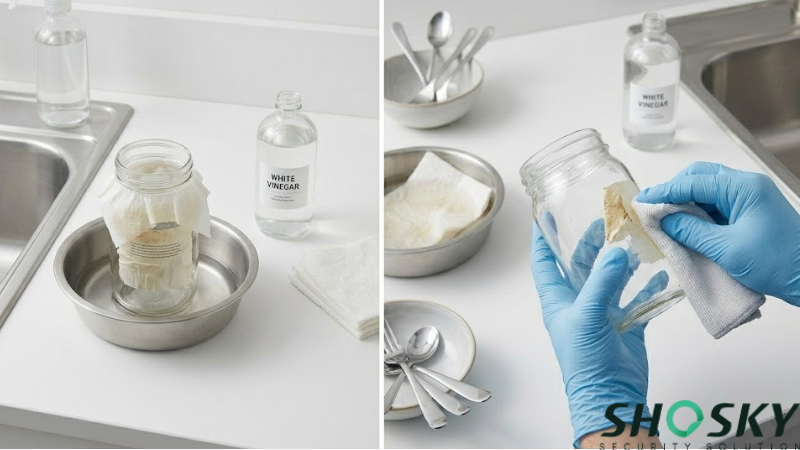
White vinegar is used in facility maintenance and light industrial cleaning where a mild, non-corrosive solution is preferred. Its acidity helps break down rubber-based adhesive bonds without affecting most hard surfaces.
Steps to follow:
- Soak a paper towel in white vinegar
- Place it over the sticker and let it sit for 10 to 15 minutes
- Wipe away the softened adhesive
- Rinse with warm water
- Repeat if any sticky residue remains
Best use cases: This method is suitable for glass panels, metal fixtures, and reusable containers in office facilities, storage areas, and light production environments. It is often used during label replacement, surface prep, and routine cleaning, where a low-strength solution is required for consistent results across different materials.
5. Soapy Water Soak for Bulk Cleaning
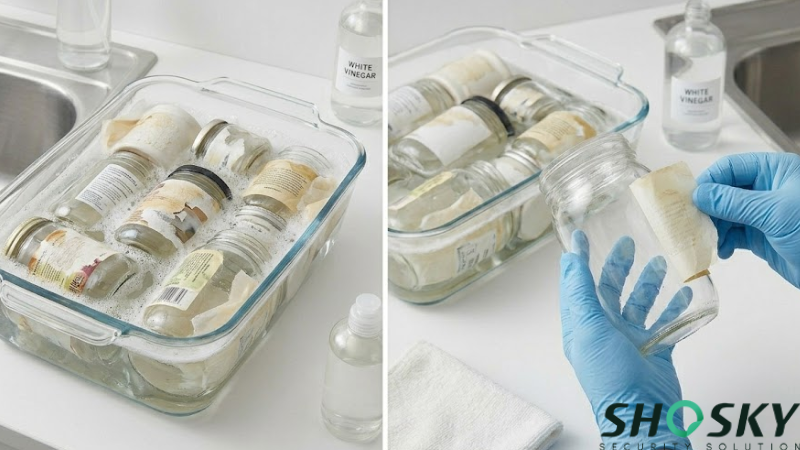
Soaking is widely used in operations that process large volumes of reusable items. It softens both label material and adhesive, which reduces bonding strength across different substrates. This method fits workflows where water-based cleaning is already part of the process.
Steps to follow:
- Fill a container with hot water and a standard cleaning agent
- Submerge the item completely
- Let it soak for at least 20 minutes
- Peel off the label once it loosens
- Wipe away any remaining residue
Best use cases: This method is suitable for glass containers, polymer components, and waterproof packaging used in logistics, warehousing, and production lines. It is commonly applied in batch cleaning setups where multiple units need to be processed in a single cycle with minimal manual effort.
6. Commercial Adhesive Removers for Industrial Use
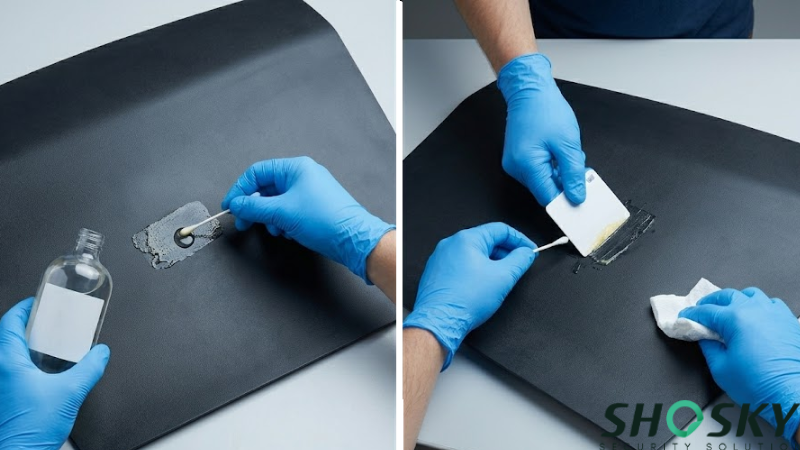
Some residue does not respond to basic methods. In those cases, specialized products help break down heavy adhesive layers quickly.
Steps to follow:
- Apply a small amount of adhesive remover like Goo Gone
- Let it sit for one to three minutes
- Wipe or scrape off the softened glue
- Clean the surface with soap and water
- Test on a small area before full use
Best use cases: These products are designed for tough jobs. They work on metal racks, warehouse equipment, and outdoor surfaces exposed to harsh conditions. They are also useful for removing thick tape buildup from security tapes used in logistics.
The Permanent Fix: Upgrading to Non-Transfer Security Solutions
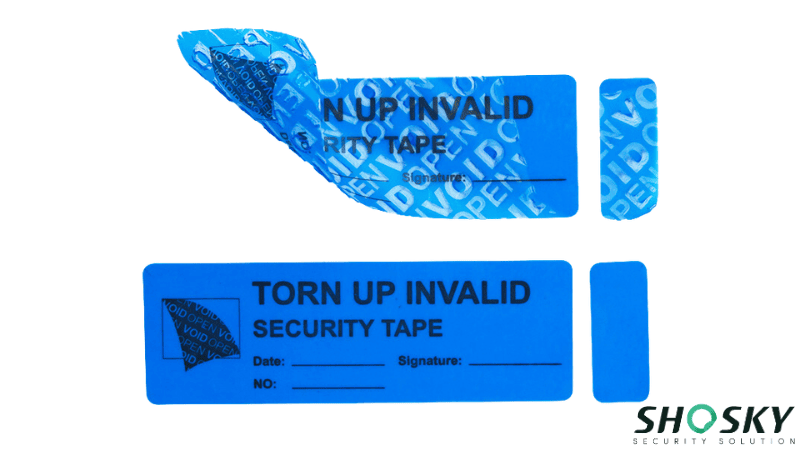
Cleaning methods solve the sticky problem after it appears, which consumes valuable labor hours. For businesses operating at scale, the ultimate approach is to prevent adhesive residue in the first place. Non-transfer tamper-evident technology achieves exactly that.
This specialized adhesive system is engineered to balance immediate tamper evidence with zero surface damage. When someone attempts to peel the material, a hidden “VOID” message activates and becomes permanently visible on the plastic film itself.
However, the applied surface of your product remains completely clean. By utilizing this zero-residue technology, procurement teams can secure different assets based on their specific operational needs:
- Non-Transfer Security Labels: Precision die-cut seals designed specifically for securing high-value electronics, IT assets, and sensitive equipment doors where post-removal cleanup is simply not an option.
- Non-Transfer Security Tapes: Continuous roll formats engineered for sealing reusable plastic logistics totes, expensive airline cargo crates, and premium retail packaging without leaving sticky buildup behind.
Upgrading to these non-transfer solutions completely shifts your operational focus from reactive cleanup to proactive prevention. Your tamper-evident protection stays incredibly strong while your valuable surfaces remain pristine and easy to manage.
Expert Tip from Shosky Security: The Chemistry of Residue Security labels use advanced acrylic adhesives that flow deeply into microscopic surface pores, creating a permanent mechanical lock. Aggressive physical scraping will only damage your equipment. Always use chemical solvents to melt the bond safely instead of forcing it.
FAQs
Q1: Why do security labels leave sticky residue behind?
Security labels use aggressive pressure-sensitive adhesives to prevent unauthorized peeling. When tampered with, the bond to the surface is stronger than the label material, intentionally leaving behind a visible warning sign.
Q2: Is rubbing alcohol safe to use on plastic surfaces?
Standard isopropyl alcohol is generally safe for hard plastics like ABS. However, it can cause clouding on sensitive or soft transparent plastics. Always test the solvent on a small, hidden edge before full application.
Q3: What makes a non-transfer VOID label different?
A non-transfer VOID label reveals the hidden “VOID” message entirely on the plastic label itself when peeled. It provides undeniable proof of tampering while leaving absolutely zero sticky chemical residue on the product housing.
Q4: Should I use heat or chemical solvents on electronics?
For sensitive IT hardware, 99% isopropyl alcohol is preferred because it evaporates instantly without leaving moisture. Heat must be used with extreme caution, as excessive temperatures can warp plastic laptop chassis or damage internal components.
Prevent Residue Before it Starts with Shosky Security Solutions
Sticker residue appears in both home and industrial use. The right removal method depends on the surface, adhesive, and how long it has been applied. At scale, prevention matters more. Tamper-evident security labels and security tapes help reduce cleanup effort and cost. That’s why choosing the right adhesive system upfront is necessary to make everyday handling cleaner and more efficient.
Shosky Security offers tamper-evident security labels and security tapes engineered to secure packages while minimizing sticky residue after removal. Contact us and find a tamper-evident system that fits your operation.