

Illicit trade in tobacco, alcohol, and cigarettes results in major yearly tax losses for governments. The WHO reports that the illicit cigarette trade accounts for about 11.6% of the global market and causes around $40.5 billion in lost tax revenue annually. Eliminating this trade could result in an annual recovery of $31.3 billion.
This is why excise tax stamps security matters. A tax stamp goes beyond a simple label. This tamper-evident solution helps governments track, trace, and verify tax payments. This article explains how different types of excise tax stamps and security labels support tax compliance and reduce illicit trade.
3 Key Tax Stamp Formats for Alcohol & Tobacco Protection
Different industries require different tax stamp formats to match their specific packaging surfaces and logistical risks. The following three are the most common security label formats utilized by governments and regulated manufacturers to protect alcohol and tobacco products while supporting supply chain integrity.
1. Ultra Destructible Vinyl Labels
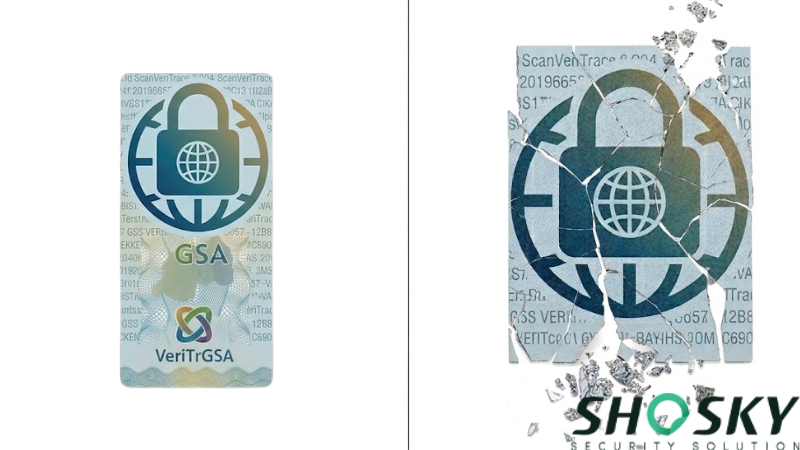
Ultra destructible vinyl labels are utilized in cases where immediate and clear tamper evidence is legally required. The material is chemically designed to break into microscopic fragments if any removal is attempted, making reapplication physically impossible.
This allows inspectors to confirm tampering at a glance and helps authorities safeguard tax collection more effectively. Key defense mechanisms and specific market applications for this format include:
- Frangible Substrate Integrity: Breaks into tiny pieces upon any lifting attempt, making it ideal for securing high-end wine bottles against illegal refilling.
- Irreversible Tamper Indication: Provides immediate visual proof of opening on premium cigar packaging, ensuring authentic luxury distribution.
- Anti-Transfer Protection: Prevents criminals from peeling an authentic stamp to reuse it on counterfeit products across regulated markets. This level of high-security control is also strictly mandated for compliant cannabis security.
Once damaged, the destructible label clearly signals that the product has been opened or interfered with. This immediate visual cue supports much stronger control in heavily regulated consumer markets.
2. Custom Holographic Tax Stamps
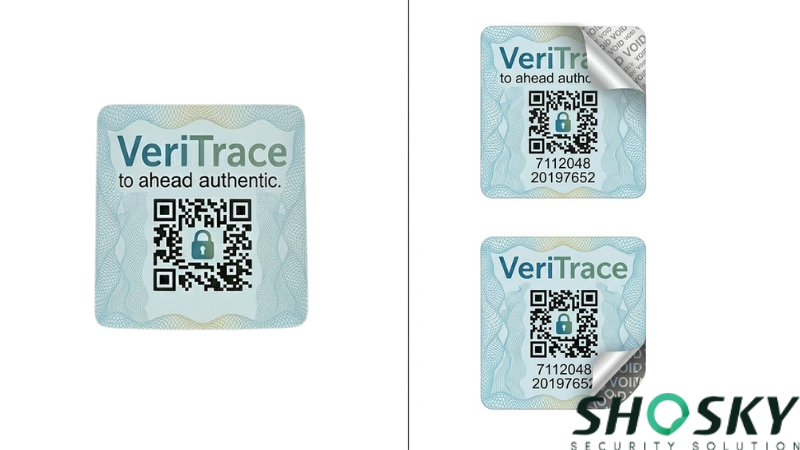
Custom holographic tax stamps provide visible government authentication on regulated products. The foil surface creates shifting colors and layered visual effects that change with light and angle.
Hidden patterns appear under different viewing positions, making each hologram stamp easy to verify without special tools. Replicating this level of detail requires advanced equipment and high-cost production setups. The primary technical strengths and anti-counterfeiting applications of these stamps include:
- Multi-angle color shifting: Enables quick visual authentication for port customs teams and field inspectors without relying on special optical tools.
- Optical Origination Complexity: Incorporates embedded hidden patterns that require advanced factory equipment, completely locking out basement counterfeiting operations.
- High Recognition Value: Delivers an authoritative government security appearance on high-value alcohol and tobacco shipments to deter opportunistic smugglers.
Due to the extreme precision required in production, duplication outside audited controlled facilities becomes highly impractical. This makes holographic tax stamps the most widely trusted option in national excise protection systems.
3. Partial Transfer Void Labels
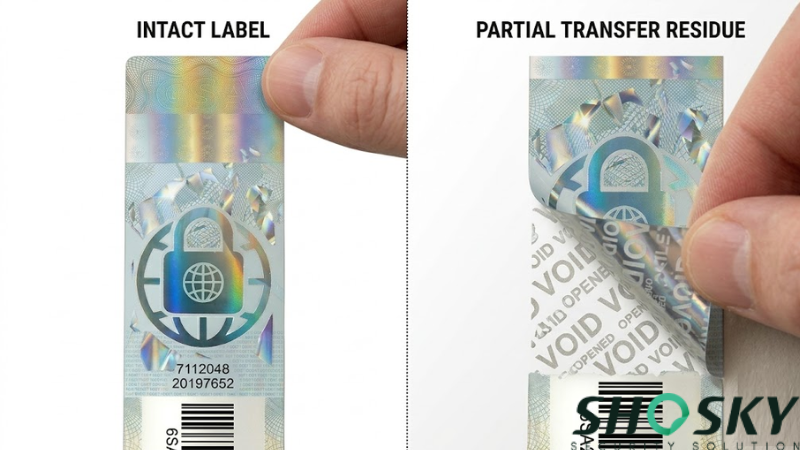
Partial transfer void labels are designed to show clear evidence of tampering after any removal attempt. When someone tries to peel the label, part of the adhesive layer remains on the surface, revealing a hidden message such as “VOID” or “OPENED”.
This makes reapplication impossible and helps inspectors quickly identify compromised packaging during checks. The specific security features and operational use cases for partial transfer labels include:
- Hidden Message Revelation: Leaves a permanent VOID or OPENED residue on bulk export cartons, proving unauthorized access during long transit routes.
- Anti-Substitution Barrier: Prevents criminals from peeling, replacing, or resealing high-value bottles held in long-term bonded warehouse storage.
- Surface Specific Adhesion: Bonds securely across glass, paper, and wood substrates, leaving unerasable proof of handling throughout retail channels.
The permanent residue left on the surface makes it exceptionally easy to confirm if a product has been handled or interfered with during storage, transport, or final sale.
Physical Defense: Stopping Tax Stamp Tampering at the Source
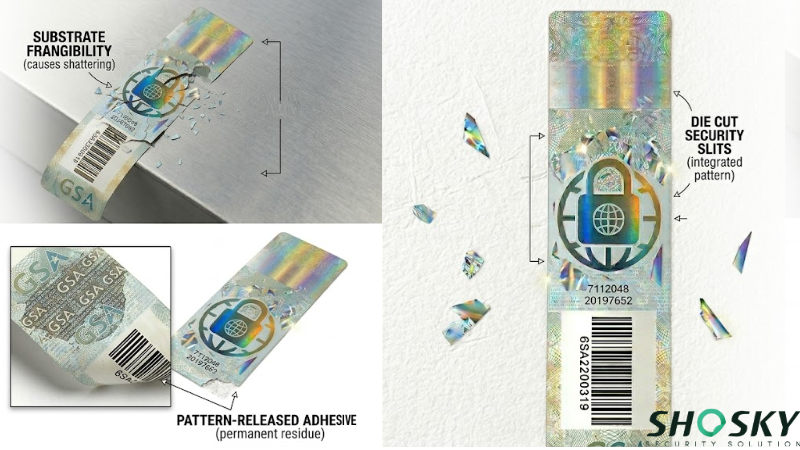
Physical protection is the first line of defense in excise tax stamps security. Before any digital verification begins, the tax stamp must show clear evidence if someone tries to remove, replace, or reuse it.
To prevent physical tampering at the source, professional excise labels rely on several integrated defense mechanisms:
- Substrate Frangibility: Causes the label to shatter irreversibly upon removal, preventing thieves from transferring an authentic stamp to a counterfeit bottle.
- Pattern Released Adhesives: Leaves a permanent chemical residue on the carton that cannot be wiped away with commercial solvents.
- Die Cut Security Slits: Forces the stamp to tear in highly specific directions if lifting pressure is applied.
These features make tampering easy to detect during inspection. Once damaged, the label cannot be restored or reused on counterfeit cigarettes or alcohol packaging. ISO 22382:2018 also supports multi-layered excise tax stamps security with visible, covert, and forensic features for stronger control.
Digital Authentication: Tracking & Verifying Tax Stamp Authenticity
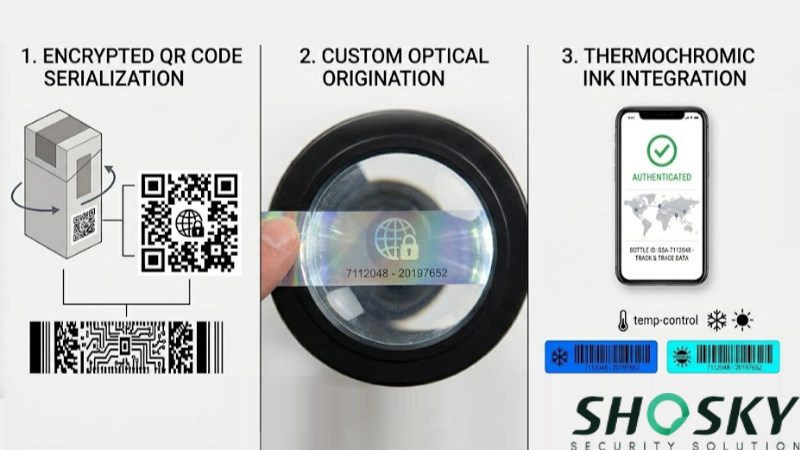
Modern tax stamps combine physical barriers with digital and visual verification. This combination helps governments and brands confirm authenticity at every stage of the supply chain. To establish a verifiable chain of custody, modern revenue protection programs utilize the following advanced authentication technologies:
- Encrypted QR Code Serialization: Converts tax stamps into track and trace tools, allowing governments to follow each bottle or carton through the supply chain.
- Custom Optical Origination: Uses holographic tax stamps for instant visual verification by customs and inspection teams.
- Thermochromic Ink Integration: Adds covert temperature-sensitive detection for identifying handling or storage irregularities.
These technologies turn each product into a verifiable data point that can be tracked, scanned, and validated in real time. When every tax stamp carries both visible and invisible security features, governments can protect revenue, reduce fraud, and keep illegal tobacco and alcohol products out of the market.
Beyond the Label: Why Procurement & Supply Chain Auditing Matter
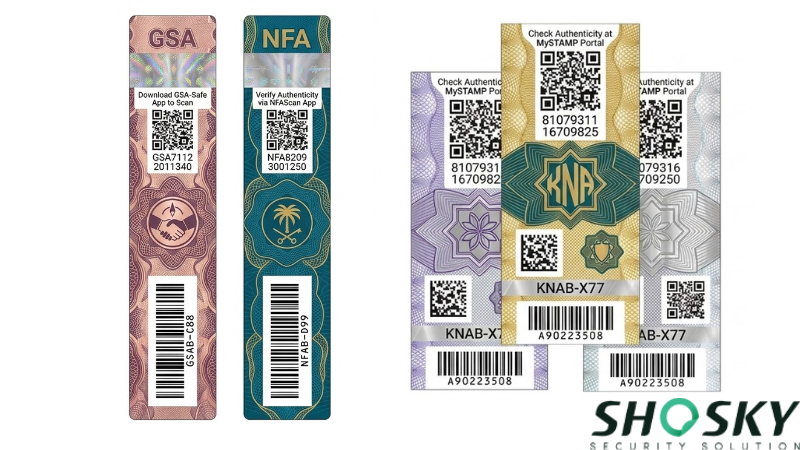
Strong excise tax stamp security does not start at the final print stage. It begins much earlier with supplier selection, raw material control, and strict manufacturing standards. Even the best holographic tax stamps can fail if the production source is weak or if genuine materials are leaked into illegal channels.
The following table outlines the key procurement and auditing controls used to strengthen supply chain security.
| Security Area | Purpose | Why It Matters |
|---|---|---|
| Closed Facility Manufacturing | Controls physical access to production areas and master materials | Prevents criminals from obtaining genuine films, hologram tools, or printed documents |
| Adhesive Compatibility Testing | Tests how labels bond to glass bottles, cartons, and paper surfaces | Helps verify that labels stay attached and show damage if removed or tampered with |
| Custom Master Roll Supply | Provides secure top-coated void films from trusted direct factories | Protects supply consistency and supports certified government printing converters |
These procurement controls form a complete defense system. When implemented together, they make it economically unfeasible for criminals to access genuine blank materials. Governments that enforce strict supplier audits and closed facility manufacturing reduce counterfeiting significantly.
The supply chain becomes a barrier itself, not a vulnerability. This layered approach protects tax revenue while giving legitimate brands confidence in their product packaging authenticity.
FAQs
What is the main purpose of an excise tax stamp security label?
An excise tax stamp serves as physical proof that appropriate government taxes have been paid on regulated goods like alcohol and tobacco. It acts as an anti-counterfeiting tool equipped with tamper-evident features to prevent smuggling and illegal product substitution.
How do ultra-destructible labels prevent illicit trade?
Ultra-destructible vinyl labels are engineered to shatter into microscopic pieces upon any removal attempt. This makes it physically impossible for smugglers to carefully peel a legitimate tax stamp off an empty bottle and reapply it to a counterfeit product.
Why is ISO 22382 important for security labels?
ISO 22382 is an international standard that provides strict guidelines for the content, security features, and issuance of tax stamps. Compliance with this standard ensures that the labels contain sufficient visible, covert, and forensic layers to defeat modern counterfeiting operations.
Improve Traceability and Control with Shosky Security Security Labels
The fight against illicit trade depends on how well physical security and digital verification work together. When excise tax stamps include layered protection features, governments gain better control over tax collection, and brands reduce exposure to counterfeiting risks across distribution channels.
Shosky Security provides full-spectrum tamper-evident solutions covering holographic tax stamps, destructible labels, and secure supply chain integration. We work with regulated industries where product integrity matters most, including tobacco, alcohol, and other excise-controlled goods. Contact our team today to discuss your requirements.