
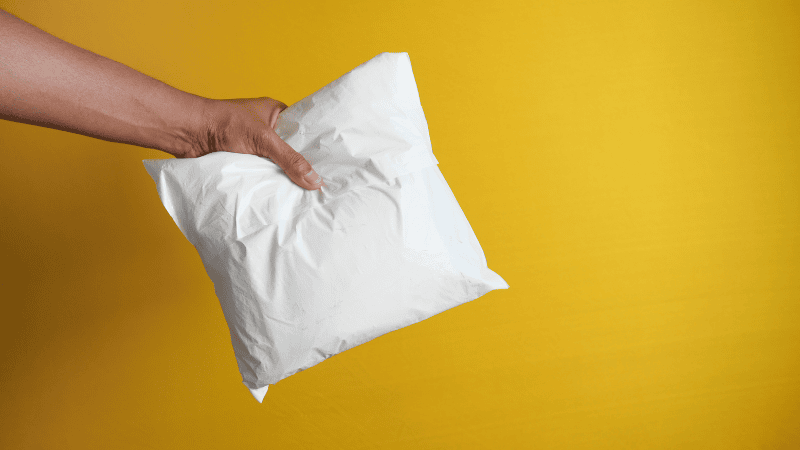
Every time a brand ships a small item in a big corrugated box, they pay for extra weight. FedEx, UPS, and many other major carriers apply a DIM divisor for most parcel shipments where package size matters more than actual weight. The box adds material cost, packing time, and dead air. The product needs none of it. The result is higher packaging costs and unnecessary warehouse storage requirements.
Custom poly mailers address these issues directly. They fit closely around products while keeping DIM weight low. The right mailer can improve warehouse operations and contribute to a smoother delivery experience for customers. This article covers how custom poly mailers fit into modern ecommerce packaging strategies and what to consider when choosing one.
Custom Poly Mailers vs Corrugated Shipping Boxes
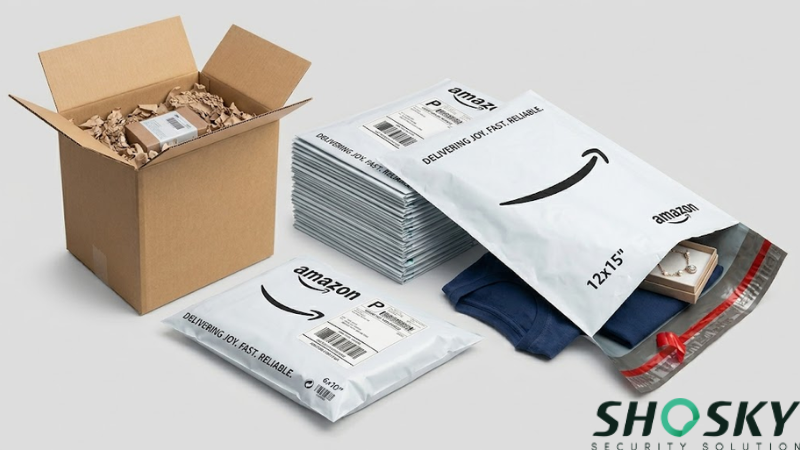
Procurement managers evaluating a switch from corrugated boxes to custom poly mailers need numbers, not generalities. The comparison below covers material cost, DIM weight impact, packing time, compliance printing, and branding surface across both formats. For soft goods categories, the gap between the two is significant at any shipment volume.
| Factor | Custom Poly Mailer | Corrugated Box |
|---|---|---|
| Material cost per unit | $0.10 to $0.25 | $0.45 to $2.00 |
| DIM weight impact | Minimal, conforms to product | Significant, traps dead air |
| Warehouse storage | High density, flexible | Low density, rigid |
| Packing time | 30 to 50% faster, no tape required | Box assembly, tape, void fill needed |
| Branding surface | Full exterior, full color printing | Exterior only, higher production cost |
| Compliance printing | Built into the production run | Requires secondary labels |
| Best product fit | Soft goods, apparel, shipping t-shirts, accessories | Fragile or rigid items |
| Postage costs | Lower due to reduced DIM weight | Higher due to box mass and DIM factor |
A business shipping 1,000 packages per month can save approximately $350 in material costs and around $100 in shipping fees by moving suitable orders from boxes to poly mailers. That is $5,400 annually at a modest volume. At 10,000 monthly shipments, the number scales proportionally.
The cost-effective case is strongest for soft goods that need no rigid protection. The right procurement move is a SKU-level audit to identify which product categories can safely ship in a mailer, then standardizing that decision across the operation.
Core Operational Benefits of Custom-Printed Mailing Bags
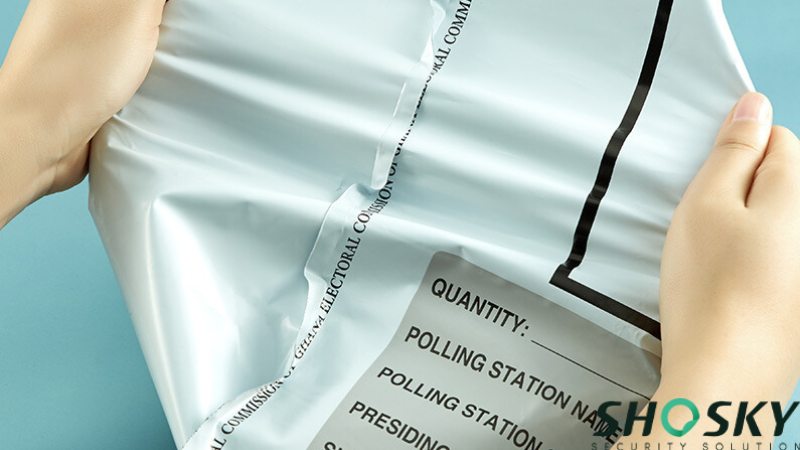
In e-commerce fulfillment, custom-printed mailing bags are chosen for clear cost and efficiency reasons. They typically cost less than shipping boxes, require less storage space, and still provide a branded delivery experience at no extra production complexity.
To fully understand the return on investment, procurement managers must evaluate the following three core drivers of adoption:
- Unboxing Experience: A plain grey bag communicates nothing at the doorstep. A sturdy custom-printed mailing bag with full color artwork and a logo adds a personal touch that builds brand recognition before the product is opened. Around 52% of consumers are more likely to repurchase after receiving an order in premium packaging.
- Dimensional Weight Savings: Shipping carriers bill based on whichever is greater between actual weight and dimensional weight. Corrugated boxes trap dead air and inflate that charge on every order. Poly mailers conform to the product and reduce postage costs across the full shipment volume.
- Warehouse Optimization: A single pallet of flat-packed poly mailers holds a quantity of units that rigid shipping boxes cannot match in the same footprint. For a small business with limited storage, that density reduces costs. For larger operations, it improves picking speed and warehouse utilization.
For procurement teams, these benefits work together. Lower material cost, improved space usage, and reduced shipping inefficiencies all stack across every quantity shipped. Over time, this creates a more stable cost structure while still maintaining a good quality packaging experience that customers notice when they receive a great product.
Ready to Get Your Custom Poly Mailers?
Start With A Low Minimum Order Quantity
The Hidden Security Asset Tamper Evident Poly Mailers
The marketing team evaluates a poly mailer by how it looks. The operations team evaluates it based on how much security it provides. Tamper-evident packaging bridges the gap between the two.
Here’s how these mailers balance visual appeal with practical security features, and why that balance matters for procurement decisions.
1. Specify Destructive Hot-Melt Adhesive Strips
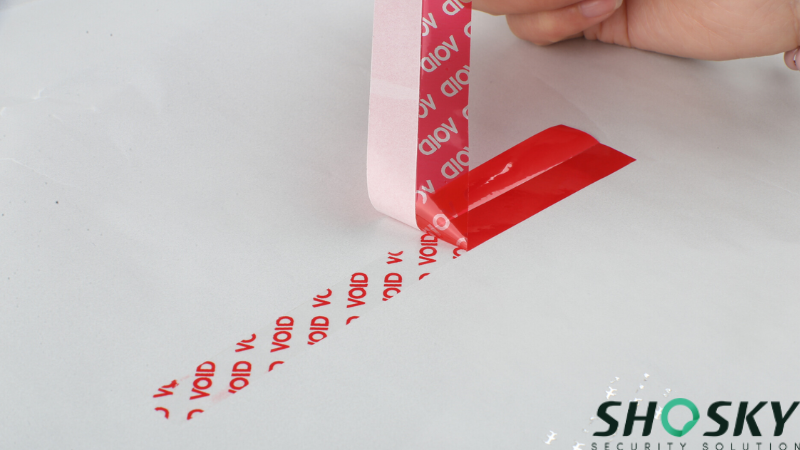
Tamper-proof poly mailers use specialized adhesive systems engineered for secure closure. Most self-sealing courier bags utilize synthetic rubber-based hot-melt adhesive technology.
After warehouse staff remove the release liner and close the flap, the adhesive forms a permanent, destructive bond with the underlying low-density polyethylene film. Once sealed, the package cannot be opened cleanly. When a bad actor attempts to access the contents, the destructive adhesive forces the following physical reactions:
- Visible stretching of the polyethylene film
- Film distortion around the closure flap
- Surface tearing that destroys the printed graphics
- Permanent damage to the mailer body
This provides clear evidence of unauthorized access. Such security measures help reduce theft concerns and support logistics investigations when claims arise.
For e-commerce businesses that sell higher-value products, these tamper-evident packaging solution types play an important role in protecting inventory during delivery.
2. Opaque Co-Extruded Film Construction
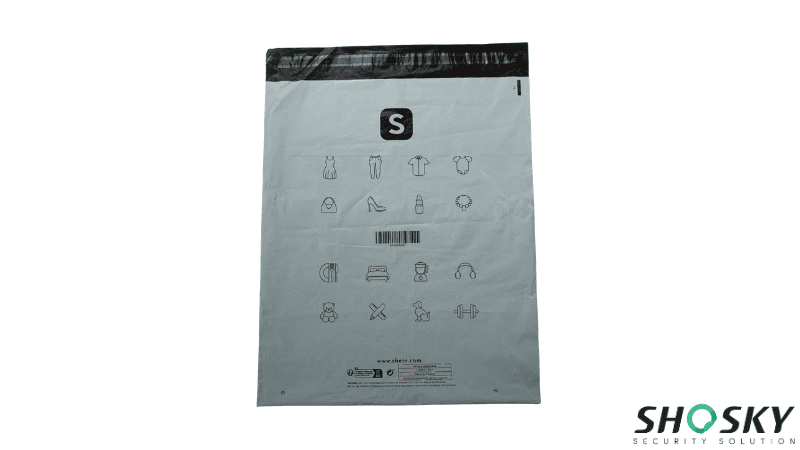
Security extends beyond tamper evidence. Many premium custom poly mailers use co-extruded film construction. A common configuration includes: a white exterior layer and a black interior layer. This structure blocks visibility through the package.
Customers gain privacy. Warehouse staff maintain confidentiality. Opportunistic theft becomes more difficult because the package contents cannot be identified in the light. Deploying opaque shipping bags remains particularly mandatory for the following high-theft product categories:
- Premium apparel and designer streetwear.
- Luxury beauty products and cosmetics.
- Confidential subscription box products.
- Consumer electronics and mobile accessories.
Many procurement teams review opacity performance as part of supplier evaluation because privacy expectations continue to rise.
High-quality film also contributes to durability. Modern custom mailers often use tear-resistant and waterproof materials that provide puncture protection during transport. The strong construction helps products remain secure throughout the shipping process.
Mandatory Compliance for Global E-Commerce Shipping Bags
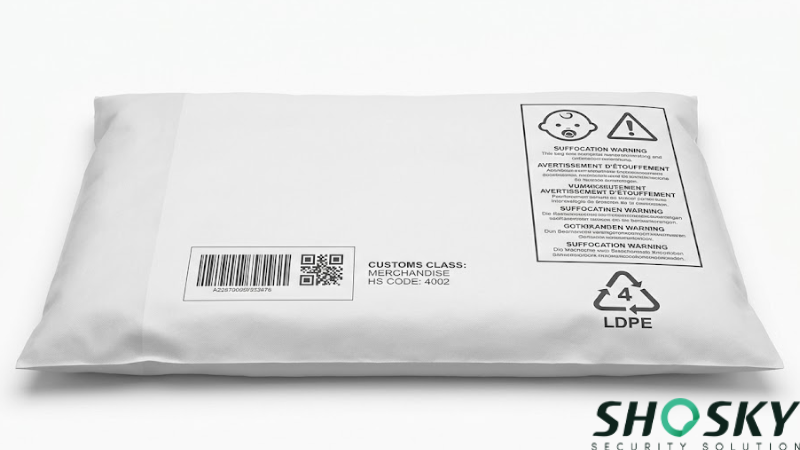
For procurement teams sourcing shipping bags across multiple channels, including Amazon FBA, compliance printing is a specification requirement that needs to be locked in at the design stage.
Amazon FBA and most international logistics platforms require a Suffocation Warning on any plastic bag with an opening larger than five inches. The warning must appear in multiple languages, depending on the destination market.
Bags arriving at an FBA facility without the correct warning text are rejected outright, triggering returned inventory, delayed listings, and reprocessing costs.
Beyond the platform requirements, there are three additional elements that should be standard on every custom poly mailer order:
- The LDPE 4 Recycling Code: The LDPE 4 recycling code must be printed to guide consumers on correct disposal and to satisfy retail partner sustainability audits.
- Barcode Integration: Unique routing barcodes printed directly on the bag surface remove the need for secondary label application, which speeds warehouse scanning and reduces label stock costs.
- Customs Classification Markings: For international shipments, customs classification markings may be required depending on destination regulations.
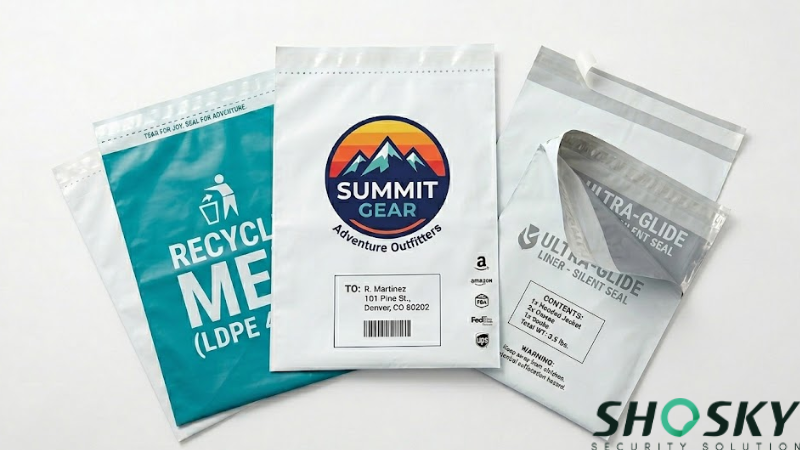
Custom printed poly mailers allow procurement teams to build all of these compliance elements into a single production run. A mailer carrying full color branding, a suffocation warning, the LDPE 4 code, and a barcode field handles every requirement without secondary labeling or rework.
Customize Poly Mailer for Your Business Today!
Start With A Low Minimum Order Quantity
3 Steps to Properly Seal Poly Mailers for Small Businesses
Improper sealing is exactly where logistics savings are lost to damage claims and carrier disputes. Warehouse managers must enforce these three structured steps to guarantee transit security.
1. Prevent Volumetric Seam Stress
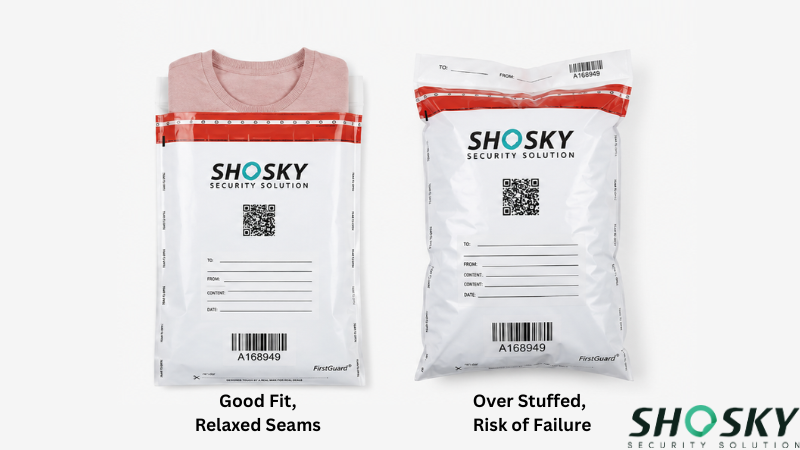
Poly mailers and bubble mailers possess a specific rated volumetric capacity, meaning the side welded seams are the primary structural weak points under stress.
Pushing a shipping bag past its intended volume stretches these seams out of alignment, creating tiny tears that look identical to malicious tampering during transit. To maintain seam security, packing teams must follow these exact dimensional boundaries:
- Maintain Flap Clearance: Ensure a minimum of 2 inches of flat clearance below the fold line to prevent the product from forcing the adhesive flap upward.
- Check Material Flex: The mailer must remain flexible enough to conform closely around the contours of the soft goods without visible tension marks along the outer edges.
- Size Up Systematically: Custom poly mailers range from small formats like 6.5 x 12 inches up to heavy-duty options like 12 x 20 inches. If a SKU causes the side seams to bulge, the packing line must immediately mandate a switch to the next larger envelope size.
By restricting volumetric tension, you ensure that the envelope retains its full engineered puncture resistance throughout the sorting and shipping cycle.
2. Execute the Air Evacuation and Uniform Press Sequence
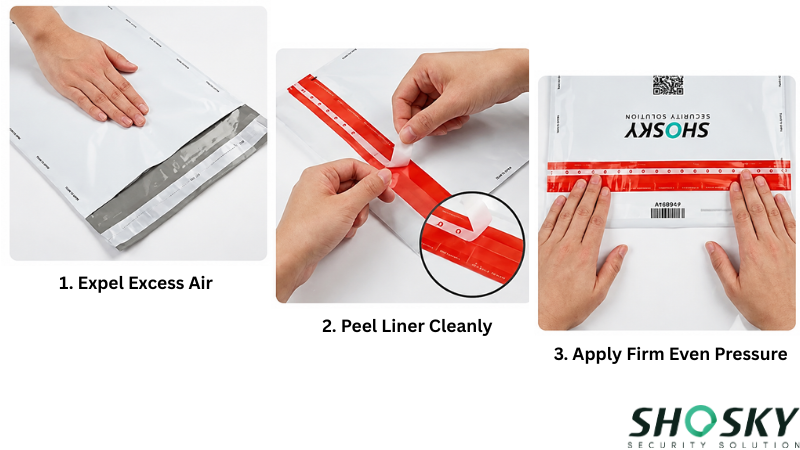
Trapped air inside a sealed courier bag acts as a bellows during transport, inflating effective dimensional weight and placing constant pneumatic pressure on the adhesive seal during carrier handling.
Warehouse workers must be trained to treat the closing action as a mechanical sequence rather than an administrative afterthought. Fulfill the sealing protocol by executing these four sequential movements:
- Flatten the Body: Place the loaded mailer flat on the packing table and use a sweeping hand motion to push excess air out through the top opening.
- Protect the Adhesive Interface: Peel the release liner cleanly in a single motion, taking care that dust, cardboard fibers, or warehouse skin oils do not touch the hot-melt surface.
- Align the Fold Line: Fold the flap over at a perfectly square angle, ensuring that no asymmetrical wrinkles form along the sealing band to create water entry channels.
- Apply Center Outward Pressure: Press down firmly with the thumbs at the center of the adhesive strip and slide outwards to both edges with approximately 15 lbs of downward force.
Uneven or light pressure creates a localized weak zone at the under-pressed edges, which allows moisture or clever hands to slowly peel the bag open undetected.
3. Adjust for Cold Warehouse Temperatures
Industrial hot-melt adhesives achieve their maximum destructive bond strengths within specific temperature windows. Many procurement teams fail to realize that a seal that performs perfectly in a corporate office will behave completely differently on a freezing loading dock.
Fulfillment operations must adjust their pacing based on these environmental metrics:
- Standard Ambient Calibration: Hot-melt adhesive strips reach their rated molecular bond strength rapidly when working in standard ambient temperatures between 68°F and 72°F.
- Cold Storage Adjustments: Cold warehouse environments below 50°F temporarily reduce the initial tackiness of the adhesive layer by slowing down chemical migration.
- Enforce Mandatory Dwell Time: In unheated winter loading bays, packing staff must apply deliberate, sustained pressure across the flap and allow a mandatory 4 to 6 second dwell time before the parcel is tossed onto a moving conveyor belt or labeling station.
Allowing this brief molecular dwell time ensures the adhesive forms an irreversible, material-tearing bond with the outer film before facing the mechanical stress of automated parcel sorting systems.
FAQs
Do custom poly mailers provide adequate protection for fragile items?
No. Poly mailers are engineered exclusively for soft goods like apparel, plush items, or pre-boxed consumer accessories. If your product is fragile or rigid, you must use corrugated boxes or highly padded bubble mailers to prevent transit crushing.
What is the optimal film thickness for a secure e-commerce poly mailer?
For standard apparel, a co-extruded film thickness of 2.0 mil to 2.5 mil provides excellent tear resistance and opacity. If you are shipping heavier items like footwear or hardware, you should upgrade to a 3.0 mil heavy-duty film to prevent puncture blowouts.
Are tamper-evident poly mailers globally recyclable?
Yes, most high-quality poly mailers are made from Low-Density Polyethylene (LDPE). Ensure your manufacturer prints the LDPE 4 recycling code on the exterior, allowing consumers to drop them off at designated flexible plastic recycling bins at local retail stores.
Upgrade Your Fulfillment with Shosky Packaging Solutions
Custom poly mailers help ecommerce brands reduce packaging waste, improve shipping efficiency, and maintain consistent branding across every order. Their lightweight structure and secure sealing make them a practical alternative to traditional boxes, especially for soft goods and high-volume fulfillment.
Shosky Security delivers custom poly mailers built around the security and compliance requirements that serious e-commerce operations demand. Tamper-evident adhesive strips, opaque co-extruded film, full color logo printing, and compliance markings are all available within a single production run. Contact us today to discuss your fulfillment needs.