

No commodity in global logistics carries more concentrated risk than BULLION. A single armored transfer moving bullion between vaults can represent more value than an entire container ship’s general cargo. And unlike electronics or pharmaceuticals, precious metals leave no trace when they disappear.
Because of this, bullion logistics security demands stricter control. This guide breaks down where precious cargo is most exposed, what tamper-evident solutions can actually protect it, and how procurement teams should evaluate suppliers before a single gram of gold leaves the origin vault.
The Vulnerability Zones in Vault-to-Vault Logistics

According to data highlighted by the AOP Report, cargo theft in the United States alone exceeded $455 million in a single year. Within that figure, precious metals stand out as a high-risk target because of their resale value and the difficulty of tracing them after diversion.
This risk, however, is not distributed equally throughout the transit journey. Risk builds around transfer points where responsibility changes hands. These moments require tamper-proof evidence to confirm the cargo arrived untouched.
The four highest-exposure points in any bullion supply chain include:
- Origin Dispatch: Risk of incorrect weighing or internal skimming before loading.
- Tarmac Transfers: Risk of blind spot theft during airport cargo loading.
- Cross-Border Customs: Risk of undocumented opening by third-party inspectors.
- Final Vault Receiving: Risk of sophisticated adulteration and fake resealing.
These transitions are the most sensitive points in the chain, where security seals, documentation, and tamper-evident solutions carry the most weight in proving custody integrity. When even a single link in this sequence fails, the entire supply chain loses certainty over the movement of gold, silver, and platinum.
Physical Security Layers for Precious Metals Transport
Protecting precious metals requires layered hardware, not a single solution. Three categories of physical security products work together to create a perimeter that is verifiable at every handover point.
Level 4 Security Bags: Extreme Attack Resistance
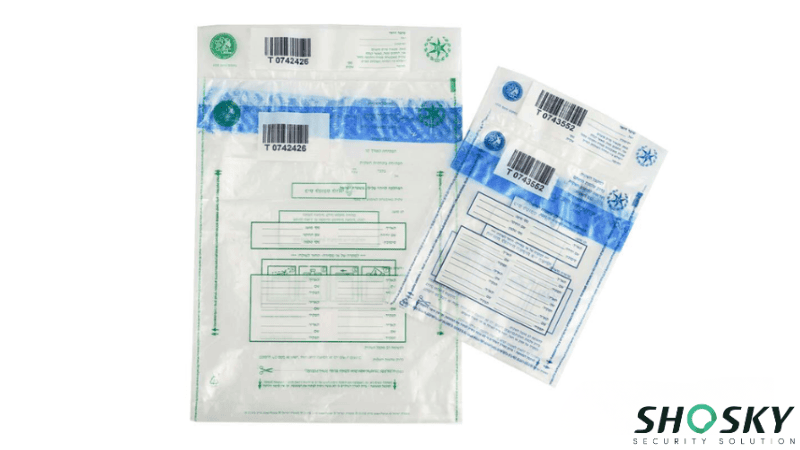
Level 4 security bags sit at the highest tier of tamper-evident packaging used in bullion logistics security. They are designed for situations where precious metals, bullion, and other valuables may face deliberate physical or chemical attacks during pick up, transport, or delivery.
The goal is simple: any interference must show clear, permanent proof. These bags are engineered to resist conditions that standard security bags cannot handle:
- Freon freezing: makes standard adhesives brittle and peelable without visible damage
- Heat gun application: melts inferior adhesives cleanly, leaving no evidence of entry
- Chemical solvents: dissolve standard bag materials without triggering a visible tamper indicator
Beyond chemical and thermal defense, bullion transport introduces a unique physical challenge: extreme material density. Standard plastic security bags often suffer from seam rupture under the sheer weight of gold or silver bars, triggering false tamper investigations. High-grade Level 4 bullion bags are engineered with heavy-duty reinforced side welding to support concentrated loads.
Once an attempt is made to open or alter the seal, an irreversible VOID message appears across the surface. In high-value logistics, this indisputable physical evidence neutralizes disputes between vault operators and carriers, transforming the packaging into a legally defensible chain of custody record.
High-Security Bolt Seals: Intermodal and Container Transit
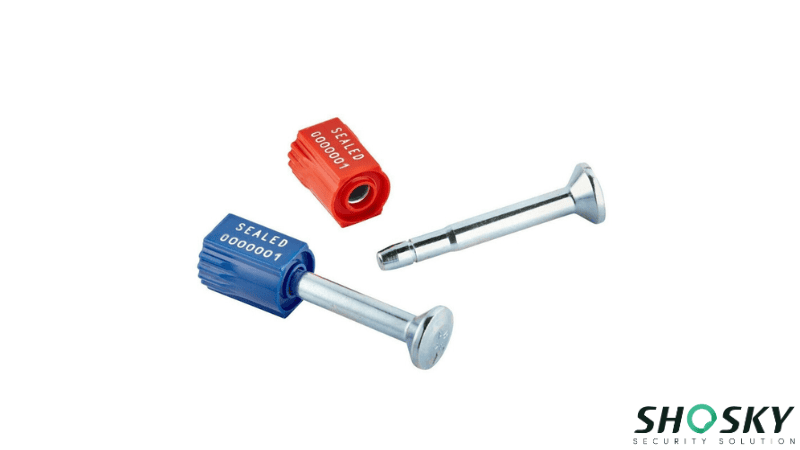
ISO 17712 certified bolt seals are designed for the kind of threats faced in bullion and mining logistics. The attack profile at the container level is industrial: angle grinders, hardened steel bolt cutters, and teams working within a short window before a GPS deviation triggers a response.
Standard bolt seals were never designed to stop such attacks. ISO 17712-certified bolt seals exist specifically for this threat, and compliance comes down to three specifications:
- Carbon steel pins: the minimum material specification to resist heavy industrial cutters
- Independent laboratory verification: ISO 17712 certification must come from an accredited third party, not a vendor self-declaration
- Documented serial numbers: Every seal must cross-reference the shipment manifest for customs clearance and chain of custody purposes
Bolt seals certification process is not based on vendor claims but on third-party verification. This ensures that precious metals shipments meet global security expectations during transport through ports, terminals, and border crossings.
Security directors who rely on vendor assurances instead of verified laboratory reports introduce gaps that most compliance frameworks are not built to tolerate.
Non-Transfer Void Tape: Reusable Armored Transit Cases
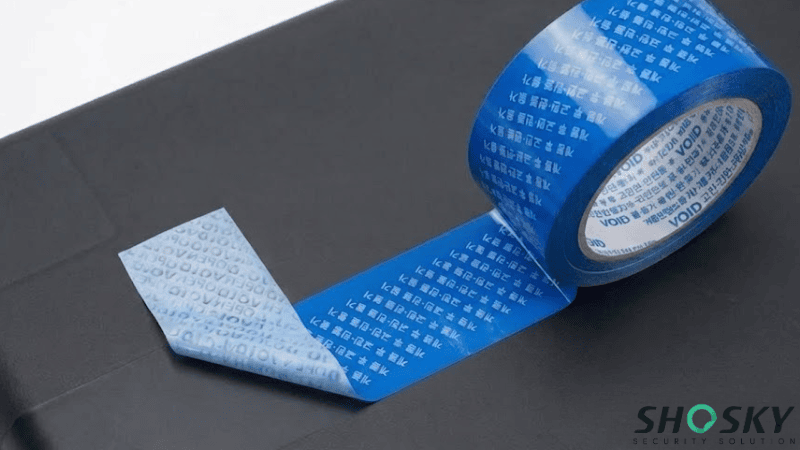
Armored transit boxes used to deliver gold coins, jewelry, gems, and high-value electronics are expensive fleet assets reused across hundreds of shipments per year. Standard tamper-evident tape leaves residue that weakens long-term case performance.
Non-transfer void tape is built specifically for reusable case applications, with three properties that standard tape cannot offer:
- Clean release: leaves zero residue on the transit box surface after removal
- Irreversible VOID message: any attempt to peel the tape reveals a hidden indicator that cannot be concealed
- Case longevity: the box surface remains undamaged and ready for the next shipment without cleaning or preparation
For armored fleet directors managing large case inventories across a global network, this distinction has a direct cost implication. The security tape protects the valuable cargo in transit without degrading the asset carrying it, and over hundreds of shipments per year, that adds up.
By eliminating the need to scrape chemical residue off armored cases, non-transfer void tape significantly accelerates fleet turnaround times between secure dispatches. It simplifies pre-transit inspection cycles and allows armored fleet directors to maintain high-velocity asset utilization while enforcing strict anti-tampering protocols.
The Procurement Framework for Armored Fleet Directors for Precious Cargo
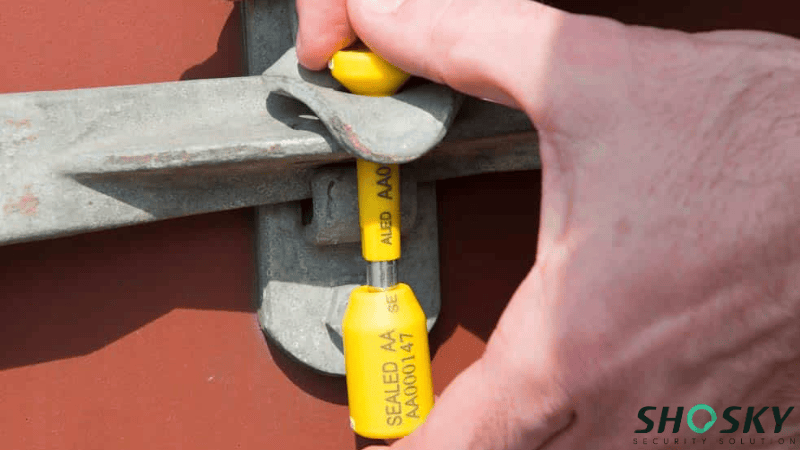
Price-first procurement in bullion logistics security introduces compliance exposure that dwarfs any savings on seal unit costs. A shipment of gold that goes missing because a substandard bolt seal was cut introduces liability for which no budget justification survives.
Security directors evaluating suppliers should work through a structured checklist before a contract is signed. Here is a practical framework used in high-value logistics operations handling bullion, silver, platinum, and other precious metals across global supply chains.
| Evaluation Area | Focus | Why It Matters in Bullion Logistics Security | Key Risk If Ignored |
|---|---|---|---|
| Material Compatibility Audits | Test seal performance across temperature and humidity ranges in all transit countries | Prevents seal failure during the transport of precious metals across extreme climates during transit and delivery | Seal breakage, false tamper readings, loss of custody evidence |
| Independent Laboratory Verification | Require ISO-certified third-party testing instead of vendor claims | Supports LBMA and C-TPAT compliance and smooth customs clearance for bullion shipments | Shipment rejection, regulatory delays, and insurance disputes |
| Sequential Logic Security | Use laser-etched, digitally linked barcode systems for each seal | Creates a traceable chain of custody across gold, silver, and platinum movements | Broken audit trail, inability to identify failure point, weak liability defense |
The table above is a starting point, not a ceiling. Security directors managing precious cargo across multiple countries and transit environments should expand each evaluation area to reflect the specific risks of their routes. Because a seal specification that works across Western European vaults may not hold up on a Middle Eastern tarmac or through a high-humidity port customs clearance process.
Aligning with LBMA Security Guidelines: Liability and Serialization

The London Bullion Market Association’s security guidelines exist specifically to resolve the liability question that every insurer and every vault operator wants answered before a dispute reaches litigation: who was responsible when the gold went missing? Serialization is the answer the industry has settled on to enforce this strict accountability.
- Irreversible Serialization: Creates a unique physical identity for every shipment that guarantees the seal cannot be duplicated or replaced after unauthorized access.
- Transporter Liability Shift: Transfers financial responsibility directly to the logistics carrier if the destination vault receives a shipment with a broken or tampered serialized seal.
- Origin Vault Accountability: Shifts liability back to the dispatching facility if the seal remains perfectly intact while the internal bullion is found to be missing or adulterated.
This framework is not a mere technicality; it is the entire architecture of how bullion disputes are resolved. Teams that treat serialized seals as a premium upgrade are misreading the risk entirely.
The seal’s serial number acts as the chain of custody made physical. It is what allows a logistics company to protect its business, defend its processes in court, and guarantee continuity of trust with vault clients across its global network.
Expert Tip from Shosky Security
Never treat a severed bolt seal or voided security bag as warehouse waste. To maintain strict LBMA compliance, destination vaults must archive all broken seals alongside their digital manifests for at least ninety days. This simple quarantine protocol creates undeniable forensic proof to neutralize delayed insurance audits and retroactive liability claims.
FAQs
How do Level 4 security bags prevent Freon freezing attacks during bullion transport?
Level 4 security bags use proprietary cold-resistant adhesives that maintain their molecular bond at extreme sub-zero temperatures. If criminals apply liquid Freon to freeze and peel the seal, the closure instantly shatters and activates a permanent VOID message. This guarantees irreversible evidence of tampering.
Why are ISO 17712-certified bolt seals mandatory for cross-border precious metal shipments?
ISO 17712-certified bolt seals feature hardened carbon steel pins designed to withstand attacks by heavy industrial cutters. Independent laboratories verify this certification. Using these high security seals is mandatory to meet the strict compliance and liability standards required for international bullion customs clearance.
What is the primary financial advantage of using non-transfer void tape on armored transit cases?
Non-transfer void tape leaves zero chemical residue on armored cases while still revealing an irreversible VOID message if peeled. This eliminates expensive cleaning protocols, preserves the lifespan of reusable fleet assets, and accelerates dispatch turnaround times for high-velocity bullion logistics.
From Transit to Vault: Shosky’s Solutions for Bullion Protection
The bullion movement is defined by verification, not assumption. Every transfer point carries exposure, and only physical proof can confirm that precious metals remain untouched throughout transport. Security seals and structured custody systems form the foundation of that control.
At Shosky Security, we work with armored fleet directors, vault operators, and logistics teams to provide tamper-evident solutions that meet the full compliance requirements of precious metals transport. Get in touch with our team to discuss your current specification and build a seal program that your compliance framework can stand behind.