
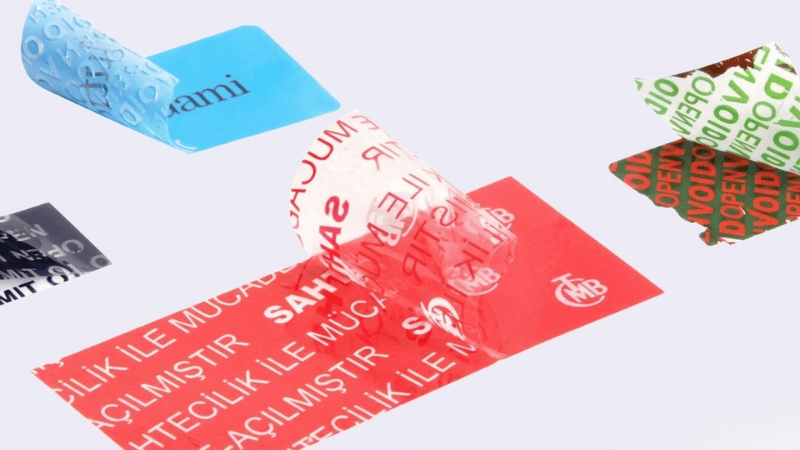
No matter how sophisticated your packaging design is, a label that peels off in transit or permanently damages a high-value asset upon removal is a critical failure. In industrial manufacturing and secure logistics, the wrong adhesive choice leads directly to product returns, lost inventory, and severe security breaches.
Across global supply chains, procurement teams rely on completely different adhesive chemistries to achieve distinct operational goals. Some applications require a destructive tamper-evident bond, while others demand a clean release that leaves zero residue.
This technical guide breaks down the physical properties of permanent, removable, and repositionable adhesives, helping you specify the exact formulation for your packaging requirements.
Why Label Adhesive Chemistry Matters
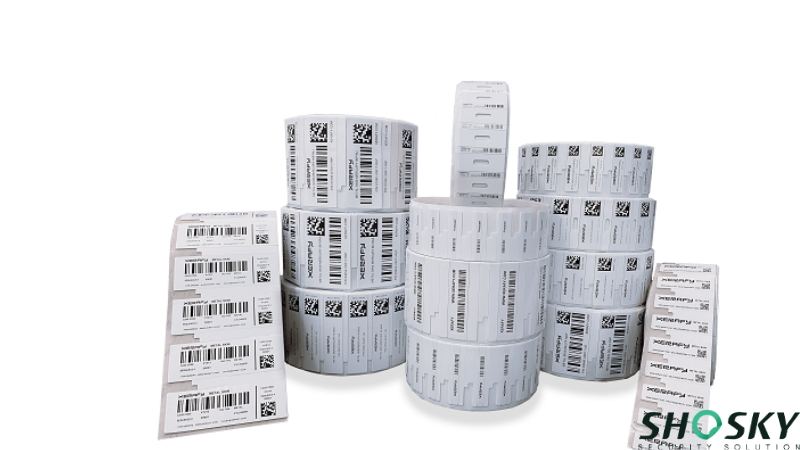
An industrial label performs only as well as its chemical formulation. The right adhesive anchors the label securely during automated handling, extreme warehouse temperatures, and rough international transit. More importantly, the adhesive controls exactly how the label behaves when a user attempts to remove it.
Poor adhesive specification leads to unavoidable and costly issues in daily operations. When the wrong chemistry is deployed, businesses face the following predictable failures:
- Loss of Adhesion in Transit: Standard adhesives may freeze and pop off in cold chain shipping or melt and slip during summer transit.
- Permanent Surface Damage: Incorrectly specified labels can leave a stubborn sticky residue that ruins the aesthetic of luxury retail goods or expensive IT equipment.
- Catastrophic Security Breaches: Weak adhesives often fail to trigger a VOID message when unauthorized tampering occurs, leaving the supply chain completely vulnerable to theft.
These predictable failures force teams to relabel entire shipments and handle massive customer complaint volumes. Small adhesive failures quickly compound into large-scale supply chain vulnerabilities. Understanding the specific shear strength and tack of different adhesives is the foundation of reliable product labeling.
Permanent Adhesive Labels: The Ultimate Security Barrier
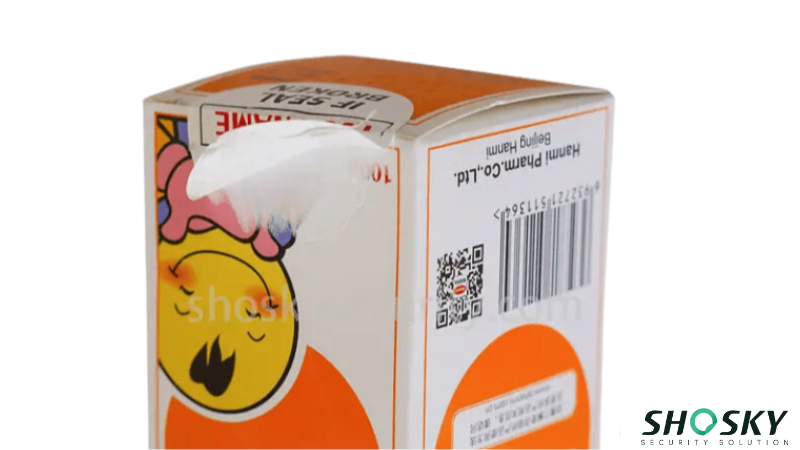
Permanent adhesive labels are engineered to form a highly aggressive, destructive bond with the application surface. The chemical bond strength is explicitly designed to exceed the label’s own face material tear resistance. As a result, removing a permanent label is physically impossible without causing visible, irreversible damage to either the label or the product.
This aggressive tack makes permanent adhesives the absolute standard for high-security applications where tamper evidence is mandatory. Regulatory bodies globally treat this destructive interference as a strict compliance requirement.
For instance, the FDA (under 21 CFR Part 211.132) requires all OTC (over-the-counter) drug products to carry tamper-evident packaging. Any breach must produce immediate, visible evidence of interference.
On the retail side, the financial stakes are equally clear: the NRF’s National Retail Security Survey found shrinkage reached $112.1 billion in losses in FY 2022, with internal and external theft accounting for nearly two-thirds of that figure.
Best Use Cases:
- Corrugated Shipping Boxes: One-time logistical sealing to prevent pilferage.
- Pharmaceutical Compliance: Sealing medical cartons and prescription bottles.
- Asset Tracking: Permanent tagging of industrial machinery, fleet vehicles, and IT servers.
Security Integration: Permanent adhesives are the backbone of Total-Transfer VOID labels and Destructible Vinyl stickers. Attempted removal physically shatters the fragile face material or leaves a permanent, sticky “VOID” message deeply anchored into the cardboard or plastic substrate.
Removable Tamper Evident Labels: High-Value Protection
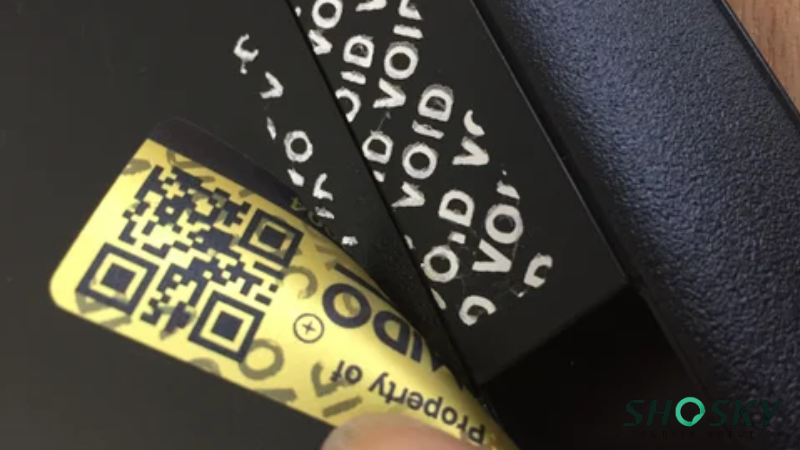
Removable adhesive labels are a marvel of polymer engineering. They are designed to hold firmly during long-term use but release cleanly without leaving a single drop of sticky residue when removal is required. Their unique adhesive profile protects sensitive or high-value surfaces from permanent scarring.
Unlike permanent adhesives that aggressively bite into the substrate, removable adhesives balance high shear strength (preventing sliding) with a controlled, low-peel release. They stay perfectly intact under normal handling but peel off cleanly when lifted intentionally.
In highly secure B2B environments, this technology powers Non-Residue VOID Labels. These advanced labels provide clear visual proof of interference by triggering a hidden “OPENED” message within the label’s own film layer, all while leaving the expensive product surface completely untouched.
Best Use Cases:
- Reusable Logistics Containers: Sealing expensive plastic totes that are returned and washed.
- High-End Electronics: Sealing retail boxes for smartphones, laptops, and luxury watches.
- Aviation and Automotive: Sealing aircraft doors and sensitive automotive diagnostic ports.
Security Integration: These labels are mandatory in industries where the underlying asset is highly valuable. If a customs agent or thief removes the label from a $50,000 server rack, the label itself displays a VOID message to prove it was breached, but the server’s metal casing remains perfectly clean and undamaged.
Repositionable Adhesive Labels: The Operational Workhorse
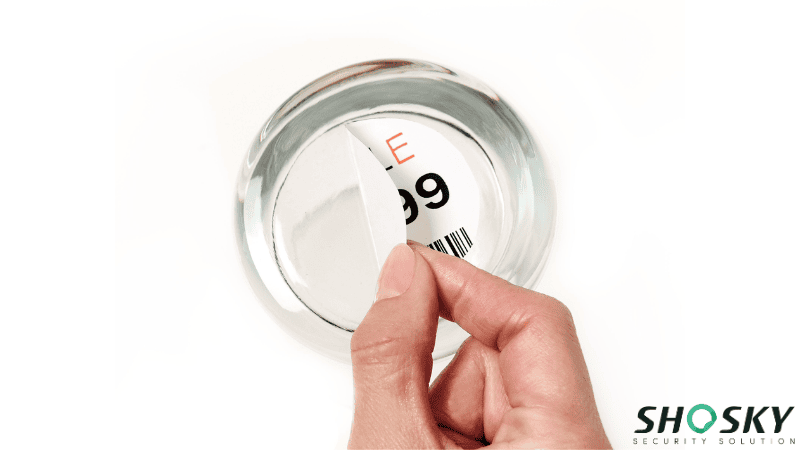
Repositionable adhesives feature an extremely low initial tack and an extended “dwell time”. This unique formulation allows assembly line workers to apply a label, peel it off if it is crooked, and reapply it perfectly straight without losing any stickiness or leaving residue.
It is critical to note that repositionable labels are NEVER used for security or tamper-evident applications. True tamper evidence is built on one-time destruction. Repositionable adhesives are engineered to do the exact opposite. They are designed for extreme operational flexibility rather than security.
These labels typically withstand UV rays, solvents, and minor moisture, making them highly durable for fast-paced indoor factory environments. Their ability to be reused drastically reduces material waste and allows teams to adjust inventory tagging as manufacturing requirements change.
Best Use Cases:
- WIP (Work-in-Progress) Tracking: Moving components across different factory assembly stations.
- Retail Campaigns: Seasonal promotional stickers that consumers can peel off cleanly at home.
- Inventory Adjustments: Temporary Kanban bin tagging in fast-moving fulfillment centers.
Key Differences: Removable vs Permanent vs Repositionable Adhesive
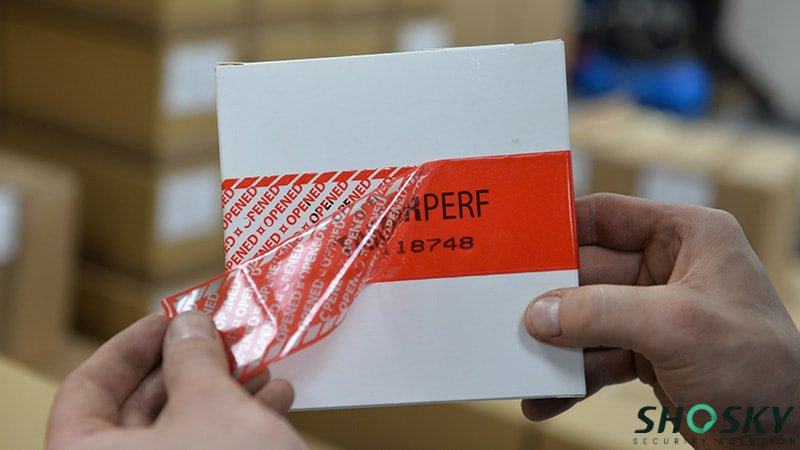
Applying a permanent label where a removable one was required will permanently ruin an expensive asset. Conversely, using a repositionable label on a tamper-evident medical box leaves zero evidence of a lethal security breach. These are not minor edge cases; they are catastrophic failures resulting from poor procurement specifications.
The technical comparison table below breaks down exactly where each adhesive chemistry performs and where it fails:
| Feature | Permanent | Removable | Repositionable |
|---|---|---|---|
| Bond Strength | Very High | Medium | Low |
| Removal | Destructive | Clean | Clean and repeatable |
| Tamper Evidence | High | Medium–High | Low |
| Surface Damage on Removal | Likely | Minimal | None |
| Temperature Resistance | Excellent | Moderate | Low |
| Reapplication | No | No | Yes |
| Typical Use | Security, compliance, asset tracking | Retail pricing, food service, and inventory | Promotions, QC tagging, display labeling |
| Dwell Time | Long-term | Short to medium-term | Short to medium-term |
| Best Surface Types | Most rigid substrates | Smooth, non-porous | Smooth, clean surfaces |
Understanding these distinct chemical properties helps packaging engineers select the exact label formulation for their environment, thereby eliminating costly operational delays and catastrophic security risks.
3 Steps to Spec the Right Adhesive for Your Project
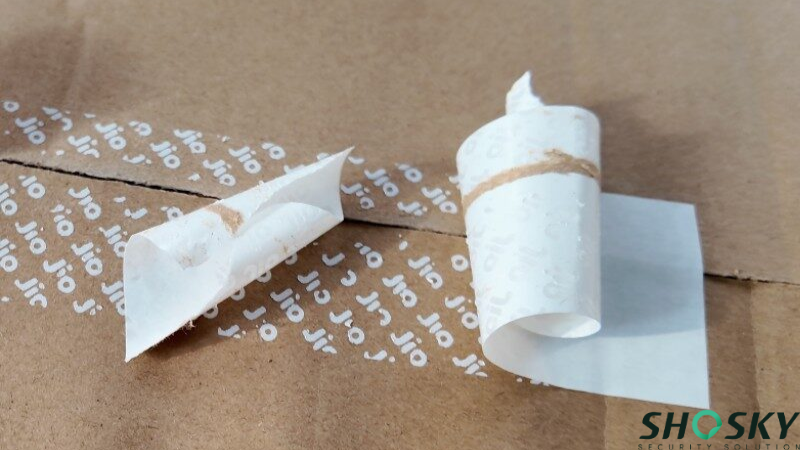
Choosing the right adhesive ensures labels stick where they should, perform reliably, and provide traceable, tamper-evident results. A structured approach prevents costly errors and helps your company maintain consistency across warehouses and machinery.
Packaging engineers must clear the following three checkpoints before finalizing any label procurement contract:
Step 1: Test the Substrate Surface Energy
The surface energy of your product dictates how an adhesive performs. High surface energy (HSE) materials like glass, metal, or smooth plastics allow most adhesives to bond quickly and maintain clarity. Low surface energy (LSE) materials, including textured plastics or curved surfaces, may require specialized adhesives or treatments.
For critical applications, request dyne level data and relevant rating or conduct surface energy testing to confirm compatibility. Even small variables (such as mold release agents, oils, or dust) can reduce adhesion and lead to early failure.
Step 2: Define the Complete Application Environment
A label that adheres perfectly in a climate-controlled warehouse might fail unexpectedly during harsh transit. To prevent this, procurement teams must evaluate the entire lifecycle of the package and account for specific environmental stressors.
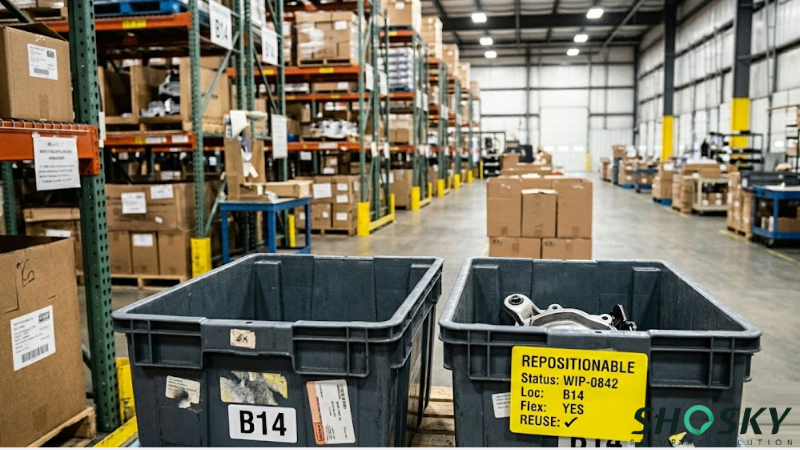
First, identify the exact service temperature range. Standard pressure-sensitive adhesives often crystallize and lose their tack in sub-zero cold chain logistics. Conversely, extremely high-heat environments can cause standard glues to melt and slip off the product.
Second, account for chemical and moisture exposure. If your products encounter factory lubricants, industrial solvents, or heavy condensation during shipping, you must specify an adhesive chemically formulated to resist these exact conditions. Always cross-reference your operational environment with the manufacturer’s Technical Data Sheet (TDS) before finalizing your order.
Step 3: Determine the Desired End-of-Life Behavior
Decide how the label should behave once its purpose is complete. Permanent adhesives form a destructive bond that leaves clear evidence if removed, protecting high-value items. Removable or repositionable adhesives allow clean removal or reuse without damaging the surface.
Selecting the right adhesive type guarantees operational efficiency, protects assets, and keeps your team satisfied with consistent labeling performance.
By strictly following these three technical steps, procurement teams can guarantee that their chosen adhesive chemistry meets both functional logistics requirements and strict tamper-evident security mandates.
FAQs
Q1: Can extreme cold cause permanent adhesives to fail?
Yes. Standard acrylic or rubber adhesives can crystallize and lose their tack entirely in freezing conditions. For cold-chain logistics or freezer storage, you must explicitly specify a specialized “freezer-grade” adhesive formulation designed to remain tacky at sub-zero temperatures.
Q2: What is the difference between removable and repositionable
While both leave no residue, their intent is different. Removable labels are designed to form a strong bond that stays secure for months but can be cleanly peeled away when the product reaches the end user. Repositionable labels have a very low initial tack, designed specifically to be peeled up and moved multiple times immediately during the manufacturing or application process.
Q3: How long does it take for a permanent label to fully bond
Permanent pressure-sensitive adhesives do not reach their ultimate shear strength instantly. They require a specific “dwell time” to allow the adhesive to fully flow and cross-link into the microscopic pores of the substrate. This process typically takes between 24 and 72 hours, depending on the ambient temperature.
Q4: Can I use removable security labels on cardboard boxes?
No. Removable non-residue adhesives are engineered strictly for smooth, non-porous surfaces like glass, metal, and high-gloss plastics. If applied to porous corrugated cardboard, the paper fibers will tear upon removal, defeating the “non-residue” purpose. For cardboard, always use a permanent Total-Transfer VOID tape.
Conclusion
Understanding removable vs permanent vs repositionable adhesive options helps you make better labeling decisions. Each type serves a different purpose. Permanent adhesives provide strength and security. Removable adhesives offer flexibility without damage. Repositionable adhesive labels support dynamic use and reduce waste. By matching the adhesive to the application, you can improve efficiency and maintain product integrity.
Prevent Packaging Failures with Shosky’s Engineered Label Adhesives
Operational efficiency and product protection start with the right adhesive. At Shosky Security, we provide customizable tamper-evident solutions that meet industry standards and deliver consistent performance for any labeling requirement. Contact us today and find the perfect label solution for your products.