

Sensitive sites face the same headache daily: every phone is a potential leak. R&D centers, defense contractors, auto proving grounds, and pre-launch product labs run on secrecy. A single photo can reveal prototypes, floor layouts, or unreleased tech and undo months of work.
Phones aren’t the issue. Instant capture and sharing is. With front, rear, ultra-wide, and telephoto lenses always ready, monitoring every guest’s stall entry. Phone camera stickers add a controlled security layer. This article looks at how these tamper-evidence solutions help enforce no-photography policies and why facilities should choose them over device collection programs.
Modern Challenges in Visitor Security Management
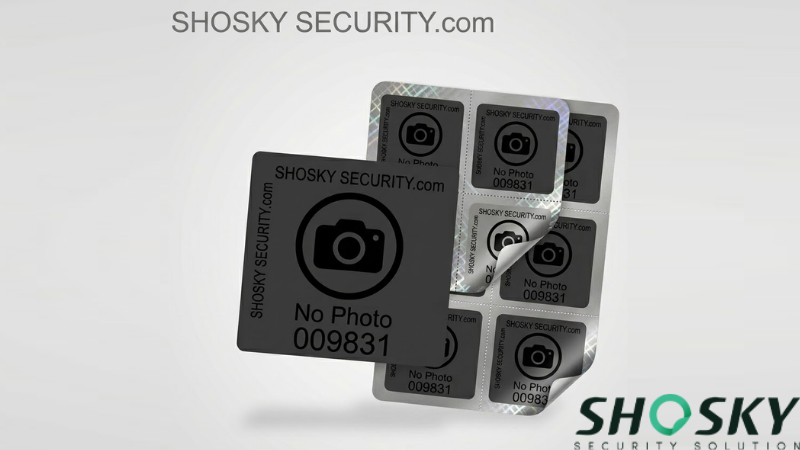
For procurement teams, the cost of a photo leak outweighs the cost of prevention. Industry data shows that in the last decade, about 40% of organizations face a mobile-related security compromise every year that disrupts operations or safety.
There are no practical ways to eliminate mobile devices from modern high-stakes workplaces entirely. One traditional approach involves confiscating devices at the reception desk and storing them in lockers until the visitor exits. This outdated approach creates the following severe operational liabilities:
- Exponential Operational Costs: Collection bins create immediate reception bottlenecks. Dedicated staff time required for tagging, storing, and guarding personal devices adds massive labor expenses during high-traffic events.
- Severe Liability Exposure: Your security team becomes legally responsible for lost, stolen, damaged, or mishandled personal electronic property.
- Executive Business Disruption: VIP contractors, vendors, and visiting engineers require smartphones for crucial emails, calls, and multi-factor authentication (2FA). Removing devices completely paralyzes their workflow.
- Logistical Overload: Handling hundreds of delicate phones during intensive shift changes or event registration requires excessive physical resources and storage space.
These severe limitations prompt modern security directors to abandon device collection as a primary containment measure. The objective remains identical: preventing unauthorized photography. However, facilities must achieve this with zero disruption to visitors, staff, and daily commercial operations.
Ready to Get Camera Stickers to Protect Your Privacy and Security?
Start With A Low Minimum Order Quantity
How Tamper-Evident Camera Covers Block Data Leaks
Phone camera stickers are engineered for direct optical and physical control. Their main function is to block cameras and prevent image capture at the source.
For procurement evaluation, phone camera stickers combine three engineered control layers: optical, physical, and audit. The design focus is verifiable coverage, irreversible tamper evidence, and traceability that fits existing visitor logs.
1. 100% Optical Sensor Blockage
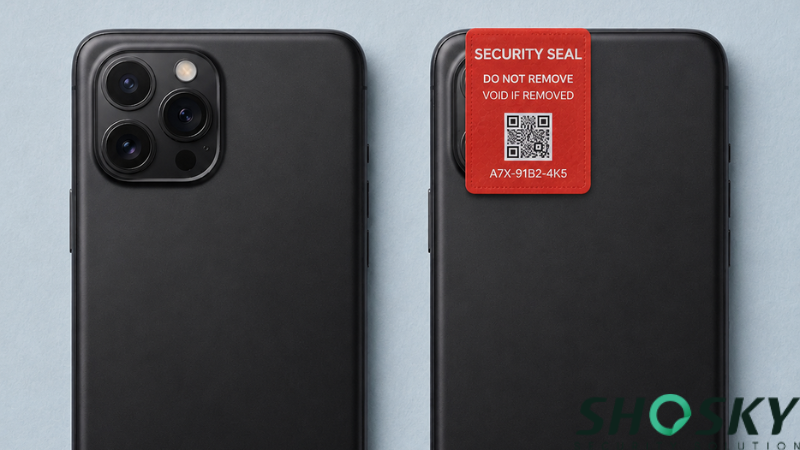
The first mandatory layer of protection is absolute optical control. If light cannot reach the camera sensor, image capture becomes impossible regardless of device settings or user intent. Effective camera stickers achieve this through engineered materials, precise coverage dimensions, and adhesives designed for temporary but reliable application.
- Material Composition: Manufacturers utilize a multi-layer PET and opaque foil laminate to guarantee >99.9% light transmission blockage across the 400–700nm visible light spectrum. Materials must be rigorously tested to ISO 15368 optical density standards.
- Precision Coverage: Die-cut label profiles must precisely match complex modern lens arrays, including single, dual, triple, and LiDAR modules. Production tolerances are held strictly to ±0.3mm to cover all sensor edges without lifting on the curved glass housing.
- Surface Adhesion: Specialized low-tack acrylic adhesives bond securely to glass and sapphire lens covers. A calibrated peel strength of 2–5 N/25mm ensures a reliable hold during normal handling while allowing clean removal.
Precise optical control maintains consistent visual protection across thousands of different smartphone models. This absolute barrier prevents partial image capture through exposed sensor edges or auxiliary wide-angle lenses.
2. The Destructive VOID Mechanism
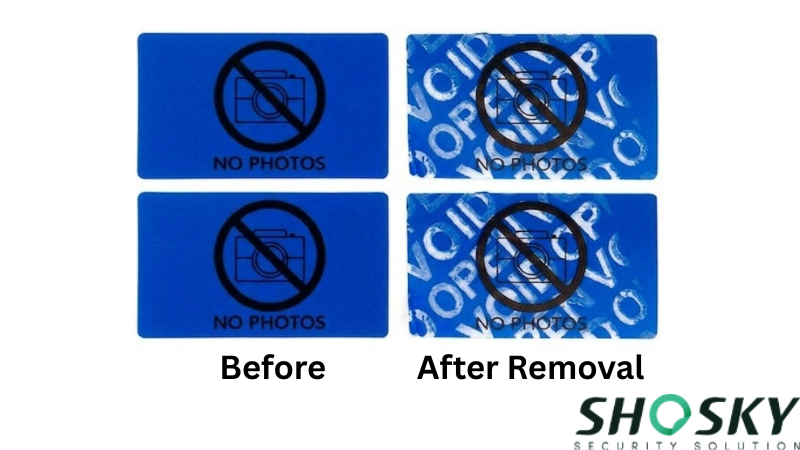
Tamper evidence serves as the second critical layer of facility control. Blocking the camera is important, but security teams also need a way to detect attempts to bypass the control. Tamper technologies like VOID technology address this requirement by making removal visible and difficult to conceal.
- Frangible Construction: Frangible film layer with pre-scored pattern. On peel attempt, the top layer separates and leaves “VOID” or “OPENED” residue on both the lens and the security label.
- Irreversible Irreversibility: Pattern transfer is mechanical. No heat, solvent, or re-pressure will re-bond the layers to hide evidence. This meets the tamper-evident criteria used in evidence and asset tagging.
- Rapid Visual Inspection: Security staff verifies the intact status visually from 2–3 meters. No scanners needed. Failed VOID triggers immediate incident logging per facility SOP.
This physical trigger creates absolute accountability throughout the visitor journey. A quick visual check can confirm compliance, while any removal attempt leaves a permanent record that supports investigations, audits, and incident reporting procedures.
3. Sequential Numbering and Record Control
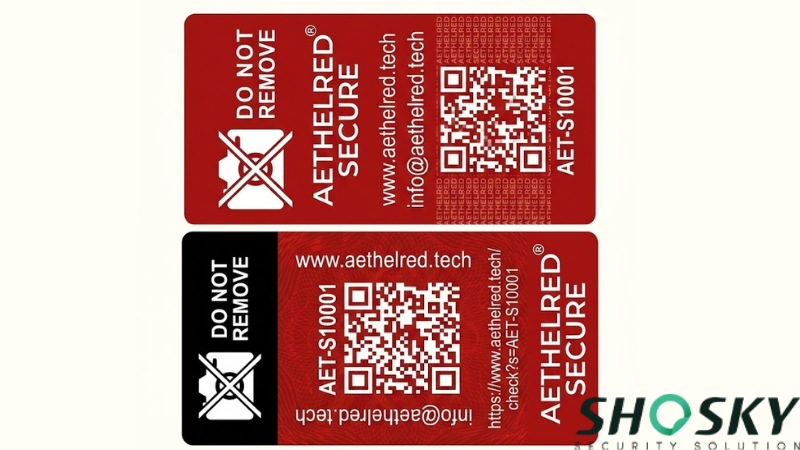
The third layer extends control beyond the physical sticker itself. Each unit becomes part of a tracked record, linking the device to a specific visitor and time window inside the facility. This turns a simple camera cover into a traceable security asset that fits into existing access systems.
- Permanent Serialization: Laser-marked or thermal-printed alphanumeric codes, optional 2D Data Matrix for scan-to-log. UID ranges customizable to match badge or ERP systems.
- Unbroken Chain of custody: Each number is issued once. Security records sticker ID against visitor name, timestamp, and device count in the access system.
- Anti-substitution Protocols: Custom fonts, microprint, or facility-specific colorways prevent visitors from sourcing identical replacements. Procurement can specify number ranges per site or event.
- Audit support: Serial logs export to CSV or integrate via API, supporting ISO 27001 and internal audit requirements for controlled areas.
With serialization in place, enforcement shifts from manual checking to structured tracking. Security teams can match each sticker to a visitor record in seconds, making audits faster and reducing gaps in accountability during high-volume entry periods.
How to Use Phone Camera Stickers and Tamper-Evident Labels from Entry to Exit
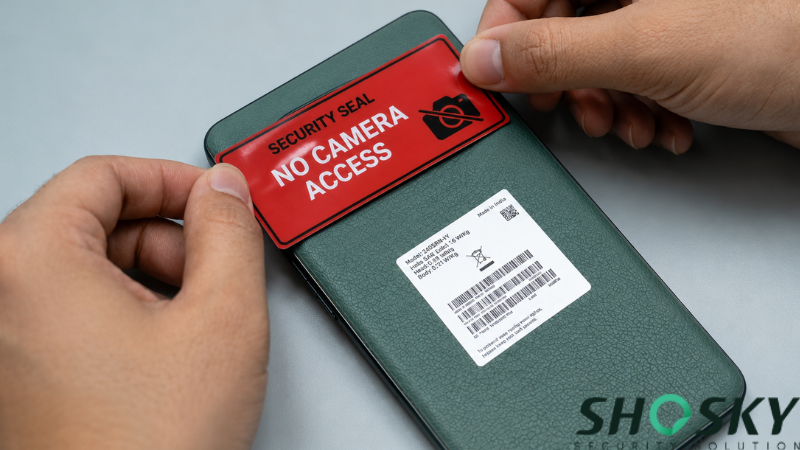
Standardized workflow is key for procurement teams. Stickers only deliver ROI if they are easy to apply, simple to verify, and leave no adhesive residue on visitor devices. The process fits existing entry points without extra scanners or tools. It creates a traceable control layer from check-in to exit that staff can run quickly at scale.
Here is the standard operating protocol for a secure entry-to-exit workflow:
- Check in and apply: Security greets the visitor, wipes lens surfaces with a dry cloth, and applies stickers to all camera modules. Each sticker’s diameter matches the lens size for full coverage. The guard logs the serial number against the visitor’s account in the access system. Application takes seconds.
- Visual verification inside: Floor staff can view brightly colored labels from a distance. Intact stickers confirm compliance without stopping visitors. Any VOID pattern signals a problem for immediate response.
- Exit check and removal: At departure, security matches the serial number, inspects for tamper evidence, and notes the record. Guests peel the label off themselves. Premium adhesives leave no residue on iPhone or Android surfaces, so devices stay clean.
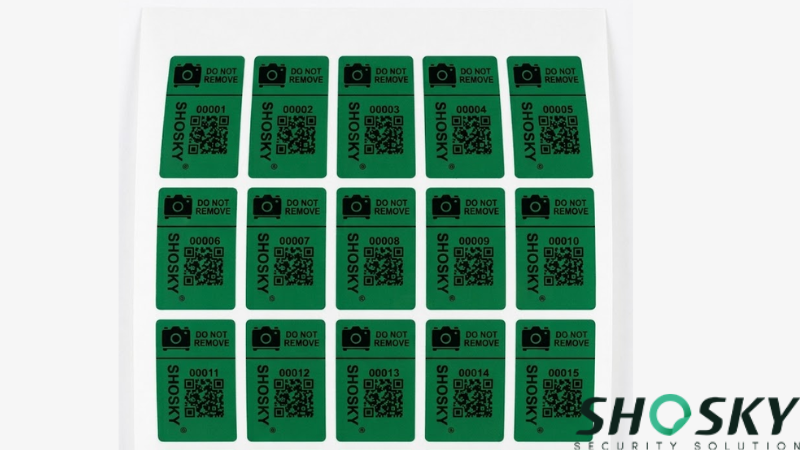
The following table shows how each stage is handled in practice. It gives a clear view of how the workflow stays consistent across different entry volumes and facility types.
| Stage | Action | Time | Tools needed | Audit link |
|---|---|---|---|---|
| Entry | Wipe lens, apply sticker, record serial | 10–15 sec per phone | Stickers, log tablet | Account + sticker ID |
| Inside | Visual check of label color and VOID | Ongoing | None | Incident log if triggered |
| Exit | Verify number, inspect, visitor peels off | 10–20 sec | Log tablet | Close out record |
Implementing this streamlined protocol solves the severe logistical nightmares created by device collection.
- Visitors keep their phones, so calls and 2FA work, and customers can connect as needed.
- Security teams get a fast, verifiable control layer.
- Procurement teams get lower liability, fewer staffing hours, and clean optics with guests.
- Staff trusts the process because it is quick to learn and easy to repeat across shifts.
Visitors retain their hardware for vital 2FA authentications while procurement teams benefit from vastly lower liability costs and zero reception bottlenecks.
FAQs
Will tamper-evident stickers leave a sticky residue on visitor smartphones?
No. Professional camera stickers utilize non-transfer modified acrylic adhesives. These specific chemical formulations grip the oleophobic lens tightly enough to trigger the VOID pattern upon removal but peel away cleanly without permanently damaging the personal device.
Do standard camera labels effectively block modern LiDAR and infrared sensors?
Yes, provided the label material utilizes a highly opaque foil laminate core. Our engineered security stickers completely block >99.9% of light transmission across both the 400 to 700nm visible spectrum and infrared wavelengths to neutralize advanced 3D scanning sensors.
Can a visitor simply buy identical replacement stickers online to bypass security?
No. High-security facility labels incorporate custom Pantone color matching, proprietary corporate logos, and sequential alphanumeric serialization. This unique physical footprint makes it mathematically and financially impossible for an unauthorized individual to source identical aftermarket replacements.
What protocol must security follow if a label shows a VOID message at exit?
Security personnel must immediately detain the device and trigger a formal compliance audit. The device owner must open their photo gallery and recently deleted folders for visual inspection under the direct supervision of the facility security director.
Secure Your Corporate Secrets with Shosky Phone Camera Stickers
Security planning in procurement focuses on control, cost, and usability. Phone camera stickers provide a balance across these requirements. They reduce dependency on device confiscation, simplify visitor flow, and maintain strict photography control.
Shosky Security develops customized tamper-evident solutions for different operational needs. Options include print variations, custom color systems, and security design adjustments based on facility requirements. Procurement teams can order samples for test evaluation before full deployment. Contact us for more details.