
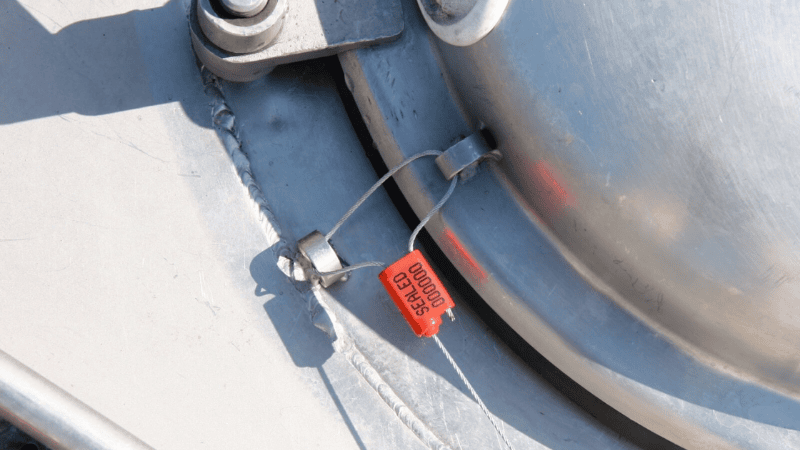
Ask five cross-border dispatchers where their trailer seal requirements come from, and you will likely get five different answers: “customs,” “USMCA,” “the broker told us,” “it’s always been a bolt seal.” None of them are wrong, exactly, but none of them explain the actual mechanism. USMCA does not mandate a seal type. C-TPAT does. And C-TPAT membership determines whether a truck sits for a general secondary inspection or rolls through a dedicated FAST lane.
For a fleet running loads between Laredo and San Antonio, or Windsor and Detroit, that distinction is not academic. It is the difference between a 15-minute crossing and a multi-hour hold, and in the worst case, between keeping C-TPAT status and losing it. This guide breaks down how USMCA, C-TPAT, and ISO 17712 actually interlock, what changed (and did not change) after the 2026 USMCA joint review, and which seal types satisfy every layer of the compliance stack at once.
How USMCA, C-TPAT, and ISO 17712 Actually Connect
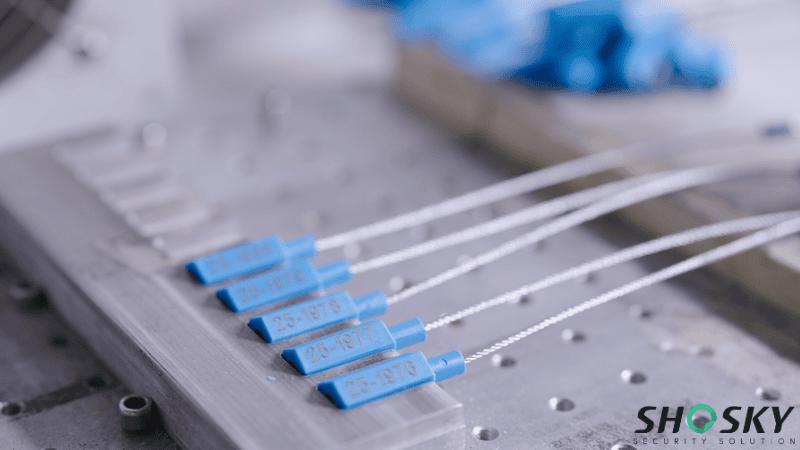
These three massive international frameworks actively operate at completely different regulatory levels, and mistakenly conflating them remains the absolute root cause of most compliance confusion on the loading dock. Understanding exactly how these legal structures interact prevents catastrophic border delays.
Logistics directors must rigorously understand these three highly distinct supply chain pillars:
- USMCA Trade Exemption: This is a trade agreement. It governs whether goods moving between the United States, Mexico, and Canada qualify for duty-free treatment, based on rules of origin and a certification of origin with nine required data elements. It says nothing about how a trailer door should be sealed.
- C-TPAT Security Mandate: This is a voluntary supply chain security program administered by U.S. Customs and Border Protection (CBP). It is where the seal requirements actually live. C-TPAT’s Minimum Security Criteria for Highway Carriers require that any loaded trailer bound for the U.S. be sealed with a high-security seal that meets or exceeds the current ISO 17712 standard.
- ISO 17712 Physical Standard: This is the international product standard that defines what “high-security” means for a mechanical seal: how it is classified, how it is tested, and how tampering must be made visibly evident.
The chain that actually matters to a carrier looks like this: a USMCA-qualifying shipment gets the commercial benefit of duty-free treatment, but the speed benefit, the FAST lane, is gated by C-TPAT certification of every link in the supply chain, from manufacturer to carrier to driver to importer. C-TPAT certification, in turn, is gated by whether the carrier can document that it uses ISO 17712-compliant seals and follows CBP’s written seal procedures. Skip the seal requirement, and USMCA eligibility is not at risk. It is FAST lane access and C-TPAT standing.
The 2026 USMCA Joint Review: What Changed for Carriers (and What Didn’t)
Article 34.7 of the USMCA required the three governments to hold a joint review of the agreement on its sixth anniversary. That review took place on July 1, 2026. The United States did not agree to renew the USMCA for another 16-year term in its current form, which, under the agreement’s own terms, triggers annual joint reviews going forward rather than an automatic extension. Mexico and Canada each confirmed they wanted to extend it.
This sounds more disruptive than it currently is for a trucking operation. The agreement remains fully in force. Nothing about rules of origin, certification of origin, or border-crossing procedure changed on July 1. What followed was a series of bilateral U.S.-Mexico negotiating rounds, a third round in Mexico City in late July and a fourth scheduled for Washington in September, focused on steel and aluminum tariffs, automotive rules of origin, and economic security issues. As of this writing, none of those negotiations have touched C-TPAT criteria, FAST program rules, or ISO 17712 seal requirements.
The practical takeaway for a carrier: keep USMCA paperwork current and watch the rules-of-origin negotiations if you haul automotive content, but do not expect the physical security layer, meaning your sealing program, to change because of the joint review. CBP’s USMCA Center remains the authoritative source for implementation updates, and it has not flagged any change to sealing or C-TPAT requirements tied to the review.
Want to Know More About Requirements of Security Seals?
Start With A Low Minimum Order Quantity
C-TPAT’s Seal Rules for Highway Carriers, Line by Line
This is the section that actually governs what goes on your trailer door. CBP’s Minimum Security Criteria for Highway Carriers spell out seal requirements in enough detail that “we use a decent seal” is not sufficient documentation during a validation visit.
The core requirement
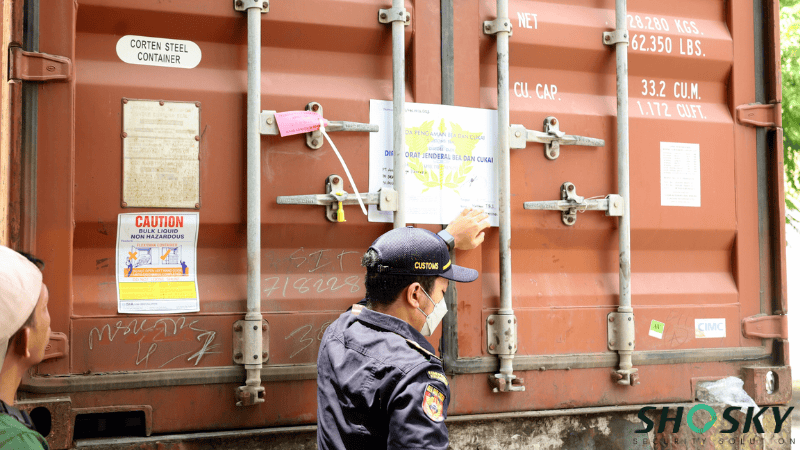
All C-TPAT shipments that can be sealed must be secured immediately after loading with a high-security seal that meets or exceeds the current ISO 17712 standard. Both cable seals and bolt seals qualify. A plastic indicative seal alone does not satisfy this requirement.
Seal placement
CBP specifies exactly where the seal goes: the secure cam position if the trailer or container has one, otherwise the bottom of the center-most vertical bar of the right-hand door, or alternatively the center-most left-hand locking handle if the secure cam position is unavailable. If a bolt seal is used, CBP recommends placing the barrel portion facing upward, above the hasp.
LTL and consolidation rules
For less-than-truckload operations, a high-security padlock is the minimum at the local pickup stage. Once freight is consolidated at a hub and loaded onto a line-haul trailer crossing the border, that trailer must carry a full ISO 17712 high-security seal. In pickup-and-delivery operations that skip a consolidation hub entirely, CBP requires either an ISO 17712 seal or an equivalent high-security locking device at each stop before the border.
The VVTT verification process
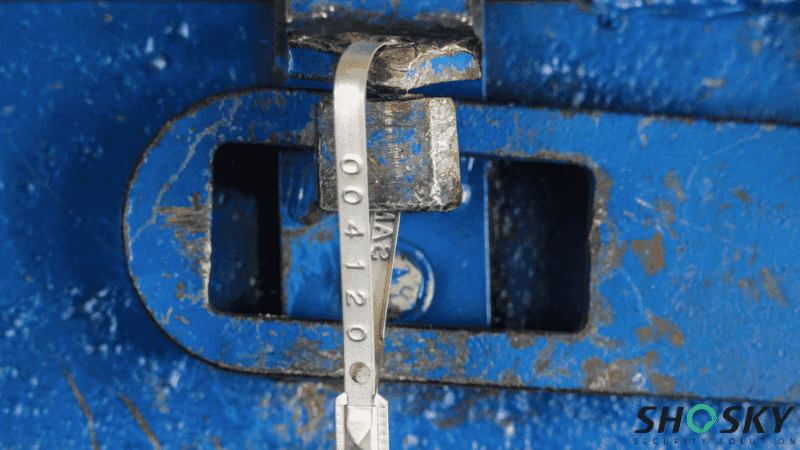
CBP requires drivers and dock personnel to run a four-step check every time a seal is applied or verified, known as VVTT:
- View the seal and container locking mechanism to confirm both are intact.
- Verify the seal number against the shipping documents.
- Tug on the seal to confirm it is properly affixed.
- Twist the bolt seal’s components to confirm nothing unscrews or separates.
This is not a suggestion. CBP’s validators check for evidence that VVTT is actually being performed and documented, not just described in a policy binder.
Documentation and re-verification
Members who maintain seal inventories must be able to provide a laboratory test certificate demonstrating that their seals comply with the current ISO 17712 standard. Written seal procedures, covering issuance, storage, a seal log, and the response protocol when a seal is found tampered with, must be reviewed and updated at least annually.
ISO 17712: What “High-Security” Actually Means
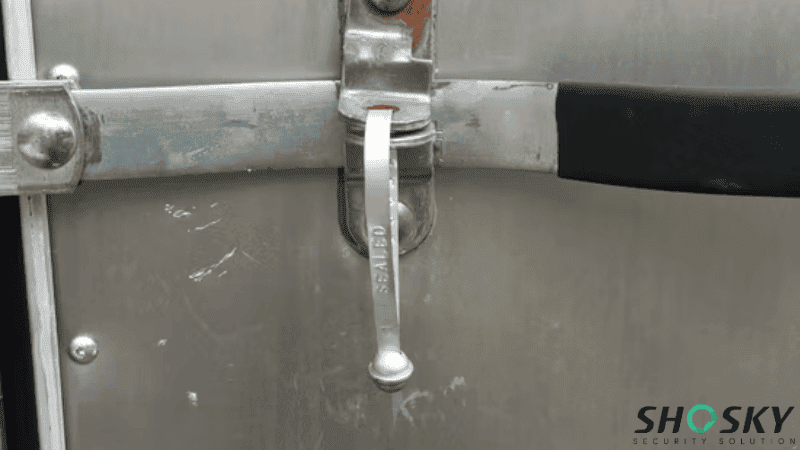
ISO 17712:2013 remains the current, reaffirmed edition of the standard as of 2026; it was last confirmed without revision in 2023. It sorts every mechanical freight seal into one of three classes:
- Class H (High Security): bolt seals and other hardened metal seals designed to resist bolt cutters, prying, and impact. This is the class C-TPAT expects on a trailer door for cross-border freight.
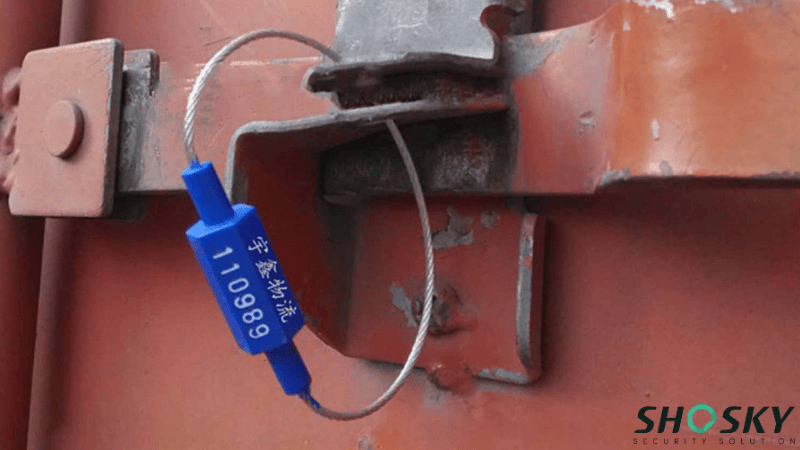
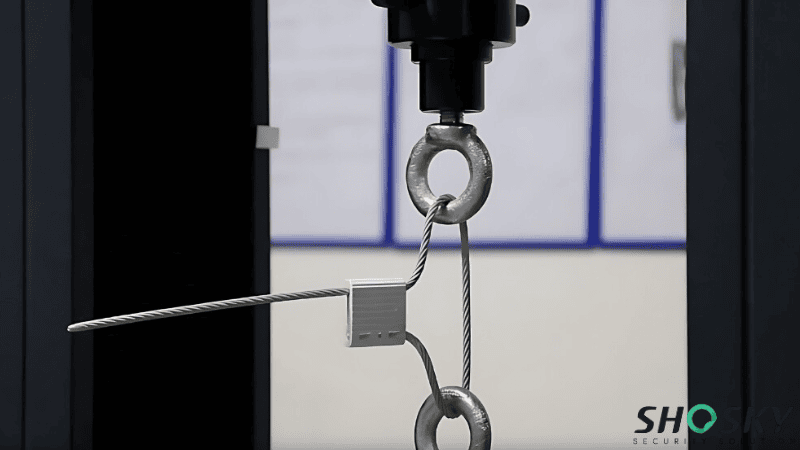
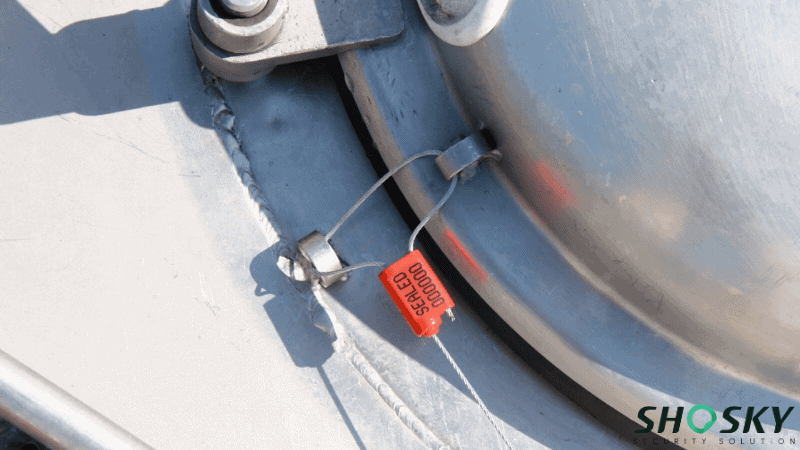
- Class S (Security): cable seals, typically a steel cable of at least 3.5 mm in diameter, threaded through hardware a rigid bolt cannot reach. Cable seals satisfy the C-TPAT container-closure requirement alongside bolt seals.
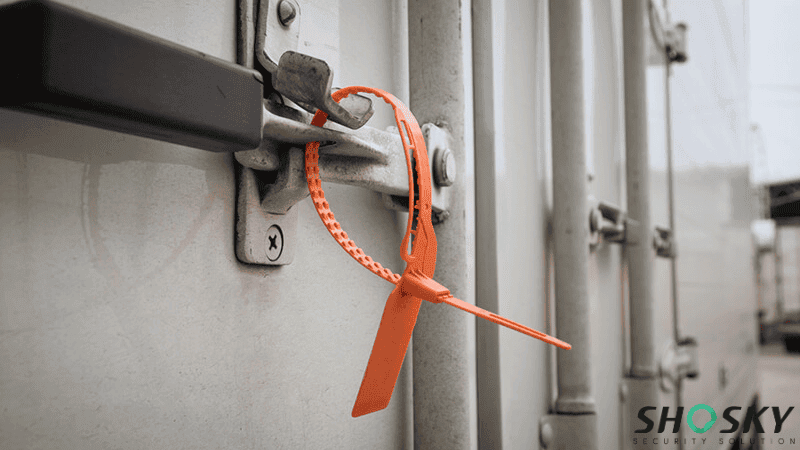
- Class I (Indicative): plastic seals that show visible evidence of tampering but offer no meaningful cut resistance. These are useful for pallet-level or internal closures, but they do not satisfy C-TPAT’s trailer-sealing requirement on their own.
The standard also requires that seal manufacturers be independently audited by an accredited process review organization and be able to produce a certification letter and an audit report documenting the seal’s tamper resistance upon request. That paperwork is what a laboratory test certificate is actually referencing when C-TPAT asks for one.
Ready to Get Tamper Evident Seals for Your Business?
Start With A Low Minimum Order Quantity
How to Choose the Right Seal: Compliance Matrix and Selection Guide
Choosing a seal is really two decisions stacked on top of each other: which class satisfies the compliance chain, and which type actually fits your equipment and route. The matrix below answers the first question; the selection guidance after it answers the second.
The Compliance Matrix
Because USMCA does not itself impose a seal standard, the honest way to build this matrix is around what each seal type unlocks in practice: whether it satisfies C-TPAT’s trailer-sealing requirement, and therefore keeps the carrier’s FAST lane access intact. The table below shows how the four most common seal types line up against that requirement.
| Seal Type | ISO 17712 Class | Satisfies C-TPAT Trailer Requirement | Typical Use in Cross-Border Operations |
|---|---|---|---|
| Bolt seal | H (High Security) | Yes, on its own | Primary door seal for full trailer and container loads |
| Cable seal | S (Security) | Yes, on its own | Vertical bar closures, LTL line-haul, equipment a bolt seal cannot reach |
| Plastic indicative seal | I (Indicative) | No, not as the sole trailer seal | Pallet-level, internal, or low-risk domestic closures only |
| GPS or RFID e-seal | Varies (only if mechanically ISO 17712-rated) | Only if the physical locking mechanism itself carries an H or S rating | Added visibility and tracking layered on top of a compliant mechanical seal |
Read the electronic seal row carefully, because it is the most common mistake carriers make. A GPS-tracked e-lock adds real value for shipment visibility and chain-of-custody data, but unless the device’s physical locking mechanism has itself been tested and classified under ISO 17712, it does not automatically satisfy C-TPAT’s trailer-sealing criterion. Many fleets layer a GPS e-seal on top of a certified bolt seal rather than treating the electronics as a substitute.
Matching Seal Type to Equipment and Route
The compliance matrix explicitly specifies what qualifies; however, your specific trailer hardware, unique freight profile, and operational routing ultimately determine what physically fits. Procurement directors must rigorously align their physical hardware utilizing these highly specific operational guidelines:
-
Full Trailer and Container Loads: Heavy carbon steel bolt seals explicitly remain the absolute default here. They brilliantly combine genuine 15.0 kN cut resistance with the lowest per-unit cost among Class H options. If your high-value freight is actively transported via intermodal rail or port drayage, the specific placement protocols outlined in our container security seals documentation must be followed rigorously.
-
Irregular Hardware Configurations: Not every commercial trailer possesses a door configuration that accepts a rigid bolt seal cleanly. Braided cable seals explicitly exist for this exact mechanical gap. The flexible 3.5 millimeter steel cable threads seamlessly through awkward vertical bars or irregular hasps. For a deeper operational breakdown of these flexible closures, aggressively review our Trailer Security Seals Guide.
-
LTL and Consolidated Freight: As covered previously, this strictly represents a two-stage decision: a high-security padlock at local pickup, followed by a full ISO 17712 seal once freight is consolidated onto the line-haul trailer crossing the international border. Buying padlocks and high-security seals as entirely separate, clearly labeled inventory items keeps your seal log audit flawlessly clean during a CTPAT validation.
-
Equipment That Cannot Be Sealed: Open equipment, such as tank trucks and flatbeds hauling for a CTPAT importer, is obviously not required to carry a seal, as there is absolutely no rigid closure to physically lock. Do not forcefully apply a seal to this equipment simply to appear compliant; explicitly document the exact equipment type instead, so a federal validator clearly understands why a zero seal is officially logged.
Procurement details often go unnoticed until a rigorous federal validation visit exposes them. Always order security seals in strictly matched, sequential alphanumeric blocks rather than mixed batches to heavily accelerate seal log reconciliation. Furthermore, to perfectly ensure your entire over-the-road fleet remains fully compliant across extreme seasonal climates, routinely cross-reference your specific hardware specifications with our comprehensive guide on security seals for trucks.
A Practical Compliance Checklist for Cross-Border Carriers
Most C-TPAT seal deficiencies stem from a handful of recurring gaps rather than exotic edge cases. Before your next validation visit or audit, confirm the following are in place and documented, not just practiced informally:
- A written seal policy covering issuance, storage, the seal log, and the tamper-response procedure, reviewed at least annually.
- Laboratory test certificates on file proving your current seal stock meets ISO 17712.
- Driver training on the VVTT verification process, with records showing it was actually delivered.
- Correct seal placement documented in your procedures (secure cam position, or the center-most bar or handle if no cam position exists).
- A protocol for in-transit reseal events: documenting both seal numbers, notifying dispatch immediately, and confirming the shipper, broker, and importer are all informed of the change.
- An annual seal inventory audit tying every seal in stock to your seal log.
Carriers that keep this checklist current rarely fail a C-TPAT validation on the sealing criterion alone. The gaps that do show up are almost always documentation gaps, not equipment gaps.
FAQs
Q1: Does the USMCA trade agreement specifically mandate a certain type of trailer security seal?
No. The USMCA strictly governs international duty-free tariffs and complex rules of origin. The physical mandate requiring a high-security mechanical seal comes directly from U.S. Customs and Border Protection through its strict C-TPAT program’s minimum security criteria.
Q2: What exact tensile pull strength is required for a bolt seal to satisfy C-TPAT regulations?
To fully comply with strict C-TPAT regulations, a heavy carbon steel bolt seal must be officially laboratory-certified as Class H under ISO 17712. This strictly requires the rigid metal seal to flawlessly withstand a minimum of 15.0 kN of violent tensile pull force.
Q3: Can logistics fleets legally use thick plastic pull seals for cross-border highway transit?
Absolutely not. Basic plastic seals are strictly classified as Class I Indicative seals under international ISO testing. They physically offer absolutely zero meaningful cut resistance and totally fail to satisfy the mandatory C-TPAT requirement for securing international highway trailers crossing international borders.
Q4: What does the mandatory VVTT driver verification acronym explicitly stand for?
VVTT strictly stands for View, Verify, Tug, and Twist. CBP actively requires commercial drivers to visually inspect the hardware, carefully verify the laser-etched serial numbers against digital dispatch documents, aggressively tug the locked seal down, and forcefully twist the heavy components to ensure totally flawless locking.
Optimize Your Cross-Border Operations with Shosky Today
USMCA sets the trade terms. C-TPAT sets the security requirements, including which seals qualify. ISO 17712 defines what “qualifying” actually means in testable terms. Treating these as three separate boxes to check is what causes carriers to pass a paperwork review and still get flagged at the border over a seal. Treat them instead as one chain, where FAST lane speed depends on C-TPAT status, which in turn depends on documented ISO 17712 compliance, and the sealing decision stops being a guess.
If your fleet is building or renewing a C-TPAT-compliant sealing program for USMCA lanes, we work with carriers and importers on ISO 17712-certified bolt and cable seals, including the lab documentation CBP asks for during validation. Reach out for a sample kit or a quote scoped to your trailer hardware and route mix.